Get an instant quote
Get in touch Listen to our podcast

Blog

Why Do You Need a Modbus Converter?

Modern factories rarely replace every device at once. A 20-year-old Modbus RTU meter may still measure temperature accurately, while a new PLC expects Ethernet communication. This mismatch creates delays, rewiring costs, and silent data gaps. A Modbus Converter connects these different environments, translating serial Modbus RTU or ASCII into Modbus TCP and other industrial protocols.

HMS Networks’ Industrial Network Market Shares 2024 report found that Ethernet accounted for 76% of new industrial network nodes, while traditional fieldbus still represented 24%. That remaining share matters. It includes installed sensors, drives, energy meters, and controllers that businesses cannot discard overnight. ARC Advisory Group has also repeatedly identified modernization and interoperability as major priorities in industrial automation. A converter can therefore extend existing equipment instead of forcing an expensive replacement.

As industrial networking expert John Rinaldi has stated, “A network is only useful when the data reaches the right system.” The point is practical. A converter must preserve register addresses, timing, error handling, and diagnostic visibility. One incorrect byte order can turn 230 volts into an impossible reading.

Field experience also exposes an uncomfortable truth: converters are not magic fixes. Poor grounding, outdated firmware, and unclear documentation can still stop communication. Engineers should test baud rates, parity, termination, and response times before deployment. The best Modbus Converter is not simply the cheapest device. It is the one that communicates consistently, documents its limits, and remains supportable years later. Industry reports provide direction, but site conditions decide success.
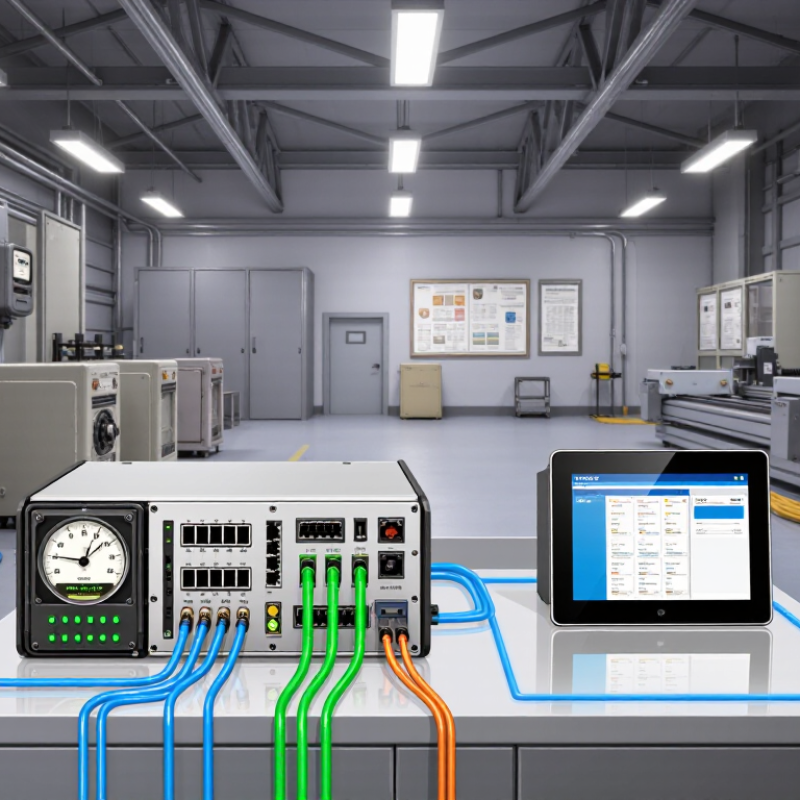
Why Do You Need a Modbus Converter?

What Is a Modbus Converter?

A Modbus converter is a communication device that connects equipment using different interfaces or protocols.

It may translate Modbus RTU signals from an RS-485 network into Modbus TCP data for an Ethernet system. In the opposite direction, it can send network commands to a serial instrument. The converter does not measure temperature, pressure, or energy itself. It transfers information between systems that cannot communicate directly.

In practical commissioning, a meter may use RS-485 with a defined slave address, baud rate, parity, and stop bit. A monitoring platform may expect Ethernet packets instead. The converter manages this communication gap.

Incorrect settings can cause silent failures.

For example, one parity mismatch may leave a screen showing no data, even when the wiring appears perfect.

Not always obvious.

A dependable converter usually provides electrical isolation, stable timing, diagnostic indicators, and protection against common signal disturbances. Isolation matters when devices have different ground potentials. Clear documentation also reduces installation errors.

It is tempting to blame the converter first, but loose terminals and duplicate addresses are frequent causes. A careful technician checks wiring, termination, addressing, and software settings together.

This process is not glamorous. It is reliable.

Yet even experienced teams can overlook a single reversed RS-485 pair during a rushed installation.

How Modbus Converters Translate Between Communication Protocols

Why Do You Need a Modbus Converter?

A Modbus converter connects devices that use different communication methods. A common example is Modbus RTU over RS-485 linked with Modbus TCP on an Ethernet network. The converter receives a serial request, reads its device address and function code, then builds a matching TCP message. It performs the reverse process for responses. This translation allows a temperature controller, energy meter, or programmable controller to share data with modern monitoring software.

The converter must handle more than cable changes. It manages message framing, timing, error checks, and network addressing. For RTU traffic, it may verify the CRC before forwarding data. For TCP traffic, it uses an IP address and port instead. During commissioning, I check baud rate, parity, slave address, and termination resistance. A single incorrect setting can make a healthy device appear silent. Small details matter.

Still, the word “translation” can be misleading. Most converters preserve Modbus commands rather than converting every data type automatically. Register order, signed values, scaling, and byte sequence may need separate configuration. A value of 253 could mean 25.3°C, an alarm code, or raw sensor data. The converter cannot know without documentation. In practice, the first setup is rarely perfect. I record real request and response frames, compare them with the device manual, and test one register at a time. This slower method often exposes assumptions hidden by simple network tests.

Why Do You Need a Modbus Converter? - How Modbus Converters Translate Between Communication Protocols

Communication Method Physical Medium Data Format and Addressing Typical Role in a Conversion System Common Application Important Conversion Considerations
Modbus RTU Serial communication, commonly over a two-wire RS-485 bus Binary frames with a slave address, function code, data field, and CRC error check Source or destination protocol Connecting meters, sensors, drives, controllers, and remote I/O devices Baud rate, parity, stop bits, device address, bus termination, and wiring polarity must match across the serial network
Modbus ASCII Serial links such as RS-232 or RS-485 Human-readable hexadecimal characters enclosed by start and end characters; uses an LRC error check Legacy serial interface Older control systems where readable serial messages or slower communication are acceptable It uses more characters and generally transfers data less efficiently than Modbus RTU
Modbus TCP Ethernet using TCP/IP, normally through an RJ45 or industrial Ethernet connection Modbus application data is carried inside a 7-byte MBAP header and TCP/IP packets; the serial CRC is not used Ethernet-side protocol Linking PLCs, supervisory software, industrial computers, and Ethernet-enabled instruments Network addressing, TCP port 502, connection limits, timeouts, and firewall rules must be configured correctly
Modbus RTU to Modbus TCP RS-485 on one side and Ethernet on the other Maps serial register requests and responses into Modbus TCP messages while preserving function codes and register values Protocol bridge Allowing an Ethernet-based monitoring system to access existing serial field devices The converter must manage serial timing, TCP connections, request queues, response timeouts, and exception codes
Modbus TCP to Modbus RTU Ethernet on the control-system side and RS-485 on the field-device side Removes the TCP/IP and MBAP transport information, then creates a correctly timed Modbus RTU frame with CRC Remote device access Connecting an Ethernet controller to legacy serial meters, actuators, or process instruments One TCP client may need to communicate with multiple serial device addresses; polling order and serial response time affect performance
Modbus to CAN RS-485 or Ethernet on the Modbus side and a Controller Area Network bus on the other side Register reads and writes are mapped to CAN identifiers and data fields according to the gateway configuration Cross-network gateway Sharing industrial measurements or commands between Modbus equipment and CAN-based machinery Register size, byte order, CAN identifier assignment, message priority, and update rate require explicit mapping
Modbus to Fieldbus Modbus serial or Ethernet combined with a fieldbus network Modbus coils, discrete inputs, input registers, and holding registers are mapped to fieldbus process data Control-system integration Integrating instruments or subsystems that use Modbus into a larger automation network Data types, cyclic update time, diagnostic information, device profiles, and read/write permissions must be aligned
Modbus to OPC UA or MQTT Serial or Ethernet Modbus connected to an IP-based software or cloud interface Modbus register values are converted into named variables, structured data points, or publish/subscribe messages Data and application gateway Sending machine data to dashboards, historians, analytics platforms, or supervisory applications Tag naming, timestamp quality, scan interval, security credentials, data type conversion, and network availability are essential
Any Modbus Converter Depends on the selected interfaces, such as RS-232, RS-485, Ethernet, CAN, or another industrial network Reads one protocol's message structure, interprets the requested data, and generates an equivalent message for the target protocol Translation and isolation Connecting equipment that uses different interfaces, speeds, addressing methods, or data models Check electrical isolation, maximum bus length, supported function codes, register mapping, latency, diagnostics, and environmental rating

Which Devices and Systems Require Modbus Conversion?

Modbus conversion is required when devices speak different communication languages. A common example is an older Modbus RTU instrument using RS-485 and a modern control system using Modbus TCP over Ethernet. Without a converter, the system cannot correctly exchange registers, status values, or alarm signals. The converter translates communication formats while preserving essential data such as voltage, temperature, flow, and energy readings.

Many field devices require this connection. These include power meters, temperature controllers, variable-speed drives, protection relays, water-treatment sensors, and older programmable controllers. A facility may also need conversion between serial Modbus networks and Ethernet-based supervisory systems. In a plant room, one converter can connect several meters to a monitoring computer through existing twisted-pair wiring. That can reduce rewiring work, but only when addressing and baud-rate settings are checked carefully.

The wider system matters too. Building management systems, energy dashboards, remote monitoring platforms, and industrial control networks often combine old and new equipment. I have seen communication faults caused by reversed RS-485 wires, duplicate addresses, and incorrect parity settings. The converter was not the real problem. Cable distance and electrical noise also affect reliability. Some devices expose unusual register maps, so engineers must verify scaling, data types, and byte order from the technical documentation. Testing one device at a time is slower, but it reveals mistakes before the entire network is connected.

How a Modbus Converter Improves Industrial Network Integration

Industrial networks rarely grow in a clean, planned order. A packaging line may use Modbus RTU, while a newer controller expects Modbus TCP. Different cables, speeds, and data formats can isolate useful information. A Modbus converter acts as the interpreter between these environments. It translates signals, adapts interfaces, and helps older equipment communicate with modern supervisory systems.

That connection improves integration in practical ways. Technicians can monitor temperature, pressure, and motor status from one interface. Maintenance teams can also compare live readings with historical trends. The International Energy Agency reports that industry consumes about 37% of global final energy. Better data visibility can expose abnormal loads before they become expensive downtime. Small gains matter.

Reliability depends on more than protocol conversion. Engineers must check baud rates, register maps, grounding, shielding, and response timing. A converter with poor configuration can create silent errors. That is easy to miss. Field experience shows that clear labeling and tested cable routes often prevent more faults than advanced software. The 2023 World Economic Forum industrial transformation research also highlights data connectivity as a recurring requirement for scalable factory improvements. Still, integration is not automatically intelligent. Someone must verify every value at the machine.

Why Do You Need a Modbus Converter?

How a Modbus Converter Improves Industrial Network Integration

A Modbus converter bridges different communication media, such as Modbus RTU over RS-485 and Modbus TCP over Ethernet, while preserving the standard Modbus data model. Each of the four Modbus data areas uses a 16-bit address range from 0 to 65,535, providing up to 65,536 addressable points.

Data shown: standard Modbus logical data areas and their defined 16-bit address capacity.

What to Consider When Choosing a Modbus Converter

Why Do You Need a Modbus Converter?

A Modbus converter connects devices that use different communication interfaces. It can link RS-232, RS-485, Ethernet, or other industrial networks. This connection helps older meters communicate with newer control systems. It also reduces the need to replace reliable equipment. In practice, a converter can prevent data gaps from a temperature sensor, energy meter, or motor controller.

What to Consider When Choosing a Modbus Converter

Start with protocol compatibility. Confirm whether the device supports Modbus RTU, Modbus ASCII, or Modbus TCP. Check baud rate, parity, stop bits, and slave address ranges. Physical conditions matter too. A factory floor may contain electrical noise, long cable runs, moisture, and vibration. Choose suitable isolation, surge protection, and a strong enclosure when needed. For Ethernet connections, review network speed, IP settings, and cybersecurity controls. A converter should also handle the required data volume without noticeable delays. Some specifications look impressive, but they may not reflect real installation conditions. Testing remains necessary.

Tips: Map every device before purchasing. Record interface type, cable length, power supply, and communication settings. Check diagnostic features, such as status LEDs, error logs, and automatic recovery. Plan for future expansion, not only today’s devices. A spare port can be valuable. Do not assume all converters behave alike. A small compatibility detail can stop an entire data chain.

CNC machining CAD export file formats

Put your parts in production today

Get an instant quote