Why Choose HDPE Floaters for Global Marine Projects?
Global marine projects demand flotation systems that remain dependable beyond calm-water demonstrations. An Hdpe Floater must face salt spray, ultraviolet exposure, wave impact, changing loads, and long periods without maintenance. Its performance depends on more than buoyancy. Wall thickness, welding quality, anchoring, compartment design, and inspection access matter equally.
Dr. Elena Marín, a marine materials engineer, explains, “A reliable floater begins with honest load assumptions, not attractive product photographs.” This principle deserves attention. A modular Hdpe Floater can simplify transportation and installation across ports, marinas, aquaculture sites, and floating solar platforms. Its low density supports easier handling. Heat-welded joints can create strong, continuous connections when trained technicians follow controlled procedures. The material also resists corrosion, which is valuable near seawater and brackish environments.
Still, HDPE is not a universal answer. Poorly designed pontoons may deform under concentrated loads. Weak anchoring can undermine an otherwise robust platform. Extreme temperatures, biofouling, abrasion, and unexpected wave directions can expose hidden weaknesses. Design teams should review local conditions, operational loads, maintenance plans, and relevant technical standards before selecting a system.
Details matter.
The strongest global projects combine material knowledge with field experience. Engineers may inspect weld beads, check freeboard, and test connection points before commissioning. Operators should record inspections after storms, impacts, or unusual loading events. This disciplined approach makes the Hdpe Floater more than a manufactured component. It becomes a monitored part of a resilient marine system, while leaving room for correction when real water conditions challenge the original design.
HDPE Floaters: Definition and Role in Marine Projects
Why Choose HDPE Floaters for Global Marine Projects?
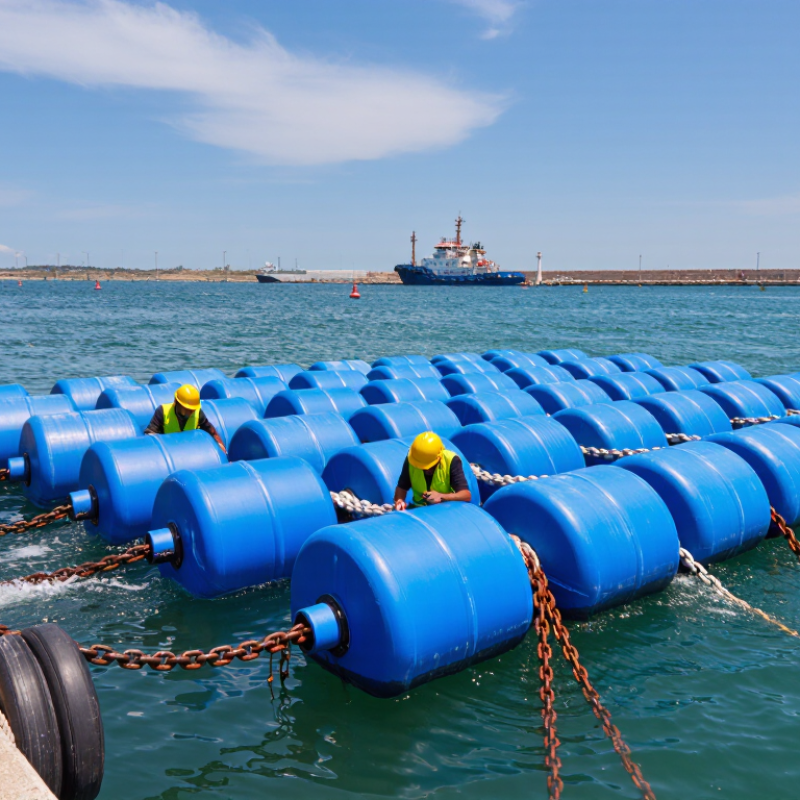
HDPE floaters are hollow, buoyant units made from high-density polyethylene. They support floating docks, walkways, service platforms, and utility lines. Their sealed chambers displace water and create usable buoyancy. Modular connections allow teams to build short access paths or large working surfaces. In practical projects, this flexibility helps when shorelines, water levels, and operating needs change.
HDPE resists corrosion, impact, moisture, and many marine chemicals. That matters in saltwater, where steel components may need frequent coating and inspection. The material also has a relatively low weight, making transport and installation easier. On one installation, crews could move individual modules without heavy lifting equipment. Small details like textured surfaces can improve footing during rain.
Design still requires careful engineering. Buoyancy calculations should include people, equipment, waves, wind, and reserve capacity. Anchoring must match local depth, currents, seabed conditions, and seasonal weather. Thermal expansion can affect long floating runs, especially in strong sunlight. I once underestimated connector movement on a temporary platform. The structure remained usable, but the adjustment took longer than planned. HDPE floaters are durable, yet they are not a universal answer. Regular checks for loose fittings, deformation, and damaged chambers remain necessary. Local marine regulations and site assessments should guide every installation.
Key Material Properties of HDPE Floaters
HDPE floaters suit global marine projects because their material properties remain predictable in wet, saline environments. PE100+ Association guidance places typical HDPE density near 0.95 g/cm³, giving strong buoyancy without excessive structural weight. That ratio matters when pontoons support walkways, service platforms, or floating solar equipment. Lower density also simplifies transport and on-site handling.
HDPE resists seawater, many acids, and common salts because its non-polar polymer structure absorbs little moisture. The U.S. Plastics Pipe Institute reports typical HDPE water absorption below 0.01% by weight. This helps limit swelling and freeze-related damage. Its flexibility is equally useful. Under impact, HDPE can deform instead of cracking suddenly.
However, sunlight still changes polymers. Carbon-black stabilization and verified UV formulations are essential in exposed projects. Small details matter.
Thermal movement deserves careful engineering. HDPE expands more than steel, with linear expansion commonly near 1.5–2.0 × 10⁻⁴ per °C. Designers should allow movement at joints and anchors. PE100 technical data commonly indicates yield strength around 23 MPa, but actual floater performance depends on wall thickness, welding quality, ballast, and wave loads. A strong material cannot rescue weak connections. Frankly, “maintenance-free” is too absolute. Periodic checks for abrasion, weld damage, deformation, and marine growth remain sensible. These practical controls support reliable service across changing climates and operating conditions.
Performance Benefits in Diverse Marine Environments
Why Choose HDPE Floaters for Global Marine Projects?
Performance Benefits in Diverse Marine Environments
Marine projects rarely operate in calm, uniform water. A floating platform may face salt spray, tropical sunlight, freezing winds, and repeated impact from waves. HDPE floaters provide practical resilience across these conditions. Their density is typically 0.94–0.97 g/cm³, allowing strong buoyancy with manageable structural weight, according to the Plastics Pipe Institute’s PE Handbook. That lower weight can simplify transport and installation in remote ports.
Water absorption is also extremely low. Typical HDPE values remain near 0.01% under ASTM D570 testing, helping preserve buoyancy and dimensional stability. This matters where water enters joints, surfaces, or enclosed sections. HDPE also tolerates many common marine chemicals, while its flexibility helps absorb minor impacts from service boats and floating debris.
Not indestructible.
Long-term exposure still requires discipline. The International Maritime Organization reports that more than 80% of global merchandise trade moves by sea, placing marine infrastructure under demanding operating cycles. In sunny regions, UV-stabilized material and regular inspections remain essential. Cold climates create another concern: flexibility may decline as temperatures fall, so connection design deserves careful review. Field teams should check fasteners, hinges, weld zones, and mooring loads rather than judging the floater alone. Specifications can look excellent on paper, yet wave direction, tidal range, and maintenance access often decide real performance.
Design, Installation, and Maintenance Considerations
HDPE floaters suit many global marine projects because they combine low weight, corrosion resistance, and practical buoyancy. Their performance, however, depends on design choices made before fabrication. Engineers should assess payload, wave height, current speed, wind exposure, and expected water-level changes. They should also check UV exposure and temperature ranges at the project site. A useful design keeps adequate freeboard when people, equipment, and debris load the platform. Connection points need reinforcement, not just thicker bolts. Experienced teams compare calculations with local survey data and recognized marine standards. Models can be wrong. A conservative safety margin often costs less than correcting excessive movement later.
Installation begins with a clear layout, stable access, and inspected lifting equipment. Floater modules should be assembled on a clean surface, away from sharp stones and metal scraps. Heat-fusion joints require controlled temperature, pressure, and cooling time. Poor fusion may look acceptable while hiding weak internal bonding. Anchors, chains, and connectors must match the calculated loads and seabed conditions. Installers should verify alignment, freeboard, and connection tension after launching. Photographs and torque records create useful evidence for future inspections. Weather delays are frustrating. Still, rushing during high winds can damage edges, joints, or temporary supports.
Maintenance should follow a written schedule, with extra checks after storms, collisions, or unusual loading. Inspectors can look for cracks, deformation, loose connectors, algae buildup, and loss of buoyancy. Small defects deserve attention. A damaged module may shift loads onto neighboring units. Cleaning should use methods that do not gouge the plastic or contaminate surrounding water. Records should include inspection dates, water conditions, repairs, and replaced components. This information helps engineers refine future designs instead of repeating convenient assumptions. One practical lesson remains uncomfortable: maintenance plans are often more optimistic than actual site conditions.
Why Choose HDPE Floaters for Global Marine Projects?
HDPE has a relatively high linear thermal expansion coefficient, typically about 1.0–2.0 × 10⁻⁴/°C. The chart uses a representative value of 1.5 × 10⁻⁴/°C to estimate the length change of a 10-meter HDPE floater component across a 40°C temperature range.
Design and installation should allow for thermal movement through flexible connections, suitable clearances, and correctly detailed anchors. During maintenance, inspect joints, fasteners, weld areas, abrasion zones, and UV-exposed surfaces for cracking, deformation, or excessive wear.
Applications Across Global Marine Infrastructure
Why Choose HDPE Floaters for Global Marine Projects?
Across global marine infrastructure, HDPE floaters support practical systems in ports, marinas, aquaculture farms, and coastal research stations. Their hollow, sealed structure provides buoyancy without absorbing seawater. That matters where floating walkways face daily spray, changing tides, and heavy foot traffic.
Engineers often use HDPE floaters for modular docks, ferry access platforms, wave attenuators, and temporary construction pontoons. Sections can be assembled onshore and connected near the worksite. This reduces installation time in remote locations. A damaged module can also be isolated and replaced, rather than removing an entire platform. Small details matter. Non-slip surfaces improve movement during rain. Rounded edges reduce snagging risks near boats and work equipment.
Performance still depends on design quality. Engineers must calculate live loads, freeboard, wind exposure, wave action, and anchoring forces for each location. Tropical sunlight may require strong ultraviolet protection, while cold regions demand attention to impact behavior and ice movement. HDPE resists corrosion, but it is not maintenance-free. Connectors, hinges, and anchor points need regular inspection. Poor spacing can create unstable walking surfaces.
Field experience also shows that local conditions are easy to underestimate. A calm harbor can become challenging during seasonal storms. Material selection helps, but it cannot replace proper site surveys, certified calculations, and documented inspections. Some projects may need heavier structural systems or hybrid designs. That limitation deserves honest consideration.


