Get an instant quote
Get in touch Listen to our podcast

Blog

Why Choose an Off Road Forklift for Rough Terrain?

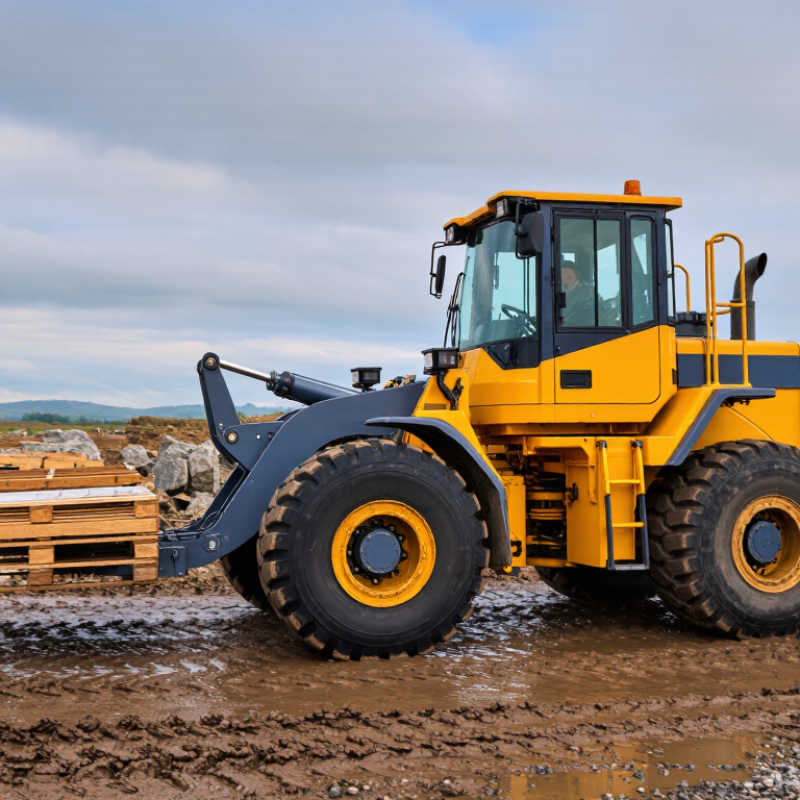
Choosing an Off Road Forklift begins with the ground beneath the tires. Mud, gravel, ruts, slopes, and unfinished surfaces can quickly expose the limits of warehouse equipment. Rough-terrain models use larger pneumatic tires, stronger frames, increased ground clearance, and stabilizing systems. These features help operators move pallets across construction sites, farms, lumber yards, and outdoor storage areas.

The need is substantial. The U.S. Occupational Safety and Health Administration reports approximately 85 forklift-related workplace fatalities and 35,000 serious injuries annually. OSHA also stresses operator training, workplace evaluation, and equipment inspection. ANSI/ITSDF B56.6, the safety standard for rough-terrain forklift trucks, reinforces these responsibilities. A capable machine cannot correct poor load balance or excessive speed.

Brian Feehan, president of the Industrial Truck Association, has expressed a useful principle: “The right truck begins with the application.” That idea matters here. A 5,000-pound capacity rating means little on a steep, wet access road. Load center, attachment choice, tire condition, visibility, and turning space matter more than a brochure headline.

Field experience can be humbling. A forklift may cross loose stone easily in the morning, then struggle after rain softens the same route. That uncertainty deserves attention. Buyers should compare terrain data, duty cycles, and maintenance records before choosing. Reports from OSHA and the World Industrial Truck Statistics organization provide valuable context, but market figures vary by region and equipment definition. An Off Road Forklift is not automatically safer. It becomes safer when its design matches the site, the load, and the operator’s training.
Why Choose an Off Road Forklift for Rough Terrain?

What Is an Off-Road Forklift?

An off-road forklift is a powered industrial truck built for uneven outdoor surfaces. Unlike warehouse forklifts, it uses large pneumatic tires, higher ground clearance, and stronger frames. Many models include a rough-terrain mast, four-wheel drive, and hydraulic leveling. These features help the truck cross gravel, mud, packed soil, and temporary construction routes.

Its purpose is practical. It can unload timber beside a site road or place heavy materials near a building foundation. ANSI/ITSDF B56.6 sets safety requirements for rough-terrain forklift design and operation. OSHA reports that forklifts cause about 85 workplace deaths and 35,000 serious injuries in the United States each year. The numbers deserve attention. A rough surface can hide soft ground, steep slopes, or loose debris. Even experienced operators can misjudge stability.

Tips: Check tire pressure, ground conditions, and rated capacity before use. Keep the load low and travel slowly on slopes. A spotter helps near blind corners. Do not treat four-wheel drive as unlimited traction. It is easy to overestimate it. Operators should follow site training and the manufacturer’s load chart, while supervisors should record changing terrain conditions. A short pre-shift inspection may prevent a costly mistake.

Why Choose an Off-Road Forklift for Rough Terrain?

An off-road forklift is designed for uneven outdoor surfaces such as construction sites, farms, gravel yards, and undeveloped ground. Common rated lift-capacity classes range from approximately 2,500 to 8,000 lb, allowing users to match the truck to the size of the load and the demands of the terrain.

The chart shows common non-branded rated-capacity classes for rough-terrain forklifts. Actual capacity depends on the load center, lift height, attachments, ground conditions, and the capacity plate on the specific forklift.

How Off-Road Forklifts Handle Uneven Terrain

Why Choose an Off Road Forklift for Rough Terrain?

Uneven ground changes how a forklift carries weight. An off-road forklift uses large pneumatic tires, higher ground clearance, and a stronger chassis. These features help it cross gravel, mud, ruts, and compacted soil. Many models also use an oscillating axle, allowing the wheels to maintain contact on uneven surfaces. That matters.

Operators must still respect the load chart. A raised load shifts the center of gravity, especially when one wheel drops into a rut. Slow travel, level forks, and careful steering reduce sudden weight transfer. ISO 22915-13 provides stability testing requirements for rough-terrain trucks, but testing cannot copy every worksite condition.

OSHA identifies overturns as a leading cause of forklift deaths, accounting for about 25% of related fatalities. Its powered industrial truck guidance also stresses training, inspections, and controlled travel speeds. NIOSH has repeatedly linked tip-overs with unstable loads, poor surfaces, and unsafe operating practices. These figures are sobering.

In field conditions, tire pressure, surface drainage, and attachment weight can matter more than appearance. A powerful machine can still lose traction on wet clay. Operators sometimes trust ground clearance too much. That is a mistake.

Pre-shift checks should examine tires, forks, mast movement, brakes, and hydraulic leaks. A spotter can improve visibility near edges, but cannot replace a trained operator or a verified load capacity.

Key Advantages for Outdoor Material Handling

Why Choose an Off Road Forklift for Rough Terrain?

Outdoor material handling rarely happens on smooth concrete. An off road forklift works across gravel, mud, compacted soil, and uneven construction surfaces. Its high ground clearance helps prevent the chassis from striking hidden rocks or deep ruts. Large pneumatic tires provide better traction and absorb shocks near loading zones. That matters when moving bricks, timber, pipe, or bagged materials across open sites.

Four-wheel drive and a stable, wide stance improve control on slopes and loose ground. However, traction is not unlimited. Operators still need to follow the rated load chart, keep loads low, and approach inclines slowly. In field use, I have found that visibility changes quickly when dust, rain, or stacked materials block the view. A spotter can reduce blind-spot risks during tight movements. Small details matter.

Regular inspection supports dependable performance outdoors. Check tire pressure, forks, hydraulic lines, brakes, lights, and protective guards before each shift. Mud around the mast can hide damage. Rain can also reduce braking response. Operators need practical training, not just a brief machine introduction. They should understand changing ground conditions, safe parking, and the effects of uneven loads. One weakness remains: off road forklifts can consume more fuel on soft ground, especially with aggressive driving. That cost deserves attention when planning outdoor operations.

Essential Features for Safety and Performance

Why Choose an Off Road Forklift for Rough Terrain?

Safety begins with matching the forklift to the ground beneath it. Rough terrain models need deep-tread pneumatic tires, strong ground clearance, and reliable four-wheel drive. These features help the machine cross gravel, mud, and uneven soil without excessive wheel spin. A low center of gravity also improves stability when carrying heavy materials. Still, stability is not automatic. Load weight, height, and slope can change handling quickly.

The operator’s protection deserves equal attention. A certified rollover protective structure, seat belt, and overhead guard reduce injury risks during sudden movement. Clear visibility matters near stacked timber, construction materials, or blind corners. Adjustable mirrors, bright work lights, and responsive hydraulic controls can prevent small mistakes from becoming serious incidents. Keep both hands steady. Avoid rushed turns.

Performance depends on daily discipline, not only engine power. Inspect tire pressure, steering, brakes, forks, and hydraulic lines before each shift. Look for oil beneath the machine. That clue is easy to ignore. Operators should slow down on wet ground and keep loads low while traveling. Training must cover slopes, soft surfaces, reversing, and uneven loads. Even experienced workers can misjudge a hidden rut. A practical route check helps, although it may feel unnecessary on familiar sites. Follow the manufacturer’s limits and applicable workplace rules. Personal judgment still needs restraint.

Why Choose an Off Road Forklift for Rough Terrain? - Essential Features for Safety and Performance

Essential Feature Typical Specification or Design Safety and Performance Benefit What to Check Before Operation
Load Capacity Commonly 2,500–10,000 lb (1,130–4,540 kg), depending on the model and load center Provides sufficient lifting capability for construction materials, agricultural loads, timber, and uneven-site equipment. Confirm the capacity plate, load center, attachment rating, and actual load weight. Never exceed the rated capacity.
Pneumatic or Flotation Tires Deep-tread pneumatic tires with larger footprints; some applications use foam-filled tires Improves traction, impact absorption, and stability on gravel, mud, soil, sand, and broken ground. Inspect tread depth, sidewalls, inflation pressure, and signs of puncture or uneven wear.
High Ground Clearance Often approximately 8–14 in (200–355 mm), depending on tire and chassis configuration Reduces the risk of the undercarriage contacting rocks, ruts, debris, or raised ground. Select clearance appropriate to the site and avoid obstacles that could affect the vehicle’s center of gravity.
Four-Wheel Drive or Traction Control Selectable or full-time four-wheel drive on many rough-terrain configurations Helps maintain controlled movement on loose surfaces, inclines, and areas with reduced traction. Use the drive mode recommended for the surface. Avoid sudden acceleration, sharp turns, and wheel spin.
Articulated or Oscillating Axle Axle articulation or oscillation that allows the wheels to follow uneven terrain Keeps more tires in contact with the ground and supports stability when traveling across irregular surfaces. Verify articulation locks, pivot points, pins, and bushings are inspected and properly maintained.
Hydraulic Leveling or Frame Leveling Available on selected machines; may level the frame or attachment on sloped ground Helps position the load more securely and improves visibility and control on uneven terrain. Level only within the equipment’s operating limits and keep the load low while traveling.
Rollover Protection Structure Overhead guard or certified protective structure with a restraint system Helps protect the operator during a rollover or from falling objects when used with the restraint system. Inspect the structure for damage or unauthorized modifications and always fasten the seat belt.
Low Center of Gravity Chassis, counterweight, mast, and load layout engineered for stability within rated limits Reduces the likelihood of forward or lateral instability during lifting and travel. Keep the load centered, carry it as low as practical, and do not turn or travel across slopes too quickly.
Gradeability Many rough-terrain forklifts are designed for moderate grades; the exact limit varies by load, surface, and model Supports controlled operation on ramps and inclined outdoor work areas. Follow the manufacturer’s maximum grade instructions. Travel straight up or down slopes whenever possible.
Mast and Attachment Visibility Clear sightlines, compact mast design, tilt control, and compatible attachments Improves load placement accuracy and helps the operator identify people, obstacles, and ground hazards. Travel in reverse when the load blocks forward visibility, use a spotter when required, and keep mirrors and windows clean.
Braking and Parking System Service brakes sized for the machine, plus a mechanical or spring-applied parking brake Provides stopping control on changing surfaces and helps prevent unintended movement when parked. Test service and parking brakes before each shift. Park on firm, level ground when possible and lower the forks fully.
Operator Comfort and Controls Adjustable seat, suspension, ergonomic controls, clear displays, and protected operator area Reduces fatigue and helps the operator maintain smooth, precise control during extended outdoor work. Adjust the seat and controls before operation. Use only trained and authorized operators.
Lighting and Warning Devices Work lights, headlights, rear lights, horn, beacon, and audible or visual alarms where required Improves visibility and helps alert pedestrians and nearby equipment in low-light or high-traffic areas. Test lights, horn, beacon, reverse alarm, and any site-required pedestrian warning system before use.
Weather and Debris Protection Sealed electrical components, protected engine bay, guards, and weather-resistant operator features Supports reliable operation in dust, rain, mud, and other demanding outdoor conditions. Clean radiators, air filters, steps, and access areas regularly. Do not operate with damaged guards or leaks.
Routine Inspection and Maintenance Pre-shift inspection covering tires, fluids, forks, chains, mast, hydraulics, steering, and safety devices Detects defects before they cause loss of control, dropped loads, downtime, or costly repairs. Document inspections and remove the forklift from service if a safety-critical defect is found.

Note: Specifications are representative industry ranges and design practices. Always follow the forklift’s capacity plate, operator manual, site risk assessment, and applicable local safety regulations.

How to Choose the Right Off-Road Forklift

Why Choose an Off-Road Forklift for Rough Terrain?

How to Choose the Right Off-Road Forklift

Choosing an off-road forklift starts with the worksite, not the brochure. Walk the route after rain. Measure slopes, ruts, doorways, and loading surfaces. A machine with four-wheel drive, high ground clearance, and deep-tread tires usually handles mud and uneven ground better. Yet traction alone does not guarantee safe lifting.

Check the rated capacity at the actual load center. Timber, pipe bundles, and palletized blocks can shift their center of gravity. Confirm the required lift height, attachment weight, turning radius, and side-slope limits. ANSI/ITSDF B56.6 provides safety requirements for rough-terrain forklift design and operation. Its guidance is a useful technical baseline, not a substitute for a site assessment.

Capacity changes with height.

OSHA reports about 85 annual forklift fatalities and 34,900 serious injuries in the United States. These figures cover powered industrial trucks broadly, but they show why selection and training must work together. OSHA also stresses operator training, inspections, and safe travel practices. Ask for load charts, service records, visibility details, and rollover protection. Check whether local technicians can support the hydraulic system and tires.

A perfect specification sheet can still mislead. I would test the forklift with a representative load on the roughest route. The first choice may feel slower. That can be acceptable if it improves control, braking, and stability.

Data sources: OSHA Powered Industrial Trucks Safety, and ANSI/ITSDF B56.6 Rough-Terrain Forklift Standard.

CNC machining CAD export file formats

Put your parts in production today

Get an instant quote