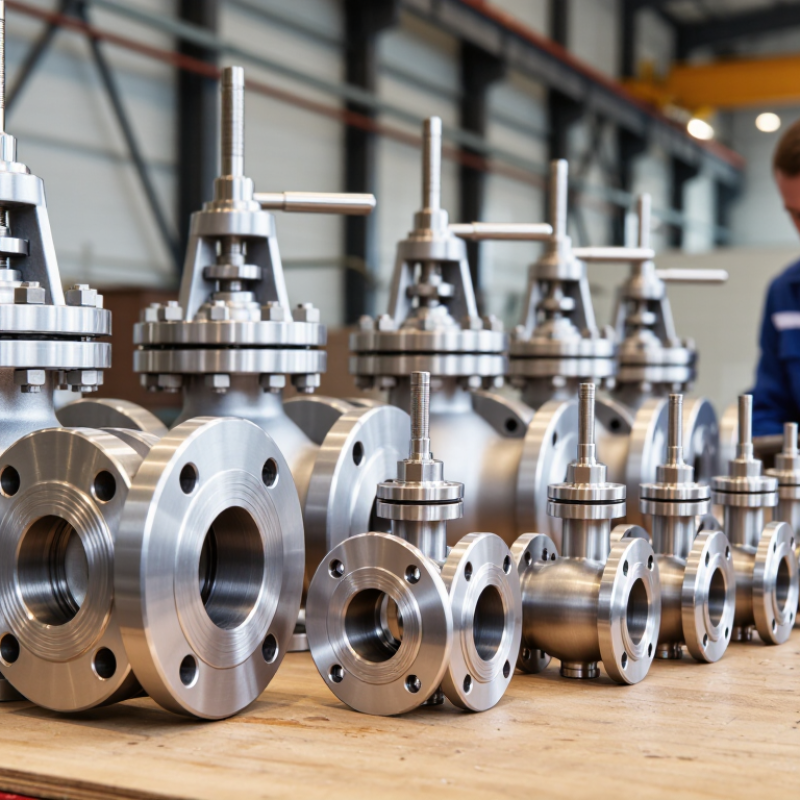
Global buyers evaluate Weld Ball Valve manufacturers against demanding pipeline and plant requirements. The International Energy Agency’s Electricity 2024 report recorded 2.2% growth in global electricity demand in 2023 and projected average annual growth of 3.4% for 2024–2026. This is useful infrastructure context, not a direct measure of valve sales. Still, it signals why dependable flow-control equipment matters across expanding energy systems.
A welded-end ball valve can reduce potential leak paths at flanged connections, but design details matter. Buyers should compare pressure and temperature ratings, body and trim materials, bore design, seat type, welding-end dimensions, and fire-safe or emissions qualifications where specified. Ask manufacturers for applicable standards, inspection records, material traceability, and clear test documentation. API 6D and ISO 5208 may be relevant, depending on the application and project specification. Check the exact scope rather than relying on a logo or broad claim.
The manufacturers featured in this guide serve different markets and project needs. Some emphasize pipeline service; others focus on compact designs, custom materials, or regional support. A catalog is not proof. Request technical data, delivery details, and references for comparable service conditions. Comparisons can be messy, especially when product descriptions use similar terms for different configurations. No single supplier is best for every project. Careful review helps global buyers shortlist credible options and identify questions to resolve before procurement.
A welded ball valve uses end connections designed for welding into a pipeline, reducing the number of bolted joints around the body. Inside, the main choice is full-bore or reduced-bore construction.
A full-bore valve has an opening close to the pipe’s internal diameter. This helps limit flow restriction and can allow cleaning tools or inspection pigs to pass through, when the system is designed for them.
A reduced-bore valve has a smaller opening through the ball. It is often lighter and may cost less, but the narrower passage can increase pressure loss and fluid velocity. That difference matters in long runs, viscous service, or lines with frequent pigging.
Small details count. Compare the valve’s bore with the actual pipe schedule, not just its nominal size. Also check pressure rating, temperature range, seat material, and operating torque against the service conditions. During installation, qualified welders should follow the valve maker’s procedures, with suitable heat control to protect internal components. In practice, selection can be less tidy than a catalog chart suggests; verify the flow calculation and maintenance needs before choosing.
For global buyers comparing top welded ball valve manufacturers, ASME B16.34 pressure classes offer a useful starting point. Classes 150, 300, 600, 900, 1500, and 2500 describe rating categories, not pressure values in psi. Not a psi value. The allowable working pressure depends on the valve’s material group and operating temperature. A Class 600 valve, for example, may have a lower pressure limit at elevated temperature than at ambient conditions.
Check the pressure-temperature table for the exact body material and service temperature. Then confirm that the valve’s end connections and construction match the specified rating. A welded body does not, by itself, establish suitability for every pressure class. Ask for the applicable design documentation and pressure-test records. That detail is easy to miss when quotations list only a class number.
Real operating conditions matter, too. Consider pressure surges, frequent cycling, and the fluid’s temperature—not just steady-state line pressure. Verify seat materials and sealing requirements against the process conditions. A rating chart is not the whole story. Even experienced teams can overlook the effects of temperature changes or installation loads. Clear documentation helps buyers compare suppliers on equivalent technical terms.
Illustrative pressure-temperature ratings for ASTM A216 Grade WCB (Material Group 1.1) at 100°F (38°C).
At this reference temperature, the listed pressure rating rises with the class designation. Class numbers are not pressure values; allowable ratings vary by material and temperature. Confirm the applicable ASME B16.34 edition, material, and service conditions when selecting a valve.
For global buyers, API 6D and ISO 17292 address different questions. API 6D covers pipeline and piping valves, including design, manufacturing, inspection, and testing requirements. ISO 17292 specifies requirements for metal ball valves used in petroleum, petrochemical, and natural gas industries. Ask manufacturers to identify the exact standard and edition applied to each valve. A certificate alone is not enough.
Look beyond paperwork. Review pressure-test records, material traceability, and inspection plans for the quoted size and pressure class. On a factory visit, check whether stamped heat numbers match material certificates and whether test gauges have current calibration records. Small gaps matter. API’s Monogram program applies to eligible products and facilities; buyers should verify its scope rather than assume every API-compliant product carries program authorization.
Quality systems help keep these checks repeatable, but ISO 9001 certification does not prove a valve meets API 6D or ISO 17292. The ISO Survey 2022 reported 1,265,216 valid ISO 9001 certificates across 189 countries, showing how widely the system is used—not whether a specific manufacturer performs well. Request recent audit findings, corrective-action evidence, and sample inspection records. Even strong systems can miss a rushed batch; that possibility deserves attention.
Welded ball valve sourcing reflects different regional strengths. East Asian manufacturers often offer broad size ranges, automated production, and competitive lead times. European suppliers are commonly associated with engineered designs for chemical, energy, and low-temperature service. North American makers often focus on pipeline specifications, traceable materials, and documented pressure testing. These are tendencies, not guarantees.
Demand shapes these offerings. The International Energy Agency’s Gas Market Report, Q1-2024, put global LNG trade at about 401 million tonnes in 2023, roughly 2% above 2022. That growth supports continued demand for valves used in gas processing and export infrastructure, including welded designs where fewer body joints can reduce potential leak paths. Still, LNG service needs careful review: temperature range, seat materials, fire-safe testing, and end connections matter more than a supplier’s regional label.
Ask for the applicable pressure-temperature ratings, material certificates, welding procedure qualifications, and test records. Check whether the valve is full-bore or reduced-bore; the difference affects flow and pigging access. A polished brochure is not enough. I would also compare delivery promises against actual inspection capacity—a detail buyers sometimes overlook, and one that can make the schedule less tidy than expected.
Top Weld Ball Valve Manufacturers for Global Buyers
Global Buyer Checklist: Testing, Traceability, Materials, and Delivery
Global buyers should assess more than price when sourcing welded ball valves. A credible supplier can explain its inspection steps and provide records for each order. Ask for pressure-test reports that identify the test conditions and acceptance criteria. Check weld-end dimensions, surface finish, and any specified non-destructive examination. Small details matter. A checklist helps, but it cannot replace clear answers when a requirement is unclear.
Traceability should connect the valve’s identification marks to material certificates and inspection records. Match heat numbers and material grades against the purchase specification, especially for the body, ball, and stem. Confirm that selected materials suit the stated temperature, pressure, and service conditions. The paperwork can look complete while one detail remains unclear. Review it carefully. For delivery, confirm lead time, preservation, end protection, and packaging; exposed weld ends can be damaged before installation.
Tips: Request a sample document pack before approval. Compare valve markings with certificates and test reports. Clarify who handles any inspection hold points. Keep agreed delivery dates in writing, and allow time for document review. Schedules sometimes slip; early updates are more useful than polished assurances.
| Evaluation Area | What Buyers Should Specify | Evidence to Request | Verification and Acceptance Notes |
|---|---|---|---|
| Design and applicable standards | Valve type, pressure class, nominal size, end connections, design temperature, service, and the required design and testing standards. | Product datasheet, general arrangement drawing, design-standard declaration, and inspection and test plan. | API 6D is commonly specified for pipeline valves; ASME B16.34 covers pressure-temperature ratings, materials, dimensions, and requirements for many valve types. Confirm the edition and scope in the purchase order. |
| Pressure and seat testing | Shell-test and seat-test requirements, test medium, test pressure, duration, leakage criteria, and whether testing is witnessed. | Valve-specific test reports showing serial or heat identification, test conditions, results, and inspector sign-off where required. | API 598 and ISO 5208 are commonly referenced valve inspection and pressure-testing standards. The applicable standard, test values, and acceptance criteria should be agreed for the ordered valve and service. |
| Materials and service suitability | Body, ball, stem, seats, seals, bolting, and other wetted-part materials, selected for the fluid, pressure, temperature, corrosion, and operating conditions. | Bill of materials, material certificates, grade and condition details, and documentation for any specified coating or overlay. | Common body-material specifications include ASTM A216/A216M for carbon-steel castings and ASTM A351/A351M for corrosion-resistant steel castings. Specify the required grade; suitability depends on the actual service conditions. |
| Material traceability | Traceability requirements for pressure-containing parts and other critical components, from material receipt through finished-valve assembly. | Material test reports, heat or lot numbers, component marking records, and a traceability matrix linking components to each valve serial number. | Check that markings and certificates match the ordered material grades and that the traceability chain is complete. Specify certificate type and retention requirements in the order. |
| Weld quality and inspection | Where welding is used, define weld locations, qualified procedures, welder qualifications, inspection extent, and any post-weld heat treatment requirements. | Welding procedure and qualification records, welder qualification records, weld maps, inspection reports, and heat-treatment records when applicable. | Set the required examination method and acceptance criteria in the inspection plan. Nondestructive examination may include visual, radiographic, ultrasonic, magnetic-particle, or liquid-penetrant methods, as appropriate to the joint and specification. |
| Fugitive emissions | Whether low-emission performance is required, including the applicable test standard, valve configuration, test conditions, and acceptance class or limit. | Type-test report identifying the tested design, stem sealing arrangement, test method, and results. | ISO 15848-1 provides a classification system and type-testing procedures for fugitive emissions of industrial valves. Do not assume a test result applies to every size, material, or configuration. |
| Corrosive and sour service | Fluid composition and operating conditions, including relevant H₂S exposure, so material restrictions and hardness requirements can be assessed. | Material selection documentation, hardness results, and applicable compliance statements or test records. | For applicable oil and gas production environments, NACE MR0175/ISO 15156 addresses materials for resistance to sulfide stress cracking. Confirm the service environment and the specific requirements before ordering. |
| Functional and dimensional checks | Operating method, direction of operation, travel stops, mounting interface, face-to-face dimensions, and any actuator or accessory requirements. | Dimensional inspection report, functional test record, mounting-interface drawing, and accessory schedule. | Verify dimensions and interfaces against the purchase specification and approved drawings. Confirm actuator sizing against operating conditions, not nominal valve size alone. |
| Quality-system and inspection plan | Required quality-system credentials, purchaser hold or witness points, document review points, and inspection access. | Current quality-system certificates where required, project quality plan, inspection and test plan, and inspection records. | ISO 9001 certification concerns a quality-management system; it does not by itself certify a particular valve design or guarantee product performance. Verify certificate scope and validity independently. |
| Documentation package | Required documents and language, format, approval timing, and whether records must be supplied with the shipment or before dispatch. | Approved drawings, datasheets, material certificates, test reports, inspection records, operating and maintenance instructions, and final document index. | List required documents in the purchase order and document register. Agree how revisions, nonconformities, and final records will be controlled. |
| Delivery and export readiness | Required delivery date, shipping term, destination, packaging, preservation, marking, and any country-specific import or documentation requirements. | Production schedule, packing list, commercial invoice, shipping documents, preservation instructions, and dispatch notification. | Confirm the agreed Incoterms® rule and named place, shipment split policy, packaging suitability for transport and storage, and the process for reporting schedule changes. |
| Commercial and post-delivery support | Warranty scope, spare-parts availability, technical support, repair arrangements, and response expectations for nonconformities. | Written warranty terms, recommended-spares list, service contact details, and nonconformity or claims procedure. | Make support commitments, exclusions, and response arrangements explicit in the contract. Confirm that recommended spares match the delivered valve configuration. |
| Cookie | Duration | Description |
|---|---|---|
| cookielawinfo-checkbox-analytics | 11 months | This cookie is set by GDPR Cookie Consent plugin. The cookie is used to store the user consent for the cookies in the category "Analytics". |
| cookielawinfo-checkbox-functional | 11 months | The cookie is set by GDPR cookie consent to record the user consent for the cookies in the category "Functional". |
| cookielawinfo-checkbox-necessary | 11 months | This cookie is set by GDPR Cookie Consent plugin. The cookies is used to store the user consent for the cookies in the category "Necessary". |
| cookielawinfo-checkbox-others | 11 months | This cookie is set by GDPR Cookie Consent plugin. The cookie is used to store the user consent for the cookies in the category "Other. |
| cookielawinfo-checkbox-performance | 11 months | This cookie is set by GDPR Cookie Consent plugin. The cookie is used to store the user consent for the cookies in the category "Performance". |
| viewed_cookie_policy | 11 months | The cookie is set by the GDPR Cookie Consent plugin and is used to store whether or not user has consented to the use of cookies. It does not store any personal data. |