What Are the Top Types of Flange Accessories?
A flange joint can look simple: two raised faces, a gasket between them, and bolts tightened in a controlled pattern. Yet a small mismatch in material, dimensions, or installation can lead to leakage, vibration, or costly downtime. Choosing the right Flange Accessory is therefore a practical engineering decision, not a catalog detail.
ASME B16.5 provides a key reference for pipe flanges and flanged fittings, covering NPS ½ through NPS 24 and pressure classes from 150 to 2500, subject to material and temperature limits. For larger sizes, ASME B16.47 addresses NPS 26 through NPS 60. These standards help buyers check compatibility, but they do not replace project-specific review. The ASME standards are the verifiable technical authority used here; no independently sourced quotation from a named flange-accessory expert was available, so none is attributed.
The range of accessories extends beyond gaskets and bolts. Blind flanges, spectacle blinds, spacers, and insulation kits can each serve a distinct operating or maintenance need. A gasket that suits one service may not suit another. Details matter.
This guide compares the main types, their typical functions, and the questions engineers and procurement teams should ask before selection. It also flags a common gap: matching dimensions alone does not confirm suitability. Check the applicable standard, service conditions, and manufacturer documentation. A careful review can prevent an expensive mismatch at the joint.
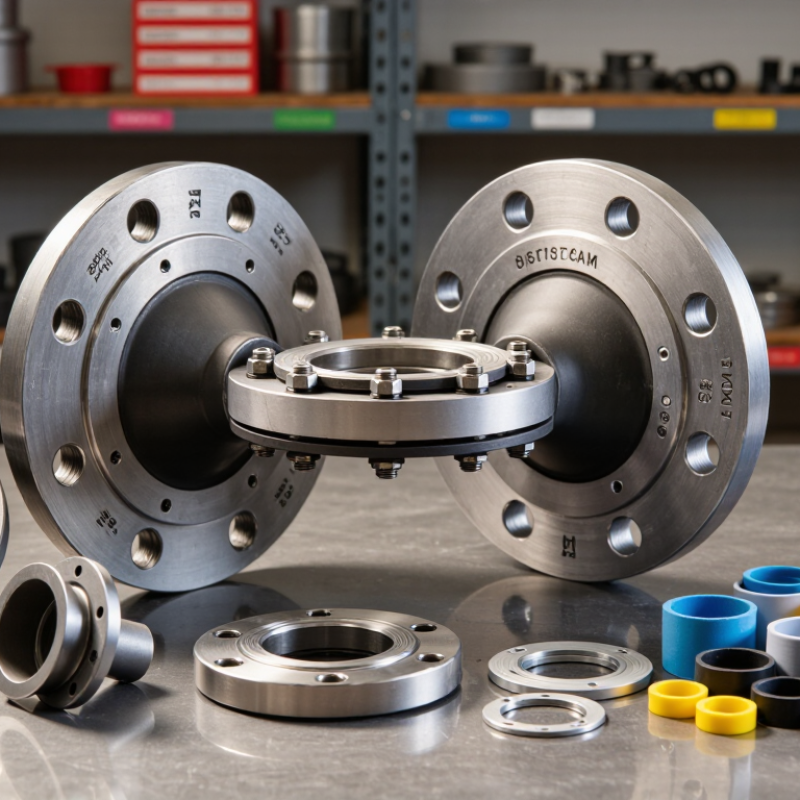
What Flange Accessories Are and Why They Matter
Flange accessories are the supporting parts that help a flanged joint connect and seal reliably. Common examples include gaskets, bolts, nuts, washers, and insulating kits. The flange faces meet, while the gasket sits between them and helps limit leakage. Bolts apply clamping force across the joint.
Small details matter. A gasket that does not match the flange dimensions or service conditions may fail to seal properly. Materials, pressure, temperature, and the fluid being handled all affect selection.
Tips: Check the flange size, facing, gasket material, and bolt requirements against the equipment documentation. Keep sealing surfaces clean and inspect them for scratches or corrosion. Don’t guess at bolt tightening; follow the specified procedure and use suitable tools.
These accessories matter because a joint is only as dependable as its fit and assembly. Uneven tightening can compress a gasket unevenly, while damaged threads can make the intended bolt load hard to achieve. Insulating kits may also help separate dissimilar materials where electrical continuity is a concern, but their use depends on the system design. It is easy to focus on the large flange and overlook a washer or gasket. That small oversight can deserve a second look during inspection. When requirements are unclear, consult a qualified engineer or the equipment manufacturer’s documentation.
How Flange Accessories Are Classified by Function
Flange accessories are best classified by the job they perform, not just their shape. Sealing components include gaskets, which sit between raised faces and compress under bolt load. A spiral-wound gasket suits many demanding services, while soft sheet materials may fit lower-pressure duties. Selection depends on fluid, temperature, pressure, and flange finish. A mismatch can cause leakage even when the flange itself is correctly rated.
Fastening accessories, mainly studs, nuts, and washers, create and maintain the clamping force. ASME B16.5 provides dimensional and pressure-class data for covered flanges, including classes 150 through 2500 and sizes from NPS 1/2 to 24. Those figures are not a substitute for checking material compatibility or the required bolt load. Small details matter.
Flow-control and access accessories include blind flanges, spectacle blinds, spacers, and orifice plates. Blinds close a line; spectacle blinds allow a visible change between open and closed positions. Orifice plates support flow measurement when installed with suitable fittings. ASME B16.5 is a useful technical reference, but it does not determine every accessory’s service suitability. That distinction is easy to miss. In practice, confirm the piping specification and operating conditions before choosing an accessory.
Gaskets and Sealing Rings: Types and Uses
Gaskets seal the small gap between flange faces, but material choice matters. Compressed nonmetallic sheet gaskets suit many low-to-moderate pressure services. PTFE resists many corrosive fluids, while flexible graphite handles higher temperatures when the service chemistry allows it. Spiral-wound gaskets combine metal windings with a softer filler, making them useful where pressure and temperature vary. Ring-joint gaskets fit machined grooves in demanding high-pressure connections. They need accurate alignment. ASME B16.20 covers metallic gaskets, while ASME B16.21 covers nonmetallic ones.
Sealing rings, including elastomeric O-rings, can work in purpose-designed flange grooves, especially in lower-pressure systems. Check fluid compatibility, temperature, flange finish, and compression before choosing; a ring that swells or takes a permanent set may leak. The U.S. Department of Energy’s Improving Compressed Air System Performance sourcebook reports that typical industrial systems can lose 20–30% of compressed air through leaks. That figure covers system leaks, not flange gaskets alone, but it shows why joint inspection matters. A clean flange face and even bolt tightening help. Perfect selection is not always tidy: service conditions can change, so maintenance records should capture the gasket material and observed wear.
Bolts, Nuts, and Washers: Essential Flange Fasteners
Bolts, nuts, and washers may look ordinary, but they hold a flange joint under pressure, heat, vibration, and changing loads. A bolt supplies clamping force; the nut keeps that force in the joint when tightened to the specified procedure. Small parts. Big consequences.
Washer use depends on the flange design and project specification. Where specified, a suitable washer spreads bearing load and helps protect the flange face beneath the nut. Use materials and coatings compatible with the service environment; mismatched metals can corrode, while unsuitable finishes may affect friction.
Installation quality matters as much as hardware selection. Check threads for damage, confirm bolt length leaves adequate thread engagement, and keep lubricant consistent with the approved torque method. Tighten in staged passes, following the specified sequence—often a cross pattern—to draw the flanges together evenly. There is no universal torque value. Joint type, gasket, material, lubrication, and operating conditions all influence the required preload. A practical note: crews sometimes focus on the wrench reading and overlook whether the flange faces are aligned. That check can be awkward in a tight space, and it is easy to rush. Record the hardware grade and tightening steps, then inspect the assembled joint as the maintenance plan requires.
What Are the Top Types of Flange Accessories?
Bolts or studs, nuts, and washers work together to secure flange joints. The chart shows the minimum tensile strength specified for ASTM A193 Grade B7 bolts by diameter range.
How the fasteners work: Bolts or studs provide clamping force, nuts secure the threaded fasteners, and washers help distribute load beneath a nut or bolt head. Values shown are minimum tensile strength requirements in ASTM A193/A193M for Grade B7; actual requirements depend on diameter.
Insulation Kits, Flange Guards, and Other Protective Accessories
What Are the Top Types of Flange Accessories?
Insulation Kits, Flange Guards, and Other Protective Accessories
Flange accessories help manage leakage risks, corrosion, heat loss, and worker exposure around pipe joints. Insulation kits place sleeves and washers between flange faces to reduce electrical continuity and galvanic corrosion. Correct sizing matters. A poorly fitted kit can compromise the joint, so confirm materials, temperature limits, and bolt dimensions before installation.
Flange guards form a visible barrier around a connection. Some designs help contain or redirect spray if a leak develops; they are not a substitute for sound gaskets, correct bolt loading, or routine inspection. Protective covers can also shield flanges from moisture, dust, and accidental impact during storage or maintenance. Choose guards that suit the service conditions, and keep inspection points accessible. A cover that hides a developing leak may create a false sense of security.
Tips: Check compatibility with the fluid, pressure, and temperature. Inspect kits and guards after maintenance. Small details matter. Record any fit issues; one size does not always suit every flange.


