Choosing a supplier for Linked Smoke Detectors involves more than comparing prices. Buyers need to understand how alarms connect, what happens when one unit detects smoke, and how reliably the system performs. Some products use wireless links; others connect through wiring or compatible control equipment. The details matter. A signal must reach other units without confusing users or creating avoidable maintenance work.
This guide to top linked smoke detector manufacturers in China considers product range, manufacturing experience, technical documentation, and customer support. It also highlights practical questions to ask before requesting samples: Can the supplier explain the connection method? Are test reports and certificates available for the exact model? Can the company support installation guidance and replacement parts? A polished brochure is not proof. Specifications and supporting documents deserve careful review.
No single ranking fits every project. A property developer may value consistent supply and straightforward installation, while a distributor may focus on private-label options and responsive service. Even a capable manufacturer may not suit every market or building type. Readers should confirm product details directly, test representative samples where practical, and check that stated approvals apply to the models they plan to purchase. This comparison offers a starting point, not a substitute for technical evaluation.
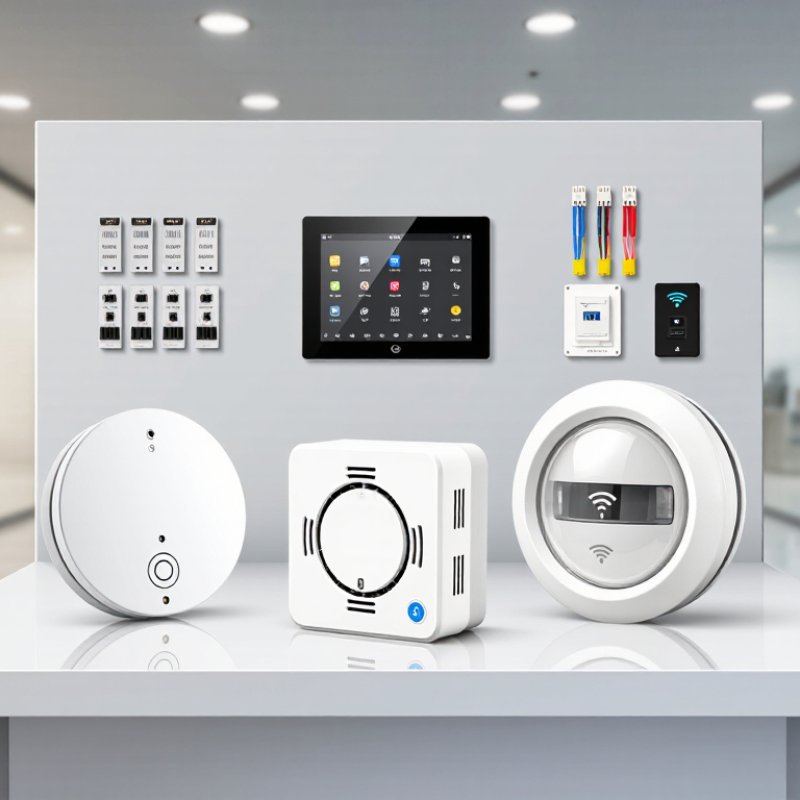
Linked smoke detectors are units that communicate so an alarm in one area can alert people elsewhere. Each detector still senses smoke locally, usually through an optical or ionization sensing chamber. When smoke reaches its sensor, that unit sounds and sends a signal to connected detectors.
The connection may use wiring or a radio link. In a two-storey home, smoke detected near the kitchen could make alarms upstairs sound too. This shared warning can matter when a closed door or distance muffles the original alarm.
Some systems also identify the unit that triggered; others simply sound together. Check the product specifications rather than assuming.
Still, linked alarms are not magic. A weak battery, poor wireless signal, or unsuitable placement can affect performance. Test every unit and confirm that the others respond, following the maker’s instructions. Keep detectors away from cooking fumes and dusty corners, where nuisance alarms may become frustrating. People sometimes disable an alarm after repeated false alerts. That reaction is understandable, but it leaves a gap; adjusting placement is usually a better thing to investigate.
Interconnected smoke detectors use sensors, communication links, and coordinated alarms to provide warning across several rooms. Many models use photoelectric sensing, which detects smoke particles entering a small optical chamber. A light source and receiver monitor changes inside it. Dust can affect readings, so a well-designed chamber helps reduce nuisance alarms without ignoring real smoke.
When one detector senses smoke, it sends a signal to linked units through a wireless network or wired connection. The alarms can sound together, making the alert easier to hear behind a closed bedroom door. That matters at night. Useful features include low-battery warnings, connection-failure alerts, and a test button that checks the alarm and communication system. Some units also report which detector triggered the alert, helping people locate the source faster.
Reliability depends on more than the sensor. Radio signals can weaken behind thick walls, metal ducts, or large appliances, while depleted batteries may interrupt communication. These details are easy to overlook. For manufacturers in China, careful assembly, consistent sensor calibration, and clear installation guidance matter as much as adding more wireless features. No system is perfect, and occasional testing remains necessary. A detector that is difficult to install or maintain may perform poorly in real homes.
Evaluating smoke detector manufacturers in China starts with the exact model, not a polished catalog. Ask which destination-market standard the product is tested against, such as EN 14604 or UL 217. Request current certificates and full test reports, then match model numbers, production sites, and tested configurations. Ask for evidence. A certificate alone cannot show how consistently each production batch performs.
Factory controls matter. Check whether the manufacturer records component suppliers, calibration dates, test results, and batch codes. Ask to see how units are tested for alarm response, battery life, and performance under heat and humidity. NFPA’s 2021 report, covering U.S. home fires from 2014 to 2018, found a death rate of 8.7 per 1,000 reported fires where working smoke alarms were present, compared with 15.5 where they were absent or not working. That makes real-world reliability more than a paperwork issue.
Request samples from regular production, not specially prepared units. Compare their labels, assembly, sound output, and test records. Check how quickly the supplier reports defects and provides corrective-action evidence. A neat audit file is reassuring, but it is not proof of long-term field reliability. I would still verify a sample independently; that adds time and cost, but may reveal gaps a factory tour misses. Details matter.
Leading linked smoke detector manufacturers in China compete on more than unit price. Their strength often lies in developing interconnected alarms, where one detecting unit triggers alerts across a home or small facility. That matters when a hallway alarm may go unheard behind a closed bedroom door. Good engineering should keep signals stable without making setup confusing. Keep it simple.
Product sheets tell only part of the story. Buyers can compare radio range through walls, backup battery behavior, alarm sound levels, and how devices reconnect after power loss.
Ask for test records, traceable production checks, and samples from regular production, not only handpicked units. A useful supplier explains limitations plainly and provides clear installation guidance.
For larger orders, check whether firmware versions stay consistent and replacement units work with existing networks. Get compatibility confirmed in writing.
Factory visits or independent inspections may reveal practical details: test stations, packaging controls, and staff training. Not every supplier will fit every project. A cautious trial can uncover weak radio links before many devices reach end users.
Linked smoke detectors suit apartments, hotels, schools, and warehouses where an alarm in one room must alert people elsewhere. In a two-storey home, a kitchen alarm should also be audible upstairs. NFPA’s 2021 Smoke Alarms in U.S. Home Fires report found a 55% lower death rate per 1,000 reported home fires in homes with smoke alarms. That is a strong signal, not a guarantee.
For Chinese suppliers, request test reports and certificates matching the exact model, sensor type, and production site. Relevant standards may include GB 4715 in China, EN 54-7 in Europe, and UL 268 in North America. These are not interchangeable. Confirm applicable market approvals, backup power, radio frequency, alarm synchronization, and compatibility with the building’s fire panel. Paperwork can look tidy; installation details often decide performance.
Choose detectors for the actual environment. Photoelectric sensing is often used where smouldering fires are a concern, while dust, steam, and airflow may affect performance. Check product guidance and local requirements rather than assuming one sensor fits every room. Test wireless coverage through concrete walls, and verify alerts after a power cut. Ask for audibility data, service intervals, event logs, and a clear replacement plan. Small details matter.
| Cookie | Duration | Description |
|---|---|---|
| cookielawinfo-checkbox-analytics | 11 months | This cookie is set by GDPR Cookie Consent plugin. The cookie is used to store the user consent for the cookies in the category "Analytics". |
| cookielawinfo-checkbox-functional | 11 months | The cookie is set by GDPR cookie consent to record the user consent for the cookies in the category "Functional". |
| cookielawinfo-checkbox-necessary | 11 months | This cookie is set by GDPR Cookie Consent plugin. The cookies is used to store the user consent for the cookies in the category "Necessary". |
| cookielawinfo-checkbox-others | 11 months | This cookie is set by GDPR Cookie Consent plugin. The cookie is used to store the user consent for the cookies in the category "Other. |
| cookielawinfo-checkbox-performance | 11 months | This cookie is set by GDPR Cookie Consent plugin. The cookie is used to store the user consent for the cookies in the category "Performance". |
| viewed_cookie_policy | 11 months | The cookie is set by the GDPR Cookie Consent plugin and is used to store whether or not user has consented to the use of cookies. It does not store any personal data. |