Get an instant quote
Get in touch Listen to our podcast

Blog

2026 Top PE Glove Types for Global Buyers

Global buyers comparing 2026 PE glove types need more than a low unit price. They need a glove that suits the task, fits comfortably, and arrives in dependable packaging. This guide explores clear and colored options, flat and embossed surfaces, and differences in thickness, sizing, and pack format. Small details matter. A textured surface can make a damp item easier to hold, while an overly loose cuff may slow routine work. The right choice depends on how gloves will be used, stored, and replenished.

A practical buying principle comes from fictional PE glove specialist Elena Morris, created for this overview: “Match the glove to the handling task, then verify the fit and finish with samples.” That reminder is useful because product descriptions cannot show every wrinkle, seam, or feel. Compare sample gloves under realistic working conditions. Check dimensions, material consistency, carton labeling, and packaging before approving an order. Ask suppliers to clarify specifications and confirm that samples match production goods. No chart can replace a hands-on check.

This overview is designed to help procurement teams assess Pe Gloves with clearer criteria, whether they are sourcing for food service, retail, cleaning, or general light-duty handling. Requirements differ between buyers and markets, so confirm applicable product and labeling expectations with qualified local advisers. A sensible shortlist balances usability, supply reliability, and cost. There is no perfect glove for every task. The best option is the one that performs consistently where it will actually be used.
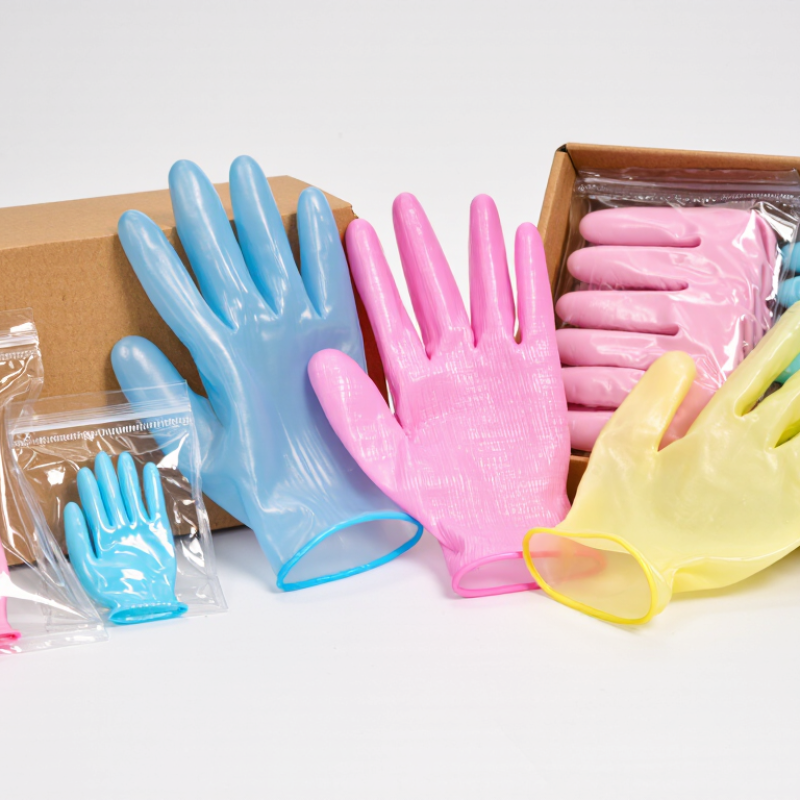
2026 Top PE Glove Types for Global Buyers

PE Glove Basics: LDPE, HDPE, and Typical 10–30 μm Film Thickness

2026 Top PE Glove Types for Global Buyers

PE Glove Basics: LDPE, HDPE, and Typical 10–30 μm Film Thickness

LDPE and HDPE differ in density and feel. ASTM D883 classifies LDPE at about 0.910–0.925 g/cm³ and HDPE at 0.941–0.965 g/cm³. LDPE gloves often feel softer and drape easily. HDPE gloves are typically crisper, with a firmer feel. Neither material is automatically the better choice; fit and task matter.

Disposable PE gloves commonly use film around 10–30 μm thick. At 10 μm, a glove can feel light and loose, especially when pulling it over damp hands. Thicker film may feel sturdier, but thickness alone does not prove puncture resistance or fit. ASTM D6988 describes methods for measuring plastic-film thickness. Ask suppliers for measured specifications and test samples, rather than relying only on nominal figures. I would check seams, too; they can disappoint.

Tips: Compare gloves at the same thickness and size. Check cuff opening, hand movement, and whether the film tears during ordinary donning. For incoming checks, agree on a sampling method and measurement locations before ordering.

Major PE Glove Types: Flat, Embossed, Cuff-Length, and Sleeve Styles

Flat PE gloves are lightweight and easy to put on, making them practical for brief handling tasks such as serving baked goods or sorting small items. Their smooth surface suits work where quick changes matter more than a firm grip. Embossed PE gloves have a textured pattern that can improve handling of slightly damp objects. The texture is not a substitute for a glove designed for high-risk or precision work. Grip matters.

Cuff length changes how much of the wrist and forearm is covered. Standard cuffs are convenient for quick tasks, while longer cuffs can help keep splashes off the lower forearm. Sleeve-style PE gloves extend farther up the arm and may suit cleaning or food-preparation tasks involving larger containers. More coverage can feel warm or cumbersome, so check the fit during realistic work movements. A glove that slips or tears easily is a poor choice, even when its coverage looks suitable.

Tips: Match the style to the task, not just the price. Test a sample with the items workers handle, including wet packaging if relevant. Check the product specifications for intended use and fit, and replace gloves when torn or contaminated. One detail is easy to overlook: oversized gloves can catch on objects and slow routine work.

How Glove Design Affects Fit, Dexterity, Tear Resistance, and Task Suitability

2026 Top PE Glove Types for Global Buyers

PE gloves are valued for quick changes and light-duty tasks, but design affects how well they work. A loose, oversized glove can snag on packaging and make small items harder to handle. A closer fit improves control, though PE gloves are not usually as precise as fitted gloves. Embossed surfaces may help with grip when handling dry, lightweight items. They do not guarantee secure handling of wet or slippery objects. Thicker film can resist small tears better, but may feel less flexible.

Tips: Match glove size to the wearer, then test the fit while picking up a small item. Check the cuff, seams, and film for weak spots. A brief trial is useful; a quick visual check can miss problems.

For food preparation, cleaning, or simple packing, task needs should guide the choice. A roomy glove may suit short, frequent changes, while a better-fitting option can help with repeated sorting. Tear resistance depends on film thickness, glove shape, and how the glove is used. Pulling sharply over long fingernails or rough edges can still cause damage. There is no perfect trade-off: extra thickness can reduce dexterity, and a snug fit can make donning slower. Buyers should assess samples under real working conditions before choosing.

2026 Top PE Glove Types for Global Buyers - How Glove Design Affects Fit, Dexterity, Tear Resistance, and Task Suitability

Glove type Typical construction Fit Dexterity Tear resistance Grip and handling Suitable tasks Key buying considerations
Flat polyethylene (PE) Thin, usually loose-fitting film glove made from polyethylene; commonly has a simple, smooth surface. Loose; often accommodates a range of hand sizes but may shift during use. Low; excess material can make precise handling difficult. Low; thin film can split or puncture when stretched or used against sharp edges. Limited, especially when the surface or hands are wet or greasy. Brief, low-risk food handling; deli counters; basic hygiene tasks; light product handling. Check film thickness, sizing, seam quality, and applicable food-contact requirements. Not intended for sharp tools or heavy-duty work.
Embossed PE Polyethylene film with a textured or embossed surface, often on one or both sides. Loose, similar to flat PE; embossing does not make the glove form-fitting. Low to moderate for simple tasks; still limited by loose fit and film thickness. Low to moderate depending on film thickness and manufacturing quality; embossing alone does not guarantee greater tear strength. Generally better handling than smooth PE for light, dry tasks; performance varies with the texture pattern and conditions. Food service and short-duration handling where a little more surface grip is useful. Compare texture, thickness, and fit samples. Do not assume embossing provides reliable grip on oily or wet items.
Cast polyethylene (CPE) Polyethylene film produced by a cast-film process; often textured and generally softer or more flexible than basic flat PE. Loose to moderately improved, depending on cut, sizing, and film specification. Low to moderate; flexibility can help with routine handling, but it remains a loose film glove. Typically moderate relative to very thin flat PE, but strongly dependent on thickness, seams, and use conditions. Textured versions can offer more control for routine handling than smooth film. Food preparation, cleaning, and other short-duration, low-risk tasks where a more substantial disposable PE-style glove is preferred. Confirm whether the glove is textured, its thickness, and whether its intended use matches local food-contact and hygiene rules.
Stretch polyethylene (stretch PE) Polyethylene film formulated or manufactured to stretch more than conventional thin PE film; product properties vary by specification. Can conform more closely than basic flat PE, though fit still depends on size and design. Moderate for simple tasks when the glove stays securely in place; not equivalent to a close-fitting examination glove. Variable; stretch may help the glove accommodate movement, but it does not by itself establish puncture or tear protection. Usually suited to light handling; surface texture and wet or oily conditions affect control. Light food handling and general short-duration tasks that benefit from more flexibility than standard flat PE. Request the product specification and sample. “Stretch” is not a standardized guarantee of durability or protective performance.
Thermoplastic elastomer (TPE) — related alternative Made from a thermoplastic elastomer rather than conventional polyethylene; some disposable styles are marketed as PE-style alternatives. Often closer-fitting and more elastic than basic PE, depending on pattern and sizing. Moderate; can support more controlled handling than a loose PE glove, but performance depends on fit and material thickness. Often more resilient than very thin PE for routine handling, but no general rating applies across all products. Varies by surface finish; test with the intended items and working conditions. Food service and light handling when a closer fit or increased flexibility is desired. It is a distinct material category, not simply another PE film type. Verify composition, food-contact status, and task suitability.

Selection note: These are general, qualitative comparisons—not standardized performance ratings. Actual fit, dexterity, and tear resistance depend on glove thickness, size, pattern, seams, manufacturing quality, and working conditions. Disposable PE-style gloves are generally intended for low-risk tasks; they should not be treated as cut-, puncture-, chemical-, or heat-protective gloves unless the specific product has been tested and rated for that hazard.

Food-Contact Checks: U.S. FDA 21 CFR 177.1520 and EU Regulation 10/2011

For global buyers, polyethylene (PE) gloves should be assessed by their intended food-contact use, not material name alone. In the United States, 21 CFR 177.1520 covers olefin polymers, including certain polyethylene materials, subject to specified conditions and limitations. It is not a blanket approval for every PE glove. Formulation, additives, and contact conditions matter.

For the EU market, Regulation (EU) No 10/2011 sets requirements for plastic materials and articles intended to contact food. Relevant checks can include migration limits and a Declaration of Compliance supported by appropriate documentation. Ask whether the evidence covers the glove’s actual food types, contact time, and temperature. Greasy or hot foods may call for different checks than brief contact with dry foods. Details matter.

A label alone is not proof. Request traceable product documentation and confirm that it matches the supplied glove and its intended use. A test report may cover specific conditions, not every possible kitchen task. Still, paperwork can be incomplete. Compare the stated scope with your handling process, and seek qualified regulatory advice when the conditions fall outside the documents.

2026 Top PE Glove Types for Global Buyers — Food-Contact Checks

Compare selected polyethylene specification limits in U.S. FDA 21 CFR 177.1520. These are extraction-test metrics, not universal glove pass/fail limits.

Under the cited FDA polyethylene specifications, the n-hexane-extractable fraction is limited to 5.5%, and the xylene-soluble fraction to 11.3%. In the EU, Regulation 10/2011 generally sets an overall migration limit of 10 mg/dm², with specific migration limits and conditions of use also applying. The test methods and units differ, so these values are not directly comparable. Verify the specific glove material, intended food, and contact conditions.

Buyer Comparison Criteria: Size, Film Gauge, Packaging, Testing, and Cost per Glove

2026 Top PE Glove Types for Global Buyers

Compare PE gloves by size, film gauge, packaging, test evidence, and cost per glove—not carton price alone. A loose cuff can slip while handling a wet tray; a tight one may tear during donning. Request palm-width and length measurements, plus tolerances, for each size. Film thickness is commonly stated in microns or mils. Confirm the measured range and test method: a higher gauge does not automatically mean better usability.

Packaging affects both hygiene and handling speed. Compare gloves per inner pack, carton, and pallet, and check whether packs dispense cleanly without pulling out several gloves at once. Ask for batch-specific inspection results, including thickness and physical-integrity checks. ISO 2859-1 describes attribute-sampling plans, which buyers can use when agreeing on lot inspection. For food-service use, the FDA Food Code 2022, section 3-304.15, says single-use gloves are for one task and should be discarded when damaged or soiled. It is a useful handling benchmark, not a universal rule.

Tips: Calculate landed cost per glove: total delivered cost divided by usable glove count. Include rejects and packing waste. Cheap cartons can disappoint. I would also keep a sample carton for line trials; paperwork alone cannot show how easily gloves tear during a busy shift.

Article Source:

CNC machining CAD export file formats

Put your parts in production today

Get an instant quote