Choosing a Fuel Tank manufacturer is a practical decision, not a popularity contest. Global buyers must examine safety records, material expertise, testing capacity, and delivery reliability. A polished website proves very little.
Professor John B. Heywood, an MIT automotive engineering authority, described the internal-combustion engine as “a mature technology with continuing opportunities for improvement.” That principle also applies to fuel storage. A modern Fuel Tank must contain fuel safely, resist vibration, control vapors, and perform across changing temperatures. Small design failures can create expensive recalls, damaged cargo, or dangerous leakage.
This guide introduces ten manufacturers serving international buyers. They represent different strengths, including steel tanks, aluminum systems, high-density polyethylene designs, and specialized commercial solutions. Some focus on passenger vehicles. Others support trucks, agricultural machinery, generators, marine equipment, or industrial fleets.
The evaluation considers certification practices, production scale, customization, quality control, export experience, and after-sales support. It also considers less visible details. Can the supplier provide material traceability? Can it repeat dimensions accurately across large orders? Does it test welds, pressure resistance, impact performance, and fuel compatibility?
No ranking is perfect.
Supplier performance can vary by factory, region, and project size. Buyers should verify current certificates, sample quality, lead times, warranty terms, and compliance requirements before signing contracts. Price matters, but an inexpensive Fuel Tank may become costly when fitting problems appear.
The strongest manufacturers combine engineering discipline with dependable communication. That combination helps global buyers reduce uncertainty, protect equipment, and select storage systems suited to real operating conditions.
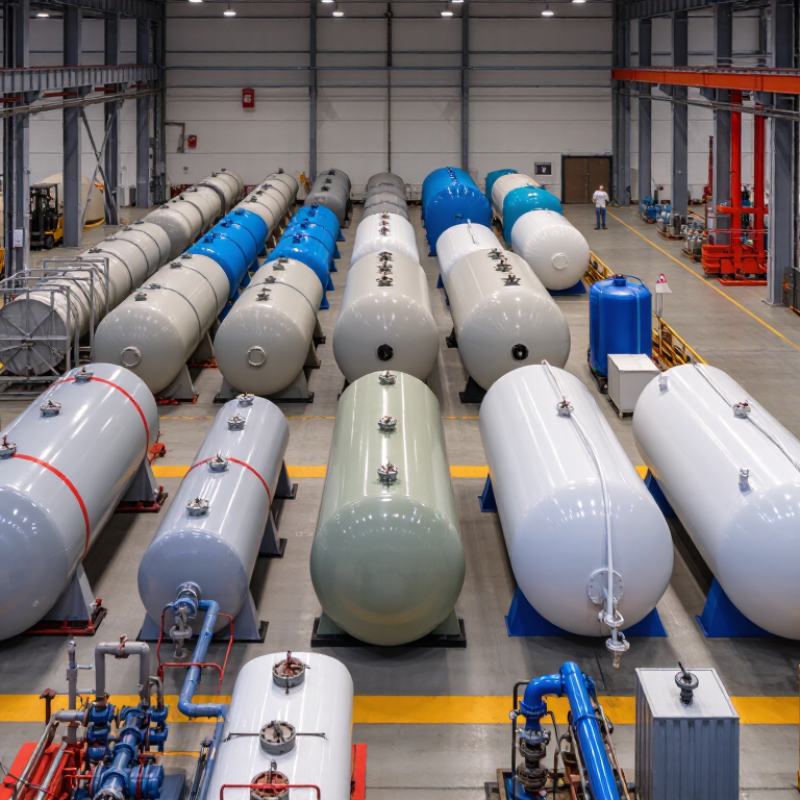
Fuel tank selection depends on the application, not only on capacity. Automotive tanks commonly use molded polymers or coated steel because they need low weight, impact resistance, and stable fuel containment. Heavy-duty trucks and construction equipment often require larger steel or aluminum tanks. Their exposed position demands stronger brackets, corrosion protection, and easy drain access.
Aerospace systems use flexible bladder tanks or specialized composite structures. These designs reduce weight and tolerate vibration. Marine tanks often use aluminum, stainless steel, or reinforced polymer, depending on fuel type and saltwater exposure. Stationary facilities use double-wall tanks with leak monitoring. According to the IEA Oil 2024 report, global oil demand was about 102 million barrels per day in 2023 and may reach 105.4 million by 2030. That forecast supports continued demand for safe storage across transport and industry. However, demand alone does not define the right tank.
Tips: Match the tank to temperature, pressure, fuel chemistry, and installation space. Check applicable standards, including UL 142, EN 12285, or equivalent local requirements. Ask for weld inspection records, material certificates, and pressure-test evidence. A practical mistake is comparing price before checking service access. Maintenance can cost more than the tank itself. I have also seen specifications overlook condensation and coastal corrosion. That deserves a second review.
Top 10 Fuel Tank Manufacturers for Global Buyers
Criteria for Ranking Leading Fuel Tank Manufacturers
A credible ranking starts with verified manufacturing experience, not attractive catalog images. We examine production history, tank applications, and documented performance in demanding environments. A manufacturer should provide material certificates, weld inspection records, pressure-test results, and clear quality procedures. These details reveal whether promises match workshop reality.
Safety and compliance carry significant weight. Strong suppliers design tanks around regional transport, storage, and installation requirements. Their engineers understand corrosion control, ventilation, grounding, and leak prevention. We also assess traceability, from steel batch records to final inspection labels. A reliable factory can explain each stage without hesitation.
Customer evidence matters too. We review delivery consistency, warranty handling, replacement support, and technical communication across time zones. Useful references include fleet operators, distributors, and maintenance teams with direct experience. Production capacity must be realistic, especially for custom dimensions or recurring orders. A large facility is not automatically better. Sometimes, smaller teams respond more carefully.
Ranking remains imperfect. Public information can hide delayed shipments or unresolved service cases. For this reason, independent audits, factory visits, and sample inspections help balance online claims. We also compare total ownership costs, not only the initial quotation. A cheaper tank may require earlier coating repairs, complicated fittings, or costly downtime. That difference becomes visible after installation.
This chart presents a practical buyer-side weighting model for evaluating leading fuel tank manufacturers. The criteria reflect commonly used procurement considerations, including regulatory compliance, material durability, leak prevention, production capability, delivery reliability, customization, and after-sales support. The percentages represent the relative importance of each criterion and total 100%.
Top 10 Fuel Tank Manufacturers Serving Global Buyers
Selecting among the top ten fuel tank manufacturers requires more than comparing prices. Global buyers should examine production experience, material quality, and documented testing procedures. Reliable manufacturers explain tank capacity, wall thickness, coating systems, and operating limits clearly. They also provide drawings that match the final installation space.
Experienced suppliers usually support different transport methods, climates, and equipment types. Their tanks may require corrosion resistance for humid ports or reinforced frames for long-distance shipping. Strong quality systems include leak testing, weld inspections, pressure checks, and traceable materials. Export support also matters. Clear packaging plans, technical documents, and responsive communication reduce delays. Certification requirements vary by destination, so buyers should verify them before placing an order.
Tips: Ask for recent test records, installation photos, and a sample data sheet. Confirm outlet positions, mounting points, and cleaning access. Do not rely on capacity alone. A larger tank may create unnecessary weight or space problems. No shortlist is perfect. Even careful buyers can overlook maintenance access during early discussions. I would recheck every drawing before production, especially when several units use different vehicle or machinery layouts. Practical experience shows that small measurement errors can become expensive changes later. The best manufacturers remain transparent when a design needs revision.
Top 10 Fuel Tank Manufacturers for Global Buyers
The leading high-volume manufacturer focuses on OEM-grade tanks, automated welding, and traceable quality checks. Its main markets include North America and Europe. A rotational-molding specialist produces lightweight polyethylene tanks for agricultural machinery, utility vehicles, and off-road equipment. A steel fabrication expert serves heavy trucks, mining fleets, and construction vehicles with reinforced tanks and strong mounting brackets. An aluminum specialist targets marine engines and premium commercial vehicles, where corrosion resistance matters. A custom-production manufacturer supports low-volume fleets with laser-cut parts and flexible design changes.
A large industrial supplier makes tanks for generators, compressors, and mobile equipment. Its strength is capacity planning and stable delivery across regional markets. A composite-tank producer serves customers needing low weight and improved chemical resistance. An aftermarket manufacturer supplies replacement tanks for older trucks and buses, with broad fitment coverage. A motorcycle-focused producer emphasizes compact shapes, vibration control, and smooth internal coatings. The tenth manufacturer integrates tanks with level sensors, fuel lines, and vapor-management components for modern vehicle platforms. These profiles sound clear, but real performance still depends on testing and installation quality.
Tips: Request material certificates and pressure-test records. Check mounting points, temperature ratings, and delivery history. Confirm local compliance before ordering. Do not trust a low price alone. A supplier may look capable online, yet its field support can be weak.
Global buyers should compare fuel-tank suppliers as risk partners, not catalog sellers. The IEA’s Oil 2024 report projects global oil demand will reach 105.4 million barrels per day by 2030. That scale increases pressure on storage safety, delivery continuity, and lifecycle support. Ask each manufacturer for material certificates, weld maps, leak-test records, coating specifications, and serial-level traceability. Require evidence against applicable standards, such as ISO 9001, ISO 3834, API 650, or local fire codes. Standards alone are not proof. Review recent audit findings, corrective-action closure, and independent inspection records.
Build a weighted comparison sheet before requesting final prices. Score engineering depth, material quality, testing capacity, customization control, spare-part availability, warranty terms, and response time. The World Bank’s Logistics Performance Index 2023 assesses customs, infrastructure, shipment quality, logistics competence, tracking, and timeliness. Use those dimensions when checking export readiness. Request a sample packing plan, named freight responsibilities, and realistic lead-time data from the last twelve months. A factory tour helps, but it can become theater. Verify production logs and contact two comparable customers. The cheapest offer may hide coating failures, weak documentation, or costly site modifications. That uncomfortable possibility deserves a line in the evaluation. Buyers should test communication during quotation; delayed answers often predict delayed problem-solving. Some criteria remain subjective, and pretending otherwise weakens the decision.
| Rank | Anonymous Supplier Profile | Primary Tank Material | Typical Capacity Range | Main Applications | Manufacturing Processes | Common Compliance References | Leak-Test Capability | Indicative Lead Time | Best Fit for Global Buyers |
|---|---|---|---|---|---|---|---|---|---|
| 1 | Profile 01 – High-Volume Automotive Supplier | High-density polyethylene or multilayer plastic | 35–80 L | Passenger vehicles, light commercial vehicles | Blow molding, multilayer molding, automated assembly | ISO 9001, IATF 16949, applicable vehicle regulations | Automated pressure-decay and helium testing | 8–16 weeks for production programs | Large OEM programs |
| 2 | Profile 02 – Heavy-Duty Metal Tank Specialist | Aluminum or coated carbon steel | 100–500 L | Trucks, buses, construction equipment | CNC forming, MIG/TIG welding, robotic welding | ISO 9001, ISO 3834, vehicle and transport regulations | Hydrostatic and low-pressure air testing | 6–12 weeks after design approval | Commercial vehicle fleets |
| 3 | Profile 03 – Agricultural Equipment Supplier | Polyethylene or painted steel | 40–300 L | Tractors, harvesters, irrigation equipment | Rotational molding, sheet-metal fabrication, powder coating | ISO 9001, fuel-system safety requirements | Manual air-pressure test and dimensional inspection | 4–10 weeks for standard designs | Flexible mid-volume orders |
| 4 | Profile 04 – Off-Road and Recreational Vehicle Supplier | Cross-linked polyethylene or aluminum | 10–80 L | ATVs, utility vehicles, recreational vehicles | Rotational molding, thermoforming, welded fabrication | ISO 9001, applicable off-road vehicle requirements | Air-pressure decay and visual weld inspection | 5–12 weeks including tooling | Low-to-medium volume customization |
| 5 | Profile 05 – Industrial Generator Tank Supplier | Carbon steel, stainless steel, or double-wall steel | 200–10,000 L | Backup generators, power systems, industrial engines | Plate rolling, structural welding, coating systems | ISO 9001, UL 142 or equivalent local tank requirements | Hydrostatic, pneumatic, and interstitial-space testing | 8–20 weeks depending on capacity | Stationary fuel storage projects |
| 6 | Profile 06 – Marine Fuel Tank Fabricator | Marine-grade aluminum or stainless steel | 50–2,000 L | Workboats, leisure boats, marine auxiliary systems | CNC cutting, TIG welding, baffle installation | ISO 9001, relevant marine classification requirements | Pressure testing and weld-penetrant inspection | 6–14 weeks after approved drawings | Corrosion-sensitive marine use |
| 7 | Profile 07 – Replacement and Aftermarket Supplier | Coated steel, aluminum, or molded plastic | 30–180 L | Replacement parts for vehicles and machinery | Stamping, welding, corrosion-resistant coating | ISO 9001, applicable replacement-part regulations | Air-leak testing and fitment verification | 3–8 weeks for catalog parts | Fast replenishment and mixed SKUs |
| 8 | Profile 08 – Custom Engineering and Prototype Supplier | Aluminum, stainless steel, or engineered polymer | 5–500 L | Prototype vehicles, special-purpose equipment | 3D CAD development, CNC fabrication, additive tooling | ISO 9001 and project-specific technical standards | Documented pressure, vacuum, and dimensional tests | 2–8 weeks for prototypes | Complex designs and small batches |
| 9 | Profile 09 – Fleet and Municipal Equipment Supplier | Aluminum or galvanized and coated steel | 80–600 L | Buses, refuse trucks, utility fleets | Welding, modular fabrication, bracket integration | ISO 9001, fleet safety and transport requirements | Pressure-decay testing and coating inspection | 6–12 weeks for repeat orders | Durability and serviceability |
| 10 | Profile 10 – Export-Oriented General Fabricator | Carbon steel, aluminum, or polyethylene | 20–1,000 L | General machinery, agricultural and industrial equipment | Laser cutting, bending, welding, rotational molding | ISO 9001 and destination-market requirements | Batch pressure testing and final inspection records | 5–14 weeks depending on customization | Cost-sensitive international sourcing |
| Cookie | Duration | Description |
|---|---|---|
| cookielawinfo-checkbox-analytics | 11 months | This cookie is set by GDPR Cookie Consent plugin. The cookie is used to store the user consent for the cookies in the category "Analytics". |
| cookielawinfo-checkbox-functional | 11 months | The cookie is set by GDPR cookie consent to record the user consent for the cookies in the category "Functional". |
| cookielawinfo-checkbox-necessary | 11 months | This cookie is set by GDPR Cookie Consent plugin. The cookies is used to store the user consent for the cookies in the category "Necessary". |
| cookielawinfo-checkbox-others | 11 months | This cookie is set by GDPR Cookie Consent plugin. The cookie is used to store the user consent for the cookies in the category "Other. |
| cookielawinfo-checkbox-performance | 11 months | This cookie is set by GDPR Cookie Consent plugin. The cookie is used to store the user consent for the cookies in the category "Performance". |
| viewed_cookie_policy | 11 months | The cookie is set by the GDPR Cookie Consent plugin and is used to store whether or not user has consented to the use of cookies. It does not store any personal data. |