Top Foil Stamping Machines for Global Buyers
Global packaging and print buyers are searching for equipment that combines visual impact, repeatable quality, and measurable production efficiency. A modern Foil Stamping Machine can press metallic film onto cartons, labels, invitations, and premium book covers. The result is immediate: a gold logo catches light, while fine lettering remains sharp under inspection. However, attractive samples do not prove reliable performance.
Smithers’ packaging and print market reports identify premium finishes, brand differentiation, and shorter production runs as continuing industry priorities. Its analysis of global packaging trends also highlights automation, material efficiency, and consistent output. These factors matter when comparing machines across regions. A buyer in Germany may prioritise energy data and documentation. A converter in Southeast Asia may focus on speed, service access, and spare-part availability.
PMMI’s global packaging trend research similarly points toward connected equipment, flexible production, and reduced waste. That direction changes how buyers should judge foil stamping technology. Maximum stamping speed is useful, but only when registration remains stable. A machine producing 6,000 sheets per hour can still lose money if setup waste is excessive.
This guide examines leading Foil Stamping Machine options for global buyers. It considers stamping area, pressure control, heating stability, substrate compatibility, automation, safety features, and technical support. Manufacturer claims require careful checking. No ranking is perfect. Real factory trials remain essential, especially with textured paper, recycled board, and delicate films. Buyers should request sample tests, maintenance schedules, warranty terms, and total ownership costs before committing. Reliable equipment is not always the most expensive option. It is the machine that performs consistently on the materials and volumes your operation actually handles.
Understanding Foil Stamping Machines and Their Core Functions
Top Foil Stamping Machines for Global Buyers
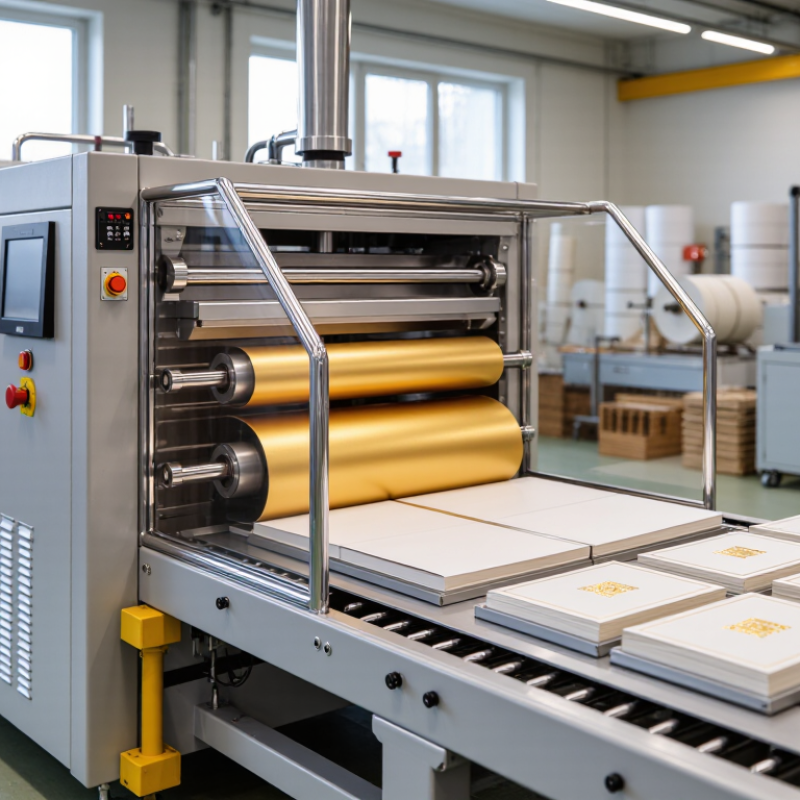
Understanding the machine’s core functions helps buyers compare equipment fairly. A foil stamping machine transfers a metallic or colored layer onto paper, cards, labels, or coated materials. Heat softens the foil, while a heated die and controlled pressure create the impression.
Timing matters. Excessive heat can blur fine lines or deform thin stock.
Reliable machines usually provide adjustable temperature, pressure, stamping speed, and dwell time. These controls support different substrates and foil types. Automatic feeding improves output, while registration sensors help align artwork accurately. A practical evaluation should also examine die-changing time, foil rewinding, waste control, and emergency-stop access.
In real production, small alignment errors can create expensive rejects. No machine is perfect. Operators still need training and careful setup.
Tips:
Test your actual materials before purchasing. Check the machine’s voltage, air requirements, working dimensions, and maintenance schedule. Request clear manuals, spare-part information, and documented safety compliance. A supplier’s technical response often reveals more than a polished specification sheet. Buyers should record test results, including temperature, pressure, speed, and finished appearance. This makes comparisons more reliable. One common mistake is choosing maximum speed too early. Stable feeding and consistent pressure usually matter more than impressive numbers.
Key Machine Types for Different Foil Stamping Applications
Top Foil Stamping Machines for Global Buyers
Key Machine Types for Different Foil Stamping Applications
Foil stamping machines differ by substrate, volume, and registration demands. Flatbed machines suit cartons, invitations, labels, and short production runs. They apply steady pressure across a defined area. Rotary machines work better with continuous web materials, including flexible packaging and high-volume labels. Their cylinders reduce handling time and support faster repeat production.
Pneumatic machines use compressed air for consistent pressure and relatively simple maintenance. Hydraulic models deliver stronger force for thick board, leather, and textured surfaces. Digital foil systems can personalize names, serial numbers, or short promotional runs without traditional dies. According to Smithers’ The Future of Global Packaging to 2028, global packaging demand is expected to exceed 1 trillion dollars in value. That scale keeps productivity important, but speed alone is not enough.
A 2024 Grand View Research analysis identifies packaging printing as a growing market, driven by customization and premium presentation. Buyers should check foil width, heating zones, die-change time, maximum sheet size, and registration tolerance. Ask for production samples. Test fine text, dark stocks, recycled board, and uneven surfaces. Small details matter.
No machine is perfect.
In practice, substrate variation can expose weaknesses that brochures hide. I would also inspect operator access, ventilation, spare-part availability, and local technical support. A low purchase price may become expensive after repeated setup errors. The best choice matches the application, not the most impressive specification.
Top Foil Stamping Machines for Global Buyers
Key Machine Types for Different Foil Stamping Applications
The chart compares representative throughput levels for major foil stamping machine types. Manual presses are suitable for short runs and customized work, while platen and rotary systems are better suited to continuous commercial production. Actual output depends on substrate, foil coverage, stamping area, setup time, and operator experience.
Essential Features Global Buyers Should Compare
Global buyers should compare foil stamping machines by measurable output, not catalog claims. According to PMMI’s 2024 Packaging Machinery Shipments Study, U.S. packaging machinery shipments reached approximately USD 11.3 billion in 2023. That scale reflects strong demand for reliable automation, but it also raises buyer expectations. Check maximum sheet size, stamping speed, pressure stability, and registration accuracy. A machine running 5,000 sheets per hour may slow sharply with complex artwork or heavier stock. Ask for test samples using your actual paper, foil, and design.
Foil efficiency deserves equal attention. The machine should support precise foil feeding, programmable gaps, and quick-change settings. These features reduce unused foil around fine text and solid coverage areas.
Smithers’ packaging market research projects continued global growth through 2028, increasing pressure to control material waste and production costs. Energy consumption, heating recovery, and standby power should appear in the technical documentation. Small differences matter across long production runs.
Service access is another practical test. Inspect heater replacement time, operator controls, spare-part availability, and remote diagnostics. Safety guarding and emergency-stop systems must meet the buyer’s local requirements. Do not overlook training quality. A sophisticated interface can still confuse a new operator at 6 a.m. I would also compare warranty terms carefully, because the cheapest quotation may hide expensive downtime. No comparison is perfect. Record the supplier’s test conditions, then repeat them independently before purchasing.
How to Evaluate Performance, Materials, and Production Capacity
Top Foil Stamping Machines for Global Buyers
How to Evaluate Performance, Materials, and Production Capacity
Choosing a foil stamping machine requires more than comparing catalog speeds. A reliable evaluation begins with repeatable production tests. Ask suppliers for cycle-time data under realistic pressure, temperature, and foil conditions. Watch the machine during startup and continuous operation. A stable cycle matters more than a dramatic maximum speed. Measure it repeatedly.
Test every intended substrate before purchasing. Paperboard, coated stock, laminated sheets, and textured materials can behave differently under heat. Check adhesion, edge sharpness, color consistency, and surface distortion. Operators should inspect both the first sheet and the hundredth sheet. I have seen excellent samples fail after temperature drift. That small defect can create costly waste. Record settings for each material, even when the process seems simple.
Production capacity should reflect actual working hours, not theoretical output. Calculate finished sheets per hour, including setup, foil changes, cleaning, and quality checks. Request a monitored run-off test with your own materials. Examine heater recovery time and feeding accuracy. A quoted speed may hide frequent stoppages. Review maintenance access, spare-part support, safety documentation, and operator training. I would leave room for human error, because perfect forecasts rarely survive a busy production floor.
International Buying Factors: Safety, Support, Cost, and Compliance
For global buyers, a foil stamping machine is not merely a heated press. Safety, service access, and documented compliance matter equally. Smithers’ packaging market outlook projects global packaging demand above 1 trillion units annually by 2028. That scale increases pressure on reliable finishing equipment. Buyers should request guarding details, emergency-stop testing, and thermal-control limits. ISO 12100 supports risk assessment, while IEC 60204-1 addresses electrical equipment safety. Certification still depends on the destination market.
Support becomes visible when production stops at 2 a.m. Ask for multilingual manuals, remote diagnostics, operator training, and stocked wear parts. Response-time commitments should appear in writing.
A machine may look advanced, yet poor documentation can create expensive hesitation. That is often overlooked.
Cost comparisons should include foil waste, die changes, energy use, maintenance, and installation. The PMMI 2024 economic outlook continues to highlight labor and supply-chain pressure across packaging operations. Automation can reduce repetitive handling, but it does not remove setup errors. Request sample runs using your actual substrate, artwork, and foil. Measure registration, cycle time, rejected sheets, and heat-up time. A low purchase price can become costly after months of downtime. I would also challenge optimistic supplier estimates. Real factory conditions are rarely as clean as demonstrations. Auditable test records, spare-part pricing, and local compliance documents provide stronger evidence than impressive specifications.


