Get an instant quote
Get in touch Listen to our podcast

Blog

What Are the Top CNC Gundrilling Machines in 2026?

Choosing a top CNC gundrilling machine in 2026 depends on the holes you need to produce, not just a machine’s headline specifications. A Cnc Gundrilling Machine must maintain tool alignment and stable cutting conditions through long, narrow holes. Even a small deviation can affect straightness, surface finish, and the fit of a finished component.

This guide compares machines through practical criteria: drilling depth, workpiece capacity, spindle performance, coolant delivery, control options, and available service support. These details matter on the shop floor. A rigid bed, reliable chip evacuation, and accessible maintenance points can save time during demanding production runs. Yet a high-pressure coolant system or advanced control is not automatically the right choice for every workshop. Not always.

The strongest option depends on material, hole diameter, production volume, operator experience, and budget. A machine suited to repeat orders in steel may be excessive for occasional work in softer materials. Published specifications are useful, but they cannot replace a careful review of sample parts, setup requirements, and support after installation. That deserves a second look.

In the sections ahead, we examine leading machine types and the features that distinguish them, while noting where trade-offs remain. No single model wins every application. Consider this a practical starting point, not a substitute for testing your own parts and confirming requirements with a qualified supplier.
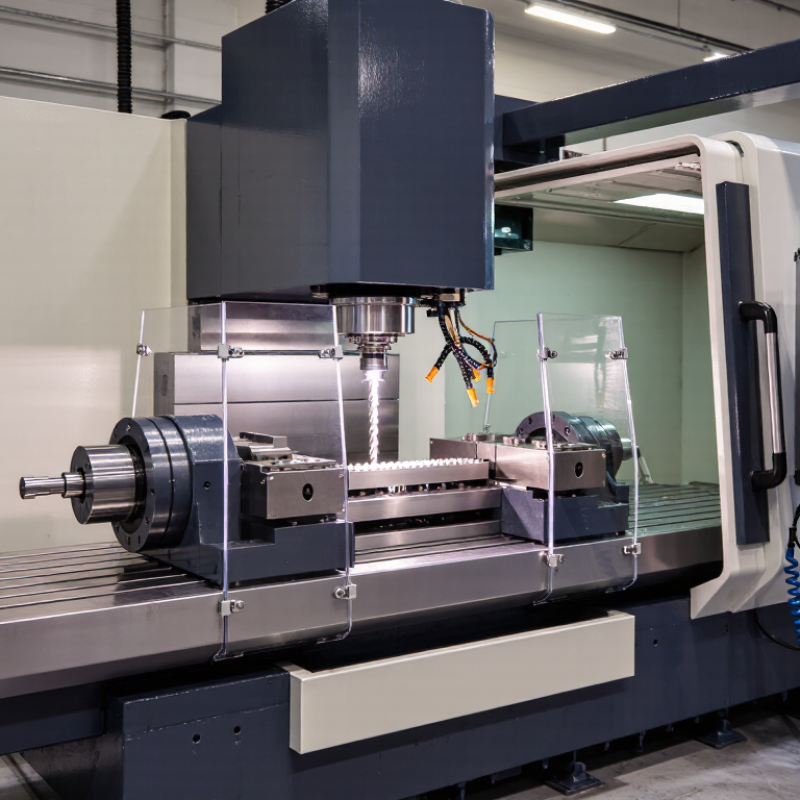
What Are the Top CNC Gundrilling Machines in 2026?

What CNC Gundrilling Machines Do and How They Work

CNC gundrilling machines are built to make deep, narrow holes with controlled position and a smooth, consistent bore. Unlike a standard twist drill, a gun drill typically has one cutting edge and a long, slender body. Coolant travels through a passage inside the tool, then carries chips back out along its external flute. The flow also helps manage heat. Small details matter.

During a cycle, the CNC system coordinates spindle rotation, tool feed, and coolant delivery. Depending on the machine and setup, either the workpiece or the drill may rotate. A rigid fixture holds the part steady, while guides support the drill near the entry point. For example, drilling a long steel shaft requires careful alignment; even slight runout can send the tool off course. Operators check tool condition and coolant flow rather than trusting the program alone.

The process can produce holes several times deeper than their diameter, but capability varies with material, tool geometry, and machine configuration. Feed rates that work in one alloy may cause chatter or wear in another. That part is easy to underestimate. CNC control improves repeatability, yet it cannot correct poor setup or a worn cutting edge. Test cuts and measured inspection remain useful, especially when straightness and diameter tolerance are critical.

Key Criteria for Comparing CNC Gundrilling Machines in 2026

What Are the Top CNC Gundrilling Machines in 2026?
Key Criteria for Comparing CNC Gundrilling Machines in 2026

Comparing CNC gundrilling machines starts with the hole, not the machine’s headline speed. Check the required bore diameter, depth, material, and straightness tolerance. A machine suited to a short steel part may struggle with a much longer, narrow bore. Review spindle speed and feed control across the actual operating range. Stable performance matters more than an impressive maximum figure.

Coolant delivery deserves close attention. Pressure, flow, filtration, and chip evacuation all affect drilling consistency and tool life. Ask how the machine handles the workpiece length and setup you use. Also compare workholding, control usability, guarding, maintenance access, and available technical support. Request a test cut using representative material, then inspect the bore for size, finish, and deviation. A specification sheet rarely tells the whole story. Even a careful comparison can overlook a detail in the setup.

Tips: Bring a sample drawing and material specification to supplier discussions. Record cycle time, tool wear, and measured bore results during trials. Check calibration and service requirements before purchase. Small differences in fixturing can change results, so treat one successful test as useful evidence, not a guarantee.

Leading CNC Gundrilling Machine Models and Their Features

The leading CNC gundrilling machines in 2026 are best compared by configuration, not by a single ranking.

A single-spindle deep-hole model suits precise, low-volume work, such as drilling a straight 12-millimeter bore through a long steel shaft. CNC control manages feed, spindle speed, and tool position, while high-pressure coolant carries chips out through the drill. That matters. A stable bed and accurate alignment help limit bore wander, especially as hole depth increases.

Multi-spindle models can produce several holes in one setup, reducing handling time for repeat parts. They need careful fixture design, though; a small alignment error can affect every bore. Compact machines suit smaller components and limited floor space, while larger travel and work envelopes accommodate long parts.

Some systems include automatic tool changes, probing, and coolant monitoring. These features can improve consistency, but they do not replace routine checks of drill wear and coolant condition. Not always. A machine with more automation may be a poor fit if the work mix changes often.

Buyers should compare usable drilling depth, diameter range, spindle capability, setup time, and service support against actual parts. One specification sheet rarely tells the whole story.

How Machine Types Match Different Drilling Applications

Matching a CNC gundrilling machine to the job starts with hole depth, diameter, workpiece shape, and production volume. A horizontal single-spindle machine can suit long shafts, where steady support and coolant flow help control a deep hole. For a compact hydraulic block with many repeated holes, a multi-spindle setup may reduce cycle time. Not always. Set-up and tooling costs can outweigh that gain on small batches.

Gun drilling is typically suited to smaller, deep holes; BTA systems are often selected for larger diameters and higher material removal. Grand View Research valued the global CNC machine market at $101.22 billion in 2023 and projected 9.5% annual growth through 2030. Deloitte and MAPI’s 2019 smart-factory report found that 86% of surveyed manufacturing executives expected smart-factory solutions to drive competitiveness within five years. Those figures point to rising interest in automation, but they do not tell a shop which machine to buy. A 300-millimeter steel shaft and a row of shallow plate holes need different setups. Compare chip evacuation, coolant delivery, fixture access, and changeover time against the actual part mix. A shop trial still matters; catalog depth-to-diameter claims can hide chip-control problems.

How to Choose a CNC Gundrilling Machine for Your Needs

Choosing a CNC gundrilling machine starts with the hole, not the brochure. Record diameter, depth, material, straightness, finish, and expected production volume. A 6 mm hole, 600 mm deep, demands different support from a wider hole of equal depth. Check the required depth-to-diameter ratio against demonstrated machine capacity. Then verify spindle range, drill guidance, and workpiece clamping. Small details matter.

Coolant delivery is a core selection factor. Ask for pressure and flow measured at the tool, plus filtration specifications—not just the pump’s rated output. Match these figures to the cutting tool and material, and request a trial using your actual workpiece. Inspect chip evacuation, hole deviation, and surface finish. A showroom demonstration may not reveal production problems.

Assess accuracy with documented tests and repeatable results. ISO 230-2 describes positioning-accuracy and repeatability tests for numerically controlled machine-tool axes; it does not, by itself, guarantee finished-hole quality. Also review service access, setup time, and control-system data. Deloitte’s 2024 Smart Manufacturing Survey reported that 86% of surveyed manufacturing executives expected smart-manufacturing solutions to improve competitiveness within five years. Connectivity can help track performance, but it cannot fix poor tooling choices. That distinction is easy to miss.

What Are the Top CNC Gundrilling Machines in 2026? — How to Choose a CNC Gundrilling Machine for Your Needs

Compare machine configurations rather than brands. The capability ranges below are general buying guides, not guaranteed specifications; actual limits depend on the machine, workpiece material, drill design, coolant system, and setup.

Machine Configuration Typical Hole Diameter Typical Depth Range Key Strength Best Suited For What to Check Before Buying
Micro-hole CNC gundrill Approximately 0.5–3 mm Often around 10–50 times the hole diameter; application-dependent Precise drilling of small, deep holes with suitable micro-drills and stable workholding Small components, precision passages, and fine-hole production Minimum drill diameter, spindle runout, vibration control, filtration, and coolant delivery at the tool
Compact single-spindle CNC gundrill Approximately 2–12 mm Commonly configured for holes tens of diameters deep; some applications require more Small footprint and focused capability for one-off work or compact parts Job shops, small components, and production with limited floor space Maximum workpiece length, axis travel, setup access, tool-change method, and achievable repeatability
General-purpose single-spindle CNC gundrill Approximately 3–25 mm Often around 50–100 times the hole diameter for suitable applications Flexible setup for a broad range of deep-hole jobs and workpiece sizes Mixed production, mold components, shafts, and precision-machined parts Workpiece envelope, spindle power and speed range, coolant pressure and flow, and support for long workpieces
Large-capacity CNC gundrill Approximately 10–40 mm or larger, depending on configuration Set by the required hole depth, machine travel, workpiece support, and tooling Handles larger workpieces and holes that need greater machine capacity Long shafts, heavy components, energy-sector parts, and large tooling Bed and workpiece capacity, usable stroke, steady-rest arrangement, loading method, and foundation requirements
Multi-spindle CNC gundrill Depends on spindle layout and tooling; commonly used for repeated small-to-medium holes Depends on the part and spindle configuration Can drill multiple holes in parallel to increase output on repeat jobs High-volume parts with consistent hole patterns and stable production demand Spindle spacing, independent or shared control, changeover time, coolant capacity, and production-rate validation
Combination deep-hole drilling machine Varies by process and machine setup Varies with the selected process, tooling, and workpiece Can accommodate more than one deep-hole process, such as gundrilling and BTA drilling Facilities processing a wide range of hole diameters or changing job requirements Process changeover, tooling compatibility, chip removal, coolant system requirements, and the cost of unused capability
CNC machining CAD export file formats

Put your parts in production today

Get an instant quote