In 2026, choosing CNC cutting tools means matching the tool to the material, machine, and cut—not chasing a fashionable coating. A small end mill cutting aluminum behaves differently from a carbide insert facing stainless steel. Heat, chip shape, tool rigidity, and coolant delivery all matter. So does the workholding. A good tool can still produce a poor finish when the setup flexes.
Machining educator John Saunders is associated with practical, setup-aware instruction. A concise paraphrase of that shop-floor lesson is: “Match the tool and cutting conditions to the real setup.” It is not a magic formula. It is a useful starting point. This guide compares common tool families, including end mills, drills, face mills, turning inserts, and saw blades. Each has strengths, limits, and a suitable place in the process.
The details matter. A sharp, polished flute may help evacuate aluminum chips, while a tougher geometry may better withstand interrupted cuts. Coatings can extend tool life, but only when they suit the material and operating conditions. And labels can blur: CNC routers, mills, and lathes use different tool forms, even when their jobs overlap. That distinction is easy to miss. The sections ahead explain what each tool does, where it performs best, and which selection details deserve a closer look. Because real shops vary, no ranking can replace a controlled test on your own machine.
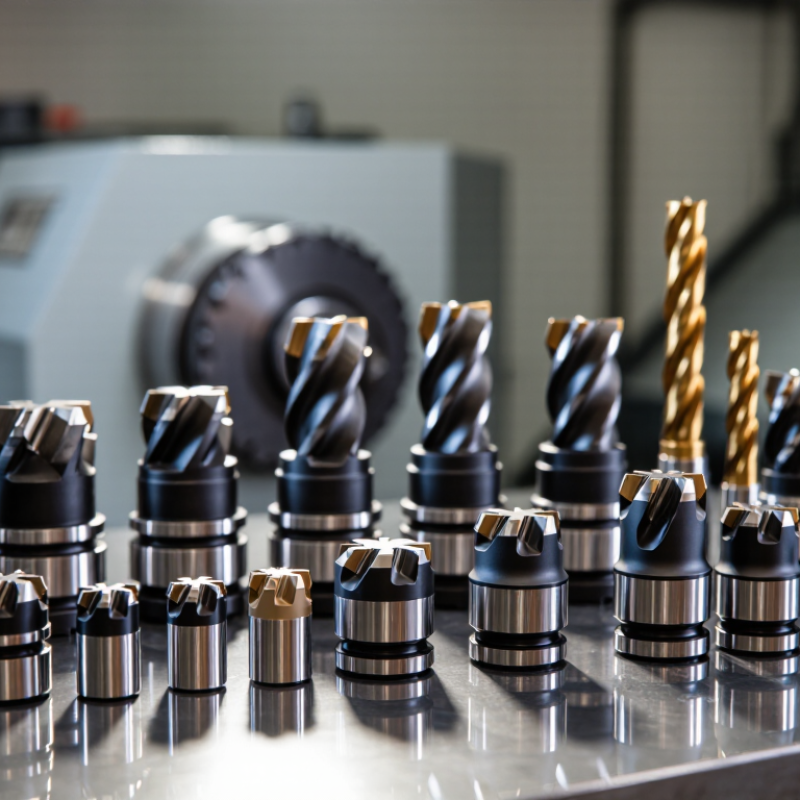
CNC cutting tools remove material by forcing a sharp edge into a moving workpiece. In milling, a rotating cutter’s teeth shear away small chips as the machine follows a programmed path. In turning, the workpiece rotates against a mostly stationary tool, creating round surfaces. Drills cut axially to make holes; reamers then refine their size and finish. Abrasive tools grind away tiny amounts for tighter tolerances. Chips matter. Their shape, color, and flow can reveal heat buildup or a worn edge, though they are not reliable signals on their own.
Tool geometry determines how cutting forces travel through the edge. Rake angle affects chip formation; clearance prevents the tool flank from rubbing the new surface. Carbide tools tolerate higher cutting speeds than many high-speed-steel tools, while coatings can reduce friction and wear. The right choice still depends on material, machine rigidity, and coolant. A stiff setup helps. Small vibration can quickly spoil a finish. Grand View Research estimated the global CNC machine market at USD 101.22 billion in 2023 and projected 9.4% annual growth from 2024 to 2030. That forecast signals expanding CNC use, not a guarantee that any single tool type will suit every job. Real machining often needs a test cut, and published speed ranges may need adjustment for actual conditions.
The top types of CNC cutting tools in 2026 still depend on the material, machine, and job. End mills are versatile choices for slots, pockets, and curved profiles. A four-flute carbide end mill can leave a clean wall in steel, but too much heat may shorten its life. More flutes are not always better.
Drills make round holes, while reamers refine them when a closer fit is needed. Face mills remove material across broad surfaces; their replaceable inserts can reduce tool-change time. For turning, indexable inserts cut rotating workpieces and suit repeat production. The small details matter. Insert shape, coating, and edge condition affect both finish and tool life.
Waterjet and laser cutting heads handle sheet materials without conventional milling contact. They can be useful for thin stock, though edge quality and material thickness still guide the choice. In practice, start with the workpiece and required tolerance, then check the machine’s rigidity and coolant setup. Watch the chips. Long, tangled chips or a rough surface may signal poor cutting conditions, but they do not identify one cause by themselves. Tool selection takes testing. Real shops sometimes revise a setup after the first parts, and that is not failure; it is useful evidence.
| Tool Type | Typical CNC Process | Cutting Action | Common Workpiece Materials | Typical Applications |
|---|---|---|---|---|
| End mills | CNC milling | Peripheral and end cutting; available with different flute counts and geometries | Aluminum, steel, stainless steel, cast iron, plastics | Slots, pockets, profiles, contours, and general-purpose milling |
| Face mills | CNC milling | Uses cutting edges around the face, commonly with replaceable inserts | Steel, cast iron, aluminum, and other machinable metals | Producing flat surfaces and removing material across broad areas |
| Drills | CNC drilling | Axial cutting with a rotating tool; options include twist, indexable, and solid-carbide drills | Aluminum, steel, stainless steel, cast iron, plastics | Creating round holes, including holes for subsequent finishing or fastening |
| Taps | CNC tapping | Form internal threads by cutting or, with forming taps, displacing material | Steels, aluminum alloys, and other materials suited to the selected tap type | Making internal threads in pre-drilled holes |
| Reamers | CNC hole finishing | Removes a small amount of material from an existing hole | Steel, aluminum, cast iron, and other machinable materials | Improving hole size consistency and surface finish after drilling |
| Boring tools | CNC milling or turning | Enlarges and finishes an existing hole with a single-point or multi-edge tool | Steel, stainless steel, cast iron, aluminum | Adjusting internal diameters and correcting hole alignment or finish |
| Turning tools and inserts | CNC turning | Single-point cutting as the workpiece rotates; often uses replaceable inserts | Steel, stainless steel, cast iron, aluminum, titanium alloys | Facing, straight turning, taper turning, and external profiling |
| Grooving and parting tools | CNC turning | Narrow cutting edge forms grooves or separates a workpiece | Steel, stainless steel, aluminum, and other turnable metals | Cutoff operations, external grooves, and face grooves |
| Thread mills | CNC milling | Moves along a programmed helical path to machine threads | Steel, stainless steel, aluminum, and many machinable alloys | Internal or external threads, especially where CNC interpolation is suitable |
| Slitting saws | CNC milling | Thin circular cutter removes material around its periphery | Aluminum, steel, stainless steel, and other machinable metals | Narrow slots, kerfs, and cutoff-style milling operations |
Tool suitability depends on the workpiece material, machine capability, workholding, tool geometry, and cutting conditions. The categories above describe common CNC applications rather than a ranking of performance.
CNC cutting performance starts with the tool material. High-speed steel tolerates impact and suits modest speeds, while carbide stays hard at higher temperatures and supports faster cutting. The trade-off is brittleness: a carbide end mill can chip if the setup vibrates or the workpiece is interrupted. It happens.
Geometry shapes how the tool enters and clears the cut. A high-helix end mill can lift chips efficiently from softer metals, but may pull thin parts upward. Drills need suitable point geometry to center cleanly and reduce wandering. Insert shape also matters: a sharp edge can lower cutting forces, while a stronger edge may last longer in roughing. Neither choice is universal.
Coatings can reduce friction, resist heat, or limit wear, depending on the process. A heat-resistant coating may help when cutting steel at sustained speeds, but it will not fix poor chip evacuation. Match the coating to the workpiece, coolant, and cutting temperature. Watch the chips and inspect the edge under good light. A bright, smooth finish is useful evidence, though not proof of optimal tool life. Real machining often involves compromises, and even a well-chosen tool may need adjustment after the first test cut.
End mills handle many pocketing, slotting, and profile-cutting jobs. Flat-end mills leave square corners and suit shoulder features in aluminum or steel. Ball-nose mills create smooth contours on molds and curved surfaces. Corner-radius mills are useful when a sharp edge would wear too quickly. The choice still depends on tool reach and machine rigidity.
For holes, drills create openings, while reamers bring a pre-drilled hole closer to its specified size and finish. Taps cut internal threads; thread mills offer another option when a shop needs flexibility across several hole diameters. Keep the cut stable. A tool chart can mislead when the real setup includes a long tool, weak clamping, or chatter.
Turning tools work on lathes to face, groove, and shape rotating parts. Their inserts are chosen to suit the material and operation, not just the part’s outline. Saw blades separate stock, while specialized cutters can machine narrow slots or delicate details. In practice, the boundary between tool types is not always neat; a capable cutter may still leave poor results if feeds, speeds, or chip evacuation are overlooked.
What Are the Top Types of CNC Cutting Tools in 2026?
How to Choose the Right CNC Cutting Tool for the Job
Choosing a CNC cutting tool starts with the material and the operation, not its popularity. End mills suit many slotting and contouring tasks, while face mills remove material across broad surfaces. Drills make holes; reamers improve their accuracy and finish. For hard materials, a carbide tool may resist wear better than high-speed steel, but it can be less forgiving of vibration.
Check the machine’s spindle speed, power, tool-holding system, and coolant setup before choosing. Then consider the cut: a deep pocket needs chip evacuation, while a thin workpiece may chatter under heavy pressure. Match the tool’s diameter and flute design to the feature and material. A test cut can reveal burrs, heat discoloration, or rough walls before a full run. Tool charts are useful, but they cannot predict every setup. Real shop conditions can be messy.
Tips: Start with the workpiece drawing and toolmaker’s cutting data. Secure the stock, inspect tool runout, and make a small trial pass. Watch the chips. Long, tangled chips may signal poor evacuation, though one sign alone rarely tells the whole story. Even a careful choice may need adjustment.
| Cookie | Duration | Description |
|---|---|---|
| cookielawinfo-checkbox-analytics | 11 months | This cookie is set by GDPR Cookie Consent plugin. The cookie is used to store the user consent for the cookies in the category "Analytics". |
| cookielawinfo-checkbox-functional | 11 months | The cookie is set by GDPR cookie consent to record the user consent for the cookies in the category "Functional". |
| cookielawinfo-checkbox-necessary | 11 months | This cookie is set by GDPR Cookie Consent plugin. The cookies is used to store the user consent for the cookies in the category "Necessary". |
| cookielawinfo-checkbox-others | 11 months | This cookie is set by GDPR Cookie Consent plugin. The cookie is used to store the user consent for the cookies in the category "Other. |
| cookielawinfo-checkbox-performance | 11 months | This cookie is set by GDPR Cookie Consent plugin. The cookie is used to store the user consent for the cookies in the category "Performance". |
| viewed_cookie_policy | 11 months | The cookie is set by the GDPR Cookie Consent plugin and is used to store whether or not user has consented to the use of cookies. It does not store any personal data. |