China’s injection molding sector includes manufacturers serving packaging, automotive, medical, electronics, and household-goods production. Choosing among them takes more than comparing machine prices. Clamp force, shot size, screw design, control precision, energy use, and local service all affect daily output. A machine that looks capable on a specification sheet may still struggle with a particular resin, mold, or cycle time.
John Bozzelli, an injection-molding consultant and educator, often emphasizes process understanding. A concise paraphrase of his practical message is: “Stable molding depends on understanding the material and process, not merely adjusting machine settings.” That distinction matters. Buyers should ask manufacturers for application-specific trials, clear acceptance criteria, operator training, and realistic spare-parts support. Watch the cycle. Inspect the molded part. Ask how the supplier handles faults after installation, not only how quickly it promises delivery.
This guide examines leading Injection Molding Equipment manufacturers in China through practical selection criteria, including machine range, automation options, technical support, and export experience. Company claims deserve verification. A polished catalog cannot show every service gap. Not always. The right choice depends on the product, production volume, budget, and support available at the factory. Some details are easy to overlook, and this comparison is a starting point—not a substitute for testing a machine against your own mold and material.
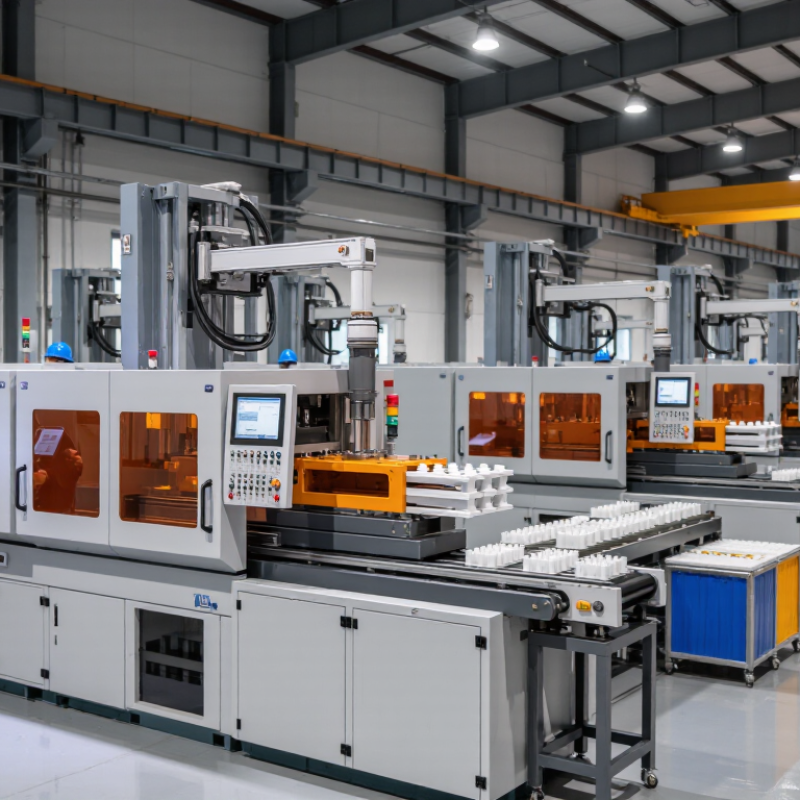
Injection molding equipment gives Chinese manufacturers a practical way to produce consistent plastic components at scale. A typical machine heats resin in a barrel, injects it into a closed mold, and holds pressure as the part cools. The cycle may take seconds or minutes, depending on part size and material. Small details matter. A stable melt temperature and controlled injection speed can reduce short shots, sink marks, and excess scrap.
Factories use hydraulic, electric, and hybrid machines for different production needs. Electric models can offer precise movement and lower energy use in suitable applications, while hydraulic systems often handle demanding clamping requirements. Neither choice works for every shop. Teams must consider mold dimensions, projected part area, resin behavior, cycle targets, and available floor space. On the factory floor, operators also watch material drying, cooling lines, and mold wear. A blocked water channel can quietly lengthen cycle time.
The equipment’s role extends beyond forming parts. Sensors and process records help technicians compare pressure, temperature, and cycle time across shifts. That evidence can make troubleshooting less dependent on memory. Still, a dashboard cannot explain every defect. Experienced operators may notice a faint change in machine sound or a rough edge before an alarm appears. That judgment is useful, but it should be checked against measurements and documented settings. There is no perfect setup, and production conditions can drift.
China’s injection molding equipment market is not a single, uniform supplier field. It is shaped by machine type, production scale, and customer needs. Standard hydraulic presses serve many general-purpose factories, while all-electric and hybrid models suit applications needing precise control or lower energy use. Large machines handle bulky parts; compact presses fit electronics and other small-component workshops. These categories help buyers compare options, but specifications and service capacity still vary widely.
The supply chain extends beyond machine manufacturers. Equipment makers source controls, screws, barrels, pumps, and clamping components from specialist producers before assembling and testing complete presses. Regional manufacturing clusters can make parts and technicians easier to find, though access differs by location. Sales may come through direct teams, distributors, or project integrators. A low purchase price can look attractive, but installation, mold compatibility, spare-part lead times, and operator training often shape the real cost. Details matter.
Tips: Request cycle-time data using your own material and mold, not just a showroom demonstration. Ask where service teams operate and which spare parts are stocked. If energy use or repeatability is unclear, request a measured trial before deciding.
Leading injection molding equipment manufacturers in China serve packaging, automotive, medical, and household-goods producers. Their product ranges may include hydraulic, all-electric, and hybrid machines. The right choice depends on the part, resin, production volume, and available floor space. A machine producing small caps has different needs from one molding a large housing. Details matter.
When comparing suppliers, review clamp force, shot capacity, tie-bar spacing, control functions, and energy use. Ask how each machine is tested before shipment, and request sample results for parts similar to yours. Check whether technicians can support installation, operator training, and spare-parts planning. A polished specification sheet is useful, but it cannot show every production challenge. Even capable manufacturers may recommend a machine that needs adjustment for a particular mold. That part deserves careful review.
Tips: Bring a mold drawing and resin data to discussions. Ask for a cycle-time estimate, then confirm its assumptions. Check references from comparable applications. If possible, inspect a running machine. Small details can change the result.
| Machine Class | Indicative Clamping Force | Typical Applications | Common Materials | Selection Considerations |
|---|---|---|---|---|
| Micro and small machines | Approximately 5–200 metric tonnes | Small precision components, connectors, caps, and compact housings | Common thermoplastics such as PP, PE, ABS, and nylon, subject to machine configuration | Check shot capacity, repeatability, mold dimensions, and whether the application requires micro-injection capability. |
| Medium-tonnage machines | Approximately 200–800 metric tonnes | Consumer-product housings, appliance components, containers, and general industrial parts | PP, PE, ABS, PS, PC, and engineering thermoplastics, depending on the screw and process setup | Match clamp force to projected part area and cavity pressure; also verify tie-bar spacing and mold-opening stroke. |
| Large-tonnage machines | Approximately 800–3,000+ metric tonnes | Large appliance panels, automotive interior and exterior parts, pallets, and sizeable containers | PP, PE, ABS, PC/ABS, and other materials selected for the part’s strength and environmental requirements | Assess platen size, mold weight limits, injection capacity, machine footprint, and factory power requirements. |
| Two-platen machines | Commonly available in medium-to-large clamping-force ranges | Large molds and applications where a compact machine layout is valuable | Material choice depends on the injection unit and application, as with other thermoplastic molding machines | Compare machine length, mold installation access, opening stroke, and the required clamping-force range. |
| All-electric machines | Available across a broad range, from small to medium-tonnage applications | Precision molding, clean production environments, and applications requiring consistent motion control | Typically selected for thermoplastic parts; specific material suitability depends on machine configuration | Compare repeatability, cycle requirements, installed power, maintenance needs, and total operating cost. |
| Vertical machines | Available in small-to-medium and specialized configurations | Insert molding, overmolding, and parts requiring convenient manual or automated insert placement | Material and insert combinations depend on the mold design and process requirements | Check table size, insert-loading method, operator access, safety guarding, and automation compatibility. |
Note: Clamping-force ranges are indicative industry categories, not fixed standards. Actual machine specifications and material compatibility vary by model, screw design, mold, and process.
Chinese injection molding equipment manufacturers differ mainly in engineering priorities. Some focus on compact electric presses for clean, repeatable production. Others build hydraulic machines for larger parts and higher clamping forces. The difference shows on the factory floor. Thin-wall packaging may require fast injection response, while a thick housing can depend more on stable pressure and controlled cooling. No machine fits every mold.
Product ranges vary, too. One supplier may offer standard machines in a limited set of clamp sizes. Another may cover servo-hydraulic, all-electric, and two-platen designs, with optional robots or take-out systems. More choices sound attractive. Yet integration quality matters more than catalog size. Ask for cycle-time data from a comparable mold, repeatability records, energy figures, and details on screw and platen dimensions. Check whether the controls provide process data your team will actually use.
Technology claims need practical checks. During a plant visit, watch a machine run continuously and inspect parts for flash or weight variation. Ask about maintenance, spare-part lead times, and commissioning support. A polished demo can hide awkward setup. One trial is not proof, either; resin, mold condition, and operator skill can change results. A comparison may still miss something, so assess the machine with your own part and production schedule.
When evaluating injection molding equipment suppliers in China, compare verified production results, not catalogue claims. Ask for a sample run using your resin, mold, and target cycle time. Record shot-weight variation, reject rate, and energy use per kilogram. Grand View Research estimated the global injection molding machine market at USD 10.14 billion in 2023. Its report projected 4.8% annual growth from 2024 to 2030. That market outlook signals demand, but it does not prove any supplier’s machine will fit your process. Numbers need context. Request test conditions and raw results.
Check machine specifications against your actual parts, including clamping force, injection capacity, tie-bar spacing, and control repeatability. Review maintenance access, spare-part lead times, operator training, and remote support response times. Ask how factory acceptance testing is documented, and confirm installation support before signing. ISO 20430:2020 sets safety requirements for injection moulding machines; ask for evidence that the proposed configuration addresses applicable requirements. Visit the factory if possible. Watch a machine run, inspect wiring and hydraulic connections, and speak with service staff—not only sales staff. One limitation of a checklist is that a polished demo can hide difficult mold changes or inconsistent support. Test your own tooling where practical.
Suggested evaluation weighting for a supplier comparison: prioritize process capability and quality systems, while also assessing machine performance, service, engineering support, delivery, and documentation. These percentages are an illustrative buyer-assessment framework, not measured market statistics; adjust them to match your project requirements.
| Cookie | Duration | Description |
|---|---|---|
| cookielawinfo-checkbox-analytics | 11 months | This cookie is set by GDPR Cookie Consent plugin. The cookie is used to store the user consent for the cookies in the category "Analytics". |
| cookielawinfo-checkbox-functional | 11 months | The cookie is set by GDPR cookie consent to record the user consent for the cookies in the category "Functional". |
| cookielawinfo-checkbox-necessary | 11 months | This cookie is set by GDPR Cookie Consent plugin. The cookies is used to store the user consent for the cookies in the category "Necessary". |
| cookielawinfo-checkbox-others | 11 months | This cookie is set by GDPR Cookie Consent plugin. The cookie is used to store the user consent for the cookies in the category "Other. |
| cookielawinfo-checkbox-performance | 11 months | This cookie is set by GDPR Cookie Consent plugin. The cookie is used to store the user consent for the cookies in the category "Performance". |
| viewed_cookie_policy | 11 months | The cookie is set by the GDPR Cookie Consent plugin and is used to store whether or not user has consented to the use of cookies. It does not store any personal data. |