Top Carbon Fiber Production Line Suppliers Worldwide
Carbon fiber is moving from niche aerospace use toward wind energy, automotive structures, pressure vessels, and hydrogen systems. The Fiber Year 2024 places global carbon fiber demand in the low hundreds of thousands of tonnes annually. Its analysis also shows continuing capacity expansion, especially across Asia and the Middle East. This growth increases the importance of selecting a capable Carbon fiber production line supplier. A promising factory is not automatically a reliable one.
The strongest suppliers provide more than furnaces and winding equipment. They integrate precursor preparation, oxidation, carbonization, surface treatment, sizing, tension control, and data monitoring. Each stage affects tensile strength, modulus, yield, and energy consumption. CompositesWorld market analyses repeatedly identify process consistency as a central challenge for commercial carbon fiber production. That point matters on the factory floor. A few degrees inside a stabilization oven can alter fiber performance across an entire spool. Small errors become expensive.
This guide examines leading suppliers worldwide through practical criteria. These include installed capacity, pilot-line experience, automation, after-sales support, commissioning records, and lifecycle energy performance. Publicly available research from the U.S. Department of Energy also highlights energy intensity as a major barrier to lower-cost carbon fiber manufacturing. Supplier claims still require careful verification. Some published capacity figures describe planned projects, not operating lines. That distinction is easy to miss. Buyers should request trial data, production references, and evidence of repeatable quality under comparable precursor conditions. No ranking can replace a factory visit, technical audit, and transparent cost model. Mistakes happen. Good suppliers make them visible early.
Carbon Fiber Production Lines: Definition, Functions, and Industrial Scope
Top Carbon Fiber Production Line Suppliers Worldwide
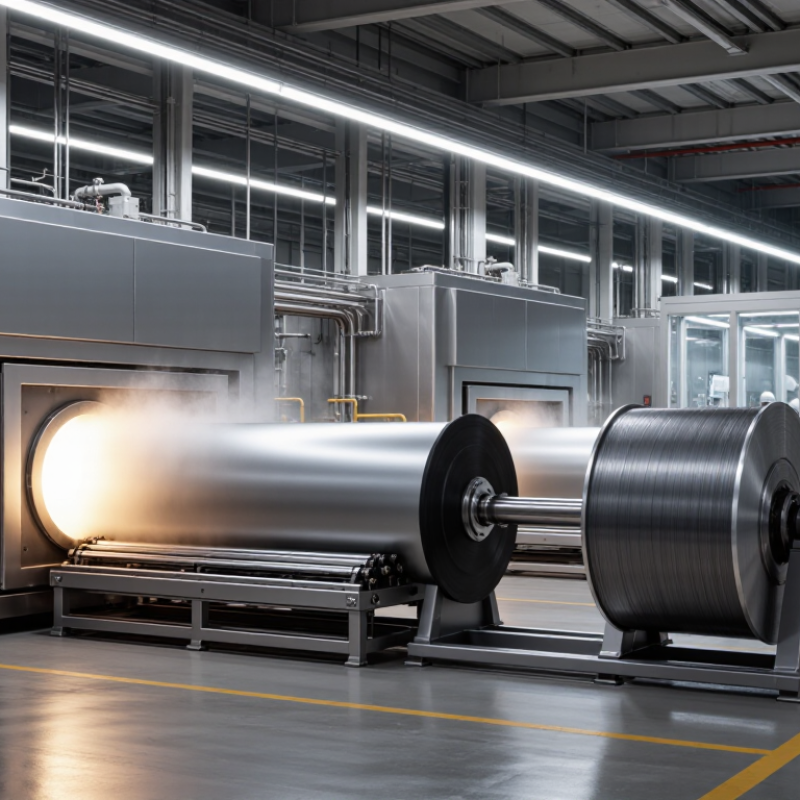
A carbon fiber production line converts precursor fibers into lightweight, high-strength reinforcement. Its core stages include oxidation, carbonization, surface treatment, sizing, drying, winding, and quality inspection. Each stage controls fiber strength, modulus, surface chemistry, and consistency. Small temperature changes can affect thousands of meters of output.
The industrial scope is expanding beyond aerospace. The Global Wind Energy Council’s Global Wind Report 2024 recorded 117 GW of new wind capacity in 2023. Large turbine blades increasingly require carbon reinforcement to reduce weight and improve stiffness. The International Energy Agency’s Global EV Outlook 2025 reported more than 17 million electric vehicles sold in 2024. This growth supports demand for lighter structural components and compressed-gas storage systems. Carbon fiber also serves sporting goods, civil engineering, and robotics. However, market estimates differ widely because some reports count intermediate materials, while others count only finished fiber. That gap deserves more attention.
Tips: Evaluate line suppliers through measurable evidence. Request production data, energy consumption, tensile-strength variation, maintenance records, and pilot-line results. Check whether the equipment supports your precursor type and target tow size. A fast line is not automatically a reliable line. In practice, stable quality often matters more than maximum rated speed.
Criteria for Evaluating Global Carbon Fiber Production Line Suppliers
Evaluating global carbon fiber production line suppliers requires more than comparing quoted capacity. The International Energy Agency reported nearly 14 million electric car sales in 2023, while the Global Wind Energy Council recorded 117 GW of new wind capacity. These trends support demand, but they do not guarantee profitable line utilization. A credible supplier should explain throughput by tow size, precursor type, and product grade. Vague capacity claims deserve caution.
Process control is central. Review tension stability, oxidation uniformity, carbonization temperature control, surface treatment, and winding accuracy. Carbonization commonly operates above 1,000°C, so furnace energy use can strongly affect operating costs. Ask for measured yield data, not marketing estimates. Pilot trials should test tensile strength, modulus, sizing adhesion, and batch consistency. Small variations can become expensive defects.
Independent evidence matters. ISO 9001 quality systems, ISO 14001 environmental management, and traceable calibration records provide useful reference points. The International Organization for Standardization does not replace a factory audit. Check commissioning records, spare-parts response, operator training, and cybersecurity controls for connected equipment. Life-cycle emissions also deserve attention; the International Energy Agency repeatedly identifies energy intensity as a major industrial concern. No supplier gets every criterion right. I would challenge any proposal that hides downtime, scrap rates, or maintenance assumptions. Report definitions differ, and that makes direct comparisons imperfect.
Leading Carbon Fiber Production Line Suppliers by Region and Capability
Top Carbon Fiber Production Line Suppliers Worldwide
Carbon fiber production line suppliers differ sharply by region and technical strength. East Asian suppliers often provide high-throughput lines, stable furnace control, and competitive installation support. European suppliers commonly emphasize automation, energy efficiency, and precise process monitoring. North American suppliers may offer stronger integration with aerospace, automotive, and industrial research systems. Regional capability matters because local engineers understand labor conditions, utilities, and compliance expectations.
A reliable supplier should demonstrate experience across stabilization, carbonization, surface treatment, sizing, winding, and quality inspection. Ask for production data, not attractive brochures. Check tension control during continuous operation, furnace temperature uniformity, and fiber strength consistency across each spool. Some suppliers offer complete lines, while others specialize in furnaces or downstream equipment. No supplier is perfect. Unexpected maintenance needs may appear after commissioning, especially when raw materials or factory conditions change. Scale matters, but flexibility can matter more for developing products.
Tips: Compare suppliers through factory audits, sample testing, and verified reference projects. Request a clear commissioning schedule and spare-parts plan. Confirm whether operators receive practical training on alarm handling, furnace safety, and process adjustments. Measure twice. Also review energy consumption per kilogram, expected yield, software access, and long-term technical support before signing an agreement.
Supplier Selection, Installation, and Production Line Maintenance Considerations
Top Carbon Fiber Production Line Suppliers Worldwide
Selecting a carbon fiber production line requires more than comparing prices. Check precursor compatibility, tow size, furnace capacity, surface treatment control, and expected yield. The Global Wind Energy Council reported 117 GW of new wind capacity in 2023, supporting continued demand for lightweight composite materials. However, demand alone does not guarantee a profitable plant. Ask suppliers for verified throughput data, energy consumption, defect rates, and references from comparable facilities. Factory acceptance testing should measure temperature uniformity, tension stability, line speed, and fiber strength.
Installation needs practical planning. Leave space for maintenance access, exhaust systems, cooling water, electrical upgrades, and safe material movement. A line can arrive on time and still lose weeks during commissioning. Require documented installation procedures, operator training, software backups, and a site acceptance test using your actual precursor. The International Energy Agency’s Energy Technology Perspectives 2023 emphasizes efficiency and industrial decarbonization, making furnace energy monitoring increasingly important. Yet, energy figures from suppliers may exclude auxiliary equipment. That comparison is often misleading.
Tips: Build a maintenance calendar before production starts. Inspect rollers, heaters, filters, tension sensors, and oxidation zones at fixed intervals. Track downtime by cause, not only by shift. Keep critical spares on site, but avoid overstocking expensive parts. Use calibrated sensors and retain batch records for traceability. A useful target is stable output, not maximum speed. Pilot runs may reveal weaknesses that sales documents hide. Even experienced teams sometimes underestimate ventilation balancing and operator fatigue. That deserves a second review.


