In the world of electrical connections, the choice of connectors can significantly impact efficiency and reliability. Among various options, the Butt Splice Connector stands out due to its simplicity and effectiveness. Industry expert John Smith emphasizes, "A quality Butt Splice Connector can mean the difference between a stable connection and a potential failure." His insights highlight the crucial role such connectors play in maintaining performance in electrical systems.
The market is flooded with options. Thus, selecting the right Butt Splice Connector can be overwhelming. Factors to consider include material quality, size, and insulation capabilities. Connections must endure environmental challenges. Weather-stripped or heat-shrink variants can enhance durability against moisture and corrosion. Neglecting these factors can lead to unexpected failures.
It’s important to recognize that not all Butt Splice Connectors are created equal. Some may promise high performance but fail under pressure. Assessing user feedback and expert evaluations can guide better choices. While we seek the top products, we should remain cautious about branding and price. Ultimately, understanding the requirements of your specific electrical project is essential for making an informed decision.
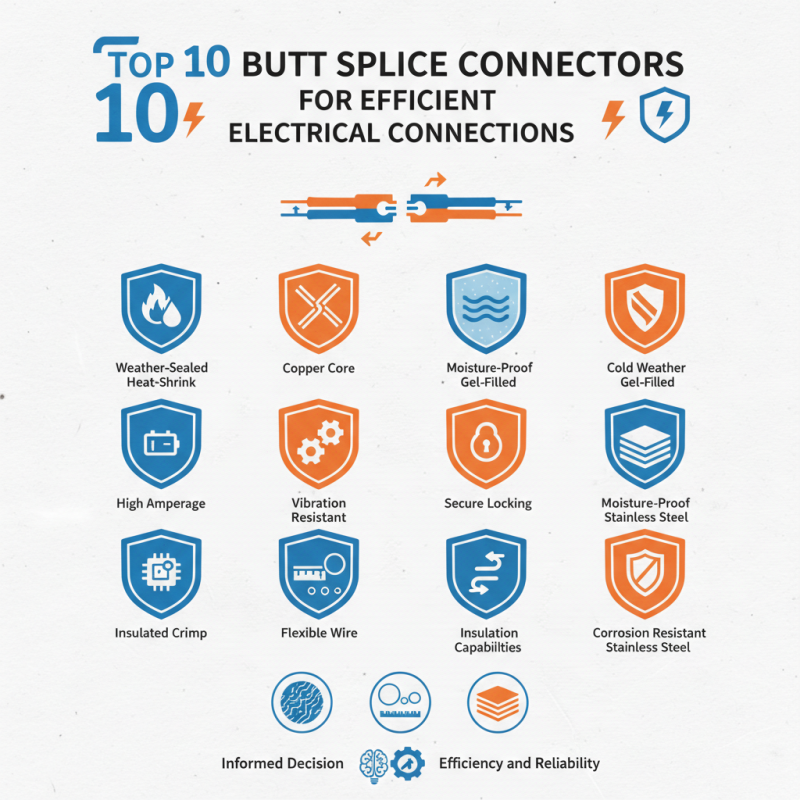
Butt splice connectors are vital in electrical work. They join two wires securely. Various types exist, including heat-shrink and non-heat-shrink options. Each type serves different applications. For instance, heat-shrink connectors provide added insulation, while non-heat-shrink types are simpler to use.
When selecting a butt splice connector, consider the wire gauge. Using the wrong size can compromise the connection quality. It's crucial to ensure a snug fit without damage. Proper crimping techniques are also important. A poorly crimped connection can lead to failures. Experience shows that practice improves skills, reducing potential errors.
In some cases, butt splices may fail due to environmental factors. Moisture and corrosion can weaken connections, leading to power loss. Regular inspections can help identify issues early. Think of your connections as a chain; every link matters. Evaluating the reliability of your connectors is essential for long-term performance.
When selecting butt splice connectors, several key features should be taken into account. The gauge of the wire is crucial, as it determines the connector size you need. According to industry standards, connectors compatible with 18-22 gauge wires suit many applications.
You should also consider insulation materials. Heat-shrink options provide better protection against moisture and environmental factors. A report by the Institute of Electrical and Electronics Engineers (IEEE) emphasizes that robust insulation can enhance the longevity of electrical connections by up to 30%.
Tips: Always look for connectors with color-coded insulation for easier identification. This small detail prevents errors during installation under time-sensitive conditions.
Another important factor is the material of the connector. Copper connectors offer superior conductivity compared to aluminum. Low-grade materials can result in resistance issues, leading to overheating. The National Electrical Contractors Association (NECA) has found that using quality components can lower failure rates significantly, by up to 50% in field applications.
Remember, the electrical environment influences connector choice. Temperature fluctuations can impact performance. Regular inspections and testing can identify early signs of wear.
When undertaking electrical projects, selecting the right connectors is crucial for reliable connections. Butt splice connectors are widely used due to their effectiveness and simplicity. They offer a strong, permanent bond between wire ends, making them a top choice for various applications.
For small projects, consider using heat-shrink butt connectors. They provide additional protection against moisture and corrosion. Their design allows for a secure fit when heated, ensuring that the wires are well insulated. For larger gauge wires, using standard crimp-style connectors is recommended. They are easy to install and can handle higher current loads, which is essential in many installations.
It's important to note that not every connector suits every need. Testing connectors in specific conditions may reveal weaknesses. For example, a connector that works well in dry environments might fail in wet conditions. Thus, reflective assessment during the selection process can lead to smarter decisions. Always evaluate the requirements of your electrical project to ensure that you choose the most effective butt splice connector.
When using butt splice connectors, proper installation is crucial. A study by the Electrical Reliability Council indicates that improper connections can lead to a failure rate as high as 30%. This highlights the importance of meticulous installation practices. Begin by stripping the wire insulation accurately. Expose just enough wire to ensure a secure connection. Too much stripping can lead to fraying, which may compromise the integrity of the splice.
Next, select the right connector size. A common mistake is using connectors that do not match the wire gauge. Proper sizing ensures minimal resistance and optimal electrical flow. According to industry reports, mismatched sizes can increase resistance by over 20%. Crimp the connector with enough pressure to create a solid bond, avoiding any gaps. If you're using heat-shrink connectors, apply heat evenly. This creates a robust waterproof seal. Inspect the connection closely for any visible gaps or loose wire strands. Addressing these details can prevent future failures. Each step matters for reliability and safety.
When using butt splice connectors, several common mistakes can undermine your connections. One major error is not stripping enough insulation from the wire. If the stripped wire does not reach the connector fully, it can lead to poor conductivity. Conversely, stripping too much can expose bare wire, increasing the risk of shorts.
Another frequent misstep is failing to use the right connector size. Mismatched connectors can lead to weak or loose connections. This can create heat, causing potential wire damage. It is essential to check the gauge of your wire and select the appropriate connector for that size.
Overtightening the connector is also a critical mistake. While you want a secure connection, excessive force can damage the wires or the connector. A firm but gentle grip is ideal. Additionally, always inspect your work. Look for any signs of wear or unexpected hairline fractures in the connector. These details can make a significant difference in performance.
| Connector Type | Gauge Range | Material | Insulation Type | Max Voltage Rating (V) |
|---|---|---|---|---|
| Butt Connector A | 22-16 AWG | Copper | Nylon | 600 |
| Butt Connector B | 20-14 AWG | Tinned Copper | Polyolefin | 300 |
| Butt Connector C | 18-16 AWG | Copper | PVC | 600 |
| Butt Connector D | 14-10 AWG | Tinned Copper | Nylon | 600 |
| Butt Connector E | 12-10 AWG | Copper | Heat Shrink | 600 |
| Cookie | Duration | Description |
|---|---|---|
| cookielawinfo-checkbox-analytics | 11 months | This cookie is set by GDPR Cookie Consent plugin. The cookie is used to store the user consent for the cookies in the category "Analytics". |
| cookielawinfo-checkbox-functional | 11 months | The cookie is set by GDPR cookie consent to record the user consent for the cookies in the category "Functional". |
| cookielawinfo-checkbox-necessary | 11 months | This cookie is set by GDPR Cookie Consent plugin. The cookies is used to store the user consent for the cookies in the category "Necessary". |
| cookielawinfo-checkbox-others | 11 months | This cookie is set by GDPR Cookie Consent plugin. The cookie is used to store the user consent for the cookies in the category "Other. |
| cookielawinfo-checkbox-performance | 11 months | This cookie is set by GDPR Cookie Consent plugin. The cookie is used to store the user consent for the cookies in the category "Performance". |
| viewed_cookie_policy | 11 months | The cookie is set by the GDPR Cookie Consent plugin and is used to store whether or not user has consented to the use of cookies. It does not store any personal data. |