Get an instant quote
Get in touch Listen to our podcast

Blog

Top 10 Automatic Arc Welding Machine Manufacturers

Choosing an Automatic Arc Welding Machine is not just a brand decision. The right equipment must match the work, power supply, operator skill, and production pace. A compact fabrication shop may value easy setup and stable output, while a heavy-duty plant may need higher duty cycles and dependable service support.

This guide introduces ten manufacturers associated with automatic arc welding equipment. It considers practical factors such as process compatibility, control options, consumable availability, maintenance access, and technical assistance. Look closely at the specifications. A model’s advertised capacity may not reflect how it performs during long production runs or with a particular material. Verify details with the manufacturer and compare them against your own welding procedures.

Real conditions matter. A machine used for repetitive seams faces different demands from one handling varied assemblies. Operator training, fixture design, and ventilation also affect results, even when the equipment is capable. No ranking can settle every shop’s needs. That is easy to overlook. Manufacturer reach and product range can change by region, and service quality may depend on the local distributor. Treat the list as a starting point, not a final verdict. Before purchasing, request current technical data, confirm support arrangements, and, when possible, test representative workpieces. A careful comparison can prevent costly mismatches and help teams choose equipment that fits both present workloads and realistic future plans.
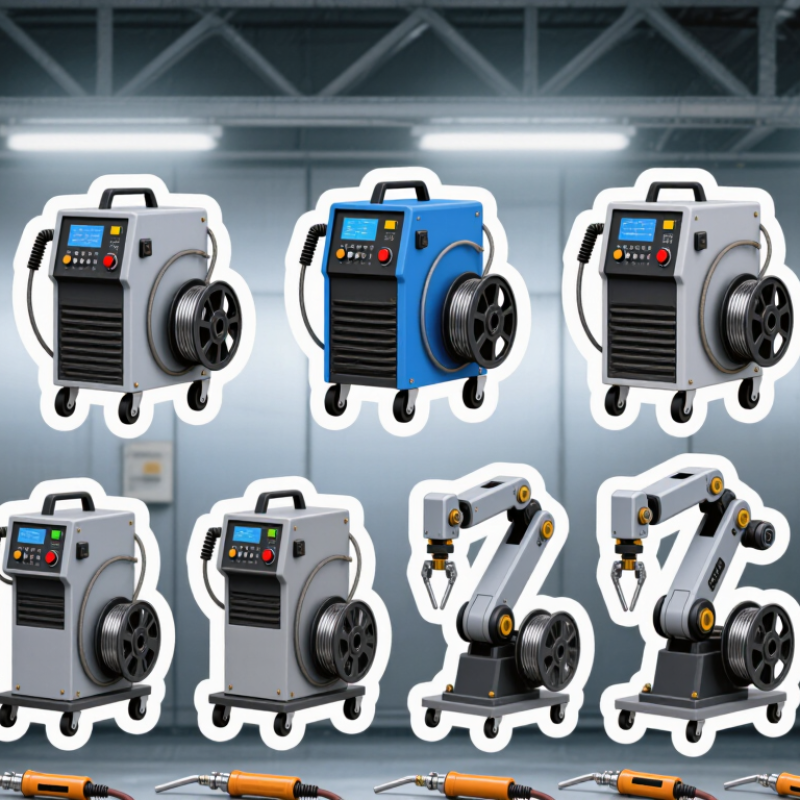
Top 10 Automatic Arc Welding Machine Manufacturers

Automatic Arc Welding Machines: Types and Core Technologies

Automatic arc welding machines differ in how they feed filler metal and protect the weld pool. Gas metal arc welding (GMAW) feeds continuous wire beneath shielding gas, making it useful for repeatable production. Flux-cored arc welding (FCAW) uses tubular wire and can suit heavier steel or some outdoor work, though slag removal may add time. Submerged arc welding (SAW) covers the arc with granular flux and is often used for long, straight seams on thick plate. Fit-up still matters.

Core technologies affect consistency as much as rated speed. Inverter power sources regulate current and voltage, while wire feeders help maintain steady electrode delivery. Arc sensors monitor electrical changes; seam-tracking systems can adjust torch position when joint alignment varies. Robotic systems add programmed movement and torch-angle control. But sensors cannot fix every irregular joint. A clean edge helps. Operators should test settings on the actual material and thickness, since real parts may not match drawings perfectly.

Tips: Start with small test beads. Adjust wire speed, voltage, and travel speed, then inspect bead shape, spatter, and penetration. Record settings that work. They may still need revision when consumables or joint fit-up change.

Typical Operating Current Ranges by Arc-Welding Process

A technical comparison of common arc-welding processes used in manual and automated systems. The bars show typical current ranges in amperes; actual operating limits vary by equipment, material, and application.

SMAW: shielded metal arc welding; GTAW: gas tungsten arc welding; GMAW: gas metal arc welding; FCAW: flux-cored arc welding; SAW: submerged arc welding. Ranges are approximate and are not equipment specifications.

How to Evaluate Automatic Arc Welding Machine Manufacturers

Evaluate automatic arc welding machine manufacturers by asking for evidence, not polished claims. Request a live demonstration using your material, joint geometry, and wire diameter. Watch the arc start, wire feed, and travel speed. The finished bead should be consistent, with no obvious gaps or excessive spatter. A short demo is useful, but it cannot prove long-term reliability.

Check whether the supplier can explain duty cycle, power requirements, torch compatibility, and process controls in plain language. Ask for test records and inspect sample welds under realistic production conditions. Can operators adjust parameters without guesswork? Look for clear manuals, training, and responsive technical support. Small details matter. A spare feeder roller or torch liner can affect output when replacement parts take weeks to arrive.

Compare service terms, parts availability, and maintenance needs alongside purchase price. Ask how faults are diagnosed and what information technicians need to help remotely. References from facilities with similar workloads can add useful context, though one good reference is not proof. No checklist is perfect. I might overvalue a smooth demonstration and miss awkward software or setup steps. Run a trial with your own operators, record changeover time, and note where instructions remain unclear.

Profiles of 10 Leading Automatic Arc Welding Machine Manufacturers

The ten profiles below compare capabilities rather than claim a universal ranking. One manufacturer focuses on robotic welding cells, pairing arc equipment with fixtures and safety enclosures. Another builds systems for thick plate, where stable heat input and repeatable passes matter. A pipe specialist may offer rotating positioners and compact torch heads. Fit matters.

A fourth manufacturer serves smaller workshops with straightforward controls and quick setup. A fifth emphasizes multi-process power sources for varied materials and joint types. A sixth integrates seam-tracking sensors, helping the torch follow changes in fit-up. Sensors can misread reflective surfaces, though. A seventh designs modular cells that can be expanded as production needs change.

An eighth profile centers on high-volume manufacturing, where cycle time and consistent weld quality are closely monitored. A ninth distinguishes itself through commissioning, operator training, and spare-parts support. These details affect uptime, not just the purchase price. The tenth focuses on custom engineering for unusual part geometries. Buyers should compare duty cycle, service access, documentation, and test-weld results. A polished demonstration is useful, but production samples reveal more. Some specifications still need careful verification.

Comparing Manufacturer Capabilities, Products, and Services

When comparing automatic arc welding machine manufacturers, examine the complete work cell, not just the power source. Ask for demonstrated performance on your material thickness, joint design, and production speed. Check duty cycle, wire-feed stability, torch access, seam tracking, and available process data. A polished demo is useful, but a repeatable weld on your own sample matters more.

The International Federation of Robotics’ World Robotics 2024 report recorded 541,302 industrial robot installations worldwide in 2023. This is useful context for automation demand, not a direct measure of welding-machine sales. Compare suppliers on integration support, operator training, spare-parts availability, and response times. Request sample welds and inspect penetration, bead consistency, and spatter. Ask what changes when the workpiece fit-up is imperfect. Real parts rarely behave like perfect test coupons.

Tips: Bring representative parts and define acceptance criteria before demonstrations. Check the controller’s parameter range and whether recipes can be locked or retrieved. Ask for maintenance intervals and consumable costs in writing. Small details matter. A strong machine can still disappoint if service is slow or setup takes too long.

Applications and Selection Factors for Automatic Arc Welding Machines

Automatic arc welding machines suit production lines that repeat the same joint across many parts. Common applications include automotive frames, construction equipment, storage tanks, and pipe fabrication. A machine can maintain steady travel speed and arc length, especially on long seams. Fit matters. Poor joint preparation still causes defects.

Selection should start with the workpiece, not the machine’s headline speed. Check base-metal type and thickness, joint geometry, welding position, and required process. Then assess duty cycle, wire-feed range, torch access, and fixture accuracy. A narrow tank interior, for example, may limit torch movement even when the power source is adequate. Extraction, guarding, and maintenance access also affect real production.

Automation is growing, but broad robotics figures are not welding-specific. The International Federation of Robotics’ World Robotics 2024 report recorded 541,302 industrial robot installations worldwide in 2023, with 4,281,585 robots in operation. This signals wider industrial automation, not guaranteed demand for any one welding system. Buyers should run sample welds using their actual material and joint design, then inspect penetration, spatter, and repeatability. I would still allow time for setup changes; production parts are rarely as uniform as the drawings suggest.

Top 10 Automatic Arc Welding Machine Manufacturers - Applications and Selection Factors for Automatic Arc Welding Machines

Manufacturer-neutral comparison of ten key machine-selection factors. The table describes established welding processes and practical evaluation criteria rather than ranking or naming suppliers.

# Selection factor Applications and process fit What to evaluate
1 Welding process GMAW is widely used for automated production; FCAW suits many heavy fabrication tasks; SAW is commonly used for long, accessible welds; GTAW is selected when precise heat control and clean welds are important. Confirm compatibility with the base material, joint design, required weld quality, shielding method, and production environment.
2 Material and thickness range Automated arc systems are used on materials including carbon steel, stainless steel, and aluminum, with the suitable process and setup depending on the job. Check the documented operating range, compatible consumables, material-transfer requirements, and qualified welding procedures for the intended thicknesses.
3 Output and duty cycle Higher, sustained welding loads are common in production lines and heavy fabrication; lighter or intermittent work may require less capacity. Compare rated current, voltage, and duty cycle at the specified conditions. Duty-cycle ratings should be interpreted using the applicable equipment documentation and test standard.
4 Feed system and consumables Wire-fed GMAW, FCAW, and SAW installations depend on a feed system matched to the wire, torch or contact assembly, and production setup. Verify supported wire types and diameters, feed consistency, spool or bulk-feed options, changeover time, and availability of suitable consumables.
5 Travel speed and positioning Mechanized carriages and positioners can support repeatable straight seams, circumferential welds, and other defined production paths. Match travel-speed range and motion axes to the part geometry; assess fixture access, torch angle control, repeatability, and setup time.
6 Automation and controls integration Automated cells may combine a power source, motion equipment, robot or positioner, fixtures, and supervisory controls. Check I/O and communication options, program access, process-parameter control, cell compatibility, and how faults and cycle status are communicated.
7 Seam tracking and monitoring Tracking and monitoring options can help manage joint-position variation and record process information in repetitive production. Determine whether the application needs touch sensing, through-arc sensing, or vision-based tracking, and confirm that monitoring data can be stored and reviewed.
8 Safety and compliance Arc-welding installations require attention to electrical hazards, arc radiation, fume exposure, moving machinery, and the applicable workplace rules. Review equipment documentation, guarding and interlocks, extraction provisions, installation requirements, and applicable local standards and regulations.
9 Serviceability and support Production equipment benefits from planned maintenance, available replacement parts, and clear troubleshooting procedures. Ask about service coverage, spare-parts lead times, maintenance intervals, operator training, technical documentation, and remote-support arrangements.
10 Total cost and qualification A system should be assessed against its intended production volume, weld acceptance requirements, material utilization, and expected operating life. Compare purchase and installation costs with consumables, energy, maintenance, training, and downtime; request representative trials and validate procedures before production.

Actual machine capability and suitability vary by configuration, material, joint preparation, welding procedure, and operating conditions. Confirm specifications with the supplier and qualify the process for the intended application.

Article Source:

CNC machining CAD export file formats

Put your parts in production today

Get an instant quote