Get an instant quote
Get in touch Listen to our podcast

Blog

Top 10 Industrial Oil Boiler Manufacturers Worldwide

Choosing an Industrial Oil Boiler is not simply a matter of comparing output ratings. Buyers must examine fuel efficiency, heat-transfer design, emissions control, maintenance access, and long-term operating costs. A compact boiler may fit a crowded plant, yet poor burner adjustment can waste fuel every hour. That detail matters.

This guide reviews the Top 10 Industrial Oil Boiler Manufacturers Worldwide through a practical, evidence-based lens. It considers manufacturing experience, product reliability, service networks, safety engineering, and documented performance. The ranking is not absolute. Regional fuel quality, climate, operating pressure, and local technical support can change the best choice. That is worth remembering.

Boiler specialist Dr. David R. Tree has emphasized, “Combustion performance depends on the complete system, not the burner alone.” His point remains highly relevant. A strong manufacturer should provide more than a steel pressure vessel. It should offer intelligent controls, stable combustion, accessible spare parts, clear commissioning procedures, and responsive technical assistance. Inspectors and plant engineers should also verify certifications independently. Marketing claims can sound impressive. They are not operating data.

The manufacturers discussed here serve demanding industries, including food processing, chemicals, textiles, district heating, and general manufacturing. Their designs differ in thermal capacity, automation, burner technology, and fuel flexibility. Some companies lead in efficiency. Others perform better through regional service or customized engineering. No supplier is perfect. Even reputable equipment can underperform when installation, water treatment, or maintenance is neglected.

This overview aims to help decision-makers ask sharper questions before purchasing. Real value appears over years, not during a sales presentation.
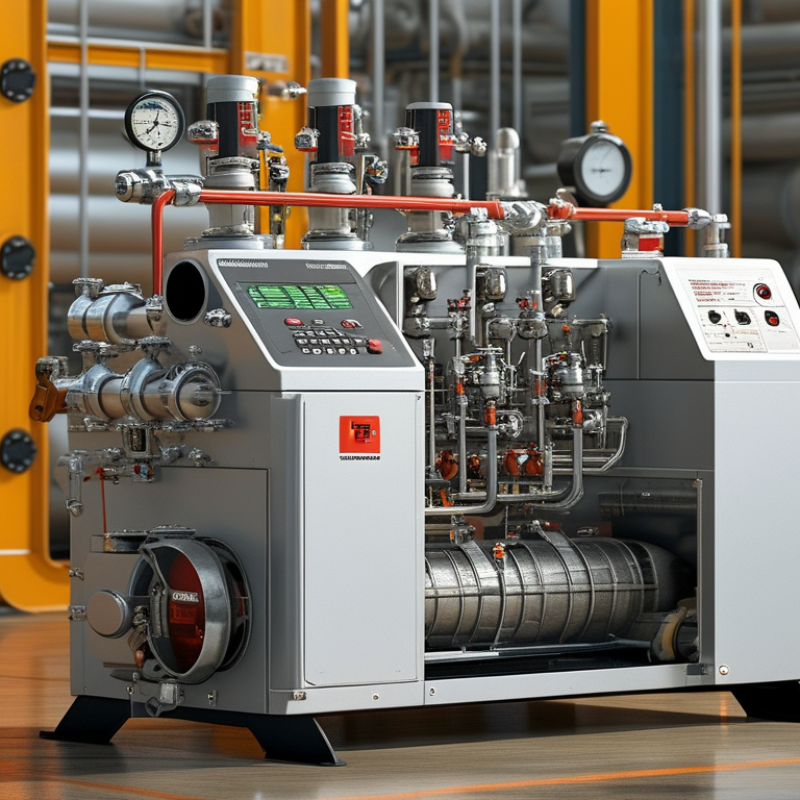
Top 10 Industrial Oil Boiler Manufacturers Worldwide

Industrial Oil Boilers: Definition, Applications, and Core Technologies

Industrial oil boilers are pressure-vessel systems that convert fuel oil into heat for water, steam, or thermal fluid. Their insulated furnace burns atomized oil inside a controlled combustion chamber. Heat then travels through tubes or heat-transfer surfaces before reaching the production process.

These boilers serve factories that need steady, high-temperature energy. Common applications include food processing, chemical production, textile finishing, metal treatment, and commercial heating. Steam may sterilize equipment, dry materials, or drive process machinery. Thermal-oil systems can heat reactors without using high pressure. The correct choice depends on load patterns, fuel quality, operating temperature, and available space.

Core technologies include multi-pass fire-tube designs, water-tube construction, modulating burners, automatic fuel controls, and oxygen-trim systems. Modern flame safeguards monitor ignition, pressure, and combustion stability. Economizers can recover heat from exhaust gases, although their value depends on return-water conditions and maintenance quality. Emission-control equipment may also be necessary.

Sizing is where many projects quietly fail. An oversized boiler cycles frequently and wastes fuel, while an undersized unit cannot maintain production heat. Engineers should review hourly demand, standby requirements, chimney design, water treatment, and inspection access. Field experience shows that clean burners and correctly adjusted controls often matter more than impressive specifications. No calculation is perfect. Real factories change, and the original assumptions deserve review. Reliable operation still requires trained operators, documented inspections, and compliance with local pressure-vessel and environmental rules.

Criteria for Evaluating Global Industrial Oil Boiler Manufacturers

Top 10 Industrial Oil Boiler Manufacturers Worldwide

Evaluating global industrial oil boiler manufacturers requires more than comparing purchase prices. Proven field experience matters. Review installations with similar steam capacity, fuel type, operating hours, and climate. Ask for operating records, not only polished brochures. A boiler running beside a dusty production line faces different demands from one in a clean laboratory.

Technical competence should appear in measurable details. Check thermal efficiency, turndown ratio, burner control, pressure ratings, and heat-loss data. Request independent performance tests and clear emissions documentation. Reliable manufacturers explain how their designs address flame instability, corrosion, soot buildup, and fluctuating fuel quality. Safety systems deserve close attention, including automatic shutdowns, pressure relief, flame detection, and inspection access.

Look beyond the factory gate. Evaluate spare-parts availability, technician response times, training, warranty terms, and remote monitoring support. Lifecycle cost can exceed the initial quotation when maintenance is difficult or fuel consumption is underestimated. Local service capability often matters more than a distant engineering office. References should be contacted directly, if possible. Ask operators about downtime, response quality, and recurring faults.

No manufacturer is perfect. That is worth remembering. A supplier that openly discusses design limits may be more trustworthy than one promising flawless operation. Some published efficiency figures also depend on testing conditions that may not match real plant loads. Compare assumptions carefully, document every technical question, and involve qualified boiler engineers before selecting a global supplier.

Leading Manufacturers and Their Product Specializations

The top ten industrial oil boiler manufacturers compete through specialization, not simply capacity. Their portfolios typically include fire-tube boilers for factories, water-tube units for high-pressure steam, and thermal-oil heaters for controlled process temperatures. Some focus on compact modular systems, while others engineer large custom plants for refineries, food processing, and chemical production. Low-NOx burners, automatic controls, and heat-recovery modules increasingly separate mature suppliers from basic equipment vendors.

The International Energy Agency reported in Energy Efficiency 2023 that industry represented about 37% of global final energy consumption. That figure explains why buyers examine fuel efficiency, downtime, and maintenance access closely. Leading manufacturers now provide oxygen-trim controls, economizers, remote monitoring, and dual-fuel capability. Product claims still require caution. Actual performance depends on fuel quality, operating load, water treatment, and operator training. A boiler rated at peak efficiency may perform poorly at low load. That is an overlooked weakness.

Tips: Compare tested efficiency at your normal load, not only the advertised maximum. Request emissions data, service response times, spare-parts availability, and reference installations. The U.S. Department of Energy’s industrial efficiency guidance also emphasizes combustion tuning and heat recovery. These details often save more fuel than a larger furnace. Do not ignore oil storage design. It affects safety, reliability, and total project cost.

Comparing Boiler Efficiency, Capacity, Safety, and Emissions Performance

Comparing the top industrial oil boiler manufacturers requires more than reading efficiency figures. In plant assessments, thermal efficiency is meaningful only when matched with the actual load profile. A boiler operating near its design capacity usually performs better than one cycling through light demand. Look for stable burner turndown, reliable heat recovery, and documented fuel consumption. A difference of two percentage points can become substantial across a full operating year.

Capacity also affects safety and emissions. Larger units may support heavy process loads, but they demand stronger combustion controls, careful water treatment, and disciplined maintenance. Essential features include flame-failure protection, low-water cutoffs, pressure relief devices, and automatic shutdown systems. Inspectors should review test records, not only product brochures. Numbers can mislead. Emissions performance depends on burner design, fuel quality, oxygen control, and operating habits. Verified stack testing should cover nitrogen oxides, sulfur oxides, carbon monoxide, and particulate matter.

Manufacturers with strong engineering practices usually provide clear maintenance schedules, operator training, and traceable compliance documents. Regional regulations also differ, so one model may perform well in one market and require upgrades elsewhere. During commissioning, small details matter: a poorly adjusted damper can raise fuel use, while dirty heating surfaces reduce heat transfer. Even sophisticated equipment can underperform when servicing is delayed. A fair comparison should therefore combine laboratory data, field references, lifecycle costs, and the support available after installation.

Selecting an Industrial Oil Boiler Supplier for Different Industry Needs

Choosing an industrial oil boiler supplier requires more than comparing purchase prices. Each industry has different heat loads, fuel conditions, operating schedules, and maintenance demands. A food-processing plant may need stable temperature control and cleanable surfaces. A metal facility may require high output during long production cycles. Ask suppliers for verified efficiency data, pressure ratings, combustion performance, and documented service experience.

Inspect the supplier’s engineering process. Reliable manufacturers should calculate boiler capacity from actual operating conditions, not simple estimates. Request drawings, emissions information, safety controls, and installation requirements before signing a contract. Check whether technicians can provide commissioning, operator training, spare parts, and emergency support. Response time matters when a boiler supplies steam for a full production line. One overlooked valve can create expensive downtime.

Tips: Compare total ownership cost, not only the quotation. Review fuel consumption, inspection intervals, warranty limits, and local technical support. Ask for references from facilities with similar workloads. A supplier may present excellent laboratory efficiency, yet field performance can differ. This is where careful questioning helps. Do not accept vague promises. Also, avoid choosing the largest boiler “for safety”; excessive capacity can increase cycling losses and maintenance costs. Supplier selection is rarely perfect, and operating data may be incomplete. Leave room for reassessment after the first season.

Top 10 Industrial Oil Boiler Manufacturers Worldwide - Selecting an Industrial Oil Boiler Supplier for Different Industry Needs

Rank Supplier Profile Primary Market Region Typical Boiler Configuration Typical Capacity Typical Efficiency Common Liquid Fuels Typical Pressure Range Best-Fit Industrial Applications Key Selection Considerations
1 Profile A — Large Utility-Scale Manufacturer Europe and the Middle East Three-pass fire-tube or water-tube package boiler 10–100 t/h steam 85–92% Light fuel oil, diesel, heavy fuel oil 10–40 bar(g) Refineries, petrochemical plants, large process facilities High turndown, emissions compliance, redundancy, long-term service support
2 Profile B — Process Steam Specialist East Asia and Southeast Asia Horizontal fire-tube boiler with packaged burner 1–30 t/h steam 82–90% Diesel, kerosene, light fuel oil 7–25 bar(g) Food processing, textile production, chemical manufacturing Fast start-up, compact footprint, stable steam pressure, local spare parts
3 Profile C — High-Temperature Thermal Oil Specialist Central Europe and North America Coil-type thermal fluid heater with expansion system 0.3–15 MW thermal output 80–90% Diesel, light fuel oil, waste oil where permitted Up to approximately 10 bar(g) Asphalt, edible oils, wood products, chemical processing Outlet temperature, fluid compatibility, expansion-tank design, thermal safety controls
4 Profile D — Heavy-Fuel Industrial Boiler Supplier South Asia and Africa Smoke-tube boiler with fuel-heating and atomization system 2–25 t/h steam 78–88% Heavy fuel oil, furnace oil, diesel 8–25 bar(g) Rubber, rice processing, paper, general manufacturing Fuel viscosity control, preheating requirements, soot cleaning, operating cost
5 Profile E — Modular Packaged Boiler Manufacturer North America and Latin America Factory-assembled skid-mounted fire-tube boiler 0.5–20 t/h steam 80–89% Diesel, light fuel oil, biodiesel blends subject to approval 7–20 bar(g) Temporary plants, commercial laundries, small factories Delivery time, transport dimensions, plug-and-play installation, controls integration
6 Profile F — Low-Emission Burner Integration Specialist Western Europe and developed Asian markets Fire-tube or water-tube boiler with low-NOx burner 1–50 t/h steam 84–92% Diesel, light fuel oil, low-sulfur fuel oil 10–40 bar(g) Urban manufacturing, pharmaceutical, clean-process facilities NOx limits, combustion tuning, flue-gas treatment, noise control
7 Profile G — Water-Tube High-Pressure Specialist Japan, South Korea and the Middle East Membrane-wall water-tube boiler package 10–150 t/h steam 85–93% Diesel, light fuel oil, heavy fuel oil 25–80 bar(g) Power generation, large chemical plants, cogeneration systems Pressure-part design, water chemistry, certified welding, operator training
8 Profile H — Compact Low-Capacity Boiler Supplier Eastern Europe and Central Asia Vertical or compact horizontal fire-tube boiler 0.1–5 t/h steam 78–87% Diesel, kerosene, light fuel oil 4–16 bar(g) Small food plants, workshops, hotels, agricultural processing Low capital cost, simple maintenance, available utilities, installation space
9 Profile I — Waste-Oil-Compatible Boiler Specialist North America and selected European markets Heavy-duty boiler with filtration and preheating system 0.2–10 t/h steam 75–86% Approved waste oil, used lubricating oil, diesel backup 5–20 bar(g) Metalworking, vehicle maintenance, recycling and industrial workshops Fuel permitting, contaminant control, ash management, burner warranty conditions
10 Profile J — Turnkey Industrial Heating Contractor Africa, Latin America and emerging markets Custom fire-tube, water-tube or thermal-oil package 0.5–40 t/h steam or 0.5–20 MW thermal output 78–90% Diesel, light fuel oil, heavy fuel oil 7–40 bar(g), depending on design Remote-site projects, mining, construction materials, general process heating Engineering scope, site utilities, commissioning support, operator training and after-sales coverage

Note: Capacity, efficiency and pressure figures are typical engineering ranges for the stated boiler configurations. Actual values depend on fuel quality, operating conditions, emissions requirements, feedwater temperature and applicable local codes.

CNC machining CAD export file formats

Put your parts in production today

Get an instant quote