Get an instant quote
Get in touch Listen to our podcast

Blog

Top 10 Fixed Guards Fence Manufacturers Worldwide

Choosing a fixed guards fence manufacturer is about more than comparing catalog photos. These systems help separate people from machinery, moving equipment, and restricted work areas. A useful supplier should explain how its panels, posts, connectors, and access gates fit together. Details matter.

This overview of the top 10 manufacturers worldwide gives buyers a starting point for comparing product ranges and capabilities. Look for clear specifications on panel dimensions, wire or mesh construction, coating options, and mounting methods. Ask how the manufacturer handles custom layouts, replacement parts, and installation guidance. Fit comes first. A fence that looks robust may still create awkward gaps or obstruct routine maintenance if the layout is poorly planned.

Manufacturing experience is relevant, but it should be supported by information buyers can verify. Review technical drawings, material descriptions, quality procedures, and any test or certification documents applicable to the intended market. Requirements vary by site and application, so confirm them with qualified safety and engineering professionals. No single ranking can capture every project’s needs. Price, lead time, local support, and compatibility with existing equipment can change the best choice. That is an imperfect measure, but a practical one. The manufacturers featured here are assessed as potential partners, not as a substitute for project-specific review. Use the list to ask sharper questions, compare evidence, and identify a supplier whose products suit the actual conditions on your site.
Top 10 Fixed Guards Fence Manufacturers Worldwide

What Fixed Guard Fencing Is and Where It Is Used

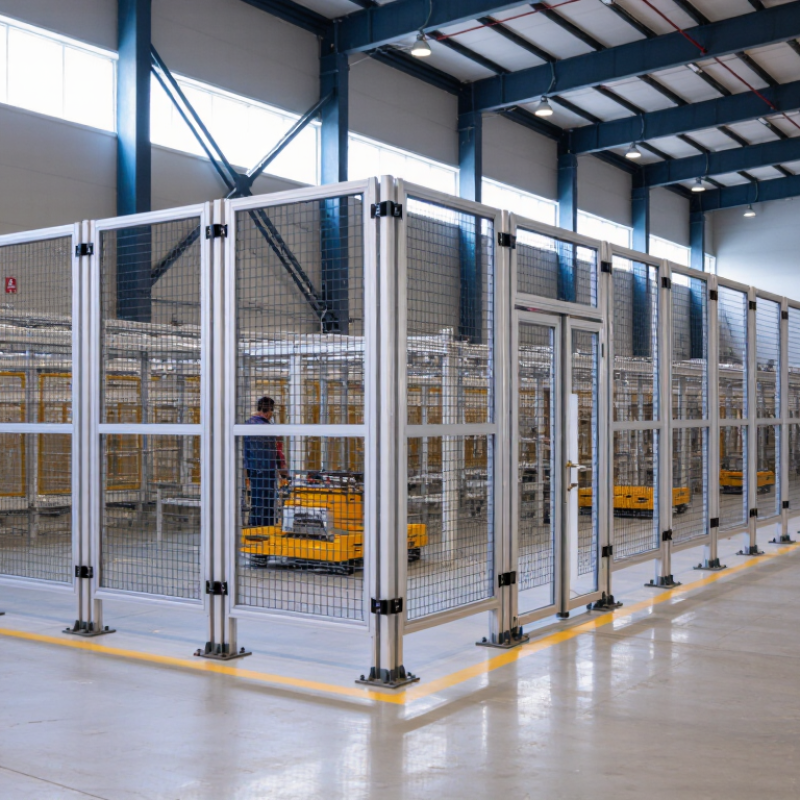
Fixed guard fencing is a stationary barrier that separates people from hazardous machinery. It commonly uses steel mesh panels, posts, and anchored supports around robot cells, conveyors, presses, and palletizers. The aim is separation. Mesh lets staff see moving equipment while helping prevent accidental access to pinch points and moving parts. It is used in factories, warehouses, and packaging facilities where machinery runs in a defined area.

The International Federation of Robotics’ World Robotics 2024 report records 541,302 industrial robots installed worldwide in 2023, with 4,281,585 operating robots reported at year’s end. These figures show how widespread automation has become, but they do not measure fence demand directly. In practice, guard layout should follow a site-specific risk assessment. Panel height, mesh openings, clearances, and access doors all matter. Fixed fencing can create blind spots or complicate maintenance if planned poorly. A barrier alone is not a complete safety system; entry points may need suitable interlocking, and servicing requires safe procedures.

Tips: Check reach distances and opening sizes against applicable safety standards, including ISO 13857. Leave clear routes for inspection and maintenance. Reassess the layout when equipment or production flow changes. A neat fence is useful, but fit matters more.

How Fixed Guard Fences Are Designed and Manufactured

Fixed guard fences begin with a risk assessment, not a mesh catalogue. Designers map moving parts, operator routes, maintenance access, and likely reach-through points. ISO 14120:2015 sets general requirements for fixed and movable guards, while ISO 13857:2019 addresses safety distances. These references guide decisions on panel height, openings, and clearance; they do not replace machine-specific assessment.

The need is practical. The U.S. Bureau of Labor Statistics’ 2022 Census of Fatal Occupational Injuries recorded 738 fatal injuries involving contact with objects and equipment. A fence cannot prevent every incident, but sound design can help separate people from hazards. Manufacturers typically cut steel tube or sheet, weld or bolt frames, fit mesh panels, then apply a protective finish. Small details matter: a cut edge can snag a glove, and a poorly placed post can block inspection. Fit-up deserves care.

Before production, teams should check panel dimensions, fixing points, and access for tools. During installation, they verify clearances and confirm that panels cannot be removed casually. It can be tempting to use finer mesh everywhere. That may improve reach protection, yet reduce visibility and airflow. Trade-offs are real. Documenting measurements and test checks makes later maintenance more reliable, though shop-floor conditions can still expose design flaws.

Leading Fixed Guard Fence Manufacturers Around the World

Leading fixed guard fence manufacturers around the world supply barriers for factories, warehouses, workshops, and distribution centers. Their products may look similar in a catalog, but construction details matter. Check the upright spacing, rail thickness, mesh openings, and how panels connect to posts. A fence beside a conveyor needs different access and clearance than one protecting a storage aisle. Small differences can affect installation and daily maintenance.

Manufacturing capability is only part of the picture. Ask how suppliers control weld consistency, prepare surfaces before coating, and inspect finished panels. Request drawings, material details, and samples where practical. A smooth powder-coated finish is useful, but damaged corners or poorly aligned holes can complicate installation. Details matter. Regional suppliers may offer shorter delivery times, while larger exporters may provide broader production capacity. Neither option is automatically better. A polished catalog can still leave questions unanswered, and even a careful checklist may miss an unusual site condition. Compare actual specifications, lead times, replacement-part availability, and communication before selecting a manufacturer.

Top 10 Fixed Guards Fence Manufacturers Worldwide - Leading Fixed Guard Fence Manufacturers Around the World

Representative manufacturing markets and common product characteristics. This is a geographic overview, not a ranked list of companies; specifications and regulatory requirements vary by supplier and installation.

Manufacturing Market Common Fixed-Guard Fence Solutions Typical Materials and Construction Common Applications Relevant Design Considerations
China Modular machine-perimeter fencing, mesh guard panels, access gates, and custom enclosures Welded steel mesh, formed steel posts, bolted connections, and painted or galvanized finishes Factory automation, packaging lines, material handling, and robotic work cells Opening size, guard height, anchoring, corrosion protection, and safe access for maintenance
Germany Modular safety fencing and machine enclosures designed for configurable production layouts Steel mesh panels, rigid frames, and mechanical fasteners; finishes selected for the environment Automotive production, machine tools, industrial robots, and assembly systems Risk assessment, reach-through prevention, visibility, and integration with safety-related access systems
United States Perimeter guarding, machine barriers, cell fencing, and made-to-measure protective enclosures Welded wire panels, structural steel frames, posts, and floor-mounted fixings Warehouses, manufacturing plants, robotic cells, and processing equipment Applicable workplace rules, safeguarding clearances, secure installation, and access for inspection
Italy Modular machine guards, production-cell fencing, and enclosures for automated equipment Painted or galvanized steel mesh, framed panels, and modular support components Packaging machinery, food-processing equipment, automated assembly, and machine building Cleanability where required, visibility, panel rigidity, and compatibility with the machine layout
Japan Compact machine-perimeter guards, modular barriers, and customized equipment enclosures Steel mesh or sheet panels, formed frames, and bolted or otherwise secured joints Electronics manufacturing, automotive facilities, robotics, and precision machinery Space-efficient layouts, safe separation distances, inspection access, and secure fixing
United Kingdom Fixed machine guarding, modular safety fencing, and perimeter protection for automated lines Steel mesh panels, framed assemblies, and finishes suited to indoor or outdoor conditions Manufacturing, logistics, food production, and automated handling systems Applicable UK requirements, foreseeable access needs, guard integrity, and maintenance arrangements
France Modular industrial fencing, machine enclosures, and fixed barriers for production areas Welded metal mesh, steel frames, and corrosion-resistant coatings where needed Industrial machinery, automotive operations, packaging, and process facilities Applicable European and national requirements, visibility, access control, and installation conditions
India Machine guards, factory perimeter fencing, and modular barriers for production equipment Welded steel mesh, steel tubing or formed sections, and painted or galvanized finishes Automotive manufacturing, engineering workshops, warehouses, and general industry Local legal requirements, site conditions, anchoring, corrosion exposure, and required maintenance access
South Korea Industrial safety fencing, robotic-cell barriers, and machine-perimeter guard systems Steel mesh panels, rigid frames, and modular posts with mechanical connections Electronics, automotive, battery production, and automated manufacturing Risk-based separation, panel strength, access-point layout, and compatibility with plant safety procedures
Spain Fixed machine guards, modular perimeter fencing, and protective enclosures for production lines Steel mesh or sheet panels, framed supports, and protective surface treatments Food and beverage, automotive suppliers, packaging, and material handling Applicable European and national requirements, hygienic needs where relevant, and environmental durability

Comparing Manufacturers by Products, Standards, and Services

Comparing fixed-guard manufacturers starts with the product range, not a glossy catalogue. Some focus on welded-mesh panels; others offer solid steel enclosures, modular aluminum frames, or custom machine-cell barriers. Check panel heights, mesh openings, post spacing, door options, and attachment methods for uneven floors. Details matter.

Standards deserve equal attention. Ask how designs address machine-guarding requirements, including ISO 14120 and safe-distance guidance such as ISO 13857, where applicable. Requirements vary by machine, risk assessment, and installation location. A capable supplier should explain its design assumptions instead of promising universal compliance. Request drawings, material specifications, test records, and clear notes on openings and access points. A certificate alone may not show whether a guard suits your actual hazards.

Service can distinguish a panel seller from a useful project partner. Compare site measurement, CAD layouts, installation support, replacement parts, and response times for damaged sections. Ask who checks door alignment and interfaces with safety systems. Price matters, but low-cost panels may need extra brackets or awkward rework. Detailed documents can still miss a cramped aisle or cleaning routine. Fit comes first.

How to Choose a Fixed Guard Fence Manufacturer

Choosing a fixed guard fence manufacturer starts with the hazards and layout, not a catalog photo. Share a dimensioned drawing, machine access points, and any areas that need frequent cleaning. Ask how the supplier selects post spacing, mesh openings, panel thickness, and fastening methods for your application. Details matter. A fence around a moving machine may need different access and visibility than a simple perimeter barrier. Confirm that proposed panels and gates fit your site measurements, including floor slopes and tight corners.

Request material and finish specifications, installation drawings, and clear guidance on anchoring. Ask what checks are performed before shipment, and how replacement panels or hardware can be ordered later. A responsive manufacturer should explain assumptions and flag missing information rather than promise a perfect fit without reviewing the site. Compare quotations by scope, not just price: installation support, documentation, lead times, and after-sales help can change the real cost. A neat drawing is reassuring, but it cannot reveal every awkward corner. That is worth remembering.

Tips: Send photos with measurements, and ask for a sample or finish reference when appearance matters. Confirm who handles installation questions. Do not skip it. After installation, check that gates swing freely and panels remain secure.

How to Choose a Fixed Guard Fence Manufacturer

Illustrative evaluation weights for comparing suppliers—not measured market data. Adjust them to suit your machine risks, applicable standards, and project requirements.

Prioritize documented compliance and engineering capability, then assess guarding performance, materials, delivery, and lifecycle support. Verify requirements against the standards and risk assessment applicable to your installation.

CNC machining CAD export file formats

Put your parts in production today

Get an instant quote