Get an instant quote
Get in touch Listen to our podcast

Blog

China Top 10 Compressor Boring Machine Manufacturers

A Compressor Boring Machine restores worn or damaged compressor cylinders by bringing bore geometry back within specified tolerances. In practice, that means more than a clean catalogue image: buyers need to assess spindle rigidity, boring-bar range, alignment controls, workpiece capacity, and the support available after installation. A small setup error can leave a visible taper inside a large cylinder. Precision matters.

Demand for dependable compressor maintenance gives this equipment a practical industrial role. The U.S. Department of Energy’s Improving Compressed Air System Performance: A Sourcebook for Industry identifies compressed air as a significant industrial energy load and discusses efficiency opportunities in system design and maintenance. The report does not measure boring-machine sales, so it should not be treated as a market forecast. It does, however, explain why accurate cylinder repair can matter to plant operators seeking reliable equipment performance.

This China Top 10 Compressor Boring Machine Manufacturers overview is intended to help readers compare suppliers with care. It considers product capability, manufacturing experience, customization, service coverage, and the clarity of technical documentation. China’s machine-tool sector is broad, but public industry reports do not always separate compressor boring machines from other boring equipment. That limits direct market comparisons. A ranking alone is not enough. Buyers should verify specifications, request machining references, and confirm commissioning and spare-parts support before making a shortlist.
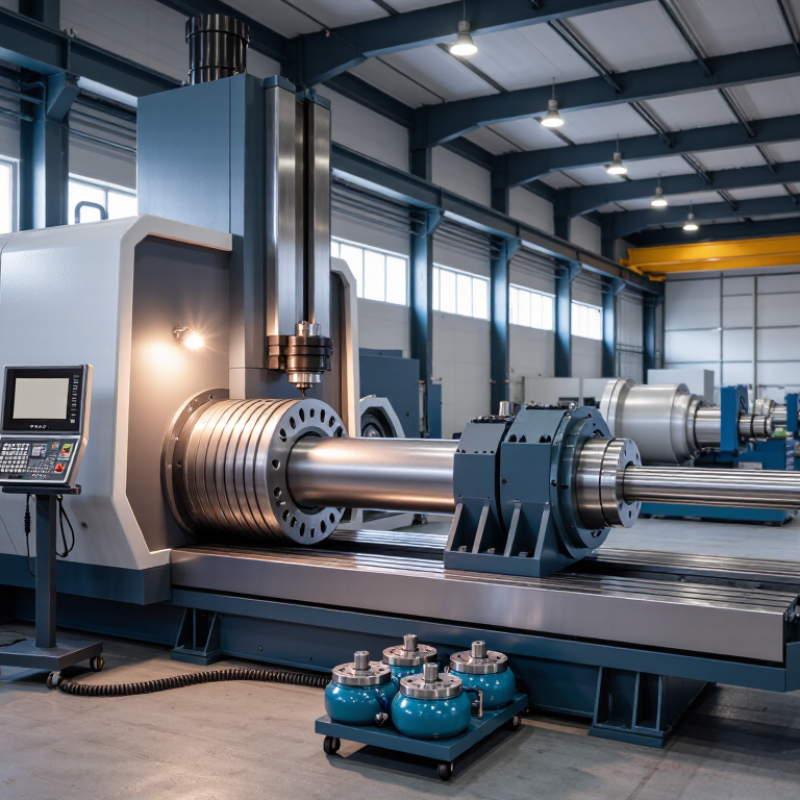
China Top 10 Compressor Boring Machine Manufacturers

Compressor Boring Machines: Functions, Applications, and Key Machining Terms

Compressor boring machines enlarge or true cylinder bores and bearing seats so moving parts fit within specified clearances. A machinist secures the compressor block in a rigid fixture, aligns the spindle with the existing bore, and removes material in controlled passes. Alignment matters: even a small offset can leave uneven walls or cause premature wear. Not glamorous work. A clean cut is.

Several terms describe the result. Bore diameter is the internal width; concentricity describes how closely related circular features share an axis. Cylindricity measures how consistently round and straight the bore remains along its length. Feed rate is how quickly the cutting tool advances, while spindle speed is its rotation rate. These settings depend on the material, tool, and required finish, so one recipe rarely fits every compressor.

The machines are used when repairing or producing compressor cylinders, housings, and related components. Boring establishes size and alignment; honing may follow to refine the surface texture. They are not interchangeable operations. In practice, setup can be less tidy than a drawing suggests: worn fixtures, heat, or old damage may affect measurement. Check bore size at several depths and orientations, and record readings before deciding whether another cut is needed. A little uncertainty should prompt a second measurement, not guesswork.

Technical Benchmarks: Bore Diameter (mm), Spindle Speed (r/min), and ISO 230-2 Accuracy

For a Top 10 comparison, bore diameter and spindle speed should be read together, not as isolated headline figures. A practical screening range might be 40–250 mm bore capacity and 80–1,200 r/min, depending on compressor size and cutting setup. Treat these as selection bands, not industry-wide averages. A 100 mm bore at low speed may suit a large, rigid cutting tool; a smaller bore can need higher speed for a clean finish. Tool material, feed rate, and workpiece support change the result.

ISO 230-2:2014 sets out methods for testing positioning accuracy and repeatability of numerically controlled axes. It does not prescribe one universal pass mark. Ask suppliers for measured bidirectional results across the working travel, rather than a single best-case figure. That matters. Also distinguish axis positioning accuracy from spindle runout; they affect the finished bore in different ways. ISO 230-1:2012 covers geometric accuracy tests under specified conditions, useful context when comparing machine reports.

Check whether test conditions match real production: warm-up time, load, measuring instrument, and workpiece setup should be stated. A few micrometres can matter in a compressor cylinder, yet catalog tables often omit how the value was measured. That is a weakness worth flagging, even when the numbers look impressive. Compare bore range, speed range, and ISO test results side by side, then verify critical dimensions with a trial cut.

China Top 10 Compressor Boring Machine Manufacturers — Technical Benchmarks

Illustrative comparison of bore diameter, spindle speed, and ISO 230-2 positioning accuracy. Each point represents an anonymized reference profile, not a verified manufacturer specification. ISO 230-2 defines a measurement method; it does not prescribe a universal accuracy limit.

Bubble size represents positioning error in micrometres; a larger bubble indicates a higher error. Use machine-specific test reports to verify values before procurement.

China’s Top 10 Manufacturers: Company Profiles, Product Lines, and CNC Capabilities

China Top 10 Compressor Boring Machine Manufacturers

Profiles of China’s top ten compressor boring machine manufacturers are most useful when they reveal measurable capabilities, not just broad claims. Compare spindle speed, bore diameter range, table travel, and stated tolerances. Check whether each machine line supports cylinder blocks, liners, or other compressor components. Grand View Research valued the global machine-tool market at US$101.6 billion in 2023, forecasting 6.4% annual growth through 2030. Market growth makes capability comparisons commercially relevant, but it cannot verify a machine’s bore quality.

Product-line reviews should distinguish manual, semi-automatic, and CNC models. Ask whether CNC systems support repeatable tool paths, probing, and documented setup procedures. The International Federation of Robotics’ World Robotics 2024 reported 276,288 industrial robot installations in China during 2023. That represented about 51% of global installations. Strong automation activity does not prove a boring machine’s accuracy. Buyers should inspect sample-part measurements, calibration records, chip evacuation, and service-response commitments. Numbers need context. Published specifications can look complete, while maintenance details remain unclear. A careful profile should flag missing evidence rather than treating every catalog claim as verified.

Manufacturer Comparison: Power (kW), Workpiece Range, Accuracy, and Safety Standards

Comparing China’s compressor boring machine manufacturers requires more than ranking motor power. A 7.5 kW spindle may suit routine cylinder work, while heavier stock or interrupted cuts can require greater torque and a stiffer frame. Ask whether quoted power is continuous or peak; catalogs do not always make this clear.

Workpiece range should include minimum and maximum bore diameter, cylinder length, and fixture capacity. A machine that accepts a 90 mm bore may still struggle with a long, thin sleeve. Fit matters.

Accuracy claims need context. Compare bore tolerance and repeatability, then ask how each was measured and on what material. I would treat an unexplained tolerance as a question, not a promise. Small details matter. Request a sample report from a comparable workpiece, including surface finish where relevant.

For safety, inspect guarding, interlocks, emergency stops, chip protection, and electrical documentation. Check that conformity documents match the machine configuration and intended market. A polished specification sheet helps, but it cannot replace a clear acceptance test.

How to Assess Suppliers: Production Capacity, Export Data, Service, and Spare Parts

Assess a boring-machine supplier with factory evidence, not brochure figures. Request monthly output, current order load, shift pattern, and recent acceptance records. Ask to inspect a machine cutting a representative cylinder block. Record bore diameter, roundness, surface finish, and cycle time. Gardner Research’s 2023 World Machine Tool Survey estimated global machine-tool consumption at about US$81.4 billion in 2022, roughly 7% above 2021. This is broad market context, not proof of demand for compressor boring machines. Treat supplier capacity claims with the same caution.

Check export history against customs declarations, bills of lading, and buyer references. UN Comtrade provides country-level trade data; HS heading 8459 covers several boring and related machine tools, so confirm the exact local tariff code before comparing shipments. Ask for the last three years of export markets and delivery records. Then test service readiness: request response-time commitments, remote troubleshooting procedures, and technician availability in your region. Spare-parts lists should identify part numbers, stock locations, and replenishment lead times. Get prices for wear items such as boring bars, seals, and bearings. A promised fast response means little without named contacts and measurable terms. I would still verify one detail: reported export volume may include equipment unlike the machine being purchased.

China Top 10 Compressor Boring Machine Manufacturers — How to Assess Suppliers: Production Capacity, Export Data, Service, and Spare Parts

No. Assessment Dimension What to Verify Evidence to Request Assessment Guidance
1 Manufacturing capability Confirm whether the supplier manufactures the boring machine in-house or mainly assembles, resells, or outsources production. Factory audit, production-process overview, equipment list, and recent machine-build records with sensitive details redacted. Distinguish verified manufacturing capability from trading or assembly activity.
2 Production capacity Check stated monthly or annual output, current order backlog, lead time, and available capacity for the required configuration. Capacity statement, production schedule, lead-time commitment, and evidence of completed comparable orders. Compare documented available capacity with your delivery schedule; do not rely on a headline capacity figure alone.
3 Machine specifications Match the proposed machine’s boring diameter, stroke, workpiece dimensions, spindle or tooling arrangement, and accuracy claims to the application. Technical data sheet, machine layout, operating manual, and a written specification for the quoted configuration. Evaluate the exact configuration offered, not a different model shown in general marketing material.
4 Quality control Review inspection stages for machine components, assembly, electrical systems, and final performance testing. Inspection checklist, calibration records where applicable, factory acceptance test procedure, and sample test report. Look for defined acceptance criteria and traceable inspection records.
5 Export experience Ask whether the supplier has shipped comparable machinery to your destination market and can handle export packaging and documentation. Redacted bills of lading, packing lists, export declarations, or customer references, where legally shareable. Check document consistency and shipment relevance. Public trade databases may be incomplete and should not be treated as a complete record.
6 Delivery and packaging Confirm the delivery term, production lead time, packing method, transport dimensions, gross weight, and responsibility for export clearance. Written quotation, packing specification, shipment plan, and the applicable Incoterms® rule and named place. Compare quotations on the same delivery basis and clarify who arranges each transport and clearance step.
7 Installation and training Determine whether installation, commissioning, operator training, and remote support are included or separately priced. Service scope, training agenda, language availability, travel-cost terms, and commissioning checklist. Confirm the service scope, response channel, and any customer-side requirements before ordering.
8 Warranty and technical service Review warranty duration, coverage, exclusions, claim procedure, technical-support hours, and escalation arrangements. Written warranty terms, service contact details, response-time commitments if offered, and sample service records. Assess the written terms rather than relying on verbal assurances; warranty coverage varies by contract and configuration.
9 Spare-parts support Check availability, identification, pricing, and dispatch arrangements for wear parts and critical components. Parts list with part numbers, recommended initial spares, quotation validity, stock or sourcing lead times, and ordering instructions. Confirm that parts are identifiable and obtainable throughout the expected operating period.
10 Commercial and supplier verification Verify the contracting entity, payment terms, quotation validity, change-control process, and consistency of company details. Business registration documents, signed quotation and contract, bank-account verification through an independent channel, and change-order terms. Resolve discrepancies before payment and ensure the contract identifies the machine configuration and acceptance conditions.

Comparison note: This is a supplier-assessment framework, not a verified ranking of ten named manufacturers. Supplier-specific capacity, export, service, and spare-parts figures should be confirmed directly using current documentary evidence.

CNC machining CAD export file formats

Put your parts in production today

Get an instant quote