10 Tips for Choosing the Best Bending Machine
Choosing a Bending Machine is a production decision, not just a search for maximum tonnage. The right model must suit the metal, part dimensions, bend angles, and daily workload. A machine that handles thick plate may still be a poor fit for short, delicate components. Setup time matters, too. So do operator training, tooling availability, maintenance access, and floor space.
Automation is changing expectations across manufacturing. The International Federation of Robotics reported 541,302 industrial robot installations worldwide in 2023 in its World Robotics 2024 report. That figure provides useful context, but it does not prove every workshop needs a robotic bending cell. A busy production line may benefit from automated loading; a job shop with varied orders may value quick changeovers more. The distinction is easy to miss.
Before comparing specifications, record a few real jobs: material grade, thickness, bend length, batch size, and required accuracy. Then compare machine capacity against those jobs, not against a supplier’s most impressive demonstration. Ask how the quoted accuracy is measured and what tooling is included. Request a trial with your own material, if possible. Small details show up fast.
There is no perfect machine for every shop. The following ten tips examine capacity, controls, safety features, service support, and total ownership cost. Some choices still involve trade-offs, and a spreadsheet cannot capture every production headache. That deserves a closer look.
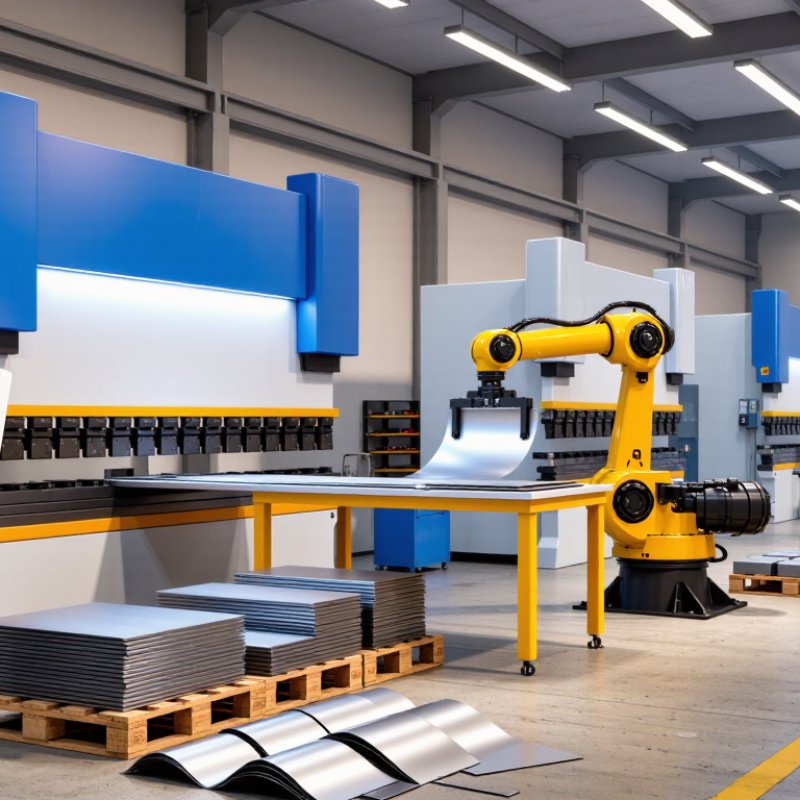
Identify Bending-Machine Types: Press Brakes, Panel Benders, and Roll Benders
Press brakes form sheet metal with a punch and die, making them versatile for varied bend angles and short runs.
Panel benders clamp and fold broad panels, often helping shops produce cabinets or enclosures consistently.
Roll benders pass sheet or plate through rollers to create cylinders, arcs, and other gradual curves. They are not substitutes for sharp, straight folds.
Geometry matters more than machine prestige.
The World Steel Association’s World Steel in Figures 2024 reports 1,888.2 million tonnes of crude steel production in 2023. That figure signals the scale of metal processing, not demand for any particular bender.
Tip: Match the machine to your hardest part, including its material, thickness, bend radius, and flange size.
Tip: Run a sample using your own stock; setup time and springback can surprise you.
Ask operators to assess loading space, tooling changes, and repeatability, not just rated force or speed. A panel bender may handle repeated box-like parts well, while a press brake can offer flexibility across mixed jobs. Roll-bending results also depend on material and roller setup. No specification sheet captures every shop condition. Record trial results, then revisit the choice before buying.
Match Sheet Thickness to V-Die Openings: Typically 6–8× Material Thickness
A practical starting point for air bending is a V-die opening six to eight times the sheet thickness. For 1 mm sheet, that usually means a 6–8 mm opening. This ratio gives the material room to form without demanding excessive force. It is a guideline, not a guarantee. Material strength and bend radius matter too.
A die that is too narrow can raise tonnage, mark the surface, or strain the tooling. Too wide, and the bend may have a larger inside radius than the drawing allows. Springback can also shift the finished angle, especially with stronger or harder sheet. Check the press brake’s capacity before setup, and confirm that the punch and die are suitable for the material.
Run a test bend on an offcut of the same thickness and material. Measure the angle and inside radius, then adjust the opening or setup as needed. Small changes count. I’ve seen the 6–8× rule treated as exact, when real stock thickness and material variation can make it miss. Record the settings that work, but verify them again when the sheet or tooling changes.
Match Sheet Thickness to V-Die Openings
A common starting guideline is to choose a V-die opening about 6–8 times the sheet thickness.
The ranges are calculated from the 6–8× guideline. Confirm the final opening against the material, bend requirements, and tooling recommendations.
Size Press-Brake Capacity by Material, Bend Length, and Required Tonnage
A press brake’s rated tonnage is only a starting point. Check what material and thickness the rating assumes; many capacity charts use mild steel as their baseline. Stainless steel or high-strength plate may require more force at the same thickness. The difference can be substantial. Bend length matters too. A 2-meter bend generally demands more total tonnage than a 1-meter bend, even when material and thickness stay unchanged. Use a tonnage chart that matches the material, thickness, die opening, and bend length. Small changes count.
For example, a long bend in thick stainless steel may exceed a machine’s capacity, although a short test piece bends cleanly. That can be misleading. Confirm the required force per meter, then calculate the load across the full bend length. Check whether the machine can deliver that force evenly across its working length, and verify tooling limits as well. Leave a sensible capacity margin for setup variation and material differences; do not treat the machine’s maximum rating as a routine target. I would recheck the calculation whenever the material grade or V-die opening changes. It is easy to overlook that detail. When chart assumptions are unclear, ask a qualified supplier or technician before running the job.
Compare CNC Controls, Backgauge Axes, and Positioning Specifications
A CNC control should make common jobs easy to program, correct, and repeat. Check whether operators can store bend sequences, adjust angles, and recover a saved job without rebuilding it. In a busy shop, a clear screen and sensible menus can save more time than a long list of advanced functions. Small details matter. Ask for a live demonstration using a part similar to your own, not just a polished sample.
Tip: Match the backgauge axes to the parts you actually bend. Two axes may handle straightforward, consistent flanges; tapered parts or varied profiles may need additional movement. More axes are not automatically better. They add capability, but can also increase setup demands and cost. Ask how quickly operators can set stops and verify them against a real workpiece.
Read positioning specifications carefully. Resolution describes the smallest displayed or commanded change; it does not guarantee finished-part accuracy. Check stated repeatability, then ask how the machine is tested and under what conditions. Material thickness, tooling, deflection, and setup all affect the result. A specification can look reassuring, yet the real setup may feel less tidy. If possible, run several parts and measure the flange positions with your usual tools. That practical check can reveal whether the stated performance suits your work.
Check Tooling Compatibility and Safety Against ISO 16092-3:2017
When comparing bending machines, check each punch and die against the machine’s rated force, working length, stroke, and clamping method. ISO 16092-3:2017 sets safety requirements for hydraulic presses, including measures related to safeguarding and control systems. It does not, by itself, confirm that a particular tool fits a particular machine.
Fit matters.
Ask for documented tooling limits, then verify the actual die height and clamping arrangement before installation. Check whether guards, light curtains, or other protective devices remain effective with the selected tooling and setup. A tool change can alter access points and operating conditions, so ask how the machine’s safeguards are validated after changes.
The U.S. Bureau of Labor Statistics reported 2.4 recordable injury and illness cases per 100 full-time workers in private industry in 2023; this broad figure is not specific to press brakes, but it underlines why safe setup deserves attention. Request a risk assessment referencing ISO 16092-3:2017 and have qualified personnel confirm the machine-tool combination. I would not rely on a sales specification alone: paperwork can be incomplete, and an on-site check may reveal practical clearance issues.


