Get an instant quote
Get in touch Listen to our podcast

Blog

7 Tips for Choosing a Hydraulic Forging Press

Choosing a Hydraulic Forging Press is not just a matter of selecting the largest tonnage on a product sheet. The right machine must suit the parts, materials, tooling, and production pace your shop actually needs. A press that seems powerful enough may still have an unsuitable stroke, daylight, or working area for a particular die setup. Small details matter.

This guide introduces seven practical considerations for comparing presses, from force capacity and control options to safety features, maintenance access, and supplier support. Look beyond headline specifications. Ask how the machine performs across its working stroke, what installation requirements apply, and whether the controls provide useful repeatability for your process. Where possible, review technical documentation and discuss your application with a qualified manufacturer or press specialist. A production trial can reveal issues that a brochure cannot.

There is no perfect press for every shop, and claims of a universally best model deserve careful scrutiny. Requirements differ with part geometry, material, tooling, and operating conditions. Even experienced buyers can overlook a constraint; I would check the foundation and service access early, not after delivery. The following tips offer a clear starting point for building a shortlist and asking better questions. They are not a substitute for engineering review, but they can help you make a more informed, dependable investment.
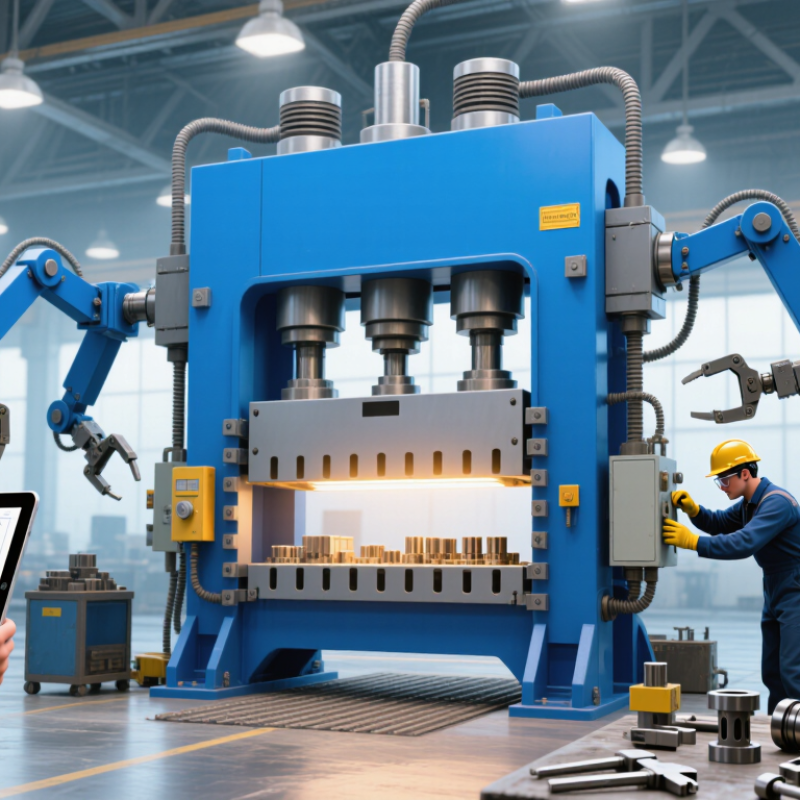
7 Tips for Choosing a Hydraulic Forging Press

Define the Forging Requirements and Production Goals

Before comparing press capacities, define the parts and processes the machine must handle. Record the alloy, billet dimensions, forging temperature, die type, and target part weight. A 50 mm steel billet and a broad aluminum preform can demand very different force and stroke profiles. Small details matter.

Estimate the required force with a qualified process engineer, using material data and the planned die design. Then check that the press can deliver that force at the needed point in its stroke. Confirm daylight, bed size, ram travel, and tool-change clearance. A high tonnage rating alone is not enough. Neither is a fast cycle time if the press cannot hold pressure steadily during forming.

Set production goals in parts per hour, shifts per day, and expected changeovers. Include loading, trimming, inspection, and downtime; the forging stroke is only part of the cycle. Ask whether the press will run one family of parts or frequent short batches. It is tempting to size for the most ambitious forecast, but that can add cost without solving a real bottleneck. Recheck the assumptions with actual cycle data when available. They may be wrong.

Match Press Capacity, Force, and Stroke to the Workpiece

A hydraulic forging press should be selected around the actual workpiece, not a catalog tonnage alone. Estimate the required force from the alloy, forging temperature, projected area, and die geometry; thick sections or cooler spots can raise the load sharply. Rated capacity is not a target to reach on every stroke. Allow an appropriate operating margin, and check how the press rating applies across its stroke using the supplier’s engineering data. Do not guess.

The stroke must cover the die opening, billet height, and loading clearance, while leaving room for safe tool setup. A stroke that is too short can prevent full die closure; excessive travel may add cycle time and complicate handling. Check daylight and shut height too, since stroke length alone does not prove the tooling will fit. Small details matter. For example, a 180-millimeter billet may need more travel than its height suggests once tongs, scale, and die approach are considered. I would recheck these dimensions after the first layout; shop drawings can miss real handling space.

Compare Frame Design, Controls, and Safety Features

A hydraulic forging press should be compared by frame stiffness, control response, and practical safeguards—not tonnage alone. A four-column frame can offer useful access around the die, while a straight-side frame may better resist uneven loading. Ask for deflection data at rated force, and check how the supplier defines the measurement. A glossy frame drawing is not enough.

Controls deserve a hands-on review. Confirm that operators can set pressure, stroke, and dwell without reaching across the work area. Check whether the system records faults and makes setup changes visible. Small details matter. The U.S. Bureau of Labor Statistics reported 2.6 million nonfatal workplace injuries and illnesses in private industry in 2023. This is not a press-specific figure, but it underscores why safeguards need real attention. Inspect light curtains, interlocks, emergency stops, and two-hand controls against the actual loading method. Ask how the press behaves after a power interruption. Then test the answer. A control panel may look clear in a showroom and feel confusing with gloves on. I would also question any safety claim that lacks documented validation; specifications can be incomplete, and buyers should verify them with a qualified engineer.

7 Tips for Choosing a Hydraulic Forging Press - Compare Frame Design, Controls, and Safety Features
Tip What to Compare Practical Checks Why It Matters
1 Frame design and stiffness Compare straight-side, four-column, and open-throat configurations. Ask for frame-deflection information at rated load and confirm the design suits the required workpiece and tooling access. Frame geometry affects access, alignment, and resistance to deflection under load. The best configuration depends on the part, die arrangement, and available floor space.
2 Rated capacity and force profile Check the rated force and the point in the stroke at which it is available. Match the press rating to the forming process, material, workpiece size, and expected operating cycle. Press capacity alone does not describe every application. Available force through the stroke and the required process conditions should be verified before selection.
3 Stroke, daylight, and bed dimensions Compare ram stroke, maximum open height (daylight), bed size, and working opening. Include die height, handling equipment, and the largest planned workpiece in the dimensional check. A press that meets the force requirement may still be unsuitable if the tooling or workpiece does not fit within its working envelope.
4 Controls and operating modes Review the available manual, setup, and automatic operating modes; ram-speed control; position and pressure settings; and how recipes or process parameters are selected and monitored. Clear, appropriate controls help operators run repeatable cycles and make setup tasks easier to manage. Confirm that controls fit the intended workflow and operator training.
5 Tooling changeover and access Inspect die access, daylight, bolster or bed arrangements, and provisions for locating and securing tooling. Estimate changeover steps and check whether planned lifting equipment can reach the work area. Good access and a workable changeover process can reduce setup difficulty and help avoid handling problems when dies are heavy or frequently changed.
6 Machine guarding and safety systems Verify the proposed safeguarding for the actual operation, including access points, interlocked guards, presence-sensing devices where suitable, emergency stops, and safe setup procedures. Confirm applicable local requirements. Safeguards must be selected for the press, tooling, and way the machine will be used. Requirements vary by jurisdiction, so have the complete installation and risk assessment reviewed by qualified safety personnel.
7 Maintenance, hydraulics, and support Ask about hydraulic-system access, filtration and fluid-maintenance requirements, inspection points, documentation, spare-parts availability, and service support. Check the expected utilities and installation requirements. Accessible maintenance points and clear service information help plan upkeep and reduce the chance that routine maintenance or support needs will disrupt production.

Check Tooling Compatibility, Efficiency, and Maintenance Needs

7 Tips for Choosing a Hydraulic Forging Press
Check Tooling Compatibility, Efficiency, and Maintenance Needs

Before comparing tonnage, check die height, shut height, bolster dimensions, stroke, daylight, and ejector layout. Request allowable eccentric-load limits in writing. A die may fit the bed yet collide with guards or leave poor loading clearance. Trial-fit a representative tool, then run a slow cycle and inspect alignment and part release. Check it cold.

Compare measured electrical use at idle, approach, and forming—not just peak motor ratings. The U.S. Department of Energy’s Improving Pumping System Performance sourcebook says pumping systems use nearly 20% of the world’s electrical energy demand. It reports 25–50% of energy use in some industrial plants. These are pump-system figures, not press-specific data, but they make hydraulic losses worth checking. Ask about pump sizing, idle pressure, variable-speed control, and measured energy per cycle.

Request filter specifications, oil volume, cooling capacity, and service intervals. Confirm technicians can access filters, seals, and hose connections for routine checks. Review maintenance logs and oil-analysis records from equipment with a similar duty cycle. Small details matter. Ask for records.

7 Tips for Choosing a Hydraulic Forging Press

Compare tooling compatibility, efficiency, and maintenance needs alongside the other key selection factors.

How to read this chart: Ratings are an illustrative planning guide, not measured industry data. Priorities vary by part geometry, production volume, tooling, and operating conditions. Confirm press specifications and maintenance requirements with qualified suppliers.

Evaluate Supplier Support, Compliance, and Installation Requirements

7 Tips for Choosing a Hydraulic Forging Press

Evaluate supplier support before comparing press tonnage. Ask who handles commissioning, operator training, and urgent service calls. Get response times in writing. Small details matter. Confirm that wear parts, seals, and hydraulic filters are readily available, with clear part numbers and lead times. Siemens’ 2024 True Cost of Downtime report estimates that unplanned downtime costs the world’s 500 largest companies about 11% of annual revenue. That figure is not specific to forging, but it shows why service access deserves serious attention.

Check compliance documents against the press’s intended use and your local requirements. Request the risk assessment, safety-circuit information, operating manual, and relevant conformity documentation. ISO 16092-3 covers safety requirements for hydraulic presses; ask how the proposed configuration addresses applicable requirements. The U.S. Bureau of Labor Statistics reported 3.3 recordable injury and illness cases per 100 full-time workers in manufacturing in 2023. This is a broad sector figure, not a press-specific rate, but it reinforces the value of guarding, safe access, and documented training.

Installation can change the real cost of a machine. Have the supplier review foundation loads, floor capacity, pit dimensions, electrical supply, crane access, and space for die changes before delivery. Ask for layout drawings and a commissioning checklist. Confirm who verifies alignment and pressure settings. I would not assume a standard installation package covers every site; older floors and tight access often complicate plans. Get those responsibilities agreed in writing.

CNC machining CAD export file formats

Put your parts in production today

Get an instant quote