Get an instant quote
Get in touch Listen to our podcast

Blog

10 Tips for Buying Trucker Caps in Bulk

Buying Trucker Caps in bulk can lower the cost per piece, but a low quote does not guarantee a good order. Buyers need to compare materials, fit, decoration, and delivery terms before approving production. A sample can look right under warehouse lights and feel different outdoors. Check the mesh for rough edges, the front panel for consistent shape, and the closure for easy adjustment. Fit matters. Small details become obvious when a team wears the same cap.

This guide covers ten practical checks, from setting a realistic budget to reviewing a pre-production sample. It explains how to compare cotton and polyester blends, choose colors that match your brand, and confirm embroidery or printing details. Ask suppliers for written specifications, production timelines, and clear pricing for setup, packaging, and shipping. Then inspect the finished goods against the approved sample, rather than relying on a product photo alone. Details add up.

Bulk buying still involves trade-offs. A premium fabric may exceed the budget, while the cheapest option may not hold its shape through regular wear. There is no perfect choice for every order. Consider who will wear the caps, how often, and in what setting. A little extra time spent checking sizes, stitching, and carton quantities can prevent avoidable surprises. These tips are designed to help you make a measured decision and order Trucker Caps with greater confidence.
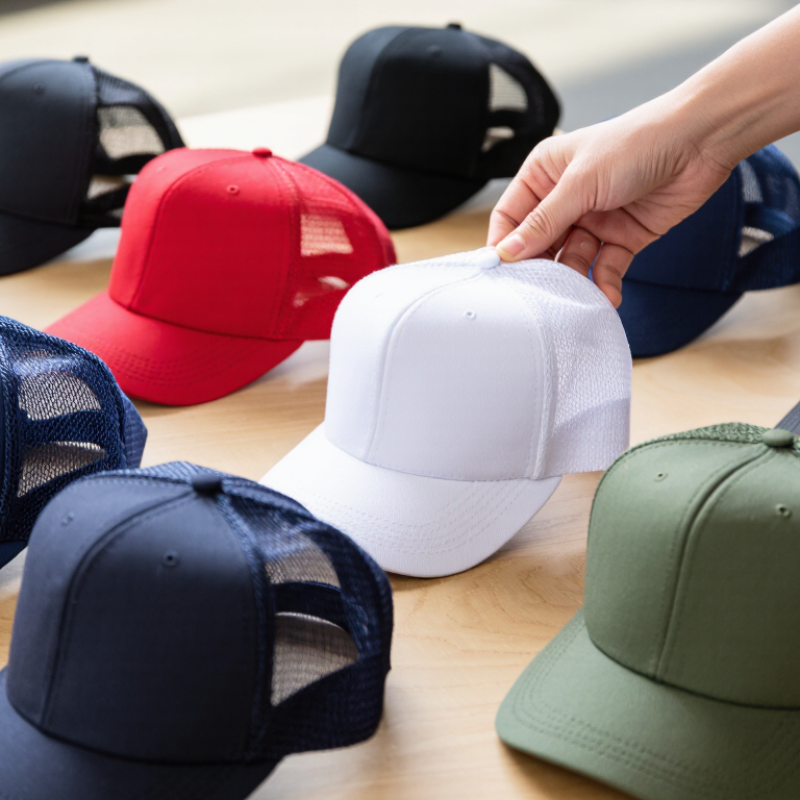
10 Tips for Buying Trucker Caps in Bulk

Defining Your Needs for a Bulk Trucker Cap Order

Before requesting quotes, define who will wear the caps and where. A crew working outdoors may need breathable mesh, a sweatband, and a darker bill. Event giveaways have different demands. Will recipients wear them daily, or only during one weekend? Fit comes first.

Record the order quantity, delivery date, budget per cap, and decoration method. Embroidery can look substantial, but dense stitching may stiffen a lightweight front panel. Specify the cap’s fabric, closure, color, and size range. A curved bill feels familiar; a flat bill creates a sharper profile. Small details matter. I would still order a sample before approving a large run. A neat spreadsheet cannot reveal an uncomfortable seam.

Visibility is useful, but it is not a sales forecast. The Advertising Specialty Institute’s 2023 Global Ad Impressions Study estimates that a promotional cap generates about 3,400 lifetime impressions in the United States. That figure supports planning for repeated wear, not assuming every cap will be kept.

Ask staff to test samples through a full workday, then note heat, fit, and logo readability. The feedback may be untidy. It is still more useful than guessing. Keep a small buffer for damaged pieces or late size changes, and confirm the final artwork dimensions before production.

Selecting Cap Materials, Styles, and Customization Options

For bulk trucker caps, match the material to the job. Cotton twill feels sturdy and takes embroidery well; polyester mesh dries quickly and suits warm, active settings. A foam-front cap can show bold prints, but it may feel less breathable.

Tip 1: Check the fabric against the wearer, season, and intended use. Small details matter.

Textile Exchange’s 2024 Materials Market Report estimates global fiber production reached 124 million tonnes in 2023, with polyester making up 57 percent. That figure describes the wider textile market, not cap performance, but it highlights how common synthetic fibers are. Ask suppliers for fiber content and care instructions, then inspect samples under ordinary indoor and outdoor light.

Tip 2: Compare crown height, brim curve, and mesh stiffness in person. Fit is not universal.

For customization, specify logo size, placement, thread colors, and artwork format before approving production. Embroidery creates texture on a structured front; a printed design can preserve finer color detail. Request a physical sample with the actual trim and closure. A digital mock-up can look convincing, and still miss the mark.

Tip 3: Confirm stitching, color, and fit on the sample before ordering the full quantity.

Evaluating Suppliers, Minimum Orders, and Pricing

When comparing suppliers, look beyond the lowest quote. Ask for a sample cap and inspect the mesh, stitching, brim shape, and snap closure. Small details matter. A loose seam may be hard to spot in a product photo but obvious after handling the cap. Request written specifications for fabric, colors, decoration, and packaging so each quote covers the same items.

Check the minimum order quantity before discussing a large production run. Some suppliers set separate minimums for each color or design, which can make a seemingly affordable order much larger. Ask whether mixed colors count toward one minimum, and confirm the cost of a pre-production sample. If you are testing demand, a smaller trial order may be worth a slightly higher unit price. It is easy to overestimate how quickly one style will sell.

Compare pricing by the full delivered cost, not just the per-cap figure. Include setup fees, embroidery or printing charges, sample costs, shipping, and any charges for changing artwork. Ask for a clear production timeline and payment schedule in writing. A detailed answer is a useful sign of organized communication, though it cannot guarantee quality. I would also leave room in the budget for mistakes or delays; that part is often overlooked. If a quote is unusually low, ask what is excluded before you commit.

Reviewing Samples and Confirming Product Specifications

A pre-production sample is your chance to test the cap, not just admire it. Wear it for an hour. Check whether the crown sits evenly, the brim holds its curve, and the closure adjusts without pinching. Measure crown height, brim length, and the usable adjustment range. Record fabric composition, weight, color reference, seam density, and logo placement in a signed specification sheet. Small differences matter. A cap that looks right on a table may feel too shallow during a full day of wear.

Compare every sample with the written specifications, then keep one approved sample as the production reference. Photograph measurements beside a ruler, and note acceptable color variation under consistent lighting. The National Retail Federation’s 2024 Retail Returns Landscape report, prepared with Appriss Retail, estimated that 16.9% of annual retail sales would be returned. That figure covers retail broadly, not trucker caps specifically, but it shows why clear product expectations matter. Ask the supplier to confirm any substitutions before production. I would not treat one perfect sample as proof that every bulk unit will match; that assumption is easy to make, and worth questioning. Randomly inspect finished caps for fit, stitching, panel alignment, and closure function before shipment.

10 Tips for Buying Trucker Caps in Bulk - Reviewing Samples and Confirming Product Specifications

# What to Review Sample Check Specifications to Confirm Bulk-Order Action
1 Overall construction Inspect the sample’s panels, seams, crown shape, and finish. Check for loose threads, skipped stitches, or uneven joins. Panel count, crown profile, seam construction, and acceptable workmanship tolerances. Approve a reference sample and use it as the visual standard for production.
2 Front-panel material Feel the fabric and check whether the front panels hold their shape when handled. Fiber content, fabric weight, color, and whether the front panels are structured or unstructured. Record the approved material and construction in the purchase specification.
3 Mesh panels Check mesh consistency, flexibility, edge finishing, and attachment to the fabric panels. Mesh fiber content, color, opening pattern, and the panels where mesh is used. Compare mesh samples in the intended colors before approving the production version.
4 Fit and head circumference Try the sample on several wearers, if possible, and adjust the closure through its full range. Finished circumference range, crown depth, and bill dimensions. State measurements in inches or centimeters. Approve a measurement sheet and specify how and where each measurement is taken.
5 Back closure Open and close the closure repeatedly. Check attachment strength, adjustment, and edge comfort. Closure type, material, color, adjustment range, and attachment method. Confirm the closure on the approved sample and require the same type in the order.
6 Sweatband and interior finish Check that the sweatband lies flat and that interior seams do not rub or have exposed edges. Sweatband material, width, color, and seam-finishing details. Include an interior inspection in the pre-production sample approval.
7 Bill shape and stitching Compare the bill curve across samples and inspect the stitching for consistent spacing and alignment. Bill length, shape, color, number of stitch rows if required, and any bill insert material. Use a physical sample or clear measurement drawing to confirm the intended bill profile.
8 Color and decoration Review the sample under neutral lighting. Check printed, embroidered, or other decoration for placement and finish. Color references, decoration method, artwork dimensions, placement, and thread or ink colors. Approve a decorated sample and document placement measurements before bulk production.
9 Durability and basic function Adjust the closure, flex the bill gently, and inspect seams and mesh attachment after normal handling. Any agreed inspection method, pass criteria, and requirements for colorfastness or seam strength. Agree on the inspection criteria in writing; do not rely on an unspecified “quality” requirement.
10 Packaging and final approval Check how the sample is folded or packed and whether the cap arrives without unwanted crushing or marks. Units per carton, individual packaging, carton dimensions, labeling details, and approved tolerances. Approve a complete pre-production sample and packaging plan before releasing the bulk order.

Note: Measurements, materials, and tolerances should be agreed with the supplier and recorded in the order specification. Sample checks are practical review points, not universal industry standards.

Placing the Order and Planning Delivery and Quality Checks

Before placing a bulk order, put every detail in writing: cap color, fabric, mesh style, closure, logo position, and size range. Send a marked-up proof with measurements, not just a screenshot. Confirm quantities by color and agree on acceptable differences in stitching or shade. A physical sample can reveal fit or fabric issues that a screen cannot. Check it in daylight, too.

Ask the supplier to confirm production time, packing method, dispatch date, and estimated transit window in one email. Build a buffer around a launch or event; freight schedules can shift, and weather may add days. Leave room for delays. Split the delivery only if the extra handling cost makes sense. Confirm carton counts and labels before shipment so receiving staff can compare boxes with the packing list.

Plan quality checks before goods leave the factory. Request clear photos of finished caps, including close-ups of seams and closures. For a large order, agree on a random inspection sample and how defects will be handled. On arrival, open several cartons, not only the top one. Look for loose threads, bent brims, uneven embroidery, and crushed packaging. It is tempting to skip label checks when a shipment arrives late. I would resist that shortcut. Keep the approved proof and inspection notes together.

Article Source:

CNC machining CAD export file formats

Put your parts in production today

Get an instant quote