Buying Ferrous Sulfate Pills can feel simple until you compare labels, tablet strengths, and stomach-related warnings. The right choice depends on more than price. Check the amount of elemental iron per tablet, the serving directions, and whether the package clearly identifies its manufacturer and expiration date. Small print matters.
The scale of iron deficiency makes careful choices important. The World Health Organization’s 2023 estimates report anemia among about 30% of women aged 15–49 and 37% of pregnant women worldwide. These figures describe anemia, not iron deficiency alone; other causes exist. In a 2015 New England Journal of Medicine review, hematologist and iron researcher Dr. Clara Camaschella wrote, “Iron-deficiency anemia is the most common type of anemia worldwide.” Her review also underscores why identifying the cause matters before treating a low blood count as a simple supplement problem.
A useful buying guide should translate that evidence into practical checks: compare elemental iron, read directions, inspect quality information, and consider tolerability. NIH’s Office of Dietary Supplements lists 8 mg per day as the recommended intake for adult men and women over 50, and 18 mg for women aged 19–50; these are dietary reference values, not personal treatment doses. Ferrous sulfate tablets can cause constipation, nausea, or stomach discomfort. Not everyone needs them. A clinician can help confirm whether iron is appropriate, especially during pregnancy, for children, or when symptoms persist. Labels are not the whole story. Still, they are a sensible place to begin.
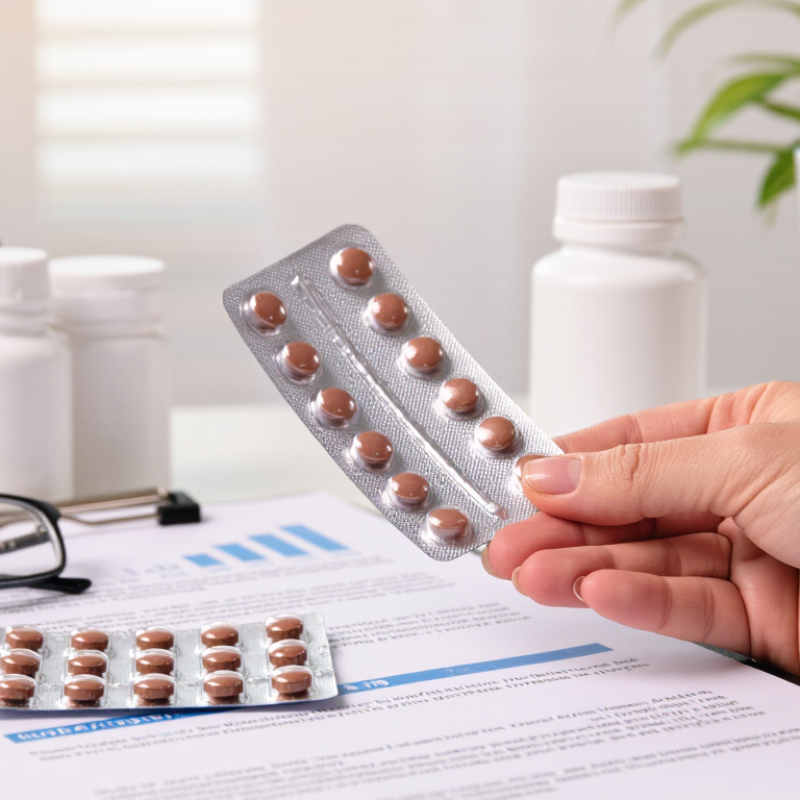
Before buying ferrous sulfate pills, set your target using the right measure. The recommended dietary allowance is 8 mg of iron daily for men and 18 mg for women ages 19–50. These amounts include food and supplements. They are not recommended pill doses. Pregnancy changes iron needs, and a clinician may recommend a different amount after reviewing blood tests. More is not automatically better.
Tip: Check the “elemental iron” amount on the label, not only the ferrous sulfate amount. The two figures can differ. Compare the label with your clinician’s advice, especially if you have not had iron levels checked. Fatigue alone cannot confirm iron deficiency; many conditions can cause it. This distinction is easy to miss.
Tip: Ask a pharmacist or clinician about timing and interactions. Calcium supplements, tea, and coffee can interfere with iron absorption when taken together. Iron may cause nausea, constipation, or dark stools. Keep tablets away from children; accidental overdose can be dangerous. A simple food-and-supplement note can help you notice patterns, though tracking is not a substitute for medical advice.
The recommended dietary allowance (RDA) is 8 mg per day for men and 18 mg per day for women ages 19–50. These amounts include iron from food and supplements; they are not recommended ferrous sulfate pill doses. Check a supplement’s elemental iron content and ask a healthcare professional before using iron supplements.
When comparing ferrous sulfate pills, check the amount of elemental iron, not just the tablet’s total weight. A 325 mg ferrous sulfate tablet typically provides about 65 mg of elemental iron. The larger number describes the iron salt, which includes other components. It is an easy label detail to miss.
Read the package carefully. Some products list both figures, while others emphasize only the compound’s weight. Formulations can vary, so do not assume every 325 mg tablet provides exactly the same amount. If the label is unclear, ask a pharmacist to interpret it. Small print matters.
More is not automatically better. Iron needs depend on a person’s health and test results, so follow guidance from a qualified clinician rather than choosing a dose by tablet strength alone. Iron may cause nausea, constipation, or stomach discomfort, and it can affect how some medicines are absorbed. The timing can be confusing. Ask a clinician or pharmacist about spacing doses from other medicines, and store iron securely away from children.
When comparing ferrous sulfate pills, check the amount of elemental iron, not just the compound’s total weight. The National Academies’ Dietary Reference Intakes set the adult tolerable upper intake level (UL) at 45 mg of iron per day. The NIH Office of Dietary Supplements explains that this limit covers total daily intake, not only supplements. It is a safety ceiling, not a target dose. The UL was based largely on gastrointestinal effects, such as nausea and constipation. The label can be confusing.
A common 325 mg ferrous sulfate tablet provides about 65 mg of elemental iron, according to the NIH Office of Dietary Supplements’ Iron Fact Sheet for Health Professionals. That amount exceeds the general adult UL, but it does not automatically mean a prescribed treatment is inappropriate. Clinicians may recommend higher amounts for diagnosed deficiency and monitor the response. Compare the elemental-iron figure with your full daily intake, and ask a pharmacist if the label lists only ferrous sulfate weight. Small print matters. These figures are general guidance; individual needs and medical advice can differ.
| Tip | What to Check | Useful Data | Buying or Use Guidance |
|---|---|---|---|
| 1. Compare elemental iron, not just tablet weight | Read the Supplement Facts panel for the amount of iron per serving. | A common 325 mg ferrous sulfate tablet provides about 65 mg of elemental iron; products and formulations can vary. | Compare products by elemental iron per tablet or serving. Do not assume the ferrous sulfate salt weight equals the iron dose. |
| 2. Put the 45 mg/day limit in context | Count iron from supplements and food when considering total daily intake. | The tolerable upper intake level for adults age 19 and older is 45 mg of iron per day from all sources. It is a general population limit, not a treatment dose. | A clinician may prescribe more than this to treat iron deficiency. Do not start or change a high-dose regimen without medical advice. |
| 3. Check your age and sex-specific daily requirement | Compare the product dose with recommended dietary allowances (RDAs), not just the upper limit. | For adults: men age 19–50, 8 mg/day; women age 19–50, 18 mg/day; adults age 51 and older, 8 mg/day. | Needs vary with life stage and health. Ask a healthcare professional whether a supplement is appropriate for you. |
| 4. Match the dose to a diagnosed need | Look for guidance based on your symptoms, medical history, and blood tests. | Iron deficiency is assessed using clinical evaluation and laboratory tests; fatigue alone does not establish iron deficiency. | Avoid taking iron “just in case.” Too much iron can be harmful, and some conditions require specific medical management. |
| 5. Review the serving size and directions | Check how many tablets make one serving and the stated daily directions. | A label’s per-serving amount may refer to more than one tablet. The elemental iron amount is the key number for dose comparison. | Follow the label or your prescriber’s instructions; do not double a dose to make up for a missed one unless advised. |
| 6. Consider tolerability and interactions | Review possible side effects and any medicines or supplements you take. | Oral iron can cause nausea, abdominal discomfort, constipation, or diarrhea. Iron can also interact with some medicines, including levothyroxine and certain antibiotics. | Ask a pharmacist or clinician about timing and interactions. Do not change prescribed medication timing without checking. |
| 7. Check safety, storage, and product quality | Inspect the seal, expiry date, ingredient list, and child-resistant packaging. | Accidental iron overdose can be especially dangerous for children. | Store pills securely out of children’s reach. Seek urgent poison-control or emergency guidance if a child may have swallowed iron. |
Reference for intake values: U.S. National Institutes of Health, Office of Dietary Supplements, Iron Fact Sheet for Health Professionals. The 45 mg/day upper limit is for generally healthy adults and does not replace individualized medical advice.
When comparing ferrous sulfate pills, read the full Supplement Facts panel, not just the large number on the front. The listed milligrams may describe ferrous sulfate, while a separate figure may show elemental iron—the amount of iron itself. Those numbers are not interchangeable. Check the serving size too: a stated amount may apply to two tablets, not one. Small print matters.
Look for clear strength information, a lot number, an expiration date, and intact packaging. If the label is vague or the tablet count does not match the serving directions, pause and ask a pharmacist. I still find these panels easy to misread; a quick second look can prevent a dosing mix-up.
USP verification, when present and confirmed in the verifier’s current directory, indicates testing against defined quality standards for identity, strength, and contaminants. It does not prove that iron is right for you or that it will suit your stomach. Don’t treat a verification mark as a personal medical recommendation. Ask a clinician or pharmacist which dose fits your needs, especially if you take other medicines or already use an iron supplement. Keep pills away from children.
Ferrous sulfate may reduce how much levothyroxine your body absorbs. Many medication instructions advise separating them by at least four hours. Follow the directions from your prescriber or pharmacist if they differ. For example, if you take levothyroxine at 7 a.m., ask whether iron at lunchtime fits your schedule. Keep the timing consistent. Do not change either dose on your own.
When comparing pills, check the amount of elemental iron, not just the total ferrous sulfate listed. Products can differ in strength and tablet form. Read the label carefully, confirm the expiry date, and ask a pharmacist to check it against your medication list. Iron can cause nausea, constipation, or dark stools. Mention troublesome symptoms to a health professional, especially if they persist.
Real mornings are messy. A phone reminder or a written medication schedule may help, but routines can still slip. If you take both medicines too close together, do not double a later dose to compensate. Ask your pharmacist or prescriber what to do next. Keep iron pills away from children, since accidental ingestion can be dangerous.
| Cookie | Duration | Description |
|---|---|---|
| cookielawinfo-checkbox-analytics | 11 months | This cookie is set by GDPR Cookie Consent plugin. The cookie is used to store the user consent for the cookies in the category "Analytics". |
| cookielawinfo-checkbox-functional | 11 months | The cookie is set by GDPR cookie consent to record the user consent for the cookies in the category "Functional". |
| cookielawinfo-checkbox-necessary | 11 months | This cookie is set by GDPR Cookie Consent plugin. The cookies is used to store the user consent for the cookies in the category "Necessary". |
| cookielawinfo-checkbox-others | 11 months | This cookie is set by GDPR Cookie Consent plugin. The cookie is used to store the user consent for the cookies in the category "Other. |
| cookielawinfo-checkbox-performance | 11 months | This cookie is set by GDPR Cookie Consent plugin. The cookie is used to store the user consent for the cookies in the category "Performance". |
| viewed_cookie_policy | 11 months | The cookie is set by the GDPR Cookie Consent plugin and is used to store whether or not user has consented to the use of cookies. It does not store any personal data. |