Get an instant quote
Get in touch Listen to our podcast

Blog

What Is Stainless Steel Round Tube Used For?

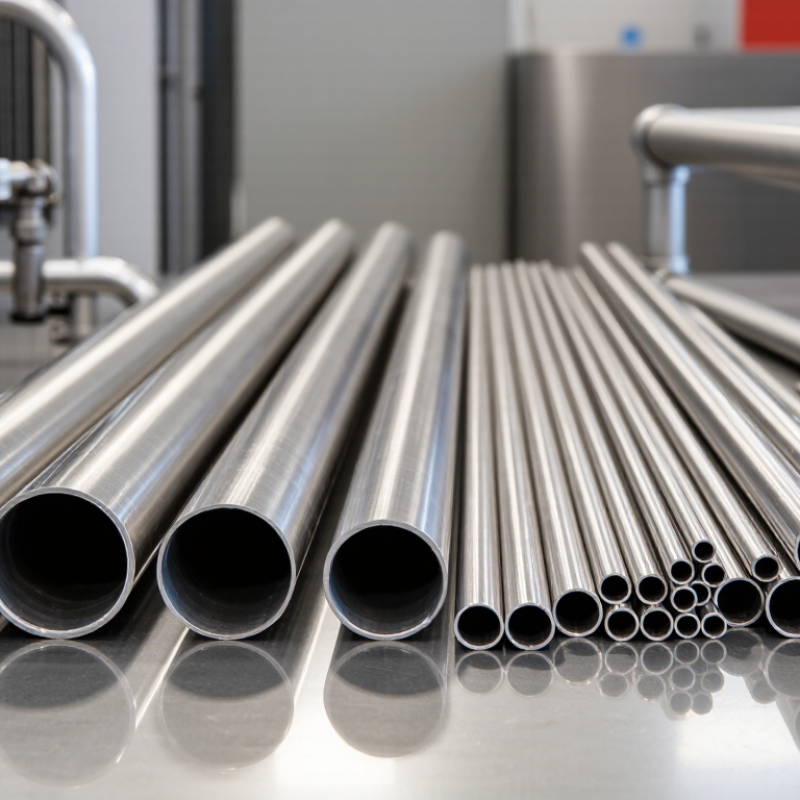
Stainless Steel Round Tube appears in many places, from clean kitchen frames to demanding industrial systems. Its circular shape distributes stress evenly and supports smooth fluid movement. The material also resists rust better than ordinary carbon steel. That advantage matters in humid workshops, coastal facilities, and food-processing areas.

Manufacturers produce round tube in different grades, wall thicknesses, diameters, and finishes. Grade 304 often suits general indoor and commercial applications. Grade 316 offers stronger resistance to chlorides and marine exposure. However, grade selection requires more than a quick comparison. Temperature, chemicals, welding methods, and cleaning routines can change the final choice. A polished surface may look excellent, but it does not automatically provide the right structural performance.

This guide examines where Stainless Steel Round Tube is used and why professionals select it. Typical applications include handrails, guardrails, heat exchangers, exhaust components, furniture, medical equipment, and process piping. Some tubes carry liquids or gases. Others support people, machinery, or protective barriers. Small details matter, such as weld quality, dimensional tolerance, internal cleanliness, and surface finish. They can affect service life and maintenance costs.

Be careful with broad claims.

No single grade fits every project. Product standards, supplier documentation, and engineering calculations should support the decision. In practice, a tube that performs well in a dry interior may fail sooner near saltwater or harsh chemicals. Even experienced buyers can overlook that difference. The following sections connect material properties with real applications, helping readers judge performance with clearer, more practical expectations.
What Is Stainless Steel Round Tube Used For?

Definition and Key Features of Stainless Steel Round Tube

What Is Stainless Steel Round Tube Used For?

Definition and Key Features of Stainless Steel Round Tube

Stainless steel round tube is a hollow, cylindrical product made from corrosion-resistant steel. Its circular shape distributes pressure evenly around the wall. This design supports fluid transfer, structural framing, and protective barriers. Common grades contain chromium, which forms a thin passive layer on the surface. That layer helps resist moisture, staining, and many chemicals. It is not completely immune to corrosion.

Manufacturers produce round tube in seamless or welded forms. Seamless tube suits demanding pressure conditions because it has no longitudinal weld. Welded tube often provides consistent dimensions and economical production. Wall thickness, outside diameter, surface finish, and grade affect performance. A polished surface may suit visible railings or food-processing areas. A dull finish can be practical for industrial frames. Small differences matter.

In workshops, stainless steel round tube appears in handrails, heat exchangers, machine guards, exhaust systems, and sanitary piping. Its smooth interior can reduce places where residue collects. Its strength-to-weight ratio also helps create rigid structures without excessive mass. However, choosing it by appearance alone is a mistake. Chloride exposure, welding quality, temperature, and cleaning chemicals must be checked. I have seen attractive tubing fail early after unsuitable installation. Even stainless steel needs proper fabrication, drainage, and regular inspection.

How Stainless Steel Round Tubes Are Manufactured

What Is Stainless Steel Round Tube Used For?

Stainless steel round tubes appear in handrails, heat exchangers, food-processing lines, furniture frames, and architectural structures. Their circular shape distributes pressure evenly and supports smooth fluid flow. Corrosion resistance also helps in humid, salty, or frequently washed environments. Still, tube selection depends on temperature, load, wall thickness, and chemical exposure.

How Stainless Steel Round Tubes Are Manufactured

Manufacturing begins with carefully selected stainless steel containing chromium and other alloying elements. The raw material is melted, cast, and formed into billets or flat strip. Seamless tubes are made by heating a billet and piercing it with a rotating tool. Rolling and drawing then control the diameter and wall thickness.

Welded tubes use formed strip. The edges are joined along one continuous seam, often with electric welding. The bead may be removed, and the tube is sized through precision rollers.

Heat treatment can improve ductility and reduce stress. Pickling or passivation cleans the surface and supports corrosion resistance. Quality checks may include dimensional inspection, visual examination, pressure testing, and weld testing. A bright surface is not proof of perfect performance. Tiny defects can remain hidden, so reliable inspection matters. I would not choose a tube by appearance alone.

Tips: Confirm the required grade, outer diameter, wall thickness, and surface finish before ordering. Ask for test reports when the tube will carry pressure or contact food. Check the actual environment, too. Chlorides can challenge stainless steel more severely than expected.

Common Industrial and Commercial Applications

What Is Stainless Steel Round Tube Used For?

Stainless steel round tube supports many industrial and commercial applications. Its smooth surface helps move liquids, gases, and powders through processing systems. Food and beverage facilities use it for washdown lines, frames, guards, and equipment supports. The material resists moisture and usually cleans more easily than ordinary carbon steel.

Commercial buildings use round tube for handrails, display structures, bollards, and architectural trim. Construction teams also install it in balconies, stair systems, and exposed service areas.

In manufacturing plants, it forms machine frames, conveyors, heat exchangers, and protective barriers. Marine environments often require corrosion-resistant tubing for railings and utility lines. However, salt exposure can still cause staining or pitting when the wrong grade is selected.

Tips: Match the tube grade to the environment, not appearance alone. Grade 304 suits many indoor and general-use projects. Grade 316 can perform better near saltwater or aggressive chemicals. Check wall thickness, outside diameter, weld quality, and surface finish before ordering. A polished tube may look excellent, but it can hide poor fabrication. That mistake is easy to overlook. Consider cleaning access, thermal expansion, and connection methods during design. Small gaps can trap water and create problems later. Specification sheets and applicable industry standards should guide final selection.

Choosing the Right Tube Grade, Size, and Finish

What Is Stainless Steel Round Tube Used For?

Choosing the Right Tube Grade, Size, and Finish

Stainless steel round tube appears in handrails, food equipment, heat exchangers, exhaust systems, and structural frames. World Stainless reported global crude stainless steel production at about 58.4 million tonnes in 2023. That scale reflects broad demand, but it does not make every tube suitable for every service.

Grade selection should follow the environment, not habit. Grade 304 usually suits indoor frames, furniture, and general processing areas. Grade 316 offers better resistance near saltwater, chlorides, and cleaning chemicals. However, “corrosion resistant” is not “corrosion proof.” Concentrated chloride deposits can still cause pitting. Heat-exposed systems may require ferritic grades, such as 409 or 439, after checking temperature and oxidation conditions. ASTM A269 and A554 provide useful tube requirements, but the project specification remains decisive.

Size needs practical verification. Measure outside diameter, wall thickness, unsupported length, pressure, and expected loads. A thin tube may look elegant but buckle under a handrail load. For liquid flow, calculate internal diameter after accounting for wall thickness. Finish changes performance and maintenance. A mill finish may work inside hidden structures, while a No. 4 brushed finish hides light scratches on visible rails. Polished surfaces help cleaning, but poor polishing can leave grooves that trap residue. The European Hygienic Engineering and Design Group emphasizes cleanable surfaces for hygienic equipment. Fabricators should also remove heat tint after welding. This step is often skipped, and that shortcut deserves reconsideration.

What Is Stainless Steel Round Tube Used For?

Grade selection depends mainly on corrosion exposure and service temperature. Type 304 is a general-purpose choice for structural, food-processing, architectural, and indoor applications. Type 316L offers improved resistance to chlorides and is commonly selected for marine, chemical, and coastal environments. Type 430 is often used for dry indoor or decorative applications, while Type 321 is suitable for elevated-temperature service. Choose the outside diameter and wall thickness according to load, flow, space, and fabrication requirements, then select a finish such as mill, brushed, or polished based on appearance and cleanability.

Chart values show representative midpoints of common standard chemical ranges in weight percent; actual limits may vary by product standard and tube specification.

Advantages and Limitations in Different Uses

What Is Stainless Steel Round Tube Used For?

Stainless steel round tube appears in handrails, furniture frames, food-processing equipment, heat exchangers, and fluid systems. Its smooth shape supports clean flow and easy wiping. It also handles moisture, moderate heat, and daily impact better than many ordinary steel tubes. In public spaces, polished tube can provide a neat, durable railing. In workshops, it offers reliable strength without requiring heavy wall thickness.

However, its advantages depend on the environment. Stainless steel costs more than carbon steel, and cutting or welding requires cleaner tools and careful technique. Saltwater, chlorides, and trapped moisture can still cause pitting. Thin-wall tube may dent under sharp impact. A bright finish can also hide poor specification. That is an easy mistake to make. For demanding chemical or coastal service, the alloy, wall thickness, weld quality, and surface finish must match the exposure. Thermal expansion may also affect long installations.

Tips: Check the fluid, temperature, and cleaning chemicals before choosing a tube. Remove iron contamination after fabrication. Avoid water traps around joints. For visible railings, inspect welds from several angles, not just from a distance. A practical trial piece can reveal scratching, discoloration, or difficult cleaning before full production.

What Is Stainless Steel Round Tube Used For? - Advantages and Limitations in Different Uses

Application Typical Stainless Steel Options Why Round Tube Is Used Main Advantages Limitations and Risks Important Design Considerations
Food and Beverage Processing 304/304L for general service; 316/316L where chloride exposure or stronger corrosion resistance is required Used for hygienic fluid transfer, equipment frames, guards, rails, and process piping Smooth internal surfaces can be cleaned effectively; corrosion-resistant; non-porous; suitable for welded fabrication Poor cleaning or stagnant liquid can cause contamination or localized corrosion; chlorides may attack 304 stainless steel Specify sanitary surface finish, smooth welds, proper drainage, and compatible cleaning chemicals
Water, Plumbing, and HVAC Systems 304L or 316L, depending on water chemistry and chloride concentration Carries potable water, condensate, process water, and certain chilled-water or heating-system fluids Long service life; low maintenance; good resistance to scaling and atmospheric corrosion; recyclable Higher material and fabrication cost than carbon steel; unsuitable water chemistry can cause pitting or crevice corrosion Check pressure rating, wall thickness, water chemistry, joining method, and galvanic compatibility with other metals
Architectural Railings and Handrails 304 for indoor or moderate environments; 316 for coastal and high-chloride locations Provides a clean appearance and strong tubular geometry for stairs, balconies, barriers, and public spaces Attractive finish; good strength-to-weight ratio; easy to clean; resistant to normal indoor humidity Surface tea staining may occur near salt or industrial pollutants; visible scratches and poor weld finishing reduce appearance Select the correct diameter and wall thickness for the required span and handrail loads; avoid trapped moisture at joints
Automotive and Transportation Components 304/304L, 316L, and selected heat-resistant stainless grades for specialized exhaust applications Used in exhaust parts, protective structures, brackets, chassis details, and fluid lines Good vibration resistance; corrosion protection; high-temperature capability for suitable grades; weldable options available Some austenitic grades have relatively high thermal expansion; forming and welding may require careful process control Consider fatigue, vibration, thermal cycling, exhaust condensate, weld quality, and clearance for thermal expansion
Chemical and Pharmaceutical Equipment 316L for many corrosive or hygienic services; duplex grades for selected high-strength chloride environments Used for transfer lines, support frames, vessels, clean-in-place systems, and controlled-process equipment Good corrosion resistance; 316L has low carbon content for improved weld corrosion resistance; cleanable surfaces No stainless grade resists every chemical; strong acids, hot chlorides, and reducing environments may require other materials Confirm chemical compatibility, temperature, concentration, weld procedures, passivation, and required internal finish
Marine and Coastal Structures 316/316L for many atmospheric marine applications; duplex grades for higher strength or demanding chloride exposure Used for railings, ladders, supports, deck fittings, tubing, and protective barriers Better chloride resistance than 304; strong, durable, and relatively low maintenance in suitable conditions 316 can still suffer pitting, crevice corrosion, or staining in stagnant seawater and splash zones; galvanic corrosion is possible Use drainage, avoid tight crevices, isolate dissimilar metals, maintain the surface, and evaluate exposure severity
Furniture, Displays, and Interior Design 304; 430 may be selected for lower-cost indoor decorative components where conditions are mild Creates lightweight frames, table legs, display supports, partitions, and decorative structures Modern appearance; easy to fabricate; durable against normal indoor wear; available in polished and brushed finishes Decorative finishes show fingerprints and scratches; thin-wall tube can dent or buckle under concentrated loads Select wall thickness according to load and unsupported length; protect finished surfaces during fabrication and installation
Industrial Machine Guards and Structural Frames 304 for general corrosion resistance; 316 where chemical or salt exposure is significant Provides rigid, cleanable frameworks for machinery, platforms, conveyors, and protective guarding Good corrosion resistance; round profile distributes loads efficiently; easy to weld and assemble in many standard grades Tubular members can buckle under compression; stainless steel may gall during threaded assembly; cost is higher than mild steel Verify buckling, deflection, impact, weld strength, connection design, and compliance with applicable safety requirements
General selection note: Stainless steel round tube is not automatically suitable for every corrosive or high-temperature service. Final selection should consider grade, tube wall thickness, temperature, pressure, chemical concentration, chloride exposure, fabrication method, surface finish, and applicable design standards.
CNC machining CAD export file formats

Put your parts in production today

Get an instant quote