
Using a Back Stretcher can feel relieving after hours at a desk, during travel, or following light exercise. However, comfort does not automatically mean correct use. A curved support changes spinal positioning, so small adjustments can affect pressure across your lower back, hips, and ribs. This guide explains practical safety habits, based on common clinical guidance and careful user experience. It focuses on gradual movement, body awareness, and sensible limits.
Start with a stable surface and inspect the device for cracks, loose parts, or damaged padding. Place it according to the manufacturer’s instructions, then lie down slowly. Keep your breathing relaxed. Begin with only a few minutes, especially if your back feels stiff or unfamiliar with extension. Stop if you notice sharp pain, numbness, tingling, dizziness, or pain traveling into a leg. Do not force a deeper stretch.
Listen closely.
People with recent spinal injuries, severe osteoporosis, unexplained back pain, or previous surgery should seek professional advice before using one. A physiotherapist or qualified healthcare professional can help determine whether this tool suits your condition. It is also important to remember that a Back Stretcher is not a treatment for every cause of back pain. Its effect may vary, and even reputable instructions cannot replace an individual assessment. Some users may improve with gentle mobility, while others may need strengthening, rest, or medical evaluation. Safe use is less about stretching farther and more about responding honestly to your body.
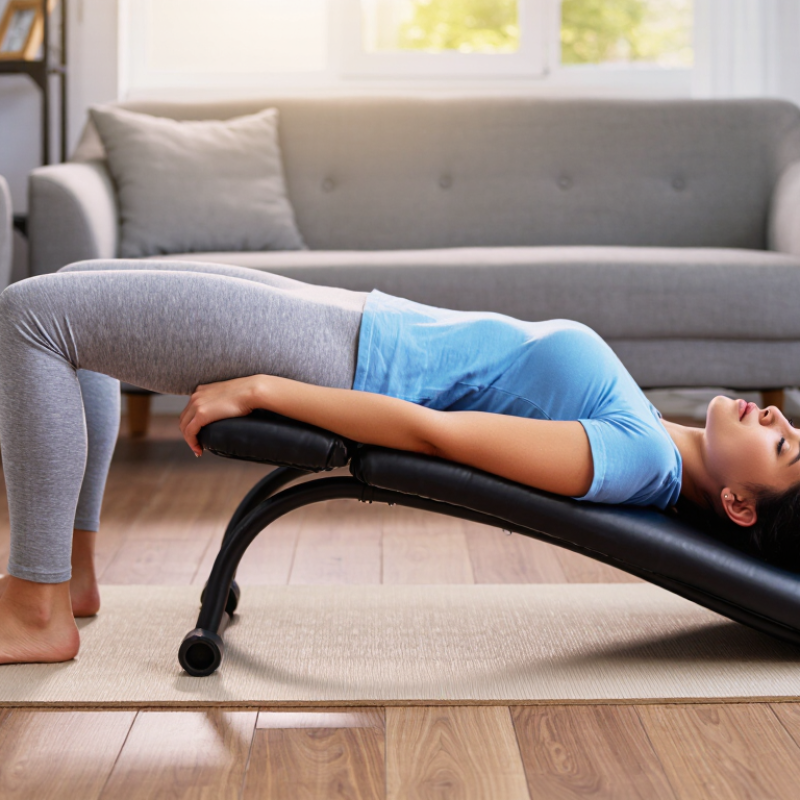
A back stretcher is a contoured device that supports spinal stretching while you lie on your back. Its raised center gently encourages extension through the thoracic and lumbar areas. The ribs, pelvis, and surrounding muscles share the load. It does not literally pull the spine apart. Instead, it changes your posture and may reduce temporary stiffness.
The World Health Organization reported that 619 million people experienced low back pain in 2020. That number may reach 843 million by 2050, according to its 2023 fact sheet. These figures show the scale of the problem, not proof that a back stretcher works. Cochrane reviews on lumbar traction found little or no clinically important benefit for many people. Therefore, treat this tool as a comfort aid, not a cure.
Use the lowest arch first. Place it on a firm, non-slip floor. Lie down slowly, keep your knees bent, and breathe without holding your breath. Try 30 to 60 seconds, then reassess. Stop if pain travels into a leg, numbness appears, or weakness develops. Seek medical advice for recent injury, osteoporosis, unexplained weight loss, fever, or bowel and bladder changes. More arch is not always better. I once assumed deeper stretching meant stronger results; that assumption needs restraint. A mild, controlled sensation is safer than chasing intensity.
| Data Dimension | Evidence-Based Information | Safe-Use Guidance |
|---|---|---|
| What It Is | A back stretcher is a contoured support device designed to place the user’s back in a gentle extension position while lying down. | Use it only on a stable, non-slip surface and follow the adjustment instructions supplied with the device. |
| Primary Purpose | It may provide a temporary stretching sensation and support relaxed positioning of the thoracic or lumbar region. | It should be viewed as a mobility or comfort aid, not as a treatment that corrects spinal conditions. |
| How It Supports Stretching | The curved surface supports the back while gravity and body position create a mild extension stretch. It does not actively pull the spine apart. | Begin with the lowest or least-curved setting available. Increase support only if the position remains comfortable. |
| Recommended Starting Position | Lie on your back with knees bent and feet flat, unless a qualified healthcare professional recommends another position. | Keep movements slow. Avoid forcing the lower back into a deep arch or allowing the ribs and pelvis to lose comfortable alignment. |
| Initial Session | A cautious starting point is approximately 1–2 minutes of gentle use. | Stop the session if symptoms increase. If well tolerated, exposure can be increased gradually rather than extended suddenly. |
| Typical Progression | Many users may gradually work toward approximately 5–10 minutes, depending on comfort, device design, and professional advice. | There is no universal ideal duration. More time or stronger curvature is not automatically more effective. |
| Breathing Technique | Slow, relaxed breathing can help reduce unnecessary muscle tension during a stretch. | Do not hold your breath, strain, or use the device during activities that make breathing difficult. |
| Expected Sensation | A mild, even stretch across the back may be acceptable. Some users may notice temporary muscle tightness when first trying the position. | Sharp pain, electric-shock sensations, numbness, tingling, weakness, dizziness, or worsening symptoms are warning signs to stop. |
| Frequency | Use should be guided by comfort and recovery. Short, consistent sessions are generally more cautious than infrequent, prolonged sessions. | Allow symptoms to settle before repeating a session, particularly after the first few uses or after changing the device angle. |
| When to Avoid Self-Use | Extra caution is needed with recent spinal surgery, suspected fracture, severe osteoporosis, significant spinal instability, or a serious neurological condition. | Ask a physician or physical therapist for individualized guidance before using a back stretcher in these situations. |
| Pregnancy Considerations | Pregnancy can change spinal loading, balance, and comfortable positioning. | Obtain advice from a qualified maternity or healthcare professional before using a device that places the spine in extension. |
| Red-Flag Symptoms | Back pain accompanied by new bowel or bladder problems, numbness around the groin, progressive leg weakness, fever, unexplained weight loss, or major trauma requires medical assessment. | Do not use a back stretcher to self-manage these symptoms. Seek urgent medical care when appropriate. |
| Position Changes | The device may be intended for different spinal regions, but changing position alters the pressure and extension applied to the body. | Change positions gradually, keep one hand available for support, and avoid twisting while mounting or leaving the device. |
| Surface and Stability | A firm, level surface helps reduce unexpected movement during use. | Do not use it on a bed, uneven floor, wet surface, or elevated platform unless the device instructions specifically permit it. |
| Combining With Exercise | Stretching alone does not replace strengthening, physical activity, posture changes, or rehabilitation when these are clinically indicated. | Pair back care with gradual movement and professionally recommended exercises rather than relying exclusively on passive stretching. |
| Cleaning and Inspection | Regular cleaning and inspection help maintain hygiene and identify damage that could affect stability. | Check for cracks, loose parts, worn padding, or a slippery surface before each use. Clean according to the manufacturer’s care instructions. |
| Main Safety Principle | A back stretcher should feel controlled and tolerable, with no significant increase in symptoms during or after use. | Use gentle settings, progress gradually, and discontinue use if symptoms persist or worsen after the session. |
General information only: individual conditions vary. Consult a qualified healthcare professional for personalized advice, especially when back pain is persistent, severe, or associated with neurological symptoms.


