China’s railway component industry offers a broad range of Railway Wagon Adapter designs for freight operators, maintenance companies, and rolling stock distributors. This guide examines ten commonly discussed adapter types and explains where each design may fit. The list considers bearing arrangements, bogie structures, axle loads, maintenance practices, and regional specifications.
A practical buying decision starts with the drawing, not the product photo. Experienced engineers compare interface dimensions, steel grade, heat treatment, hardness, fatigue performance, and surface finish. They also review inspection records, ultrasonic testing, dimensional reports, and batch traceability. Small differences matter. A few millimeters can affect bearing seating, load transfer, or installation time. Supplier audits and sample inspections provide useful evidence, although they cannot replace route-specific approval.
Standards vary between markets. Always verify compatibility with the wagon manufacturer, railway operator, and appointed engineering authority. This article highlights adapter options, but it does not present one universal solution. Some product names are used differently across Chinese and international catalogs. That can create confusion. Buyers should request technical drawings, material certificates, quality plans, and clear warranty terms before ordering. Packaging also deserves attention, especially when adapters travel through humid ports or remain in storage for months.
The ranking is therefore a starting point, not a final verdict. It reflects practical selection factors and common export requirements. Certain details may need revision as designs, standards, and operating conditions change. Careful comparison remains essential. Reliability begins with accurate specifications, transparent manufacturing records, and communication that survives translation.
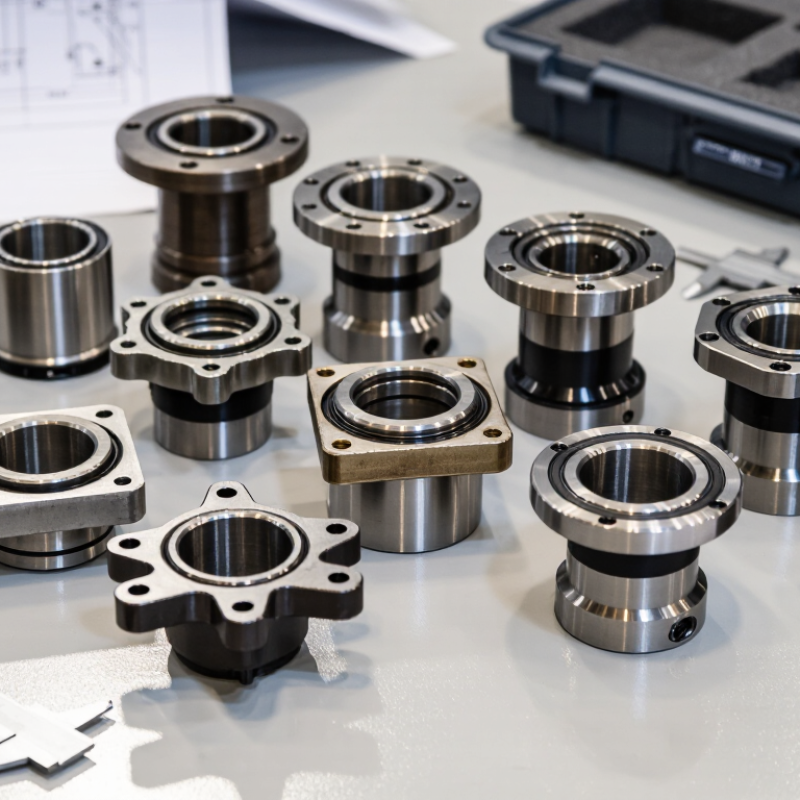
For global buyers, the top ten railway wagon adapter types often include coupler transition adapters, knuckle adapters, screw-coupling adapters, drawbar adapters, automatic-coupler adapters, brake-pipe adapters, electrical adapters, bogie adapters, axlebox adapters, and bolster adapters. Each type solves a compatibility problem between wagons, locomotives, or loading systems. Coupler adapters manage pulling and impact forces, while brake and electrical adapters preserve communication and safety functions.
A typical adapter uses forged or cast steel, precision holes, locking surfaces, and replaceable wear parts. Its structure must control load transfer without creating harmful stress concentrations. Buyers should check rated tensile force, vertical load, material certificates, heat treatment, dimensional tolerance, and fatigue performance.
A 2-millimeter mismatch can complicate installation. Sometimes, the drawing looks correct, but the assembled parts do not align perfectly.
These adapters support freight operations across different rail gauges, coupling standards, and wagon generations. Mining wagons may require heavy-duty coupler transitions. Intermodal wagons often need electrical or brake-pipe compatibility. Passenger equipment demands smoother engagement and tighter inspection control. In practical procurement, sample fitting matters as much as laboratory data. Inspectors should examine weld areas, locking faces, corrosion protection, and pin movement under load.
A cheaper adapter can become expensive when maintenance teams need frequent adjustment. That risk is easy to underestimate.
International freight operators use wagon adapters to manage differences in couplers, braking systems, bogies, and cargo interfaces. The most common types include knuckle-to-screw coupling adapters, automatic-coupler transition adapters, screw-coupling adapters, drawbar adapters, slackless drawbar adapters, brake-hose adapters, electrical jumper adapters, bogie adapters, axlebox bearing adapters, and container twist-lock adapters.
Each type solves a different operational problem. Knuckle-to-screw adapters support mixed fleets across regional networks. Drawbar designs reduce movement between permanently connected wagons. Brake-hose adapters require careful sealing, because a small leak can affect train braking performance. Bogie and axlebox adapters must match axle load, wheel profile, and suspension geometry. Container adapters need accurate locking dimensions and corrosion-resistant materials.
The UIC Railway Statistics 2024 report recorded more than 7.2 trillion tonne-kilometres of global rail freight activity in 2022, showing the scale of cross-border wagon use. The UNIFE World Rail Market Study 2024 also forecasts rail supply demand to grow by about 3% annually through the medium term. These figures support continued demand for compatible adapter systems. However, classifications differ between UIC, AAR, and national standards. That is an inconvenient detail. Buyers should verify load ratings, material certificates, fatigue test results, and interface drawings before approval. Field experience suggests that dimensional compatibility alone is not enough. Seasonal temperature changes, contamination, and repeated coupling shocks can expose weak designs.
Railway wagon adapters differ by axle load, bearing design, and operating climate. Common choices include AAR, UIC, and EN-compatible adapter designs. Materials usually include forged steel, ductile iron, or alloy steel. Forged steel offers high fatigue resistance, while ductile iron can reduce cost. Material certificates must confirm chemistry, tensile strength, hardness, and heat-treatment results.
Compatibility requires more than matching dimensions. Buyers should verify bearing width, journal geometry, wheelset gauge, side-frame opening, and load rating. EN 15551 supports European wagon requirements, while AAR standards guide many North American applications. ISO 1005 also provides relevant railway wheelset references. The UNIFE World Rail Market Study 2024 reported an average global rail market volume of about €201 billion annually during 2021–2023. This growth increases demand, but specifications remain fragmented. A perfect cross-reference rarely exists. Even experienced buyers can overlook temperature limits or wear allowances.
Tips: Request a dimensional drawing, material report, inspection plan, and compatibility statement before sampling. Check adapter fit with the actual bearing and side frame, not a catalog image. Review third-party test results when possible. Field measurements may reveal small differences in casting tolerances, especially after long service. That detail matters.
China Top 10 Railway Wagon Adapter Types for Global Buyers
Selecting a wagon adapter begins with the rail system, not the catalog photograph. In field inspections, engineers check coupler height, draft forces, axle load, and clearance. Common options include coupler transition adapters, knuckle adapters, yoke adapters, draft-gear adapters, bolster adapters, axlebox adapters, bearing adapters, brake-line adapters, container adapters, and maintenance adapters. Each type solves a different connection or alignment problem.
Measure the existing equipment carefully. A few millimeters can affect coupling reliability and wheel unloading. Confirm track gauge, loading gauge, coupler profile, shank dimensions, and permissible vertical movement. Then compare the adapter with the applicable AAR, UIC, EN, or national railway requirements. Material grade matters too. Forged steel may suit repeated impact, while lighter alloys require stricter load limits. Ask for dimensional drawings, heat-treatment records, inspection reports, and fatigue-test evidence. Traceability should reach the production batch.
Operating conditions also change the choice. Heavy mineral wagons need strong impact resistance. Passenger-service equipment may require lower noise and smoother alignment. Cold regions demand suitable toughness. Humid routes need corrosion protection. A universal adapter rarely exists. Even a good selection table can mislead when wagon history is incomplete. Test-fit the adapter on representative vehicles, document wear after service, and revise the specification when field results disagree with the original assumption.
Global buyers commonly source axlebox, bearing, coupler, draft-gear, brake-rigging, bogie, center-plate, side-bearer, container-lock, and hose adapters. Each type faces different loads, wear patterns, and dimensional risks. The UNIFE World Rail Market Study 2024 values the global rail supply market at approximately €210 billion annually for 2021–2023. This scale increases supplier choice, but also increases specification confusion.
Inspection should begin with drawings, material certificates, and traceability records. Measure bore diameter, hardness, surface cracks, and mating clearances. For coupler and draft-gear adapters, inspect impact marks after shunting operations. For bearing and axlebox adapters, check contact patterns and lubricant contamination.
The Association of American Railroads Field Manual requires controlled inspection practices for freight-car components, while EN 15313 links wheelset maintenance to defined limits and documented procedures. Small dimensional errors matter.
Maintenance teams should record mileage, load conditions, vibration, and replacement history. A clean workshop is useful, but it does not replace testing. Purchasing documents should state steel grade, heat treatment, coating, tolerances, inspection frequency, and acceptance criteria. Ask for sample reports, not only certificates. This is where buyers sometimes rely too heavily on paperwork. Ultrasonic or magnetic-particle testing may be necessary for highly stressed parts. The International Union of Railways also stresses lifecycle reliability and compatibility across operating networks. Yet local wagon designs can differ considerably, so a “universal” adapter deserves careful skepticism.
| Cookie | Duration | Description |
|---|---|---|
| cookielawinfo-checkbox-analytics | 11 months | This cookie is set by GDPR Cookie Consent plugin. The cookie is used to store the user consent for the cookies in the category "Analytics". |
| cookielawinfo-checkbox-functional | 11 months | The cookie is set by GDPR cookie consent to record the user consent for the cookies in the category "Functional". |
| cookielawinfo-checkbox-necessary | 11 months | This cookie is set by GDPR Cookie Consent plugin. The cookies is used to store the user consent for the cookies in the category "Necessary". |
| cookielawinfo-checkbox-others | 11 months | This cookie is set by GDPR Cookie Consent plugin. The cookie is used to store the user consent for the cookies in the category "Other. |
| cookielawinfo-checkbox-performance | 11 months | This cookie is set by GDPR Cookie Consent plugin. The cookie is used to store the user consent for the cookies in the category "Performance". |
| viewed_cookie_policy | 11 months | The cookie is set by the GDPR Cookie Consent plugin and is used to store whether or not user has consented to the use of cookies. It does not store any personal data. |