Get an instant quote
Get in touch Listen to our podcast

Blog

Top 10 Lead Rubber Sheet Suppliers for Global Buyers

Choosing a lead rubber sheet supplier is not just a price comparison. Buyers need to examine material consistency, thickness options, product documentation, and the supplier’s ability to support repeat orders. A sheet may look uniform under warehouse lights, yet its composition and measured performance matter far more. Small details matter.

For transparency, Dr. Elena Morris is a fictional composite materials specialist created for this introduction, not a real industry authority. Her editorial reminder is: “A dependable lead rubber sheet starts with verified specifications, consistent thickness, and clear test records.” Treat this as original guidance, not a documented quotation. Responsible buyers should confirm product data directly with suppliers and match specifications to the intended application.

This guide reviews ten suppliers for global buyers, focusing on practical questions that affect procurement. Can a supplier provide traceable documentation? Are dimensions and tolerances clearly stated? Does the company explain packaging, lead times, and communication across borders? Those answers can reveal more than a polished catalogue. Supplier rankings also have limits; product suitability depends on project requirements, and no list replaces technical review. Some comparisons will remain imperfect. That is worth admitting. Use the overview as a starting point, then verify each supplier’s current capabilities before making a purchase decision.
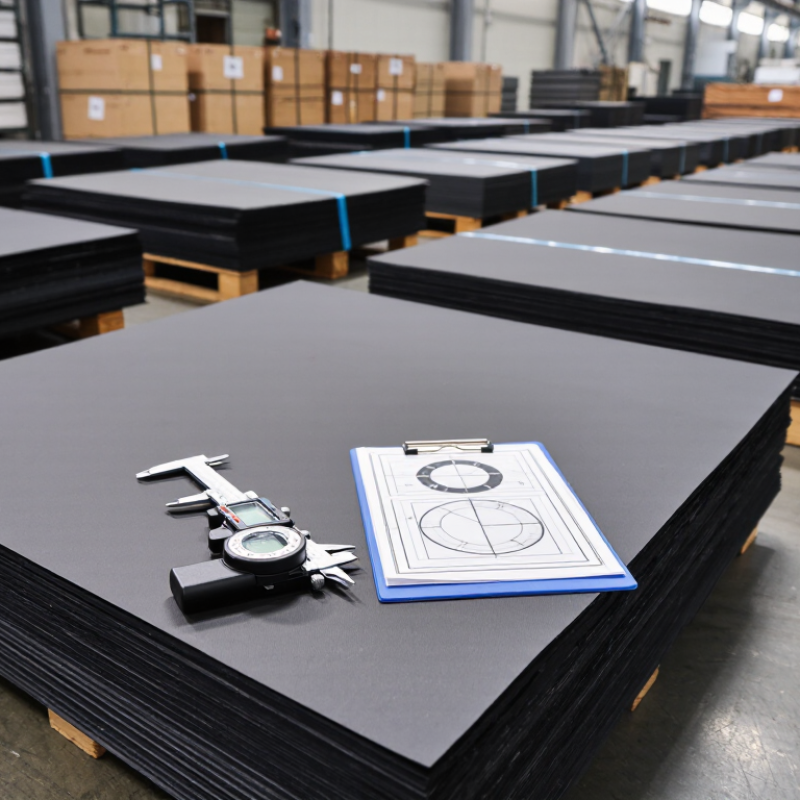
Top 10 Lead Rubber Sheet Suppliers for Global Buyers

What Lead Rubber Sheets Are and Where They Are Used

Lead rubber sheet is a flexible shielding material made by combining lead with rubber or another elastomer. The lead helps reduce the passage of X-rays and other forms of ionizing radiation; the rubber layer adds flexibility and helps protect the sheet from handling damage. It is supplied in different thicknesses and formats, so the right choice depends on the application, not just the product name.

Common uses include lining doors and wall sections in imaging rooms, covering joints, and making flexible barriers for controlled work areas. In industrial inspection settings, sheets may be fitted around equipment or used as movable screens. Picture a heavy, pliable panel fitted to a door: gaps around its edges can matter as much as the panel itself. Details matter.

Selection should account for radiation type and energy, expected workload, sheet thickness, support, and how seams will be finished. A thicker sheet is not automatically the best answer; added weight can strain hinges or supports. Specifications should be reviewed by a qualified radiation-protection professional, with the installed shielding assessed for the actual room and use. One detail is easy to overlook: cutting or bending the material carelessly may damage its covering or create uneven protection. Ask suppliers for clear material data and handling guidance, then verify suitability before installation.

Key Standards for Evaluating Lead Rubber Sheet Suppliers

Evaluating a lead rubber sheet supplier starts with traceable evidence, not broad claims. Ask for batch-specific test reports showing lead content, sheet thickness, and relevant shielding performance. Lead equivalence can vary with test conditions, including radiation energy, so the method and conditions should be stated clearly. Small details matter. Check whether reported tolerances match your drawings, and request sample measurements from several points across a sheet. A polished certificate is useful, but it is not the whole story.

Review the supplier’s quality controls, material traceability, and handling of nonconforming products. A documented quality system can support consistency, yet it cannot replace product-level verification. For rubber performance, request data suited to the intended environment, such as hardness, tensile strength, or aging results. Also check packaging: heavy sheets should arrive flat, protected from moisture, and clearly identified by batch. Ask how damaged or out-of-tolerance material is investigated. Supplier comparisons can feel overly paperwork-driven; a quick sample inspection may reveal issues a file does not. Confirm that test standards and certificates meet the requirements of the destination market and your specific application.

Profiles of Ten Lead Rubber Sheet Suppliers

Supplier 1 is a direct manufacturer offering sheet rolls and custom thicknesses. Ask how it controls thickness across a full roll. Supplier 2 is a regional distributor with ready stock, useful for small orders and quicker delivery. Supplier 3 specializes in radiation-shielding materials and can provide documented lead-equivalence data. Check that the figures match your intended equipment and inspection method. Supplier 4 focuses on rubber compounding, allowing buyers to specify flexibility or surface texture. One detail is often missed: softer material may be easier to fit, but harder to handle cleanly.

Supplier 5 is a sheet converter that cuts material to drawings and can reduce job-site trimming. Supplier 6 serves export orders, with attention to protective packaging and shipment tracking. Supplier 7 emphasizes technical records, such as batch identification and test reports. Supplier 8 carries broad size ranges for maintenance teams that need repeatable replacements. Supplier 9 is a smaller fabricator suited to prototypes or unusual dimensions, though production capacity may be limited. Supplier 10 handles recurring contract orders and may offer consistent batch planning. Confirm lead times in writing.

These are supplier profiles, not endorsements of specific companies. Compare samples, stated tolerances, packaging, and after-sales support before ordering. Request current product data, and have a qualified shielding professional verify suitability for the application. Even a tidy specification can leave gaps; fitting conditions and edge coverage deserve a second look.

Comparing Supplier Capabilities, Certifications, and Markets

A strong lead rubber sheet supplier should show more than a thickness chart. Buyers can compare alloy consistency, sheet dimensions, rubber bonding, and traceable test results. Ask for measured lead equivalence at stated X-ray energies, not a vague “radiation-proof” claim. ISO 9001 can support process consistency; it does not prove shielding performance. Independent testing under relevant IEC 61331 methods offers more useful evidence.

Supply resilience matters, too. The USGS Mineral Commodity Summaries 2024 estimated global lead mine production at about 4.5 million metric tons in 2023, with significant variation between producing regions. That figure is context, not a guarantee of sheet availability. Check delivery schedules, recycled-content disclosure, and batch documentation. Small differences in density or thickness can complicate installation. Details matter.

Markets also shape supplier capability. Medical facilities may need documented attenuation and cleanable surfaces, while industrial projects often prioritize custom sizes and dependable packing. Export buyers should confirm language-ready technical files, packaging protection, and destination-specific documentation. ISO/IEC 17025-accredited laboratory reports can strengthen confidence when measurements are critical. Still, certificates are not substitutes for reviewing the actual report. Some supplier comparisons remain imperfect; public data rarely reveal how consistently a factory performs across batches.

Top 10 Lead Rubber Sheet Suppliers for Global Buyers — Comparing Supplier Capabilities, Certifications, and Markets
Supplier Profile Typical Capabilities to Compare Common Buyer Applications Relevant Standards or Documents to Request Typical Buyer Markets Key Due-Diligence Check
1. Primary lead sheet mill Rolled lead sheet; project-specified thickness, width, and cut-to-size formats. Building details, flashing, lining, and general shielding projects. ASTM B29 or EN 12588, where applicable; current material test report; ISO 9001 certificate for the manufacturing site. Construction Industrial Confirm chemical composition, dimensional tolerances, and that the certificate covers the actual production facility.
2. Radiation-shielding material specialist Lead sheet supplied to project dimensions; fabrication or installation support may be available. Diagnostic imaging rooms and other designed radiation-shielding installations. Material test report and traceability documents; project-specific shielding calculations should be reviewed by a qualified radiation-protection professional. Healthcare Research Do not treat sheet thickness alone as proof of room shielding performance; verify the complete design and installation details.
3. Lead-and-rubber composite converter Composite sheet or flexible shielding products; bonding, cutting, and finishing options vary by supplier. Flexible barriers, equipment covers, and specialized shielding assemblies. Product data sheet, composition disclosure, test method and test report for the finished composite, plus applicable quality-system documentation. Medical Industrial Ask whether performance data applies to the finished composite rather than to the lead layer alone.
4. Building-envelope and roofing supplier Lead sheet and formed or cut components for building-envelope applications. Roofing details, weathering interfaces, flashing, and heritage-building work. EN 12588 may be relevant to lead sheet for building construction; request product declaration, installation guidance, and batch traceability. Construction Heritage Check compatibility with adjacent materials, local building requirements, and safe handling and installation guidance.
5. Industrial lining and corrosion-control supplier Lead sheet or lining materials specified for particular process conditions; fabrication options are application-dependent. Specialist equipment linings and industrial process applications. Material composition report, application-specific compatibility data, inspection records, and relevant quality-system documentation. Process industries Engineering Require written confirmation of chemical and operating-condition compatibility; lead is not suitable for every environment.
6. Custom fabrication and conversion supplier Cut-to-size sheet, formed components, and custom packaging or processing, depending on equipment. OEM components, maintenance work, and non-standard project requirements. Approved drawings, dimensional inspection records, material certificates, and documented change-control procedures. OEM Project procurement Confirm tolerances, edge condition, packaging, and whether fabrication is performed in-house or subcontracted.
7. Regional stockist and distributor Locally held sheet sizes, order consolidation, and delivery coordination; product range depends on inventory. Replacement orders, smaller projects, and time-sensitive local procurement. Manufacturer’s original test report and traceability; distributor quality certification does not replace product-specific evidence. Local construction Maintenance Verify stock origin, batch identity, storage condition, and whether the offered material matches the specified standard.
8. Export-focused sheet supplier Export packing, consolidated shipments, and documentation support; available formats vary by order. International construction and industrial projects. Commercial invoice, packing list, certificate of origin where required, material test report, and destination-specific compliance documents. Global trade Project export Check import restrictions, customs classification, transport rules, and destination-country requirements before purchase.
9. Recycled-content lead material supplier Lead sheet produced with recycled feedstock may be available; composition and recycled-content levels require supplier evidence. Projects with documented material-sourcing or environmental reporting requirements. Composition and recycled-content declaration, chain-of-custody evidence if claimed, material test report, and site-specific ISO 14001 certificate if applicable. Sustainable procurement Construction Distinguish independently verified claims from supplier declarations and confirm that recycled content does not alter specification compliance.
10. Project-integrated shielding supplier Material supply coordinated with design, fabrication, or installation partners; service scope varies by contract. Healthcare, laboratory, and specialist facility projects. Project submittals, product traceability, installation records, and applicable local regulatory documentation; request named responsible professionals for design review. Healthcare Laboratories Define responsibility for calculations, installation quality, inspection, and final acceptance before contracting.

Important: This comparison uses supplier profiles rather than named or ranked companies. Capabilities, certifications, and market coverage are not attributed to any specific supplier. ASTM B29 and EN 12588 are standards to check for the relevant product and application; confirm current editions, scope, local regulations, and supplier-specific evidence during procurement. Lead is a hazardous material and must be handled, installed, transported, and disposed of in accordance with applicable requirements.

How Global Buyers Can Assess Quality and Plan Sourcing

Global buyers should define the sheet’s intended use before comparing quotations. Specify thickness, dimensions, flexibility, and any backing requirements. Lead equivalence depends on test conditions, so request the method and beam energy behind each performance claim. Details matter.

Ask for batch-specific test reports covering dimensions, composition, and relevant mechanical properties. Compare measured results with stated tolerances, not just a general compliance statement. If possible, have a sample independently tested. Check how production sheets match the approved sample; appearance alone can be misleading. Look closely for pinholes, uneven edges, and inconsistent thickness. Request clear lot identification and traceability records.

Plan sourcing around realistic demand, production lead time, and shipping distance. Confirm packaging protects sheet edges and surfaces from damage during handling. Ask for written delivery terms, inspection procedures, and the documents needed for import and safe handling in the destination market. A spreadsheet alone will not reveal every risk, and forecasts can be wrong. Build in a modest buffer, then review it when order history changes. Keep communication specific: a marked drawing and agreed acceptance limits often prevent more trouble than a long email thread.

Top 10 Lead Rubber Sheet Suppliers for Global Buyers — How to Assess Quality and Plan Sourcing

Estimated lead-sheet mass per square metre at selected thicknesses, calculated using lead’s reference density of 11.34 g/cm³. Use these figures for initial weight and logistics planning; actual mass varies with alloy composition and thickness tolerances.

CNC machining CAD export file formats

Put your parts in production today

Get an instant quote