Get an instant quote
Get in touch Listen to our podcast

Blog

How to Choose the Right Fixed Speed Screw Compressor?

Choosing the right Fixed Speed Screw Compressor starts with understanding how your plant uses air. A workshop running one production line may need a different system from a facility operating several shifts. Check the required airflow, working pressure, and daily operating hours before comparing models. A compressor that looks powerful on paper can still be a poor fit.

Look at the air demand pattern. Fixed-speed machines run at a steady motor speed, so frequent periods of low demand may lead to unnecessary energy use. That detail is easy to overlook. Record pressure readings and operating cycles over several days, not just during one busy shift. Ask suppliers for performance data at your actual working pressure, and confirm how they calculate airflow. Numbers should be comparable.

Installation details matter, too. Measure the equipment room, check ventilation, and consider noise near occupied work areas. Think about maintenance access: filters, oil, and service panels should not be blocked by walls or stored materials. A site visit can reveal issues a product brochure will not. It may feel like extra work, but it often prevents avoidable costs.

This guide explains how to match compressor capacity to demand, assess energy and lifecycle costs, and compare essential features. It also covers installation, maintenance, and questions to ask before purchasing. No single model suits every operation. Even a careful estimate can be wrong, so leave room to review real operating data after installation.
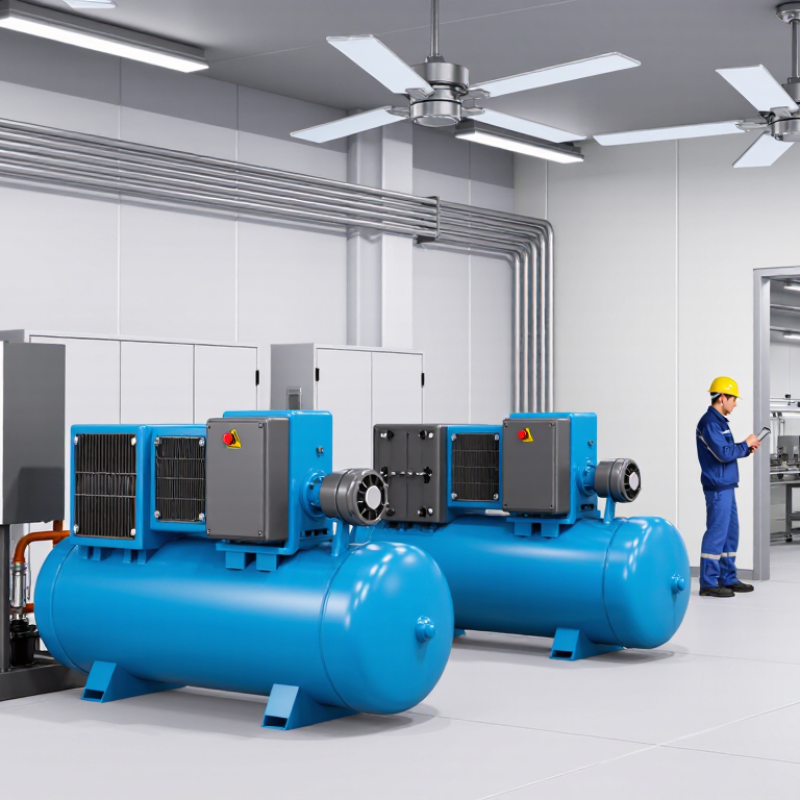
How to Choose the Right Fixed Speed Screw Compressor?

Define Required Airflow Using Peak Demand and FAD per ISO 1217

How to Choose the Right Fixed Speed Screw Compressor?

Define Required Airflow Using Peak Demand and FAD per ISO 1217

A fixed speed screw compressor should be sized around peak airflow, not average consumption. Average demand can hide sudden production surges.

List every pneumatic tool, valve, actuator, and cleaning connection. Record each device’s airflow at its operating pressure. Then identify which devices operate simultaneously during the busiest production cycle.

Measure the worst case.

A flow meter and pressure data logger can reveal demand that estimates miss. I have seen a quiet shift consume little air, while a short maintenance cycle caused a serious pressure drop. Include leaks, filter losses, piping resistance, and reasonable future demand. Do not add an arbitrary safety margin without checking the system.

Use Free Air Delivery, or FAD, rather than theoretical displacement. Under ISO 1217, FAD describes the compressor’s delivered air under stated reference conditions, pressure, temperature, and humidity. Compare compressor FAD values only when their test conditions match your application. A compressor showing 6.0 m³/min at one pressure may deliver less at a higher pressure.

Check the actual requirement at the receiver inlet or point of use. For example, if simultaneous equipment needs 4.8 m³/min at 7 bar(g), select a machine whose verified FAD meets that demand after system losses. A small receiver may handle brief peaks, but it cannot fix continuous undersizing.

I once treated a calculated margin as sufficient. The production team later added another air knife. The lesson was uncomfortable: demand records must be reviewed with operators, not built from spreadsheets alone.

Match Discharge Pressure to Use, Commonly 7–10 bar(g)

Choosing the right fixed speed screw compressor starts with discharge pressure, not motor size. Many factories operate within 7–10 bar(g), but the correct setting depends on the highest-demand tool or process. A workshop using pneumatic wrenches may need 7 bar(g), while packaging equipment may require closer to 8 or 9 bar(g). Check the equipment nameplate first.

Pressure losses occur in filters, dryers, pipe bends, and long hoses. A compressor delivering 7 bar(g) at its outlet may provide much less at the machine. The U.S. Department of Energy’s Improving Compressed Air System Performance: A Sourcebook for Industry reports that leaks can waste 20–30% of compressor output. That loss often encourages operators to raise pressure unnecessarily. It is an expensive habit.

Set the compressor only high enough to cover peak demand and distribution losses. The Compressed Air Challenge identifies system leakage, pressure drop, and inappropriate pressure settings as major efficiency concerns. A fixed speed unit can run steadily, but it cannot correct poor system design. Measure pressure during production, not during a quiet shift. One overlooked filter can change the result. Pressure data may also expose an uncomfortable truth: the selected compressor is oversized, or the plant has never measured actual demand.

How to Choose the Right Fixed Speed Screw Compressor? - Match Discharge Pressure to Use, Commonly 7–10 bar(g)
Typical Application Recommended Point-of-Use Pressure Typical Compressor Discharge Pressure Common Pressure Range Why This Pressure Is Used Selection Considerations for a Fixed Speed Compressor
General factory air, assembly, and light pneumatic equipment 5.5–6.5 bar(g) 7 bar(g) 6–8 bar(g) Many general pneumatic devices are designed to operate efficiently around 6 bar(g) at the point of use. Suitable for stable, relatively continuous air demand. Check that the distribution system can deliver the required pressure during peak use.
Machine tools, impact wrenches, grinders, and common pneumatic tools 6.0–7.0 bar(g) 7–8 bar(g) 7–8 bar(g) This range normally provides adequate operating pressure while avoiding unnecessary compression energy. Review the tool manufacturer's required pressure and air consumption. Oversizing the pressure setting can increase energy use and leakage rates.
Spray painting and finishing systems 2.0–6.0 bar(g) 7–8 bar(g) 6–8 bar(g) Spray equipment often requires regulated pressure that varies by gun type, coating, nozzle, and finishing method. Use a dedicated filter, water separator, dryer, and pressure regulator. The compressor pressure should not be used as a substitute for point-of-use regulation.
Packaging, conveying, and general production automation 5.5–7.0 bar(g) 7–8 bar(g) 7–8 bar(g) Actuators and valves commonly operate within this range, although exact requirements depend on cylinder size and cycle time. Calculate peak flow from simultaneous cylinders, valves, blow-off devices, and production cycles before selecting compressor capacity.
Cleaning blow-off and air blow guns 4.0–7.0 bar(g) 7–8 bar(g) 7–8 bar(g) Higher pressure can improve cleaning performance, but nozzle design and airflow are equally important. Use efficient safety nozzles where applicable. Uncontrolled open blow-off can create high demand and significant compressed-air waste.
Textile, woodworking, and continuous production lines 6.0–7.0 bar(g) 8 bar(g) 7–9 bar(g) An 8 bar(g) discharge setting can provide operating margin for filters, dryers, piping, and peak demand. Confirm the pressure drop across treatment equipment and long pipe runs. A fixed speed unit should be selected close to the normal load profile.
Process equipment requiring additional pressure margin 7.0–8.0 bar(g) 9–10 bar(g) 8–10 bar(g) Higher discharge pressure may be appropriate when the process requires more pressure or the system has unavoidable pressure losses. Verify that the compressor, air receiver, dryer, filters, hoses, and piping are all rated for the selected maximum working pressure.
Applications requiring more than 10 bar(g) Above 8 bar(g) 10–13 bar(g) or higher Above 10 bar(g) High-pressure applications require equipment specifically designed for the required pressure rather than simply increasing a standard setting. Use a pressure-rated compressor package and confirm motor power, cooling, discharge temperature, treatment equipment, and applicable safety requirements.
Practical selection rule: Choose the lowest compressor discharge pressure that reliably meets the highest required point-of-use pressure after accounting for pressure losses in dryers, filters, piping, hoses, valves, and regulators. For many industrial air systems, 7–10 bar(g) is the commonly used discharge-pressure range. The final setting should always be verified against the equipment manufacturer's specifications and the actual system pressure profile.

Compare Specific Power in kW per m³/min at Rated Conditions

How to Choose the Right Fixed Speed Screw Compressor?

Choosing a fixed speed screw compressor starts with usable output, not the nameplate motor size. Specific power, measured in kW per m³/min, shows how much electricity produces each unit of compressed air. Compare values only at the same rated conditions: discharge pressure, inlet temperature, cooling method, and measurement standard. An apparently efficient unit can look better because its airflow was rated at a lower pressure. That is an easy mistake. Ask for tested input power and delivered flow, then calculate kW ÷ m³/min yourself.

For example, 75 kW divided by 12 m³/min equals 6.25 kW per m³/min. Small differences matter.

Review the compressor at your actual operating pressure, not only the advertised rating. A workshop using 7 bar may waste energy with a machine tested at 10 bar. Check whether the figures include the motor, controller, cooling fan, and other running components. Some data sheets leave this unclear. That uncertainty deserves attention. Also examine service records, oil temperature trends, and filter replacement intervals. A clean separator and correctly sized inlet filter can protect real-world efficiency. However, specific power is not the only buying factor. Reliability, maintenance access, noise, installation space, and expected load profile affect the total operating cost.

Tips

Request independent test data when possible. Compare at least three compressors under identical conditions. Record pressure and flow during normal production. Do not trust one attractive number. Recheck calculations with your maintenance team before purchase.

Select Air Quality by ISO 8573-1 Particle, Water, and Oil Classes

How to Choose the Right Fixed Speed Screw Compressor?

Choose air quality before compressor capacity. ISO 8573-1:2010 classifies compressed air by particles, water, and oil. Particle Class 1 allows no more than 10 particles per cubic metre between 1 and 5 micrometres. Water Class 1 requires a pressure dew point of ≤−70°C. Oil Class 1 permits ≤0.01 mg/m³ of total oil. These limits are demanding. They may require dryers, filters, and regular validation.

A fixed-speed compressor suits stable base demand, but poor sizing can increase unloaded running time. The U.S. Department of Energy’s Improving Compressed Air System Performance sourcebook reports that leaks can waste 20–30% of compressor output. That loss also distorts air-quality decisions. A larger machine may appear safer. It can create more moisture and higher treatment costs. That assumption is often wrong.

Match the ISO class to the process, not personal preference. Electronics assembly may need very low oil and particle levels. General workshop tools may accept less strict classes. Check pressure dew point at the actual operating pressure. Inspect filters after temperature changes. ISO compliance on paper is not enough. Sampling matters. Field audits often find that drains, hoses, or maintenance gaps undermine an otherwise suitable system. Review the demand profile before selecting fixed speed, and leave room for measured growth rather than guessed capacity.

Check Load Profile and Unloaded Power Before Sizing a Fixed-Speed Unit

A fixed-speed screw compressor should be sized around real demand, not the biggest number on an old equipment list. Record pressure and flow over representative shifts, including start-up, breaks, and busy production periods. A data logger can reveal whether demand stays steady or rises in short bursts. Note how often the compressor loads and unloads; frequent cycling may point to a mismatch, limited storage, or changing demand.

Unloaded does not mean power-free. When delivery is not needed, the motor may still run, and the compressor can consume a meaningful share of its loaded power. Check the manufacturer’s unloaded-power data for the specific model, then estimate annual energy using your actual operating hours and load pattern. A unit chosen only for peak demand may spend much of the day unloading. That can be costly.

Compare the measured profile with the compressor’s output range and consider whether a receiver can cover brief peaks. Keep enough capacity for genuine production needs, but avoid adding a large safety margin without evidence. A spreadsheet can still be wrong if a quiet maintenance shift stands in for a typical week. Recheck assumptions with operators, especially when schedules or processes change.

CNC machining CAD export file formats

Put your parts in production today

Get an instant quote