Choosing the right Abc Cable begins with the job it must perform, not the product name on a catalog page. The cable’s voltage rating, conductor size, insulation, and installation method all matter. So do the route and surroundings: a long rural span, a crowded roadside pole, and a coastal site present different demands. A cable suited to one may be a poor fit for another. Details count.
Cable-engineering author William A. Thue has written about power-cable engineering. A practical takeaway consistent with that work is: “Match the cable to its electrical duty and installation conditions.” This is an editorial summary, not a verified verbatim quotation. That distinction matters. A dependable selection should be based on the project’s load, expected operating conditions, support spacing, and applicable technical requirements—not a guess or a low price alone. Check the manufacturer’s data sheet, confirm compatibility with connected equipment, and ask a qualified engineer to review uncertain design choices. A small mismatch can mean excess heating, difficult installation, or avoidable replacement later. Not glamorous, but important.
This guide outlines how to compare ABC cable types, assess conductor and insulation options, and review practical site conditions before ordering. It also points out questions worth asking suppliers, such as whether the stated rating fits the project’s actual environment. No single cable is right for every route. And a specification that looks complete can still miss a site detail. The goal is a well-supported choice, with assumptions made visible and checked before installation.
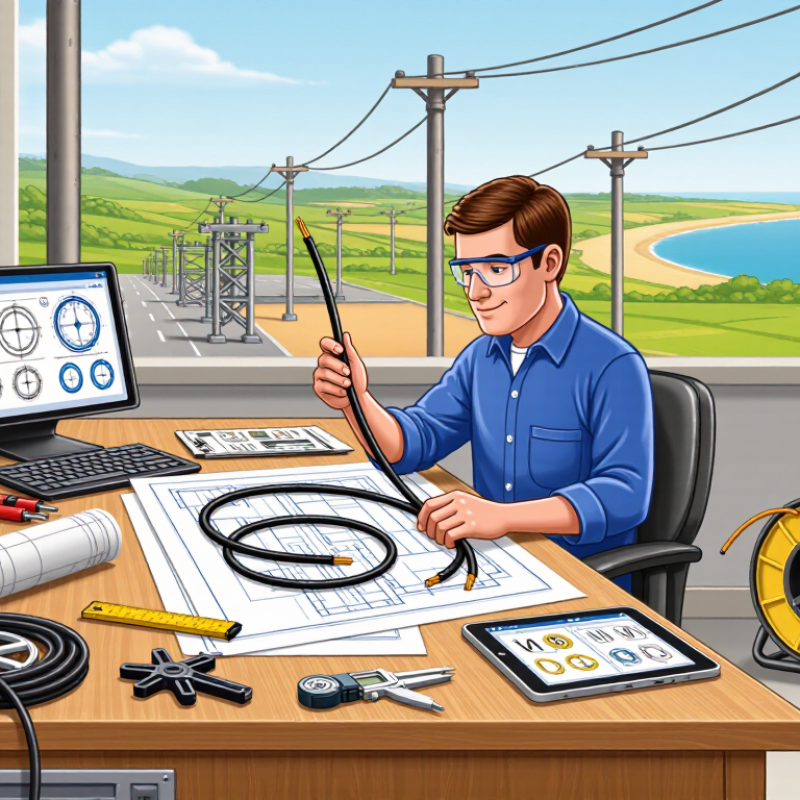
Before selecting an aerial bundled cable (ABC), define what the installation must carry and where it will run. Record the system voltage, expected load, route length, and number of connected users. A quiet street today may serve more homes later. Small details matter.
Span length and support locations affect conductor sizing and mechanical loading. Note poles, building clearances, road crossings, and trees along the route. In coastal or industrial areas, salt, dust, and chemical exposure can influence insulation and hardware choices. Sun, heat, wind, and ice also matter. A route that looks simple on a map may be harder in the field.
Check the cable’s rated voltage, conductor material, insulation, and permissible current against the project design. Ask a qualified electrical professional to verify voltage drop, fault conditions, span tension, and compatibility with connectors and supports. Local utility specifications may set additional requirements. Measure twice. I have seen plans underestimate future load; that assumption deserves a second look. Use current technical data, not a familiar cable size copied from another project.
ABC cable combines insulated conductors into a compact overhead bundle, but its construction varies. In low-voltage systems, phase conductors are commonly stranded aluminum and wrapped around a supporting messenger. Some designs use a bare messenger; others use an insulated one. The messenger carries mechanical tension, so its strength matters as much as electrical capacity.
Conductor material changes weight, cost, and installation demands. Aluminum is widely used because it is lightweight and conducts well for its mass. Aluminum-alloy messengers can provide added tensile strength across longer spans. Copper conducts electricity efficiently, but its greater weight and cost often make it less practical for aerial bundles. Details matter. Check the specified conductor size, insulation, and messenger type rather than comparing material names alone.
Cable type should match the route and operating conditions. A short service drop near a building may need a different configuration from a line crossing a wide road or open field. Salt air, heat, tree contact, and expected load can also affect the choice. Review local engineering requirements and the cable’s rated voltage before ordering. One detail is easy to miss: a stronger messenger does not automatically mean the conductors suit the electrical load. There is no perfect option for every project, and specifications can be harder to interpret than a product description suggests.
Choosing ABC cable begins with the network voltage, not the cable’s appearance. Confirm the system’s nominal voltage and the cable’s rated voltage using the project design and technical data sheet. Check whether the rating suits the system arrangement and expected operating conditions. A comfortable voltage margin matters.
Conductor size must carry the expected load without excessive heating or voltage drop. Estimate current from the actual demand, then account for cable length, ambient temperature, installation conditions, and nearby circuits. A long rural span can lose more voltage than a short service connection, even at the same current. Check the route, too. Use the cable’s published current rating, not a guess based on conductor diameter.
Finally, compare the selected cable with the protective device and connection hardware. Terminations, joints, and support spacing all affect a reliable installation. Small details matter. A tidy calculation can still miss a hot section or future load growth, so record assumptions and verify them with the applicable engineering requirements. If site conditions differ from the design, reassess the voltage drop and current capacity before installation.
Example relationship between aluminum conductor cross-sectional area and indicative current rating for low-voltage aerial bundled cable (ABC).
How to use this chart: Larger conductors generally carry more current. The values shown are indicative reference figures, not guaranteed ratings; actual ampacity depends on cable construction, number of loaded conductors, ambient temperature, installation conditions, and applicable standards. Confirm the cable’s voltage rating (commonly 0.6/1 kV for low-voltage ABC) and verify final sizing against local electrical rules and the cable manufacturer’s data.
Choosing ABC cable insulation starts with the conditions along the entire route, not just the installation point. Direct sunlight can age unsuitable materials, so check that the insulation is rated for long-term outdoor UV exposure. Hot rooftops and enclosed spaces may raise conductor temperatures. The cable’s temperature rating must suit the expected load and local climate. Details matter.
Moisture, salt spray, and airborne chemicals call for closer review. Insulation can resist weathering, but it does not protect every connector or fitting from corrosion. Near the coast, inspect the complete cable system and its hardware. In colder regions, confirm the cable remains suitable for installation and operation at low temperatures. A stiff cable can be difficult to handle. I would not assume one outdoor rating covers every exposure.
Match the insulation specification to the manufacturer’s data and the project requirements, including voltage and operating temperature. Where heat, pollution, or unusual weather overlaps, ask a qualified cable specialist to check the selection. Field conditions can differ from the drawing. A shaded span may become exposed after nearby trees are trimmed, for example. That detail is easy to miss. Recheck the route, support spacing, and environmental assumptions before ordering, especially when the installation is near industrial emissions or frequent washdown.
| Environmental condition | Insulation to consider | Why it may be suitable | Selection checks |
|---|---|---|---|
| Strong sunlight and year-round outdoor exposure | UV-resistant XLPE or PE, specifically rated for outdoor aerial use | Outdoor-grade formulations are designed to withstand sunlight and weathering. XLPE is a cross-linked material commonly used for insulated aerial conductors. | Confirm the cable’s UV/weathering qualification, voltage rating, and applicable local standard. Do not assume every PE or XLPE formulation is UV-rated. |
| High ambient temperatures or elevated conductor operating temperatures | XLPE, where the cable’s certified temperature rating meets the design requirements | XLPE generally has a higher continuous operating-temperature capability than conventional PVC, but the allowable temperature depends on the specific cable construction and standard. | Check the cable data sheet for continuous and short-circuit temperature limits, current-carrying capacity, and required clearances. |
| Frequent rain, humidity, or wet conditions | Outdoor-rated XLPE or PE insulation | Polyethylene-based insulation materials are generally resistant to moisture. The complete cable assembly must also be suitable for the intended wet and outdoor service. | Verify water-resistance requirements, joints and terminations, and installation rules. Insulation choice alone does not make a connection waterproof. |
| Coastal air or salt spray | UV- and weather-resistant XLPE or PE, paired with suitable hardware | Insulation can protect the conductor from environmental exposure, while corrosion-resistant fittings and connectors address salt-related hardware corrosion. | Specify appropriate clamps, fasteners, and connectors; confirm material compatibility and inspection requirements for the site. |
| Cold climates and low-temperature installation | Outdoor-rated XLPE or PE with a documented low-temperature rating | Cold-weather performance depends on the compound and cable design. Low temperatures can make some materials less flexible and increase the risk of damage during handling. | Check minimum service and installation temperatures, permitted bending radius, and any restrictions on installation during freezing conditions. |
| Exposure to oils, fuels, solvents, or industrial chemicals | Insulation specifically tested and approved for the chemicals present | Chemical resistance varies by compound and by the particular substance, concentration, temperature, and exposure duration. No general insulation label guarantees compatibility with every chemical. | Obtain a compatibility assessment for the actual chemicals and exposure conditions. Consider protective routing or barriers if direct exposure is possible. |
| Areas with specific fire-performance requirements | A cable construction with the required fire-performance classification; confirm whether standard PE or XLPE is acceptable | Fire behavior is determined by the complete cable design and test classification, not by insulation type alone. Standard PE and XLPE are combustible materials. | Check building, utility, and local electrical rules for flame-propagation or other fire-performance requirements before specifying the cable. |
| General low-voltage overhead distribution in ordinary outdoor conditions | ABC cable with insulation specified for the applicable overhead distribution standard, commonly XLPE or PE depending on the system | The appropriate construction depends on system voltage, conductor arrangement, climate, and the requirements of the utility or electrical authority. | Confirm conductor material and size, rated voltage, support and tension limits, clearances, fittings, and compliance with local codes. |
Note: Insulation properties and temperature limits vary by cable design and applicable standard. Confirm the project specification, local electrical requirements, and cable technical data before selection.
Check the governing standard before comparing conductor sizes. ABC requirements vary by country, voltage, and utility specification. For low-voltage systems, EN 50483 covers accessories for aerial bundled cable systems rated 0.6/1 kV. It does not replace the cable standard or local installation rules. Confirm both documents, plus the utility’s requirements, before ordering. Small differences matter.
The International Energy Agency’s 2023 report, Electricity Grids and Secure Energy Transitions, estimates that 80 million kilometres of grids must be added or refurbished worldwide by 2040. That scale makes sound installation planning essential. Check voltage, expected current, span length, ambient temperature, wind, and ice exposure against the cable’s technical data. On site, inspect pole strength, clearances, sag, connectors, and insulation compatibility. A cable suitable for one span may overheat or sag too much on another. I would not rely on a catalogue’s headline rating alone; actual conditions can be messier than the design sheet suggests. Keep the applicable standard and installation records with the project file.
| Cookie | Duration | Description |
|---|---|---|
| cookielawinfo-checkbox-analytics | 11 months | This cookie is set by GDPR Cookie Consent plugin. The cookie is used to store the user consent for the cookies in the category "Analytics". |
| cookielawinfo-checkbox-functional | 11 months | The cookie is set by GDPR cookie consent to record the user consent for the cookies in the category "Functional". |
| cookielawinfo-checkbox-necessary | 11 months | This cookie is set by GDPR Cookie Consent plugin. The cookies is used to store the user consent for the cookies in the category "Necessary". |
| cookielawinfo-checkbox-others | 11 months | This cookie is set by GDPR Cookie Consent plugin. The cookie is used to store the user consent for the cookies in the category "Other. |
| cookielawinfo-checkbox-performance | 11 months | This cookie is set by GDPR Cookie Consent plugin. The cookie is used to store the user consent for the cookies in the category "Performance". |
| viewed_cookie_policy | 11 months | The cookie is set by the GDPR Cookie Consent plugin and is used to store whether or not user has consented to the use of cookies. It does not store any personal data. |