Choosing among China’s top Lifting Socket suppliers requires more than comparing prices. A socket may look identical in a catalog, yet its performance depends on steel quality, thread accuracy, concrete compatibility, and production control. Buyers should examine material certificates, load-test records, dimensional drawings, and traceable inspection reports. Factory experience also matters. A supplier producing sockets for precast beams may understand practical risks better than a general hardware exporter.
Lifting-equipment engineer Michael Chen states, “A lifting socket is only as reliable as the concrete, installation, and inspection behind it.” This principle deserves attention. Ask whether the supplier provides installation guidance, approved accessories, and clear working-load limits. Check how the Lifting Socket performs under repeated handling, not only during a single laboratory test. Photos of a clean factory help, but audited evidence is stronger.
Look closely.
A credible manufacturer should explain its testing method without vague promises. It should identify steel grades, coating options, thread standards, and acceptable tolerances. Communication matters too. Can the technical team answer questions about edge distances, anchor orientation, and concrete strength? Small misunderstandings can create expensive delays or unsafe lifting conditions.
Price still matters, naturally. However, the cheapest Lifting Socket may carry hidden costs through rejected batches, poor fit, or unclear documentation. My own evaluation would not treat every supplier claim as fact. Some data may be incomplete. That is worth admitting. A careful comparison combines factory audits, sample testing, customer references, and engineering review before placing a large order.
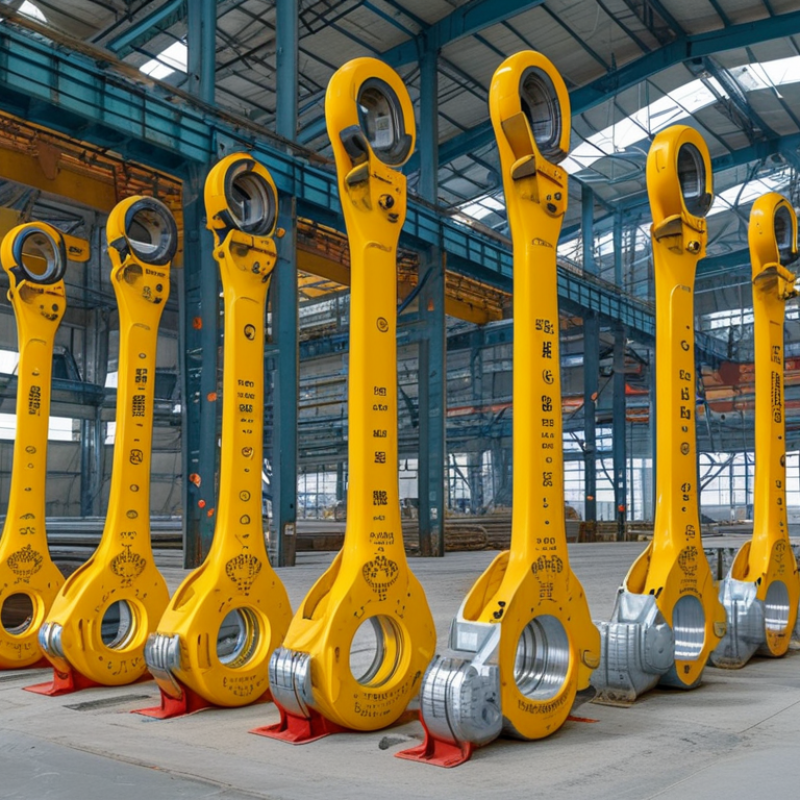
China Top Lifting Socket Suppliers: How to Choose?
Choosing a lifting socket starts with its Working Load Limit (WLL), not its appearance. WLL is the maximum permitted working load under stated conditions. Minimum Breaking Load (MBL) is the force that may cause failure during testing. These values are not interchangeable. A supplier should show both figures, the tested configuration, and the applied safety factor. Ask for material certificates, inspection records, and traceable batch numbers.
Load direction matters greatly. A socket designed for straight tension may perform differently under side loading, bending, or angular force. During site checks, I look at the sling angle, connection point, edge contact, and possible shock loading. Even a strong socket can deform when the force is poorly aligned. Clear installation drawings and practical instructions reveal more than polished product photographs. Test evidence should match the actual lifting arrangement.
Do not select a supplier by price alone. Review its quality controls, dimensional inspection, proof testing, and technical response time. Experienced engineers should explain WLL reductions caused by angles or unusual loading. I have sometimes trusted a neat certificate too quickly; that was a mistake. Documents need verification, not admiration. Leave room for uncertainty, especially when the lifting environment changes. Ask whether the supplier can provide independent test reports and replacement guidance before approving the socket for regular use.
How to Define Lifting Sockets: WLL, MBL, Load Direction, and Safety Factors
Working Load Limit (WLL) is the maximum permitted working load. Minimum Breaking Load (MBL) is calculated here using a representative 5:1 design safety factor. Capacity decreases when the load is angled and may be zero for an unapproved side load. Always confirm the applicable standard and manufacturer’s rated data before use.
A lifting socket supplier should prove more than production capacity. The International Labour Organization estimated nearly three million work-related deaths worldwide each year. It also reported about 395 million non-fatal work injuries annually. These figures make traceable hardware essential, not optional. Ask whether the socket design follows EN 1677 requirements for lifting components and sling assemblies. Check the working load limit, proof-load method, marking quality, and material traceability. A clear heat number should link the product to its mill certificate.
ASME B30.26 helps assess rigging hardware used with lifting equipment. ISO 898-1 defines mechanical properties for carbon and alloy steel fasteners. However, compliance is not automatic because a supplier mentions these standards. Request tensile, hardness, dimensional, and proof-load results for the exact production lot. ISO/IEC 17025 accreditation adds credibility to laboratory evidence. Confirm the laboratory scope covers the requested test. A generic certificate may look impressive, yet prove little. This is where buyers sometimes trust paperwork too quickly.
Request one complete sample file before placing a large order. It should include drawings, WLL tables, batch numbers, raw-material records, calibration certificates, and signed test reports. Compare report dates with production dates. Inspect thread condition, surface cracks, deformation, and marking depth on physical samples. Ask how rejected parts are isolated. A supplier that cannot explain this process needs closer review. My practical concern is simple: visual quality can hide metallurgical weakness. Independent testing is often worth the extra cost.
When evaluating China top lifting socket suppliers, compare engineering evidence, not polished catalog images. Grade 8 steel often provides dependable strength and toughness. Grade 10 may support higher working loads with suitable design control. Yet grade alone proves little. Request material certificates, heat numbers, and dimensional records for each production batch. Check the socket closely for clean threads, smooth seating surfaces, and visible forging laps. Small details matter.
Heat treatment controls hardness, toughness, and resistance to deformation. Ask whether quenching and tempering records are available for review. Hardness testing should cover defined sampling points, not one convenient location. Over-hardened steel can crack under shock loading. Under-treated steel may deform before the rated load is reached. A technically experienced supplier should explain these risks clearly.
Proof load is not the same as WLL. WLL means the permitted service load under stated conditions. Proof load verifies the assembly during a controlled test. Compare test method, holding time, acceptance criteria, and certificate details.
Review the full WLL range against rope diameter, socket size, loading direction, and sling angle. Ask about side loading, temperature, corrosion, and repeated use. I once rejected a promising socket because its WLL table omitted sling-angle assumptions. It was not a dramatic failure, but the documentation was weak. No supplier is perfect. Reliable suppliers admit limits, correct drawings, and answer technical questions before purchase.
Choosing a top lifting socket supplier requires more than comparing prices or catalog photos. Start with MOQ, because it reveals production flexibility and planning discipline. A very low MOQ may support testing, but it can also indicate weak purchasing power or unstable scheduling. Ask for sample lead time, mass-production lead time, and recent on-time delivery records. The 2023 World Bank Logistics Performance Index evaluates 139 economies, including shipment timeliness and supply-chain reliability. Use those factors when checking the supplier’s export plan.
Lead time should include tooling, raw material approval, machining, heat treatment, inspection, and packing. Request a written timeline with control points. Small details matter. Traceability should link each socket to a heat number, batch record, operator, and inspection report. ISO 9001 supports documented process control, but certification alone proves little about actual lifting performance. I would not accept a certificate without matching batch information.
Inspection data must show dimensions, hardness, surface condition, proof-load results, and any non-destructive testing used. Ask whether calibrated instruments and independent laboratories are involved. The International Labour Organization estimated nearly three million work-related deaths annually, with hazardous industrial work remaining a major concern. This makes verification practical, not decorative. A supplier may provide impressive reports, yet missing raw data is a warning. My own evaluation would also record defects from sample orders; one clean batch can hide process variation.
| Anonymous Supplier Profile | Typical Product Scope | MOQ per Size | Standard Lead Time | Rush Production Capacity | Material Traceability | Heat Number / Mill Certificate | Dimensional Inspection | Proof Load Test | Batch Inspection Records | Export Documentation | Evaluation Score |
|---|---|---|---|---|---|---|---|---|---|---|---|
| Profile A — High-volume forged-parts manufacturer | Forged lifting sockets, socket fittings, clevis-style connections, custom forged components | 100 pcs | 30–40 calendar days | Possible for repeat orders with approved drawings | Heat number marked on material and linked to batch traveler | Available for each production batch | 100% critical dimensions; sampling for non-critical dimensions | Documented proof-load testing available by batch | Inspection report, calibration references, nonconformance record | Commercial invoice, packing list, certificate of origin, test documents | 92 |
| Profile B — Medium-batch precision machining supplier | Machined lifting sockets, threaded sockets, adapters, small and medium custom lots | 50 pcs | 25–35 calendar days | Available when raw material and machine capacity are reserved | Material certificates retained by purchase order and heat number | Available on request before shipment | First-article inspection plus sampling inspection | Available through an approved external testing laboratory | Dimensional report and final visual inspection checklist | Standard export documents and certificate package available | 86 |
| Profile C — Custom engineering and low-volume supplier | Prototype lifting sockets, engineered-to-order parts, low-volume forged and machined assemblies | 10 pcs | 35–50 calendar days | Limited; depends on tooling and engineering approval | Traceable through job number, material certificate, and process records | Normally supplied with the shipment documentation | Detailed first-article report for custom dimensions | Proof testing arranged for specified designs and quantities | Records available, but format may vary by project | Export documentation available for international shipments | 83 |
| Profile D — Standardized mass-production supplier | Standard lifting sockets, common sizes, repeat-order industrial hardware | 300 pcs | 20–30 calendar days | Strong capacity for standard sizes and repeat specifications | Batch-level traceability; individual marking depends on product type | Available for selected steel grades and production batches | Routine sampling inspection based on an approved control plan | Routine proof-load testing for designated standard models | Standardized inspection forms and batch release records | Standard export paperwork available | 84 |
| Profile E — Trading and outsourced-production coordinator | Mixed lifting hardware, sourcing coordination, customized products from partner factories | 200 pcs | 45–60 calendar days | Limited control when multiple subcontractors are involved | Traceability depends on the assigned manufacturing partner | Must be confirmed before purchase order placement | Pre-shipment inspection can be arranged by request | Usually outsourced and requires additional planning | Inspection records may be available after supplier confirmation | Commercial export documents generally available | 68 |
| Profile F — Small workshop with flexible customization | Small forged or machined lifting components, repair parts, special dimensions | 20 pcs | 40–60 calendar days | Low reserve capacity during peak production periods | Job-level records available; formal heat-number control should be verified | Available only when specified in the purchase order | Manual inspection and customer-approved sampling plan | Requires third-party testing for load verification | Basic inspection checklist; limited historical data retention | Basic export documents available through logistics partners | 61 |
Choosing a lifting socket supplier requires more than comparing catalog prices. In field sourcing, I start with a weighted 40–30–20–10 scorecard.
Product quality receives 40 points.
Check material certificates, heat-treatment records, dimensional reports, and proof-test results. Ask for socket samples before approving production. Inspect threads, load markings, surface finish, and fit with the intended rope or connector. One small mismatch can delay installation.
Give engineering capability 30 points.
Review drawings, tolerance control, testing equipment, and response quality. Request a sample inspection report, not a polished promise.
Reliability and compliance receive 20 points.
Verify factory identity, traceable batches, quality procedures, and relevant third-party testing. Confirm that documents match the actual factory. They sometimes do not.
A low quote should not erase quality concerns.
Record every score and write evidence beside it.
Tips:
Use measurable questions during supplier interviews. Can the factory repeat dimensions across batches? How are rejected parts separated? What happens after a failed test? Clear answers matter. So does response speed.
I prefer suppliers that disclose limitations instead of claiming perfect performance.
My scoring is not flawless; weighting may change for urgent projects or unusual loads. Recheck the score after sample approval, because production behavior can differ from sales communication.
| Cookie | Duration | Description |
|---|---|---|
| cookielawinfo-checkbox-analytics | 11 months | This cookie is set by GDPR Cookie Consent plugin. The cookie is used to store the user consent for the cookies in the category "Analytics". |
| cookielawinfo-checkbox-functional | 11 months | The cookie is set by GDPR cookie consent to record the user consent for the cookies in the category "Functional". |
| cookielawinfo-checkbox-necessary | 11 months | This cookie is set by GDPR Cookie Consent plugin. The cookies is used to store the user consent for the cookies in the category "Necessary". |
| cookielawinfo-checkbox-others | 11 months | This cookie is set by GDPR Cookie Consent plugin. The cookie is used to store the user consent for the cookies in the category "Other. |
| cookielawinfo-checkbox-performance | 11 months | This cookie is set by GDPR Cookie Consent plugin. The cookie is used to store the user consent for the cookies in the category "Performance". |
| viewed_cookie_policy | 11 months | The cookie is set by the GDPR Cookie Consent plugin and is used to store whether or not user has consented to the use of cookies. It does not store any personal data. |