In modern manufacturing, the CNC Vertical Machining Center stands out as a pivotal tool. Businesses today demand precision and efficiency, and this equipment delivers both. With advanced technology, it enhances productivity while reducing waste.
Companies that invest in a CNC Vertical Machining Center often see significant improvements in quality. The ability to create complex parts with tight tolerances is essential in competitive markets. However, the initial investment can be daunting. Businesses must weigh the advantages against their budget constraints.
Moreover, while the CNC Vertical Machining Center offers remarkable benefits, it requires skilled operators. Training staff involves time and resources. Not all companies may be ready for this transition. Yet, those embracing this technology can gain a competitive edge. Making an informed decision is crucial.
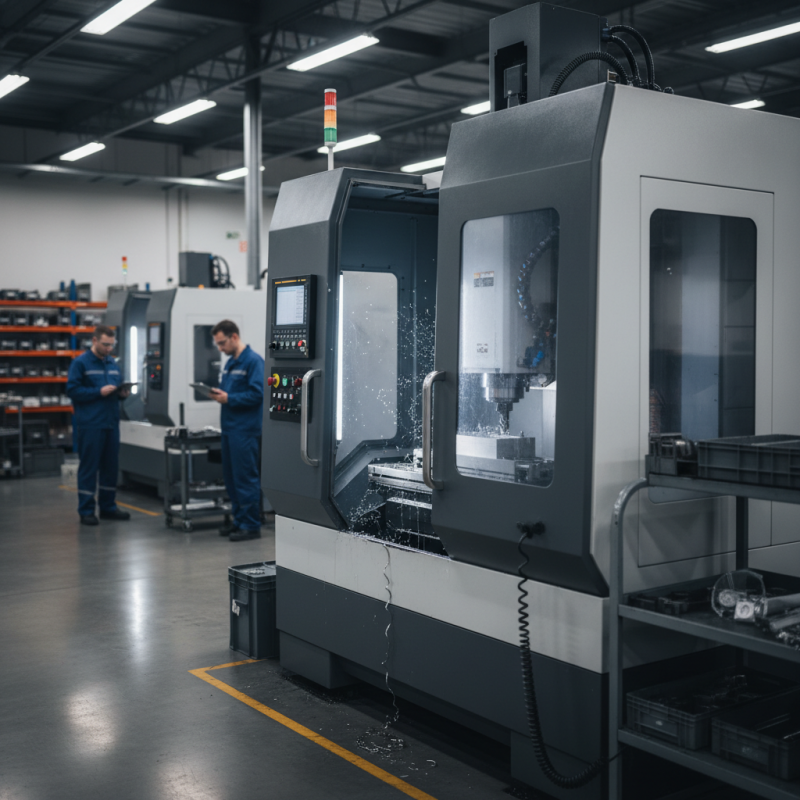
CNC vertical machining centers have become essential in modern manufacturing. They offer precision and efficiency that traditional methods often lack. With automated features, these machines can produce complex parts consistently. The setup time is reduced, which in turn increases productivity.
One significant advantage is their versatility. CNC vertical machining centers can handle various materials. From metals to plastics, they adapt to the needs of different industries. Operators can swiftly change tools without stopping production. This flexibility can dramatically enhance workflow.
Tips for choosing the right CNC vertical machining center: assess your specific needs. Consider the type of materials you'll work with. Additionally, evaluate the production volumes. Ensuring the machine fits your demands will prevent costly mistakes. Staff training is also crucial. Even the best machine can underperform without skilled operators. Encourage continuous learning to maximize efficiency.
CNC vertical machining centers are becoming vital for precision manufacturing. These machines offer unique advantages that help businesses achieve their goals. Their vertical orientation allows for better access when cutting, minimizing the risk of errors. This design also supports heavy workpieces, ensuring stability during the machining process.
Key features of CNC vertical machining centers include powerful spindles and advanced control systems. These spindles rotate at high speeds, facilitating accurate cuts and enhancing productivity. Furthermore, the integration of CAD/CAM systems improves workflow efficiency. However, the level of expertise required to operate these machines can be daunting. Not all operators may feel confident initially, leading to a learning curve that some businesses underestimate.
Moreover, manufacturers should consider the impact of machine maintenance on quality output. Regular upkeep is crucial for sustaining precision over time. Neglecting this can lead to errors and increased costs. Failing to invest in proper training can also limit the potential advantages of these machines. All these factors require careful consideration before committing to a CNC vertical machining center.
CNC vertical machining centers (VMCs) are becoming increasingly popular in various industries due to their remarkable cost-effectiveness. According to a recent report by the Advanced Manufacturing Office, more than 60% of businesses reported reduced operational costs after integrating VMCs into their production process. This technology streamlines tasks, minimizes labor costs, and improves turnaround times significantly.
Investing in a CNC vertical machining center can yield up to a 30% increase in productivity. This is crucial for small to medium-sized enterprises looking to scale. However, it's important to acknowledge that initial investments can be daunting, and not every company realizes immediate savings. A thorough analysis of your production needs is essential before making this decision.
Tip: Assess both operational costs and potential output to ensure the best ROI. Taking the time to evaluate this can shed light on whether a VMC aligns with your business goals. Remember, not every production environment will benefit equally from this technology. Sometimes, adaptability and careful planning are more valuable than the latest machinery.
CNC vertical machining centers (VMCs) have become essential in various industries. Their versatility enables precision machining of complex parts. In the aerospace sector, VMCs create intricate components with tight tolerances. Reports indicate that aerospace manufacturing is projected to grow at a CAGR of 5.4% through 2027. This growth emphasizes the need for reliable machining solutions.
In automotive manufacturing, VMCs play a crucial role in producing engine components and transmission housings. A survey showed that 68% of automotive manufacturers rely on CNC machining for efficiency. The reduction in waste and increased accuracy are undeniable benefits. However, there are challenges, such as the high initial investment and the need for skilled operators. A workforce skilled in CNC programming is essential for maximizing machine potential.
The medical equipment industry also values VMCs for creating precise surgical tools. The demand for high-quality medical devices drives the need for accuracy. Yet, not all companies can meet the highest standards. Some struggle with maintenance and operational issues. It is vital to address these areas to ensure consistency and reliability in production. Investing in advanced training can bridge this gap and enhance overall productivity.
When choosing between CNC vertical and horizontal machining centers, businesses must consider various factors. CNC vertical machining centers are renowned for their user-friendly design. They typically offer better visibility of the workpiece. This visibility allows operators to monitor the machining process more efficiently. In contrast, horizontal machining centers excel in handling larger workpieces. They are usually preferred for heavy-duty tasks, but the setup can be more complex.
Another important aspect is tool access. Vertical machining centers have a straightforward tool path. This can reduce the time needed for tool changes. Horizontal machines, on the other hand, often require more setup. This can lead to longer lead times for production jobs. However, they may be more efficient for batch processing once set up.
Cost is a critical factor too. Vertical machining centers generally have a lower acquisition cost. Yet, the choice shouldn't come down to cost alone. Consider the specific needs of your projects. Evaluate the complexity of the parts being machined. Understanding these details can clarify which option suits your business best. Each type has its strengths and weaknesses, and recognizing them is essential for informed decision-making.
| Feature | CNC Vertical Machining Center | CNC Horizontal Machining Center |
|---|---|---|
| Design Flexibility | Good for complex and intricate designs | Ideal for larger parts with flat surfaces |
| Setup Time | Generally quicker to set up | Longer setup times due to tool changes |
| Workpiece Orientation | Vertical orientation allows for gravity assistance | Horizontal orientation minimizes workpiece movement |
| Chip Removal | Chips may accumulate, potentially requiring manual intervention | Effective chip management through gravity |
| Cost | Typically lower initial investment | Higher initial cost, potential for higher volume production |
| Operational Efficiency | Less efficient for mass production | More efficient for mass production runs |
| Maintenance | Easier and more accessible | More complex, may require specialized knowledge |
| Cookie | Duration | Description |
|---|---|---|
| cookielawinfo-checkbox-analytics | 11 months | This cookie is set by GDPR Cookie Consent plugin. The cookie is used to store the user consent for the cookies in the category "Analytics". |
| cookielawinfo-checkbox-functional | 11 months | The cookie is set by GDPR cookie consent to record the user consent for the cookies in the category "Functional". |
| cookielawinfo-checkbox-necessary | 11 months | This cookie is set by GDPR Cookie Consent plugin. The cookies is used to store the user consent for the cookies in the category "Necessary". |
| cookielawinfo-checkbox-others | 11 months | This cookie is set by GDPR Cookie Consent plugin. The cookie is used to store the user consent for the cookies in the category "Other. |
| cookielawinfo-checkbox-performance | 11 months | This cookie is set by GDPR Cookie Consent plugin. The cookie is used to store the user consent for the cookies in the category "Performance". |
| viewed_cookie_policy | 11 months | The cookie is set by the GDPR Cookie Consent plugin and is used to store whether or not user has consented to the use of cookies. It does not store any personal data. |