Choosing the right Industrial Motherboard can significantly impact your operations. According to expert John Smith, a veteran in embedded systems, "The right motherboard ensures reliability and efficiency." This highlights the importance of selecting components that cater to your specific needs.
Industrial motherboards are crucial in various applications. They power machines, support automation, and ensure connectivity. When evaluating options, consider factors like form factor, processing power, and environmental durability. Each choice comes with its own trade-offs, which makes the selection process challenging.
Experts often emphasize the value of aligning tech specifications with operational demands. Neglecting this alignment can lead to inefficiencies and higher costs. Thus, while making the decision, reflect on your objectives and the unique requirements of your industry. An industrial motherboard should not just be a part; it must be a cornerstone of your technology strategy.
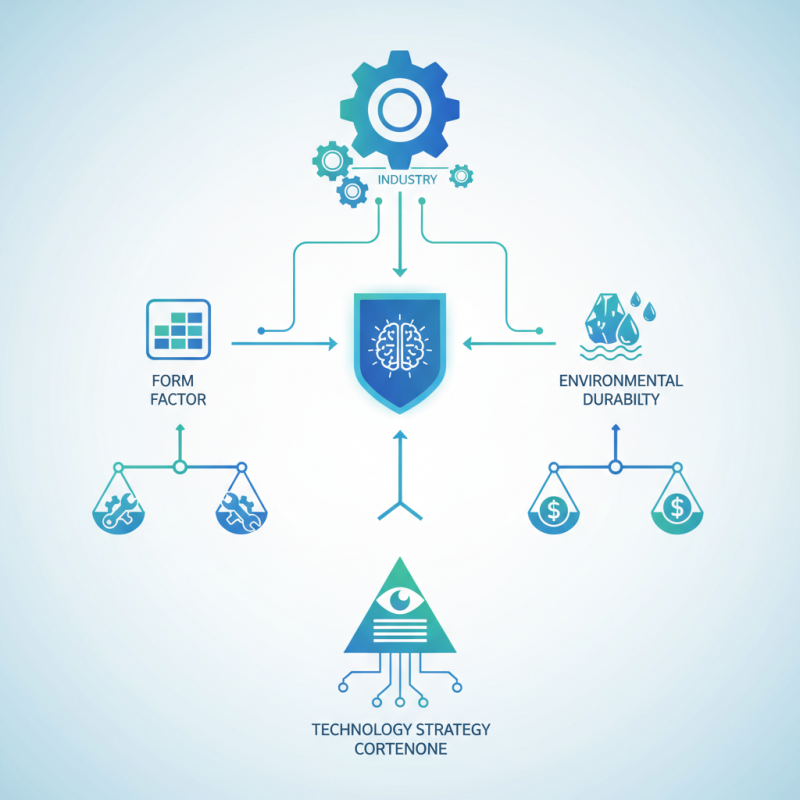
Industrial motherboards are critical components in various applications. Understanding their basics helps make informed decisions. These boards must handle diverse environments and workloads. They are built to last but also need careful consideration.
Key features include form factor, connectivity, and power consumption. Form factor determines how well a board fits into your system. Connectivity options affect how easily devices communicate with one another. Power consumption impacts efficiency and operational costs.
It's also essential to consider expandability. Some projects may require additional interfaces and ports. Keep in mind that not all motherboards offer the same flexibility. This lack of standardization can lead to challenges during integration. Evaluating these aspects will help you select a motherboard that aligns with your project's requirements.
When selecting an industrial motherboard, understanding your specific application requirements is critical. The performance metrics of your application dictate the type of motherboard you will need. For instance, applications in automation can require extensive I/O support and real-time processing capabilities. According to a recent industry report by IDC, over 45% of manufacturers reported needing motherboards that support IoT connectivity. This trend highlights the importance of flexible network interfaces and compatibility with various sensors.
Thermal management is another vital aspect. With industrial settings often exposing hardware to intense conditions, selecting a motherboard that operates efficiently in high temperatures is paramount. In fact, research indicates that nearly 70% of equipment failures occur due to thermal issues. Motherboards designed with robust cooling features can prevent overheating, thus extending the lifecycle of your industrial equipment.
Additionally, consider the scalability of the motherboard. Your current requirements might not represent your future needs. A study by TechNavio revealed that over 30% of businesses face limitations due to inadequate hardware scalability. Choosing a motherboard that allows for future upgrades can save costs and ensure longevity. In a rapidly evolving industrial landscape, adaptability is key.
| Feature | Description | Importance Level |
|---|---|---|
| Form Factor | Size and layout of the motherboard (e.g., ATX, Mini-ITX) | High |
| CPU Compatibility | Supports specific processor types and generations | Critical |
| Expansion Slots | Number and type of slots available for GPUs and other cards | Medium |
| I/O Ports | Types and numbers of ports for connectivity (USB, HDMI, etc.) | High |
| Durability | Ability to withstand harsh industrial environments | Critical |
| Power Requirements | Voltage and wattage specifications | High |
| Thermal Management | Heat dissipation features such as heatsinks and fans | Medium |
| Cost | Total price and value for features provided | High |
When choosing an industrial motherboard, evaluating key features is crucial. Form factor influences compatibility with your chassis. Common sizes include ATX and Mini-ITX. Think about your space and mounting options. A precise fit can prevent overheating issues.
Next, consider the CPU compatibility. The right socket type is vital for performance. Look for processors that align with your workload requirements. If you run demanding applications, investing in a higher-end CPU might be necessary. An underpowered chip can cause bottlenecks and hinder productivity.
Additionally, pay attention to I/O ports and expansion slots. More ports provide flexibility for devices and peripherals. Ensure the motherboard supports modern connectivity standards, like USB 3.0 and Ethernet. Reflect on your future needs; having extra slots allows for upgrades. Sometimes, features like RAID support can be overlooked but are essential for redundancy. Each aspect matters and should be weighed carefully against your specific use cases.
When selecting an industrial motherboard, brand and model differences can significantly impact performance. Some brands prioritize reliability, while others focus on advanced features. It is crucial to analyze what each brand offers based on your specific needs. Look for models with robust support and a history of performance in demanding environments.
Consider the chipset and processor compatibility of different models. Some motherboards may support newer technologies, providing better speed and efficiency. Others might service older systems, which can be a concern if you're looking to future-proof your setup. Reading user reviews can offer insights into real-world reliability and customer support experiences.
Temperature resistance and durability are also key features. Industrial environments can be harsh, and selecting a motherboard that withstands these conditions is vital. Reflect on your operational needs. If your equipment experiences frequent stress, prioritize models designed for endurance. Sometimes, the most feature-rich motherboard may not be the best choice; instead, reliability should steer your decision.
Choosing the right industrial motherboard involves careful consideration of your budget and long-term investment. Many businesses underestimate the total cost of ownership. A survey by the Industrial PC Market Research Association revealed that up to 40% of companies don’t account for maintenance and operational costs. These aspects can significantly impact your final decision.
When selecting an industrial motherboard, assess its scalability and future needs. An affordable motherboard may initially seem tempting, but it could require upgrades sooner than expected. Industry data shows that investing in a slightly more expensive, high-quality option can save 25% in costs over five years due to fewer replacements and repairs. It’s crucial to balance initial expenditure with reliable performance.
Tips: Evaluate future expansion capabilities. A motherboard that supports advanced features will likely be more versatile. Don’t overlook warranty terms; they provide a safety net. Conduct comparative analyses between options. The right choice today can pay off down the line. Engaging with industry experts can offer valuable insights that manuals often miss.
| Cookie | Duration | Description |
|---|---|---|
| cookielawinfo-checkbox-analytics | 11 months | This cookie is set by GDPR Cookie Consent plugin. The cookie is used to store the user consent for the cookies in the category "Analytics". |
| cookielawinfo-checkbox-functional | 11 months | The cookie is set by GDPR cookie consent to record the user consent for the cookies in the category "Functional". |
| cookielawinfo-checkbox-necessary | 11 months | This cookie is set by GDPR Cookie Consent plugin. The cookies is used to store the user consent for the cookies in the category "Necessary". |
| cookielawinfo-checkbox-others | 11 months | This cookie is set by GDPR Cookie Consent plugin. The cookie is used to store the user consent for the cookies in the category "Other. |
| cookielawinfo-checkbox-performance | 11 months | This cookie is set by GDPR Cookie Consent plugin. The cookie is used to store the user consent for the cookies in the category "Performance". |
| viewed_cookie_policy | 11 months | The cookie is set by the GDPR Cookie Consent plugin and is used to store whether or not user has consented to the use of cookies. It does not store any personal data. |