Choosing a Compact Transformer Substation is a practical decision, not merely a purchase based on price or footprint. The right unit must fit electrical demand, site conditions, safety requirements, and future expansion plans. A substation that looks efficient on paper may struggle beside a dusty factory, coastal road, or crowded commercial building.
Transformer specialist Dr. J. C. Das offers a useful guiding principle: “A transformer must be selected for its duty, environment, and future load—not its nameplate alone.” This idea deserves attention. Engineers should examine rated power, voltage levels, impedance, cooling method, enclosure protection, and short-circuit withstand capacity. They should also verify ventilation, access clearance, noise limits, fire separation, and maintenance space. Small does not always mean simple.
This guide explains how to compare Compact Transformer Substation designs with greater confidence. It considers prefabricated construction, installation time, operating reliability, and lifecycle cost. Site measurements matter. So do cable routes, soil conditions, humidity, and local grid rules. A few overlooked centimeters can complicate installation. A low initial price can become expensive later.
Some choices remain imperfect. Load forecasts may change. Available data may be incomplete. Therefore, responsible selection includes engineering review, manufacturer documentation, and compliance checks against applicable standards. The best solution is not always the smallest enclosure. It is the one that delivers dependable power, safe access, and practical service throughout its expected working life.
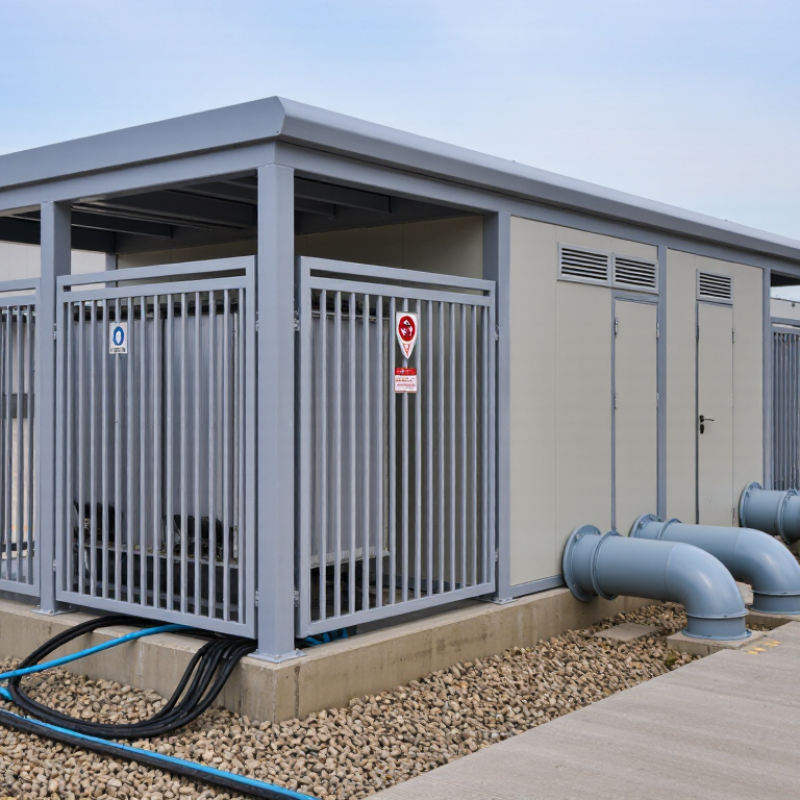
A compact transformer substation should begin with its purpose, not its enclosure size. Define whether it serves a workshop, apartment block, solar plant, or construction load. Record the normal load, starting currents, duty cycle, and acceptable voltage drop. A 500 kVA rating may look adequate, yet motors can create severe short-term stress. Peak demand matters. Also identify the supply voltage, frequency, earthing arrangement, and required fault withstand level. This prevents a convenient unit from becoming an operational limitation.
Operating conditions require equal attention. Confirm whether the substation will stand indoors or outdoors. Outdoor units may face rain, dust, salt air, sunlight, and accidental water exposure. Measure the expected ambient temperature and installation altitude. High temperatures reduce cooling performance, while poor ventilation can shorten transformer life. Check available space for cable bends, fire separation, inspection, and safe maintenance access. Do not guess.
A practical site survey should include noise limits, seismic conditions, flood risk, and future load growth. Protection settings must coordinate with upstream and downstream equipment. Review thermal calculations, enclosure protection, grounding design, and routine testing requirements. Applicable electrical standards and local regulations should guide the specification. A common mistake is treating future expansion as a simple percentage. New motors or electronic loads may change harmonics and fault behavior. The first survey is rarely complete, so verify assumptions with measured data before ordering.
Define the Purpose and Operating Conditions
Choosing a compact transformer substation starts with measured demand, not connected load alone. List lighting, motors, HVAC units, chargers, and process equipment. Then apply realistic demand and diversity factors. For example, 180 kW of connected loads at a 0.75 demand factor equals 135 kW. At a 0.90 power factor, the calculated demand is about 150 kVA. Add starting currents and nonlinear loads before selecting the transformer.
A 20–25% capacity reserve often supports moderate growth. In this example, 150 kVA plus 25% equals 187.5 kVA, suggesting the next practical rating may be 200 kVA. However, a fixed reserve percentage is not always reliable. Production plans, spare feeders, and local utility limits can change the result. Check actual meter data when available. A spreadsheet can look precise and still hide poor assumptions.
Future expansion also affects the enclosure and cable routes. Leave physical space for an additional feeder, ventilation, and safe maintenance access. Compact equipment can run hot when airflow is restricted. Confirm ambient temperature, installation altitude, harmonics, voltage drop, and short-circuit levels with a qualified electrical engineer. I have seen projects fit the transformer perfectly, then struggle with cable bending space. That mistake is avoidable. Include protection coordination and emergency isolation during the design review.
How to Choose a Compact Transformer Substation?
Compact substations should be compared by transformer type, voltage rating, and real operating losses. Dry-type transformers suit indoor rooms, tunnels, and fire-sensitive sites. They avoid insulating oil but usually require more ventilation space. Oil-immersed units often provide higher power density outdoors. They need bunding, temperature monitoring, and careful fire planning. A neat specification can still mislead.
Voltage ratings must match the incoming network, secondary loads, insulation level, and fault duty. A 11 kV/0.4 kV unit may fit many distribution systems, but it is not automatically suitable. Check seasonal loading, motor starting current, and future expansion. A 630 kVA transformer running near its efficient load point may outperform a larger 1,000 kVA unit operating lightly. This detail is often missed.
Efficiency includes no-load loss and load loss. No-load loss continues twenty-four hours daily, even when the site is quiet. Load loss rises sharply with current, so measured demand profiles matter. The U.S. Department of Energy’s distribution-transformer analysis projected about 3.6 quadrillion Btu in cumulative savings over thirty years from efficiency standards. IEC 60076-20 also frames transformer efficiency around total ownership performance, not nameplate efficiency alone. In practice, request certified loss data at defined temperatures and loads. Allowing for uncertainty is wise; field conditions rarely match laboratory sheets perfectly.
A compact transformer substation should match real site conditions, not only a catalog specification. In field inspections, safety details often determine long-term reliability. Check internal arc protection, clear isolation points, secure doors, and visible warning labels. Earthing must be tested after installation, especially where soil is dry or rocky. Temperature sensors and overload monitoring also help maintenance teams detect problems before failure.
Environmental protection needs equal attention. Choose an enclosure suitable for rain, dust, salt, and temperature changes. In coastal areas, corrosion-resistant materials can prevent early damage. Oil-filled equipment should include leak containment and fire-control measures where required. Noise may affect nearby homes, schools, or offices. Do not assume a quiet transformer on paper will remain quiet after installation. Ventilation openings also need protection from insects and standing water.
Tips: Measure the foundation, cable route, crane access, and vehicle turning radius before ordering. Leave enough space for safe inspection and future replacement. A common mistake is trusting old drawings. I have seen small errors delay installation for weeks. Check flood levels, drainage, sunlight, and winter access during the site visit. Local electrical rules and qualified engineers should confirm the final design. Perfect plans are rare, so record uncertainties and resolve them early.
Choosing a compact transformer substation starts with standards, not enclosure size. IEC 62271-202 covers high-voltage prefabricated substations, while IEC 60076 addresses transformer performance and testing. Ask for type-test certificates, routine-test records, protection settings, and verified ingress protection. A small footprint is useful. It does not excuse weak documentation.
Maintenance requirements should match the site’s reality. Check access around cable boxes, ventilation paths, earthing points, and oil or temperature indicators. The IEA’s Electricity Grids and Secure Energy Transitions report says annual global grid investment must rise from about $300 billion to $600 billion by 2030. That pressure makes avoidable outages increasingly expensive. Request a maintenance schedule, spare-parts list, response times, and technician qualifications from the supplier. Service promises matter more than polished brochures.
Evaluate total cost over the substation’s working life. Include civil works, transport, installation, losses, inspections, replacement parts, downtime, and disposal. The U.S. Department of Energy’s distribution-transformer analyses emphasize that transformer efficiency affects lifetime energy costs, not only purchase price. Compare no-load and load losses using the same duty profile. I would not trust the cheapest quotation automatically. Yet, I also would not accept premium features without measurable value. A practical spreadsheet, updated with local electricity prices and failure risks, often exposes the uncomfortable gaps.
| Evaluation Dimension | Compact Oil-Immersed 250 kVA | Compact Oil-Immersed 630 kVA | Compact Oil-Immersed 1,000 kVA | Compact Dry-Type 630 kVA | Compact Dry-Type 1,600 kVA |
|---|---|---|---|---|---|
| Typical application | Small commercial buildings, lighting, telecom, and light industrial loads | Small factories, retail facilities, apartment buildings, and distributed utility loads | Medium industrial plants, data-support systems, and large commercial facilities | Indoor public buildings, high-rise facilities, hospitals, and fire-sensitive locations | High-density commercial or industrial loads where indoor installation and fire performance are priorities |
| Typical voltage configuration | 11 kV / 0.4 kV, 3-phase, 50 Hz | 11 kV / 0.4 kV, 3-phase, 50 Hz | 11 kV / 0.4 kV, 3-phase, 50 Hz | 11 kV / 0.4 kV, 3-phase, 50 Hz | 11 kV / 0.4 kV, 3-phase, 50 Hz |
| Approximate full-load current at 400 V | 361 A | 909 A | 1,443 A | 909 A | 2,309 A |
| Transformer technology | Mineral-oil immersed, sealed or conservator type | Mineral-oil immersed, sealed or conservator type | Mineral-oil immersed, sealed or conservator type | Cast-resin, dry-type, typically AN cooling | Cast-resin, dry-type, AN or optional AF cooling |
| Relevant standards to verify | IEC 62271-202 for prefabricated high-voltage/low-voltage substations; IEC 62271-200 for metal-enclosed switchgear; IEC 60076-1 for power transformers; IEC 60076-11 for dry-type transformers; IEC 61439-1/-2 for low-voltage assemblies; IEC 60529 for enclosure IP rating; IEC 61936-1 for power installations exceeding 1 kV AC; and applicable local utility and electrical-safety regulations. | ||||
| Suggested enclosure rating | Minimum IP54 indoors; IP55 or higher outdoors, subject to ventilation design | Minimum IP54 indoors; IP55 or higher outdoors | Minimum IP54 indoors; IP55 or higher outdoors | IP31–IP54 indoors; higher rating may reduce ventilation performance | IP31–IP54 indoors; verify heat dissipation and accessibility |
| Fire and environmental considerations | Requires oil containment, separation, fire-risk review, and leak protection where applicable | Requires oil containment and an assessment of fire separation and spill control | Requires a bund or approved containment system; confirm local environmental requirements | No insulating-liquid spill risk; suitable where liquid-filled equipment is restricted | No insulating-liquid spill risk; verify fire classification and room ventilation |
| Typical transformer efficiency at rated load | Approximately 98.2%–98.8% | Approximately 98.5%–99.1% | Approximately 98.7%–99.2% | Approximately 98.2%–98.9% | Approximately 98.7%–99.2% |
| Typical no-load and load-loss priority | Low purchase cost; compare guaranteed losses carefully for lightly loaded sites | Balanced capital cost and operating losses for normal commercial load profiles | Loss capitalization becomes important because annual energy losses are significant | May have higher no-load losses; verify guaranteed values and ventilation energy | Specify guaranteed losses and thermal performance to control long-term operating cost |
| Routine maintenance requirement | Visual inspection every 6–12 months; thermography annually; oil testing typically every 2–3 years or as required | Visual inspection every 6–12 months; thermography annually; oil condition testing based on service duty | Annual inspection and thermography; oil sampling and electrical testing according to risk assessment | Visual inspection every 6–12 months; clean ventilation paths; thermography annually | Annual inspection; clean ducts and fans if fitted; check temperature sensors and connections |
| Common maintenance tasks | Check oil level, leaks, bushings, earthing, cable terminations, surge arresters, and enclosure seals | Check oil condition, protection devices, cable compartments, earthing, and switchgear operation | Perform oil quality tests, winding-resistance checks, insulation tests, and protection-function tests as scheduled | Remove dust, inspect resin surfaces, verify temperature monitoring, torque connections, and inspect ventilation | Inspect thermal sensors, fans if installed, busbar joints, resin condition, ventilation, and protection settings |
| Maintenance skill and tools | Medium; oil sampling and electrical test equipment may be required | Medium; qualified high-voltage personnel required | Medium to high; more extensive testing and outage planning are advisable | Low to medium; cleaning and electrical testing still require qualified personnel | Medium; thermal monitoring, ventilation, and connection testing are important |
| Indicative footprint excluding access clearances | Approximately 2.0–3.5 m² | Approximately 3.5–6.0 m² | Approximately 5.0–8.0 m² | Approximately 4.0–7.0 m² | Approximately 8.0–13.0 m² |
| Indicative installed budget range | USD 35,000–70,000 | USD 55,000–110,000 | USD 80,000–160,000 | USD 75,000–145,000 | USD 160,000–300,000 |
| Budget assumptions | Indicative ranges include transformer, medium-voltage switchgear, low-voltage switchboard, enclosure, standard protection, installation, and testing. They exclude land, major civil works, long cable routes, utility connection charges, taxes, difficult lifting, special fire systems, and unusual environmental requirements. | ||||
| Expected service life | Typically 25–35 years with correct loading and maintenance | Typically 25–35 years with correct loading and maintenance | Typically 25–35 years with correct loading and maintenance | Typically 20–30 years, subject to thermal, environmental, and insulation conditions | Typically 20–30 years, subject to loading, cooling, and environmental conditions |
| Supplier support to require | Require type-test and routine-test records, guaranteed losses, dimensional drawings, heat-run data, protection coordination information, installation instructions, spare-parts availability, commissioning support, training, warranty terms, response time, and documented after-sales service coverage. | ||||
| Typical delivery planning window | Approximately 10–18 weeks after approved drawings | Approximately 12–20 weeks after approved drawings | Approximately 14–24 weeks after approved drawings | Approximately 14–24 weeks after approved drawings | Approximately 18–30 weeks after approved drawings |
| Best selection when | The load is modest, outdoor installation is acceptable, and lowest initial cost is important | A cost-effective general-purpose solution is needed for a normal commercial load profile | The load is large enough to justify careful loss evaluation and robust service planning | Indoor installation, fire-risk reduction, and low spill risk are more important than minimum purchase price | High capacity is required in a constrained indoor location with strong fire and environmental requirements |
| Cookie | Duration | Description |
|---|---|---|
| cookielawinfo-checkbox-analytics | 11 months | This cookie is set by GDPR Cookie Consent plugin. The cookie is used to store the user consent for the cookies in the category "Analytics". |
| cookielawinfo-checkbox-functional | 11 months | The cookie is set by GDPR cookie consent to record the user consent for the cookies in the category "Functional". |
| cookielawinfo-checkbox-necessary | 11 months | This cookie is set by GDPR Cookie Consent plugin. The cookies is used to store the user consent for the cookies in the category "Necessary". |
| cookielawinfo-checkbox-others | 11 months | This cookie is set by GDPR Cookie Consent plugin. The cookie is used to store the user consent for the cookies in the category "Other. |
| cookielawinfo-checkbox-performance | 11 months | This cookie is set by GDPR Cookie Consent plugin. The cookie is used to store the user consent for the cookies in the category "Performance". |
| viewed_cookie_policy | 11 months | The cookie is set by the GDPR Cookie Consent plugin and is used to store whether or not user has consented to the use of cookies. It does not store any personal data. |