How to Choose the Best Dirt Tires in 2026?
Choosing Dirt Tires in 2026 is less about finding one universal winner and more about matching tread, casing, and rubber to the ground beneath your wheels. A hard-packed trail demands different grip from loose sand, wet roots, or sharp rocks. Even a tire that feels planted in a showroom can skate when the surface changes.
The U.S. Tire Manufacturers Association’s Tire Safety guidance and the Motorcycle Industry Council’s research offer useful context on tire care and riding conditions, but neither publishes a definitive ranking of dirt tires. That matters. Treat broad market claims cautiously, and compare manufacturer specifications with independent tests that identify terrain, pressure, bike, and rider weight. Check the sidewall and product manual, too; pressure and fitment affect handling, heat, and wear.
As motorcycle tire engineer and author Kevin Cameron has emphasized in his technical writing, a tire’s behavior depends on its construction and operating conditions—not tread appearance alone. For Dirt Tires, that means looking closely at knob spacing, carcass support, compound, and the terrain you actually ride. Small details count. A soft compound may hook up on rocks yet wear quickly on abrasive hardpack; an aggressive front tread may track well in mud but feel vague on firm trails. These trade-offs are easy to underestimate. A practical comparison should weigh grip, durability, fitment, and feedback against your usual routes, then leave room for your own test ride.
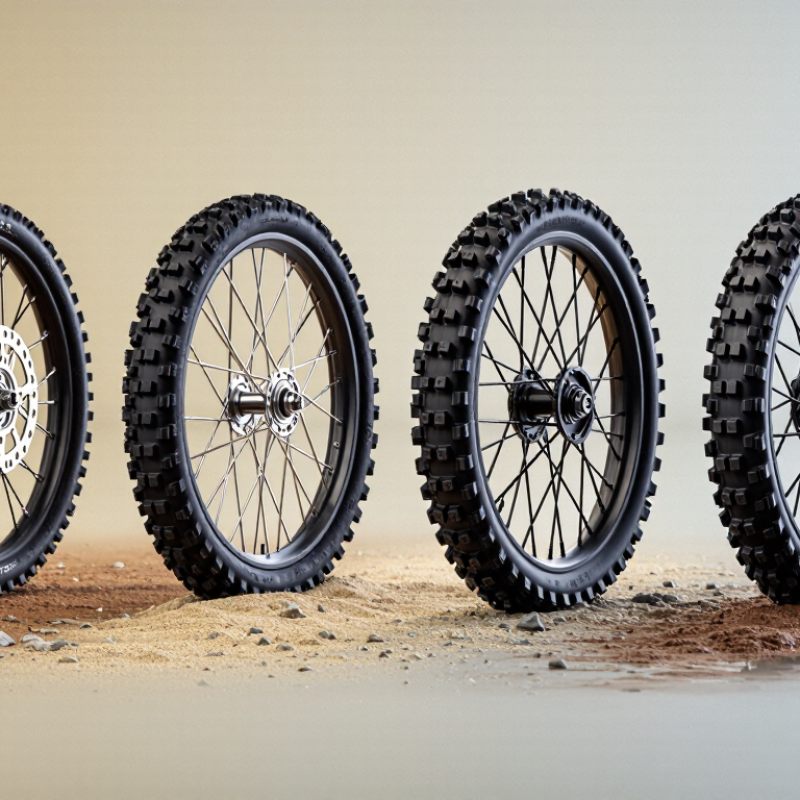
What Dirt Tires Are and How Their Tread Patterns Work
Dirt tires are built for loose or uneven surfaces, where ordinary road tread may struggle to find grip. Their tread is made of raised blocks, often called lugs, with open channels between them. Those gaps give soil, sand, and small stones somewhere to move as the tire rolls. A tire that looks aggressive is not automatically the best choice.
Pattern shape changes how a tire behaves. Widely spaced lugs can clear sticky mud more easily, while closer blocks often provide steadier contact on firm, dry ground. Taller knobs may bite into loose soil, but they can feel less settled on hard-packed trails. Small details matter. Look at the center lugs for forward traction and the outer shoulder blocks for grip when cornering. The pattern works with the tire’s rubber and pressure, not by itself.
Match the tread to the ground you ride most, then consider how often conditions change. A mixed trail may call for a balanced pattern rather than the deepest knobs available. I’d be cautious about choosing from appearance alone; two similar-looking tires can behave differently under load. Even a good tread can pack with clay or skate across smooth rock. Check the terrain, inspect the tire after a ride, and adjust expectations as conditions shift. Tread is a compromise.
Which Terrain and Riding Conditions Shape Your Choice?
Terrain should guide tread shape before appearance does. On loose sand or deep loam, wider-spaced knobs can bite and shed material; on firm hardpack, closer spacing often gives steadier contact. The USDA Natural Resources Conservation Service’s Soil Survey Manual classifies sand as 0.05–2 millimeters and clay as particles smaller than 0.002 millimeters. That difference matters: fine, wet clay can pack between knobs, while coarse sand may let them sink. Feel the surface. A short test ride on safe ground can reveal more than a photo.
Weather can change the same trail within hours. NOAA’s Atlas 14 precipitation-frequency data gives rainfall estimates by location, storm duration, and recurrence interval; check local conditions, not just seasonal averages. Wet roots, slick rock, and mud call for a tread that clears well and predictable throttle response. Dry hardpack may reward a less aggressive pattern. Mud changes everything. Tire pressure also affects grip and carcass protection, so stay within the tire and motorcycle makers’ guidance. I’d avoid choosing by terrain label alone: “forest trail” might mean dusty gravel, saturated clay, or both before lunch. Compare the route’s softest section, typical moisture, and rocks before deciding.
How to Compare Tire Types, Rubber Compounds, and Sizes
Choosing dirt tires starts with matching tread to the ground you actually ride. Open, widely spaced knobs can clear loose mud, while closer knobs often feel more stable on packed trails. For mixed terrain, a versatile tread may be less impressive in one condition but easier to live with across several. There is no perfect pattern. A dry test loop may not predict how the same tire behaves after rain.
Rubber compounds change grip, wear, and feel. Softer rubber can conform to rocks and roots, but may wear faster on hard, abrasive ground. Harder compounds often last longer, though traction can feel reduced on slick surfaces. Size matters just as much: check your vehicle’s manual, rim dimensions, and available clearance before comparing options. A tire that fits the rim can still rub the frame or fender. Small details are easy to miss.
Tips: Compare tires on the same terrain, and note pressure, temperature, and wear. Read sizing markings carefully; labels can vary by tire type. If you are unsure, confirm compatibility with a qualified tire professional. After a ride, inspect the sidewalls and knobs—your first choice may need a rethink.
How to Match Dirt Tires to Your Bike and Riding Style
A dirt tire should fit both your motorcycle and the ground you ride on. Start with the tire sizes listed in your owner’s manual; matching the rim diameter and approved width helps preserve handling and clearance. Then consider your usual terrain, not just the trail you hope to ride someday. Soft, muddy ground generally calls for taller, more widely spaced knobs that can bite and shed soil. On hard-packed trails, closer knobs often provide steadier contact and wear more evenly. Mixed terrain is a compromise. There is no magic tread.
Your riding style matters, too. A rider who accelerates hard out of loose corners may value strong rear traction, while predictable front grip can help with steering on off-camber sections. Look at both tires as a pair: an aggressive front and rear tread combination can feel different from two similarly shaped tires. Tire construction also affects feel and durability, so check the motorcycle maker’s guidance and the tire maker’s load and pressure specifications. Don’t copy a pressure number from someone with a different bike or setup. I’ve seen riders focus on knobs and overlook pressure; that can muddy the comparison. Adjust only in small steps, inspect for damage, and note how the bike behaves on familiar ground. Feel matters. Not always comfortable, but useful.
How to Evaluate Durability, Performance, and Value in 2026
Choosing dirt tires in 2026 means matching tread, casing, and compound to your actual terrain. On loose soil, widely spaced knobs can clear mud; on hard-packed trails, overly tall knobs may flex and wear unevenly. Check the carcass for cuts and bulges after rides, and record pressure before and after. Small clues matter. A pressure drop can signal a puncture or a leaking valve, not just a poor tire.
Durability is more than tread depth. NHTSA tire-safety guidance identifies 2/32 inch as a replacement threshold, but that road-oriented benchmark does not predict off-road grip or knob condition. Inspect edges for rounding and cracks, especially after riding rocky ground.
For value, compare price with expected ride hours, repairability, and terrain-specific traction—not purchase price alone. The U.S. Tire Manufacturers Association’s 2023 Scrap Tire Management Report estimated roughly 256 million scrap tires were generated in 2021. That figure covers all tire types, not dirt-tire failures, but it is a reminder that premature replacement has a material cost. Be honest with yourself: a cheaper tire may be sensible for occasional rides, yet frustrating if its knobs tear away early. Start with your terrain and riding frequency, then compare.


