Selecting PVD Coating Equipment is a production decision, not just a purchase. The right system must match your parts, coating materials, throughput, and quality targets. A compact chamber may suit small batches, while larger components need generous chamber dimensions and reliable fixture rotation. The details matter.
Industry forecasts show why careful evaluation is timely. Grand View Research’s Physical Vapor Deposition Market Size, Share & Trends Analysis Report estimated the global PVD market at about USD 24.8 billion in 2023 and projected continued growth through 2030. These figures describe the broader market, not equipment sales alone, and estimates can vary by research method. Still, they point to expanding use across sectors such as automotive, tools, and electronics. Demand does not guarantee a good investment. A system that cannot maintain stable film thickness or meet your actual cycle-time needs may create costly rework.
This guide outlines seven practical checks for comparing machines, from coating process and chamber capacity to controls, maintenance, and supplier support. Ask for performance data using parts or geometries similar to yours. Request details on coating uniformity, batch time, and expected service intervals. Then verify what the warranty covers. Small print matters. A polished demonstration is useful, but production evidence matters more. One point is easy to overlook: the lowest quoted price may not reflect installation, utilities, training, or downtime. Use these tips to ask sharper questions—and to choose equipment your team can operate consistently.
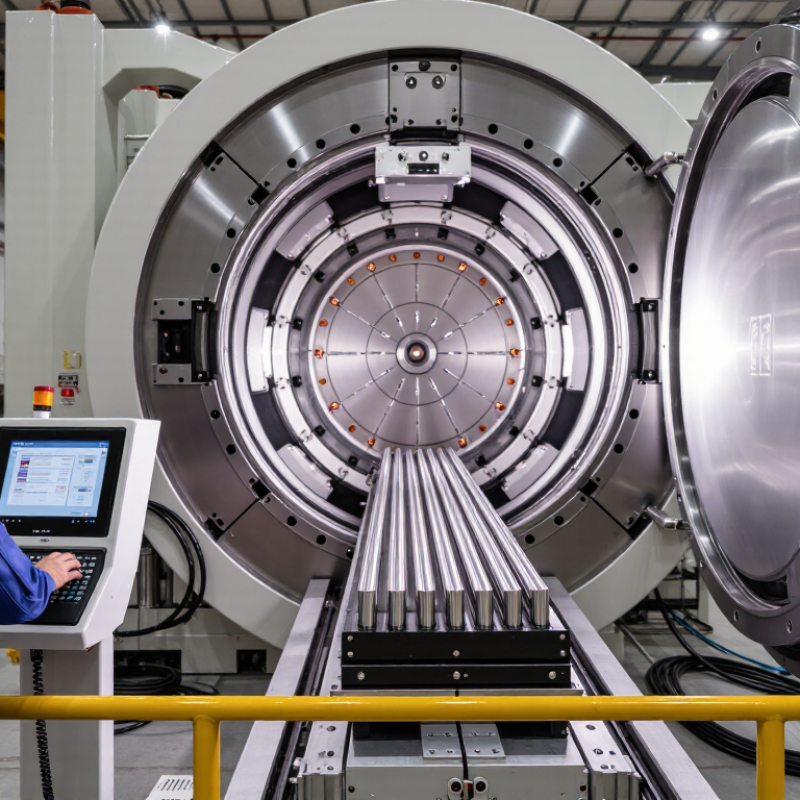
PVD coating is not one process. It is a family of vacuum-based methods that deposit thin films onto prepared surfaces. Thermal evaporation suits some decorative and optical layers, while sputtering offers flexible control over many materials. Cathodic arc deposition can produce dense, wear-resistant coatings, though droplets may affect surface finish. Match the process to the part, coating, and required performance—not just the machine’s advertised capacity.
Look closely at the equipment layout. Batch systems can handle varied part sizes and smaller production runs. Inline systems move parts through stages and may suit steady, high-volume output. Check chamber dimensions, fixture movement, pumping speed, and how evenly the coating reaches complex shapes. Ask how the system controls temperature and process gases. Small differences matter. A shadowed recess may receive a thinner film than an exposed edge.
Before choosing, define the substrate materials and coating thickness range. Confirm that the power supply and targets support the intended process. Review monitoring tools for pressure, deposition rate, and layer thickness; these help operators spot drift between runs. Inspect access for cleaning and target replacement, too. A polished specification sheet can look reassuring, but it may not reflect your actual parts. Trial samples and measured results offer better evidence, especially when geometry or surface preparation varies.
Before comparing PVD coating equipment, define what the coating must do on the finished part. Is the priority wear resistance, corrosion protection, a specific color, or a stable electrical property? These goals can conflict. A thicker layer may improve durability but alter dimensions or edge sharpness. Record acceptable thickness, uniformity, appearance, and performance tests before evaluating chamber size.
Map the actual production mix, not an idealized one. Record part dimensions, fixture count, batch weight, and product-change frequency. A chamber sized for one large component may waste capacity on smaller parts. Include loading, cleaning, masking, and inspection time; these steps can limit output more than deposition time. How many shifts? Consider peak demand, but challenge forecasts that lack reliable data. That assumption is easy to overlook.
Substrate materials and part geometry also affect process requirements. Recessed features may receive less uniform coverage, and some materials tolerate less heat. Ask for sample runs using representative parts, then measure coating thickness at several locations and test adhesion using a defined method. A pilot run helps, though it cannot reproduce every production variable. Specify uptime targets, maintenance access, utility needs, and operator training. Leave room for growth, but weigh extra capacity against energy use and payback. Review the assumptions with production and quality teams; a spreadsheet can miss awkward loading and handling issues.
Choosing PVD equipment starts with the material, not a machine’s maximum coating rate. A hard metal tool may suit arc evaporation, which can produce dense films but may leave droplets on the surface. For smoother finishes or precise alloy control, sputtering can be a better fit. Reactive gases can also help form compounds such as nitrides, but gas control and process stability matter.
Consider the part’s shape and heat tolerance. Deep recesses and narrow channels can receive uneven coverage, so fixture rotation and chamber layout deserve close attention. Heat-sensitive substrates may need lower-temperature processes and careful thermal monitoring. Fit matters.
Ask for coating trials on representative parts, then inspect thickness, adhesion, color, and wear under actual use conditions. A supplier’s quoted deposition rate is not a guarantee; part loading and geometry can change results.
I would still question any setup selected from a material list alone. Real parts often reveal the awkward details.
7 Tips for Choosing PVD Coating Equipment
Evaluating Chamber Size, Controls, and Equipment Performance
A chamber should fit the largest part, its fixture, and the clearance needed for rotation—not just the part’s dimensions. Leave room for loading and maintenance, too. Too much unused volume can increase pump-down time and operating costs. ISO 14644-1:2015 sets a limit of 3,520 particles per cubic metre at 0.5 micrometres for an ISO Class 5 room. This is a room classification, not a chamber requirement, but it illustrates why cleanliness and handling conditions matter.
Check whether controls record pressure, temperature, power, and process time for each run. These records help operators investigate coating variation instead of relying on memory. SEMI E10 provides standard definitions for equipment reliability measures, including availability and utilization. Ask suppliers for performance data under conditions close to your parts and coating recipe. Generic maximum deposition rates may not predict actual production output.
Measure thickness uniformity across a representative load, then repeat the test. Review downtime, changeover time, and maintenance access alongside cycle time. Small details count: can an operator reach a shield without removing nearby components? It is easy to overvalue chamber capacity. A larger unit may still create bottlenecks if fixtures are awkward or controls obscure process drift. That trade-off deserves a second look.
Compare chamber size, controls, and equipment performance against your production needs.
How to use this chart: Ratings are illustrative planning priorities, not measured performance data or universal recommendations. Check that the chamber fits your largest parts and fixtures, confirm process-control capabilities and repeatability, and compare throughput, process compatibility, serviceability, and total cost for your application.
Supplier support can shape the real value of PVD coating equipment long after installation. Ask who handles commissioning, operator training, and process troubleshooting. A useful training plan should cover chamber preparation, recipe changes, and routine maintenance—not just startup. That matters. Check how quickly technical staff respond, which spare parts are stocked nearby, and whether remote diagnostics are available. Request these details in writing; a vague promise of “full support” is hard to evaluate.
Compare operating costs beyond the purchase price. Include electricity, process gases, targets, chamber cleaning, and planned maintenance. Ask for realistic estimates based on your workload, then check how downtime could affect production. A lower-cost system may become expensive if parts take weeks to arrive. Safety deserves the same close review. Look for documented interlocks, clear emergency procedures, and monitoring for relevant process hazards, such as gas flow or chamber pressure. Confirm that operators receive practical safety training and know how to verify alarms. Small details count. Supplier answers may still leave gaps, so compare them with your facility’s risk assessment before deciding.
| Tip | What to Compare | Practical Questions to Ask | Why It Matters |
|---|---|---|---|
| 1. Match the process to your coating requirements | Confirm whether the system supports the required PVD process, such as magnetron sputtering or cathodic arc, and the materials, substrate sizes, and coating thicknesses you need. | Which process configurations are available? Can the system handle the substrate geometry and coating recipes used in our production? | Different processes and configurations produce different coating characteristics and may suit different parts and applications. |
| 2. Check usable chamber capacity | Compare chamber dimensions, fixture space, load size, and the clearance needed for parts and coating sources—not just the chamber’s outside dimensions. | What is the usable loading area? How many of our parts fit per batch, including the required spacing and fixtures? | Usable capacity affects batch throughput and helps prevent a system from being undersized for real production loads. |
| 3. Evaluate supplier training and technical support | Review operator and maintenance training, installation support, troubleshooting availability, documentation, and access to qualified service technicians. | What training is included? What are the support hours and typical response arrangements? Are operating and maintenance instructions supplied? | Good support can help operators use the equipment correctly and reduce delays when process or maintenance issues arise. |
| 4. Estimate total operating costs | Include electricity, process gases, targets or cathodes, consumables, cooling, vacuum-pump maintenance, cleaning, and routine replacement parts. | Can you provide a written list of routine consumables and maintenance tasks? Which costs vary with batch size or operating hours? | The purchase price alone does not show the cost of running and maintaining a coating system over time. |
| 5. Compare productivity and process control | Review cycle time, pumping and venting time, recipe control, monitoring, repeatability features, and how easily batches can be loaded and unloaded. | What steps are included in a typical cycle? Which process parameters are monitored and recorded? Can recipes be saved and repeated? | Clear cycle-time and control information helps assess production capacity and consistency for your specific application. |
| 6. Review safety systems and risk controls | Check guarding and interlocks, electrical and vacuum-system protections, hot-surface controls, gas handling, ventilation requirements, and emergency-stop provisions. | What hazards are identified in the equipment documentation? Which safety functions are built in, and which site controls or utilities are required? | PVD systems may involve vacuum, electrical energy, heat, and process gases. Safeguards should be assessed for the actual process and installation site. |
| 7. Verify installation, serviceability, and future needs | Compare utility requirements, floor-space needs, access for maintenance, spare-parts availability, warranty terms, and options for future process or capacity changes. | What power, cooling, exhaust, and gas connections are required? Which parts are routine wear items? What is covered by the warranty? | Planning for installation and service access can avoid delays, while suitable upgrade options may help the equipment remain useful as needs change. |
| Cookie | Duration | Description |
|---|---|---|
| cookielawinfo-checkbox-analytics | 11 months | This cookie is set by GDPR Cookie Consent plugin. The cookie is used to store the user consent for the cookies in the category "Analytics". |
| cookielawinfo-checkbox-functional | 11 months | The cookie is set by GDPR cookie consent to record the user consent for the cookies in the category "Functional". |
| cookielawinfo-checkbox-necessary | 11 months | This cookie is set by GDPR Cookie Consent plugin. The cookies is used to store the user consent for the cookies in the category "Necessary". |
| cookielawinfo-checkbox-others | 11 months | This cookie is set by GDPR Cookie Consent plugin. The cookie is used to store the user consent for the cookies in the category "Other. |
| cookielawinfo-checkbox-performance | 11 months | This cookie is set by GDPR Cookie Consent plugin. The cookie is used to store the user consent for the cookies in the category "Performance". |
| viewed_cookie_policy | 11 months | The cookie is set by the GDPR Cookie Consent plugin and is used to store whether or not user has consented to the use of cookies. It does not store any personal data. |