Get an instant quote
Get in touch Listen to our podcast

Blog

How to Choose the Best Wire Mesh Weaving Machine?

Choosing the right wire mesh weaving machine is crucial for any manufacturer in the industry. Expert John Smith, a veteran in wire mesh production, once said, "A high-quality machine defines the efficiency and quality of your output." Understanding the options available can be challenging.

When selecting a machine, consider the specific needs of your business. Do you prioritize speed, durability, or versatility? Each machine has different strengths. Some machines may excel in precision but lack speed. Others may be fast but risk compromising quality.

Reflecting on your requirements is vital. Are you investing in the latest technology or relying on traditional methods? A balance is essential. Choosing the best wire mesh weaving machine is more than just about costs. It’s about future-proofing your production line. Consider all factors. Don’t rush the process.
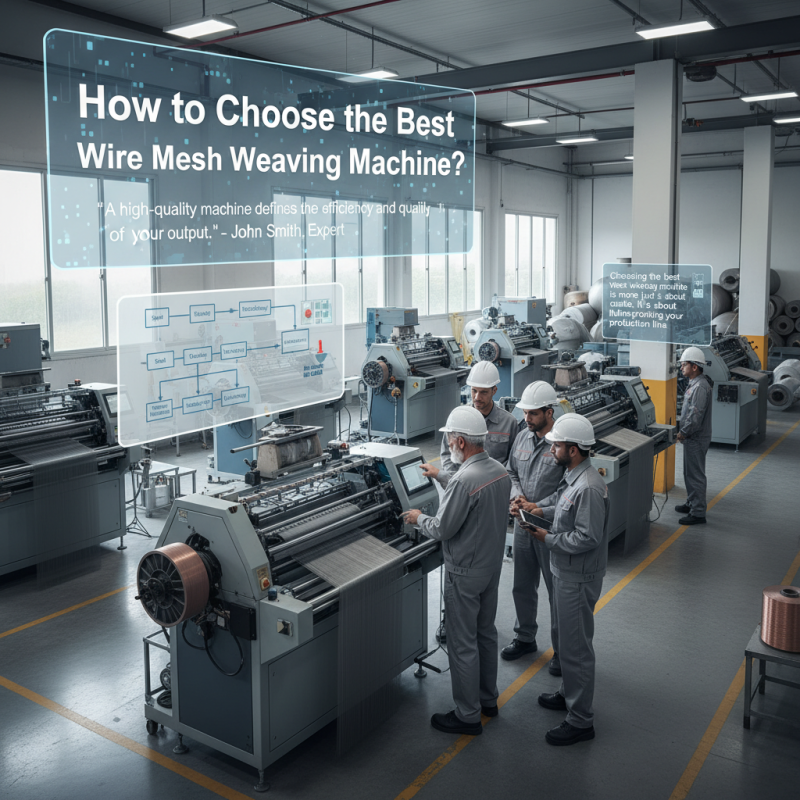
How to Choose the Best Wire Mesh Weaving Machine?

Understanding Wire Mesh Weaving Machines: An Overview

When considering wire mesh weaving machines, it’s essential to understand their role in various industries. These machines can weave different types of wire into fabric used for construction, filtration, and more. Reports indicate that the demand for wire mesh is projected to grow by 4.5% annually until 2026. This growth signifies the importance of choosing the right machine for your needs.

Tip: Evaluate the production capacity before making a decision. Machines vary widely in their output. Some models can produce up to 50,000 square feet of mesh in a day. Understanding your volume requirements will help.

Wire mesh weaving machines come with varying features. Some machines offer adjustable weaving speeds and patterns. It's crucial to balance automation and manual controls. While machines with full automation often promise efficiency, they might lack the flexibility needed for unique projects. A recent survey highlighted that 30% of manufacturers reported challenges regarding machine adaptability.

Tip: Consider the ease of maintenance. Reliable machines require less downtime. Regular maintenance aspects should include checking for wear and tear. Machines that are easier to service can save costs in the long run.

Key Factors to Consider When Selecting a Weaving Machine

When selecting a wire mesh weaving machine, several key factors come into play. The first consideration is the weaving speed. Different machines provide varying speed capabilities. A higher speed can boost production efficiency, but it may impact quality. Observing the machine's speed on sample runs can provide insights into its reliability.

The type of materials used also matters. Some machines work well with specific materials like stainless steel, while others are more versatile. It's essential to ensure that the machine you choose matches your material requirements. Testing different machines on various materials can help gauge their performance.

Another important aspect is the ease of operation. Some machines have complex controls, making them difficult to operate. User-friendly interfaces can reduce training time for workers. Consider the maintenance requirements too. A machine that is hard to service can lead to prolonged downtimes. Balancing these factors may take time, but it is crucial for long-term success.

How to Choose the Best Wire Mesh Weaving Machine? - Key Factors to Consider When Selecting a Weaving Machine

Factor Importance Level Recommended Specifications Price Range
Machine Type High Jacquard, Rigid, or Adjusted Looms $15,000 - $50,000
Production Capacity High 100 - 500 Meters per Hour $20,000 - $60,000
Material Compatibility Medium Iron, Steel, Aluminum Wire $10,000 - $40,000
Ease of Operation High User-Friendly Interface, Automation $15,000 - $45,000
Maintenance Requirements Medium Low Maintenance Parts $5,000 - $25,000
Warranty and Support High 2 - 5 Years Warranty N/A

Types of Wire Mesh Machines and Their Specific Applications

When selecting a wire mesh weaving machine, understanding types and applications is vital. Wire mesh machines can be categorized mainly into loom machines, welding machines, and knitting machines. Each type has specific applications. For instance, loom machines are often used in the production of cloth-like meshes, essential for filtration in industries such as oil and gas. In 2022, the filtration market was valued at around $40 billion, emphasizing the demand for effective mesh solutions.

Welding machines, on the other hand, cater to those needing high-strength meshes. Industries like construction require durable materials for safety. A report noted that nearly 30% of fails in construction projects involve inadequate mesh materials. Knitting machines provide flexibility, often producing less rigid meshes used in agriculture or horticulture. However, there's a trade-off: these machines may lack the strength of woven or welded alternatives, leading to potential vulnerabilities.

While selecting a machine, consider production volume and specific needs. Over 60% of manufacturers face difficulties in optimizing their machine choice. This indicates a gap in understanding application needs fully. Revisiting the choice process can ensure a better alignment of technology and application.

Evaluating Machine Specifications for Your Production Needs

When evaluating machine specifications for your production needs, consider the type of wire mesh you plan to create. Different meshes require different weaving patterns and tension settings. For instance, if your project requires fine mesh, you may need a machine that offers precise adjustments. Pay attention to the gauge of wire your machine can handle. This influences the strength and flexibility of the final product.

Another vital aspect is the production speed. Some machines operate faster than others, which can affect output. Analyze your current production demands and forecast future needs. A machine that meets today's requirements may not suffice later. Look out for features that allow easy adjustments and maintenance. Machines that are difficult to operate or require frequent repairs may hinder productivity.

Capacity should also be a key factor in your choice. Some machines can handle larger rolls of wire, while others are limited. It’s essential to reflect on your workspace and available resources. Sometimes a compact machine could be a better fit than a large, powerful one. The right balance between these factors will ultimately determine the success of your wire mesh production.

Production Capacity of Wire Mesh Weaving Machines

This chart illustrates the production capacity of different wire mesh weaving machines. By comparing the meters per hour, manufacturers can evaluate which machine best meets their production needs.

Cost vs. Quality: Making the Right Investment in Machinery

Investing in a wire mesh weaving machine requires careful consideration of cost versus quality. According to a recent industry report, 75% of manufacturers prioritize quality over price when selecting machinery. This highlights the significance of making informed choices. A cheaper machine might save money upfront, but it often comes with hidden costs. These can include higher maintenance expenses and lower output quality.

Quality machines typically have longer lifespans. A well-built machine can last over 10 years, whereas cheaper alternatives may need replacement within five years. This difference in durability impacts total costs significantly. A study found that investing an extra 20% in quality can improve productivity by 30%. However, not all manufacturers are ready for this investment. Budget constraints often lead to compromise, risking long-term productivity.

In addition to durability, consider the machine’s performance. Many low-cost machines struggle with diverse wire types. Adjusting settings can be labor-intensive. Conversely, higher-quality machines adapt more easily. They often include features that enhance flexibility. Reflecting on these factors can lead to smarter procurement decisions. Cost is crucial, but ignoring quality can prove detrimental in the long run.

CNC machining CAD export file formats

Put your parts in production today

Get an instant quote