5 Tips to Choose a Double Spiral Twin Shaft Concrete Mixer
When a concrete batch leaves the mixer, its consistency shows in the texture, not just on a specification sheet. Choosing a Double Spiral Twin Shaft Concrete Mixer can affect output, cycle time, and the effort needed to keep production steady. The right model depends on your materials, target capacity, batch frequency, and site conditions. There is no single best choice for every plant.
Check the required mixing volume and the mixer’s actual working capacity. Compare its shaft arrangement, blade design, motor power, and mixing time with your mix recipe. Ask how it handles different aggregates, moisture changes, and demanding production schedules. These details matter. A neat spec sheet can still mislead. Request test data or a demonstration using a mix similar to yours. Check the discharge for dry pockets, uneven texture, or excess residue around the corners. Review access to wear parts, cleaning points, safety features, and technical support. A powerful mixer that is difficult to inspect may cost more time later. Be realistic about maintenance. It is easy to underestimate it.
This guide presents five practical tips for comparing equipment before purchase. It covers performance, durability, operating costs, and supplier support, while leaving room for your production priorities. Record your team’s questions and verify important claims in writing. Some recommendations may need adjustment after a site trial. That is normal, and worth acknowledging.
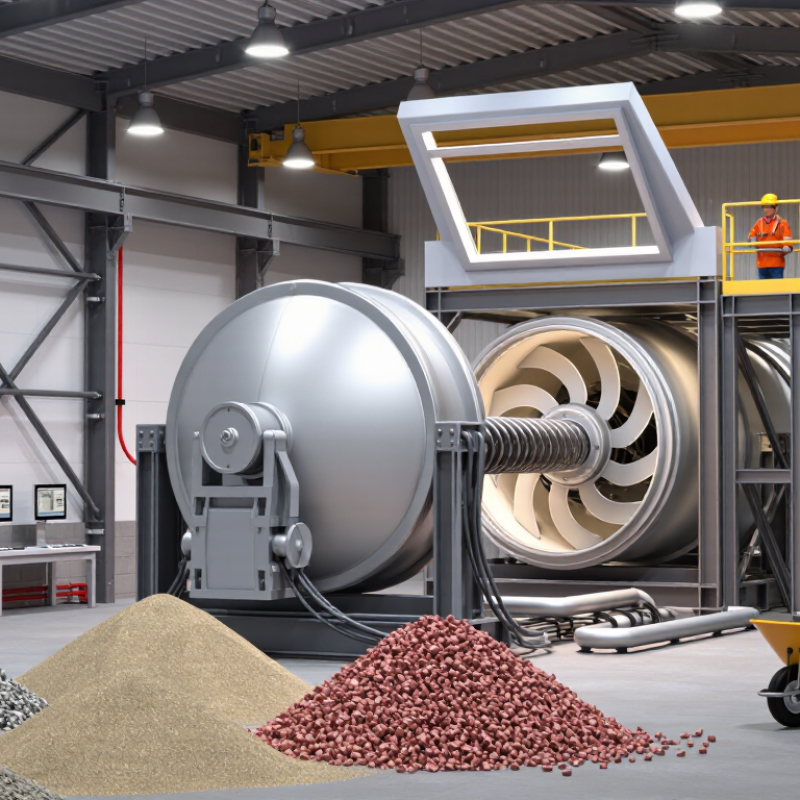
Match Mixer Capacity to Demand: Common Twin-Shaft Batches Range from 0.5–6 m³
Match rated batch capacity to peak demand, not average daily use. Common double spiral twin-shaft batches range from 0.5 to 6 m³. But the mixer is only one part of the plant. A 2 m³ batch cannot sustain a fast pour if aggregate bins refill slowly or trucks queue at the gate. Record actual batching, discharge, and truck-loading times during a busy shift. Nameplate figures tell only part of the story.
Estimate batches per hour by dividing hourly demand by usable batch volume. For example, producing 24 m³ per hour requires twelve 2 m³ batches, before downtime allowances. ACI Committee 304’s ACI 304R guide gives about one minute as a baseline mixing time for a 1 yd³ batch. It adds roughly 15 seconds for each additional cubic yard. Treat this as guidance, not a guaranteed cycle time. Mix design, slump, and equipment condition affect results. Check whether charging and discharge times fit your schedule, too.
Tip: Choose a size that meets peak demand without routinely running underfilled. Trial a representative mix. Watch it leave the discharge gate, and note uneven color or leftover material. I would recheck the calculation after a week. Planned output often looks cleaner than actual production.
5 Tips to Choose a Double Spiral Twin Shaft Concrete Mixer
Tip 1: Match mixer capacity to demand. Common twin-shaft batch sizes range from 0.5 to 6 m³.
The bars show reference batch-capacity points within the commonly cited 0.5–6 m³ range. Choose a capacity that fits your required output and batching schedule; these points are not performance ratings.
Check Aggregate Compatibility: Verify Maximum Size Against Manufacturer Limits
Aggregate size can affect whether a double spiral twin shaft concrete mixer runs smoothly. Check the manufacturer’s stated maximum before comparing machines. Treat that figure as a limit, not a target. Oversized stones may obstruct feeding, reduce mixing consistency, or increase wear, depending on the mixer’s design.
Look beyond the number on a mix specification. A sieve analysis of the actual aggregate can reveal occasional oversize particles that a nominal size hides. Ask how the limit applies to particle shape and grading, and confirm it in the equipment documentation. Small differences matter. Angular stones may behave differently from rounded ones, even when both meet the same size limit. I once focused too much on the average grading; the largest particles deserved more attention.
If your supply varies, compare the maximum size across several deliveries, not just one sample. Leave a margin below the stated limit where practical, especially when aggregate grading is inconsistent. Also check whether the feed opening and any upstream screening equipment can handle the same material. A mixer may meet the specification on paper, yet still struggle with a poorly controlled feed. Keep test results and supplier limits on file, then verify them against the concrete mix you plan to produce.
Compare Mixing Performance: Typical Wet-Mixing Cycles Take About 30–60 Seconds
A typical wet-mixing cycle in a double spiral twin shaft concrete mixer takes about 30–60 seconds. Treat this as a working range, not a guaranteed result. Not a guarantee. Actual mixing time depends on batch size, aggregate grading, moisture, and the concrete’s required consistency.
Watch the mix, not just the timer. After water and admixtures enter, inspect whether the cement paste coats the stones evenly and whether the batch looks consistent near the discharge. A dry-looking corner or clumps around the blades may signal poor charging order, uneven moisture, or worn mixing tools. Small details matter. Extending the cycle can help, but extra time does not always fix a dosing or loading problem.
When comparing mixers, run repeatable trial batches using the same materials and fill level. Record cycle time, discharge appearance, and any variation between batches. Ask how the machine handles your usual slump range and aggregate sizes, then check the recommended operating limits. A 40-second cycle may suit one mix, while another needs longer. Field results can be messy, so leave room for adjustment rather than choosing by the shortest advertised cycle alone.
Inspect Drive and Wear Parts: Compare Motor Power, Blade Material, and Liner Design
When selecting a double-spiral twin-shaft mixer, compare motor power with usable batch volume, not kilowatts alone. The USGS Mineral Commodity Summaries 2024 estimates U.S. cement production at about 91 million metric tons in 2023. That scale makes dependable uptime important, but national output cannot predict an individual plant’s duty cycle. Check loaded-start torque, gearbox capacity, and continuous-duty ratings. Ask for current draw with a full, stiff mix. Compare figures only for equivalent batch sizes. More power is not always better.
Inspect blade material, liner thickness, and access for replacement. Abrasive aggregates can wear the outer blade edges and drum liners unevenly. Ask for material-grade documentation, then measure liner thickness at several marked points during inspections. Check blade-to-liner clearance, too; uneven gaps may leave residue or reduce mixing consistency. ACI 304R, Guide for Measuring, Mixing, Transporting, and Placing Concrete, emphasizes uniform mixing and suitable mixing time. Those goals depend on sound mixing components. Small details matter. Still, wear rates are difficult to predict before testing the actual aggregate blend, so treat service-life estimates as estimates, not guarantees.
Verify Standards and Support: Check Plant Requirements, Spare Parts, and Service Coverage
Before choosing a double spiral twin shaft concrete mixer, confirm the plant’s required output, batch size, and concrete recipes. Check applicable equipment standards and project specifications with your engineering or quality team. Ask for current drawings, inspection records, and written details of the mixer’s rated capacity. A capacity figure alone can be misleading.
Check which spare parts are stocked and how quickly they can be delivered. Ask about wear parts such as mixing blades, liners, seals, and shaft components. Request part numbers and expected replacement intervals, not just a general promise of availability. Small details matter. Confirm service coverage for your site, including response hours, remote troubleshooting, and technician availability. A distant service team may still work, but travel time can stretch an outage.
Before ordering, compare the mixer’s footprint, foundation loads, electrical supply, and discharge height with your plant layout. Ask how commissioning and operator training are handled, and what documents are provided afterward. I would not rely on verbal assurances alone; they are easy to remember differently later. One overlooked cable route or missing wear part can delay installation, so record open questions and get clear answers in writing.


