China Best Aluminium Winding Wire Supplier?
Choosing the China best Aluminium Winding Wire supplier requires more than comparing quotations. Electrical performance, coating consistency, delivery stability, and traceable testing matter equally. The U.S. Geological Survey’s Mineral Commodity Summaries 2025 estimates global primary aluminium production at about 72 million metric tons in 2024, with China contributing roughly 43 million tons. This scale supports strong domestic supply chains. It does not automatically prove quality.
The International Aluminium Institute reports that aluminium production represents about 2% of global greenhouse gas emissions. Therefore, responsible buyers should examine recycled content, electricity sources, and carbon reporting. These details increasingly influence motor, transformer, generator, and renewable-energy projects. A reliable Aluminium Winding Wire manufacturer should provide alloy specifications, conductor resistance, enamel grade, thermal class, elongation results, and batch-level inspection records. IEC 60317 remains an important reference for insulated winding wires, although project requirements may demand additional testing.
Small details matter.
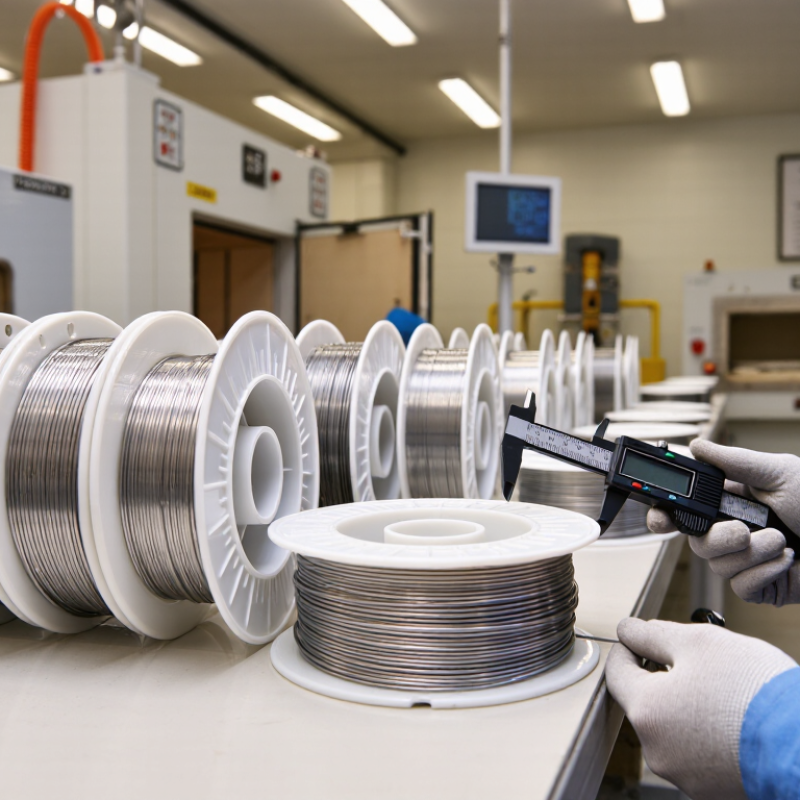
A spool edge should remain clean, without crushed turns or visible coating damage. During factory audits, buyers can review curing ovens, diameter gauges, spark testers, and laboratory calibration records. Supplier experience becomes clearer through sample approval, corrective-action history, and export documentation. However, publicly available market reports rarely identify the genuinely best manufacturer. That conclusion needs evidence from factory visits, independent tests, customer references, and repeated delivery performance. Price alone is a weak shortcut. A lower quotation may conceal tighter tolerances, inconsistent insulation, or higher waste during winding. This guide evaluates Chinese suppliers through measurable technical, commercial, and sustainability criteria, while acknowledging that no ranking remains perfect for every application.
What Is Aluminium Winding Wire?
What Is Aluminium Winding Wire?
Aluminium winding wire is an insulated electrical conductor used in motors, transformers, and generators. Its aluminium core carries current through repeated turns around a magnetic core. A thin enamel coating separates adjacent turns and reduces short-circuit risk. In practical production, wire may have a round or rectangular profile. The shape depends on slot space and thermal requirements.
Compared with copper, aluminium is lighter and often less costly, but it has higher electrical resistance. Engineers must compensate with a larger cross-sectional area or carefully designed winding geometry. Aluminium also forms an oxide layer quickly, which can complicate joints and terminals. Clean preparation, suitable connectors, controlled pressure, and verified contact surfaces matter. I have seen a small connection fault create heat discoloration near a terminal. The wire was not the only problem. Installation quality mattered more.
Reliable selection requires more than checking diameter. Review conductivity, insulation temperature class, flexibility, elongation, winding tension, and varnish compatibility. Ask for batch test records, dimensional inspection, and insulation breakdown results. These documents support traceability and consistent procurement. Storage also deserves attention: keep coils dry, protect them from dust, and avoid sharp impacts. It sounds simple. It is often neglected. Aluminium winding wire can perform well when material design, processing, and installation work as one engineering system.
What Is Aluminium Winding Wire?
Aluminium winding wire is an electrically conductive aluminium wire used in transformer, motor and generator windings. At 20°C, aluminium has a typical resistivity of approximately 0.0282 Ω·mm²/m, while copper is approximately 0.01724 Ω·mm²/m. Lower resistivity generally means lower electrical losses, whereas aluminium offers lower density and reduced conductor weight.
Reference values are typical conductivity data for commercially used aluminium and copper conductors at 20°C.
Key Types and Technical Specifications of Aluminium Winding Wire
Choosing a reliable aluminium winding wire supplier in China requires more than comparing prices. The wire type must match the motor, transformer, or generator design.
Round aluminium wire suits compact coils and automated winding. Rectangular wire fills slots more efficiently and can reduce wasted space. Bare wire needs separate insulation during production. Enamelled wire uses a thin coating, often polyesterimide or polyamide-imide, for electrical separation and heat resistance. Paper-covered aluminium wire remains useful in some transformers.
Key specifications deserve careful checking. Aluminium resistivity is about 0.0282 Ω·mm²/m at 20°C, so its conductor size usually exceeds copper for similar resistance. Common temperature classes include 155°C, 180°C, and 200°C. Request diameter tolerance, elongation, coating thickness, breakdown voltage, and winding tension limits. These details affect coil reliability.
Standards matter. Suppliers should provide test records based on relevant IEC or equivalent requirements. Ask for resistance measurements, spark testing, thermal ageing results, and batch traceability. A practical inspection can include measuring several points along one coil, not only one sample. Small ovality may cause trouble during tight winding. Supplier claims are not enough. I would also review packaging, moisture control, and how the wire behaves after bending. Aluminium is lighter, but its oxide layer and softer surface require disciplined joint preparation. Mistakes happen here.
China’s Manufacturing Standards and Quality Control Practices
China Best Aluminium Winding Wire Supplier?
China’s aluminium winding wire production combines national standards with international testing methods. Experienced manufacturers typically control aluminium rod purity, wire diameter, insulation thickness, and electrical resistance. Each production batch should carry a traceable code. That code links the finished coil to raw material records, operator details, and inspection results.
Quality Control Quality teams commonly check elongation, surface smoothness, pinholes, and breakdown voltage. Thermal ageing tests help confirm whether insulation can withstand continuous motor operation. Calibrated micrometers measure diameter at several points, not just once. Resistance testing at controlled temperatures reduces misleading results. Clean drawing equipment also matters. A small scratch can later become a serious insulation failure.
Factory Audit Considerations In factory audits, buyers should review process instructions, laboratory calibration certificates, and nonconforming-product records. ISO-based systems can support consistency, but certification alone proves little. The real evidence is in daily inspection data and corrective actions. Some facilities still depend too heavily on manual checks. That is a weakness worth questioning. A reliable supplier should explain tolerances clearly, provide sample reports, and repeat tests when results appear unusual. Good records are not glamorous. They are essential.
How to Select the Right Supplier for Your Application
Choosing the best aluminium winding wire supplier in China requires more than comparing quoted prices. The right supplier must understand your motor, transformer, or generator design. Ask about aluminium purity, electrical resistivity, diameter tolerance, and conductor elongation. These values affect efficiency, winding tension, and long-term reliability.
Request technical data before requesting a large shipment. Check the enamel coating’s thermal class, flexibility, bonding performance, and resistance to abrasion. A supplier should provide inspection records for each production batch. Ask for samples from the same manufacturing line, not laboratory-only pieces. Samples can mislead.
Measure the details. Confirm spool dimensions, net weight, moisture protection, and labeling accuracy. Clear traceability helps engineers investigate defects later. During factory discussions, ask how operators control drawing speed, coating thickness, and curing temperature. Experienced suppliers should explain these controls in practical terms. They should also identify applicable IEC, ASTM, or customer standards without making vague claims.
I once focused too heavily on conductivity and overlooked winding damage during transport. That mistake changed my evaluation process. Packaging strength now matters as much as laboratory performance. Ask for corrective-action records, production capacity, lead times, and communication procedures. A reliable supplier will discuss limitations honestly. Be cautious when every answer sounds perfect. Independent testing is wise for critical applications, especially when switching from copper to aluminium conductors. Document your acceptance criteria before approving the first production order.


