Get an instant quote
Get in touch Listen to our podcast

Blog

China Best MCB Lock Off Kit Supplier?

Choosing the China Best Mcb Lock Off Kit Supplier? The answer depends on more than price or a polished product photo. An MCB lock off kit helps secure a miniature circuit breaker against unintended operation during maintenance. Fit matters. A clamp that slips on a narrow breaker, or a hasp that blocks the panel cover, can undermine an otherwise careful procedure.

The safety case is substantial. The U.S. Occupational Safety and Health Administration estimates that effective lockout/tagout practices can prevent about 120 fatalities and 50,000 injuries each year in the United States. These figures concern energy-control practices broadly, not MCB lock-off devices alone. That distinction matters. A kit is one part of a wider system involving identification, training, verification, and suitable isolation procedures.

When assessing suppliers, ask for clear compatibility tables, material details, sample units, and inspection records. Check whether the device fits the breaker models used at your site, and whether its lock opening accepts your standard safety padlocks. Ask how the supplier controls batch consistency and handles product changes. Certifications and test reports should be relevant, current, and verifiable—not just logos on a catalogue page.

Small details count. A few minutes spent checking fit can prevent rework later. Still, supplier documents cannot replace hands-on evaluation. Test representative samples with the actual breakers and panel layout before placing a large order. This guide examines the evidence and practical questions that help buyers compare Chinese suppliers with care. No single checklist guarantees a perfect choice.
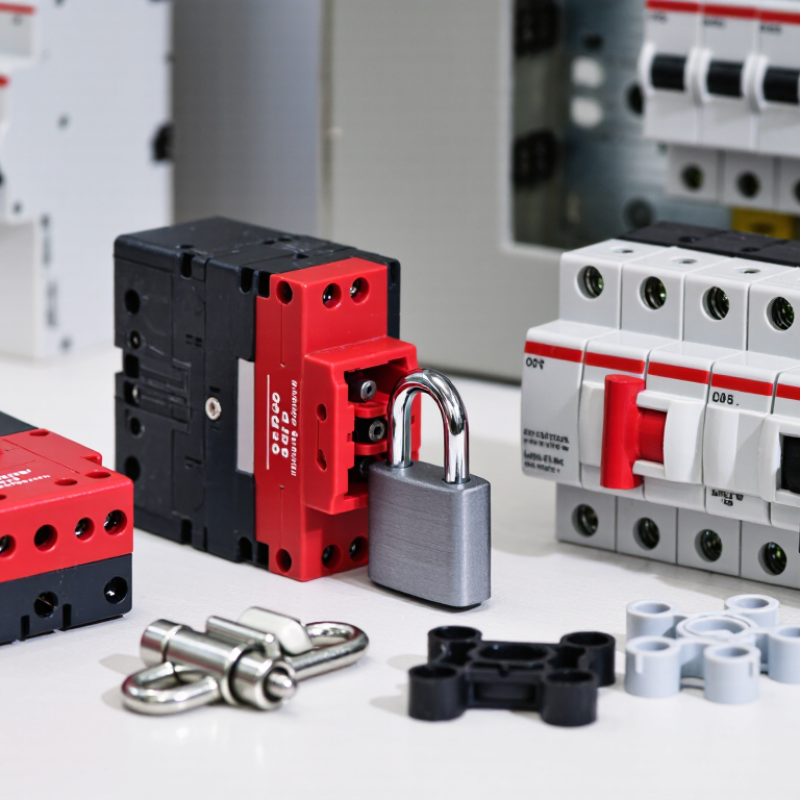
China Best MCB Lock Off Kit Supplier?

What Is an MCB Lock Off Kit and How Does It Work?

An MCB lock-off kit secures a miniature circuit breaker in its OFF position during inspection or maintenance. Depending on the breaker design, a small clamp or pin fits around the toggle, then a personal padlock prevents it from being moved back to ON. Some kits also include a tag, which identifies who applied the lock and why. Fit can be awkward. Breaker handles vary, so the locking device must match the specific mechanism and be installed as directed.

The kit is one part of an isolation procedure, not proof that a circuit is safe. A qualified worker should identify all relevant power sources, switch off the circuit, apply the lock and tag, then verify the absence of voltage using a suitable tester. OSHA estimates that effective lockout/tagout practices prevent about 120 workplace deaths and 50,000 injuries each year; those figures cover hazardous-energy control broadly, not MCB kits alone. The International Labour Organization’s 2023 global estimates report nearly three million work-related deaths annually, underscoring why isolation details matter. A lock can stop a toggle moving, but it cannot detect backfeed or a wrong circuit label. That detail is easy to miss.

Which Safety Standards Apply to MCB Lockout Devices?

MCB lockout devices do not follow one universal, product-specific safety standard. The applicable requirements depend on the country, workplace, and equipment being serviced. In the United States, OSHA 29 CFR 1910.147 covers control of hazardous energy during servicing. It requires lockout devices to be durable, standardized, substantial, and identifiable. These are workplace requirements, not a certificate for every lockout accessory.

Electrical equipment standards matter too, but they address different risks. IEC 60947-2 covers low-voltage circuit breakers, while IEC 60204-1 addresses electrical equipment on machinery. ISO 14118 provides guidance on preventing unexpected machine start-up. These standards can inform safe system design; they do not automatically prove that a particular MCB lockout device complies with every local rule. Check the device documentation and your site’s procedures.

Fit matters. A device should match the breaker’s toggle shape and spacing, then stay secure without obstructing nearby controls. During selection, test it on the actual panel and confirm that an authorized worker can apply a personal lock. In practice, compatibility can be less tidy than a catalogue suggests. That detail deserves a real check. For supplier evaluation, request material and test information, clear instructions, and evidence relevant to the markets where the kit will be used.

China Best MCB Lock Off Kit Supplier? Which Safety Standards Apply to MCB Lockout Devices?

Key reference documents and their publication or edition years

OSHA 29 CFR 1910.147 sets workplace lockout/tagout requirements in the United States. IEC 60898-1 covers household and similar circuit-breakers, while ISO 14118 addresses prevention of unexpected machine start-up; IEC 60947-3 covers switches and disconnectors. These references address different parts of electrical and machine safety and do not, by themselves, certify an MCB lockout device. Confirm the current edition and applicable local requirements for the installation.

What Features Should Buyers Compare in MCB Lock Off Kits?

China Best MCB Lock Off Kit Supplier?

What Features Should Buyers Compare in MCB Lock Off Kits?

Buyers comparing MCB lock off kits should start with fit, not appearance. Check the breaker’s dimensions, toggle shape, pole count, and available clearance. A loose device may shift when someone handles the panel door. A bulky one can block adjacent breakers. Ask for a compatibility chart and test samples on the exact MCB models used at the site. Small details matter.

Next, compare the locking method, visibility, and materials. Look for a firm clamp and a padlock opening that suits the site’s approved locks. The body should resist cracking during routine handling, without damaging the breaker toggle. Review installation instructions, temperature limits, and material specifications. Check whether the kit includes different sizes, labels, or storage options. Product claims alone are not enough; request technical drawings or inspection records where available. Fit still needs checking in person.

Tips: Trial the kit on an isolated sample panel with a qualified technician. Confirm it stays secure and remains visible after the cover closes. Follow the site’s lockout and verification procedure. A lock off device does not prove the circuit is de-energized. Keep notes on awkward fits; they may reveal a genuine compatibility gap.

How Can You Evaluate a Chinese MCB Lock Off Kit Supplier?

When evaluating a Chinese MCB lock off kit supplier, look beyond catalogue photos. Ask for clear drawings showing clamp dimensions, screw travel, and compatible breaker styles. A sample should fit securely without excessive force or slipping. Try it on the MCB models used at your site, not only on a demonstration unit. Small differences matter.

Check how the supplier controls materials and production. Request details about plastic type, metal components, inspection steps, and batch traceability. Ask whether sample measurements are recorded and how defects are handled. Test reports and material documents can support your review, but confirm what each document actually covers. A certificate alone is not proof of fit.

Communication is practical evidence, too. Send a real installation question and note whether the reply is specific, timely, and consistent with the drawings. Discuss packaging, lead times, replacement parts, and order changes before placing a large order. A polished catalogue can still hide gaps. I would compare a few samples side by side, though this takes extra time and may not reveal long-term wear. Supplier evaluation is never perfect; document what you checked and what remains uncertain.

China Best MCB Lock Off Kit Supplier? - How Can You Evaluate a Chinese MCB Lock Off Kit Supplier?

A practical, weighted scorecard for comparing suppliers of miniature circuit breaker (MCB) lockout kits. Use the same requirements and evidence checks for every supplier.

Evaluation Dimension Weight What to Check Suggested Evidence or Evaluation Benchmark Supplier Score (1–5)
MCB compatibility and fit 20% Whether the device fits the intended breaker handle, panel layout, and operating conditions. Request a compatibility list, dimensional drawings, and samples. Test fit on the exact MCB models and handle configurations used at the installation site. —
Lockout security and usability 15% Resistance to unintended removal, secure attachment, ease of installation, and padlock compatibility. Inspect the locking method and permitted padlock shackle dimensions. Conduct installation and removal trials using the site’s normal procedures. —
Materials and construction 10% Material suitability, dimensional consistency, finish, and resistance to the conditions in which the kit will be used. Request material specifications and inspect samples for cracks, sharp edges, poor molding, loose components, or inconsistent dimensions. Confirm environmental suitability for the intended application. —
Quality management and traceability 15% Documented quality controls, inspection practices, batch identification, and handling of nonconforming products. Review current quality-system documentation, sample inspection records, lot or batch traceability, and the supplier’s corrective-action process. Verify certificate scope and validity where certificates are provided. —
Testing and technical documentation 15% Whether product claims are supported by relevant, product-specific documentation and test results. Ask for drawings, instructions, test methods, and reports that identify the tested product and criteria. Confirm applicable destination-market requirements; do not treat a general management-system certificate as product certification. —
Manufacturing capacity and process control 10% Ability to maintain consistent production, manage orders, and control changes to materials or tooling. Discuss normal and peak production capacity, production planning, inspection checkpoints, subcontracting, and advance notice of product or process changes. —
Lead time and delivery reliability 5% Quoted production and shipping timelines, packaging, and communication about delays. Compare written lead-time commitments for samples and production orders. Confirm shipping terms, packaging details, and how schedule changes are reported. —
Customization and order flexibility 5% Ability to provide required kit configurations, instructions, packaging, or non-branded identification. Confirm available configurations, tooling or setup requirements, minimum order quantities, sample approval steps, and whether custom changes affect testing or delivery time. —
Commercial terms and after-sales support 5% Quote clarity, warranty terms, replacement handling, and responsiveness to technical questions. Request an itemized quotation and written terms covering payment, warranty, defects, replacement procedures, and technical support response expectations. —
Total 100% Weighted result = sum of (criterion weight × criterion rating ÷ 5). Rate each dimension from 1 (poor or unsupported) to 5 (strong, verified evidence). — / 100

Evaluation note: This is a supplier-comparison framework, not a supplier ranking or a claim that any particular supplier has passed these checks. Confirm product fit and applicable safety requirements for the specific MCBs, workplace procedures, and destination market before purchase.

How Can Buyers Verify Supplier Quality and Compliance?

China Best MCB Lock Off Kit Supplier?

Buyers should verify a supplier with evidence, not polished product photos. Ask for a current product specification, material details, inspection records, and test reports that identify the exact model. Check that the documents match the kit being quoted, including the lock body, shackle, and included accessories. Small differences matter.

Request samples and inspect them under practical conditions. Does the device fit the intended breaker handle? Can it be secured without excessive force? Try repeated fitting and removal, and check for cracks, sharp edges, loose parts, or inconsistent molding. Ask how the supplier controls incoming materials and final inspections. A factory visit or live video walkthrough can add useful context, but neither replaces verifiable records. A checklist helps. It can still miss things.

Tips: Confirm that certificates and test reports come from identifiable, relevant testing bodies, and verify their scope and validity independently. Ask for batch traceability and written change-control procedures. Compare answers from sales staff with technical documents; unexplained differences deserve follow-up. Requirements vary by destination and application, so confirm which standards apply before ordering. Do not treat a low price or a familiar certificate logo as proof of consistent quality. Even careful checks have limits, and sample performance may not represent every production batch.

CNC machining CAD export file formats

Put your parts in production today

Get an instant quote