Choosing the China Best Box Making Machine Manufacturer requires more than comparing prices or polished factory photographs.
A dependable supplier should demonstrate real production experience, stable engineering, and measurable quality control. Watch the machine running live. Check feeding accuracy, servo response, folding alignment, gluing consistency, and changeover time. Ask for samples using your actual board thickness and box dimensions. A machine that performs well on standard kraft board may struggle with laminated or recycled materials.
Packaging scientist Dr. Susan Selke has often emphasized this systems view: “Packaging performance depends on the whole system, not one isolated component.” That principle applies directly to every Box Making Machine purchase. The machine, tooling, board quality, operator training, software, and after-sales support must work together. One impressive specification proves very little.
A serious Chinese manufacturer should provide factory credentials, component brands, inspection records, installation guidance, spare-parts planning, and customer references. Request evidence, not promises. Confirm whether technical support can respond during production emergencies. Clarify warranty coverage and ownership of machine software before signing any agreement.
There is no perfect supplier.
Even experienced buyers can overlook maintenance access or hidden setup delays. This guide will compare manufacturers through practical evidence, including machine capability, customization, delivery reliability, service depth, and total operating cost. The lowest quotation may become expensive when downtime, rejected cartons, and delayed technical support enter the calculation. A careful decision begins with clear questions, witnessed testing, and a willingness to challenge attractive claims.
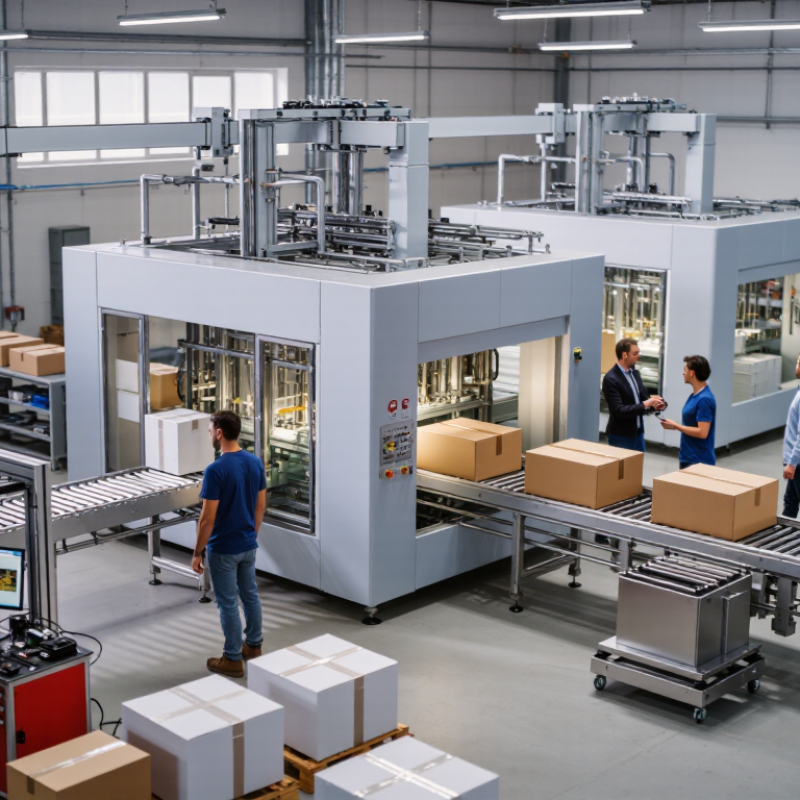
The best box making machine manufacturer in China is defined by more than production capacity or attractive pricing. It should understand how paperboard behaves during feeding, creasing, folding, and gluing. Experienced engineers test machines with real materials, including coated board, recycled stock, and different thicknesses. A factory visit can reveal practical details, such as clean wiring, organized assembly areas, and accessible spare parts.
Performance evidence matters. Ask for sample production using your box dimensions, board type, and required output. Check folding accuracy, glue control, changeover time, noise, and material waste. A reliable manufacturer should provide clear machine specifications, operating manuals, installation guidance, and safety documentation. It should also explain maintenance intervals without hiding difficult requirements.
Real communication is equally important. Technical staff should discuss limitations honestly instead of promising perfect results for every product. No machine fits every packaging line. A trial may succeed in a controlled workshop but perform differently during long production runs. This is where careful testing becomes valuable. Ask about operator training, remote support, replacement components, and response times after delivery. Some manufacturers are strong in engineering but weak in documentation. Others offer polished demonstrations but limited customization. Comparing these details helps buyers identify a capable partner rather than simply choosing the lowest quotation.
Key Types of Box Making Machines and Their Applications
Box making machines should match the package, board grade, and production volume. Corrugated box lines commonly combine printing, slotting, folding, and gluing. They serve shipping cartons, food cases, and e-commerce packaging. Rotary die-cutting machines create handles, windows, and unusual shapes. Folder-gluers suit high-volume carton production with consistent dimensions.
Folding carton machines process thinner paperboard for cosmetics, medicines, and retail products. Rigid box machines add wrapping, corner forming, and precise positioning for premium packaging. According to Grand View Research, the global folding carton market reached about USD 171.8 billion in 2023. The report also forecasts a 4.8% annual growth rate from 2024 to 2030. Smithers’ corrugated packaging outlook similarly identifies online retail as a major demand driver. However, faster output is not always better. Poor glue control can create open seams, wasted board, and delayed deliveries.
Tips: Select machines by box size range, changeover time, and board compatibility. Ask for measured samples, not only brochure speeds. Check motor access, sensor calibration, and operator training. A small factory may benefit from semi-automatic equipment. Large plants usually need integrated lines with automatic feeding and quality inspection. Energy use also matters. One overlooked issue is floor space; a machine can fit on paper but fail during maintenance. Reliable manufacturers should provide test reports, spare-parts guidance, and documented after-sales support. Expect some compromise. No single machine handles every box style equally well.
| Machine Type | Primary Box Format | Typical Materials | Typical Production Range | Main Applications | Key Selection Factors |
|---|---|---|---|---|---|
| Automatic Folder Gluer | Straight-line cartons, crash-lock bottom boxes, and multi-point cartons | Folding carton board, coated paperboard, and micro-flute laminated sheets | Approximately 80–300 m/min, depending on box style and board grade | Food packaging, pharmaceutical cartons, cosmetics, household products, and retail packaging | Folding accuracy, glue control, maximum blank width, changeover time, and inspection options |
| Rigid Box Making Machine | Two-piece rigid boxes, drawer boxes, book-style boxes, and magnetic-closure boxes | Greyboard or chipboard wrapped with printed paper, specialty paper, fabric, or synthetic covering material | Approximately 15–40 boxes/min, depending on size, structure, and automation level | Premium electronics, luxury goods, jewelry, tea, cosmetics, gifts, and specialty food packaging | Corner-folding quality, wrapping precision, compatible box dimensions, adhesive system, and finishing requirements |
| Corrugated Box Making Machine | Regular slotted cartons, full-overlap cartons, trays, and partitioned shipping boxes | Single-wall or double-wall corrugated board, commonly using kraft or test liner papers | Approximately 1,000–20,000 boxes/hour across printing, slotting, folding, and gluing configurations | E-commerce shipping, logistics, appliances, furniture, agricultural products, and industrial packaging | Board flute compatibility, print quality, slotting accuracy, box compression needs, and required line speed |
| Die-Cutting and Creasing Machine | Custom-shaped cartons, window boxes, trays, sleeves, and display packaging | Paperboard, corrugated board, laminated board, and selected synthetic sheet materials | Approximately 4,000–10,000 sheets/hour for many flatbed configurations | Retail cartons, food trays, promotional displays, window packaging, and specialty structures | Maximum sheet size, cutting pressure, stripping capability, registration accuracy, and tooling cost |
| Box Stitching Machine | Heavy-duty corrugated cartons and large-format shipping cases | Single-wall, double-wall, and selected triple-wall corrugated board | Approximately 300–1,200 boxes/hour, depending on box size and stitching mode | Machinery, automotive parts, industrial equipment, construction materials, and export shipping cases | Wire specification, stitch spacing, board thickness, joint strength, and compatibility with oversized boxes |
| Paper Bag and Small Box Forming Machine | Small folding cartons, paper bags, takeaway packs, and simple retail boxes | Kraft paper, coated paper, paperboard, and laminated paper structures | Approximately 2,000–15,000 pieces/hour, depending on product design and handle or insert operations | Retail shopping, takeaway food, bakery products, gifts, apparel, and promotional packaging | Paper weight, handle or insert options, glue performance, forming accuracy, and production flexibility |
| Box Corner Pasting Machine | Rigid boxes, gift boxes, setup boxes, and reinforced corner structures | Greyboard, chipboard, coated wrapping paper, and specialty covering materials | Approximately 15–35 boxes/min, depending on corner count and box dimensions | Luxury packaging, cosmetic boxes, watch boxes, gift packaging, and premium presentation cases | Corner alignment, adhesive curing time, box squareness, material thickness, and tooling adaptability |
| Integrated Box Production Line | Printed and finished cartons produced through multiple connected processes | Paperboard, corrugated board, laminated sheets, and specialty packaging substrates | Output is determined by the slowest machine in the line; industrial lines commonly exceed 10,000 units/hour | High-volume food, beverage, e-commerce, consumer goods, and industrial packaging operations | Line balancing, automation level, floor space, digital production monitoring, maintenance support, and total operating cost |
Note: Production ranges are typical industry ranges and vary according to box structure, material thickness, machine configuration, operator skill, and quality requirements.
Choosing the best box making machine manufacturer in China requires more than comparing prices. Evaluate production experience, engineering skills, and evidence of reliable delivery.
Ask how many years the factory has built similar machines. Request videos of the assembly line, not only polished product photos. A serious manufacturer should explain forming pressure, material limits, production speed, and maintenance intervals clearly. Check whether key components have traceable sources and whether electrical systems meet your destination market’s requirements. Review test reports, installation records, and customer references from businesses with similar box sizes. One useful check is a live factory demonstration using your own paper, board, and box design.
After-sales support often reveals more than a sales presentation. Confirm response times, spare-parts availability, remote troubleshooting, and technician training. Ask for a written acceptance test with measurable standards, such as output per hour, folding accuracy, noise level, and waste rate. A sample run should include repeated production, not one perfect box. Small flaws matter. A clean showroom can still hide weak process control. I would also inspect packaging, loading methods, software language, and operator safety instructions before payment. No evaluation is perfect. My own mistake would be trusting fluent communication too quickly; technical clarity matters more than impressive promises. A manufacturer that admits limitations may be more dependable than one claiming every machine is flawless.
Production Quality, Customization, and Technical Support
Choosing a box making machine manufacturer in China requires more than comparing prices. The “best” supplier should prove quality through repeatable production results. Ask for sample boxes, inspection records, and a live machine trial. Watch the feeder, folding section, glue unit, and delivery belt closely. Uneven folds often reveal poor alignment or unstable pressure. Small defects matter.
Customization should begin with your box drawings, material range, and daily output. A capable engineering team can adjust feeding systems, tooling, dimensions, and control settings. It should also explain what cannot be changed safely. That honesty builds trust. In practical line assessments, a speed increase sometimes reduces folding accuracy. A slower final setting may lower waste noticeably. Faster is not always better. Machine access, operator skill, and workshop temperature can affect results.
Technical support must continue after installation. Look for clear manuals, remote diagnostics, spare-parts lists, and practical operator training. Response time should be written into the service agreement. Ask who handles software updates and mechanical troubleshooting. A reliable manufacturer can provide commissioning records and maintenance intervals. Still, no supplier can prevent every problem. Some support promises sound impressive but remain vague. Request names, timelines, and measurable service steps before ordering. That makes the partnership more dependable and easier to evaluate.
Choosing the best Chinese box-making machine manufacturer requires more than comparing prices. Smithers’ industry research places the global corrugated packaging market above US$200 billion, with continued growth expected through 2029. This demand increases pressure on machine stability, production speed, and technical support. A reliable manufacturer should provide tested samples, clear machine specifications, and performance data from comparable applications. Ask about board thickness, maximum sheet size, die-cutting accuracy, setup time, and actual output. Sales promises are not enough.
Look closely at factory experience and quality controls. ISO-based procedures, electrical safety documentation, spare-parts availability, and remote troubleshooting can reduce costly downtime. PMMI’s recent packaging machinery reports highlight labor shortages, automation, and supply-chain resilience as major equipment concerns. These issues matter on a busy production floor. I have seen buyers focus on hourly speed, then discover excessive setup waste. That mistake is expensive. A slower machine with stable feeding may produce more saleable boxes.
| Cookie | Duration | Description |
|---|---|---|
| cookielawinfo-checkbox-analytics | 11 months | This cookie is set by GDPR Cookie Consent plugin. The cookie is used to store the user consent for the cookies in the category "Analytics". |
| cookielawinfo-checkbox-functional | 11 months | The cookie is set by GDPR cookie consent to record the user consent for the cookies in the category "Functional". |
| cookielawinfo-checkbox-necessary | 11 months | This cookie is set by GDPR Cookie Consent plugin. The cookies is used to store the user consent for the cookies in the category "Necessary". |
| cookielawinfo-checkbox-others | 11 months | This cookie is set by GDPR Cookie Consent plugin. The cookie is used to store the user consent for the cookies in the category "Other. |
| cookielawinfo-checkbox-performance | 11 months | This cookie is set by GDPR Cookie Consent plugin. The cookie is used to store the user consent for the cookies in the category "Performance". |
| viewed_cookie_policy | 11 months | The cookie is set by the GDPR Cookie Consent plugin and is used to store whether or not user has consented to the use of cookies. It does not store any personal data. |