
Sourcing Quartz Glass in China can involve more than comparing prices. Buyers may need clear tubes for laboratory equipment, fused silica plates for thermal systems, or custom quartz windows with tight dimensional tolerances. The right manufacturer depends on the application, order volume, and required inspection records. A low quotation may look attractive, but it does not show how consistently a supplier controls wall thickness or handles a fragile shipment.
This guide to the Top 10 Quartz Glass Manufacturers in China for Global Buyers offers a practical starting point, not a universal verdict. It considers product range, processing capability, quality documentation, communication, and export readiness. These details help buyers prepare specific questions, such as whether a factory can provide material traceability, inspect surface defects, or package long tubes against impact. Ask for drawings, tolerances, and sample results before making a decision. Small details matter.
Company information and capabilities can change, and a polished catalog is not proof of production performance. No ranking can replace your own technical review. Check whether the quoted grade and dimensions match your operating conditions, and confirm lead times in writing. Samples help, but only if they represent the production process. That step is easy to overlook. Use the list to narrow your options, then verify claims directly with each manufacturer.
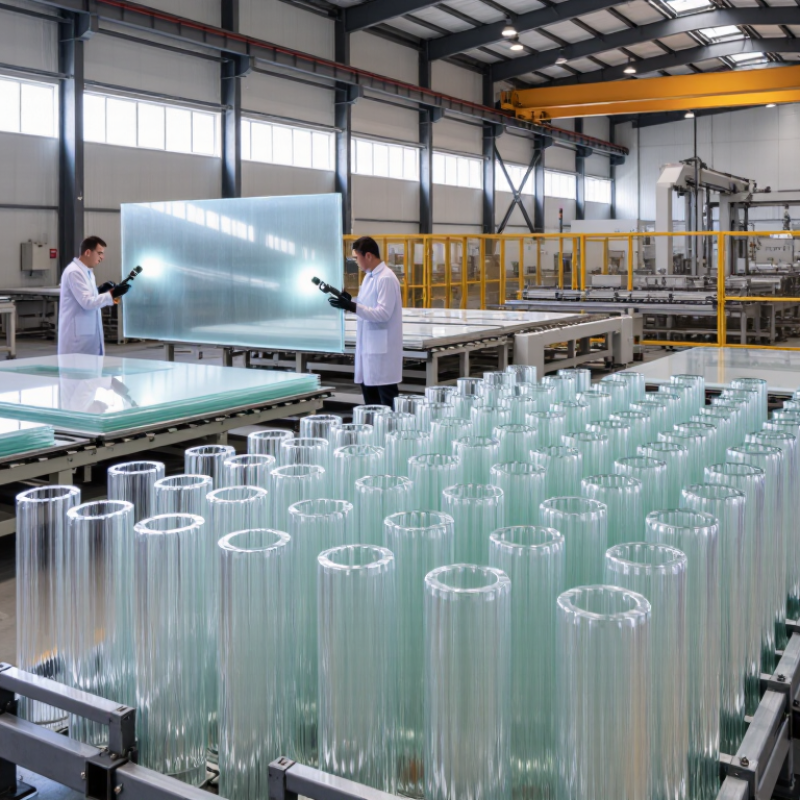
Quartz glass is made from high-purity silica and is valued for heat resistance, chemical stability, and low thermal expansion. These properties help it withstand rapid temperature changes better than ordinary glass. Its ultraviolet transmission can also be useful, though performance depends on purity, thickness, and surface quality. Details matter.
In semiconductor production, quartz components are used in high-temperature processes where contamination must be carefully controlled. Laboratories use quartz tubes and vessels for heating samples and handling corrosive chemicals. Specialized lighting and optical systems may also rely on its thermal or transmission properties. Quartz is not a universal solution. It can be costly, and some grades are vulnerable to mechanical impact.
For global buyers, the intended operating conditions should guide material selection. Ask about purity, dimensions, tolerances, surface finish, and inspection methods. A clear specification makes supplier comparisons more meaningful than a price alone. One detail is easy to overlook: machining and cleaning can affect performance, even when the base material is suitable. Technical data should be checked against the actual process, not just a product description.
| Product or Capability Area | Typical Quartz Glass Form | Common Industrial Applications | Relevant Material Characteristics | What Global Buyers Should Check |
|---|---|---|---|---|
| Semiconductor processing | Tubes, boats, liners, chambers, and custom components | Wafer fabrication and thermal processing equipment | High-temperature capability, chemical resistance, and low contamination potential when the appropriate grade and processing are used | Purity grade, dimensional tolerances, surface finish, cleanliness, and compatibility with the intended process |
| Quartz tubing | Clear or opaque tubes in specified diameters and wall thicknesses | Furnaces, laboratory equipment, lighting systems, and industrial heaters | Thermal stability and resistance to many corrosive environments; performance depends on grade and operating conditions | Outer and inner diameter, wall thickness, straightness, end finish, and allowable service conditions |
| Optical components | Windows, plates, lenses, and optical blanks | UV optics, analytical instruments, scientific equipment, and laser systems | Some grades provide useful ultraviolet transmission; transmission varies with wavelength, grade, thickness, and surface quality | Transmission range, optical homogeneity, surface quality, coating requirements, and test documentation |
| Fused silica for fiber optics | High-purity glass preforms and related components | Manufacture of optical fiber for telecommunications and sensing | High-purity silica is used in optical fiber, where composition and processing influence optical performance | Purity specifications, dimensional consistency, defect limits, and traceability to the agreed specification |
| Laboratory ware | Crucibles, beakers, dishes, rods, and custom glassware | Research laboratories, sample preparation, and high-temperature testing | Low thermal expansion compared with many common glasses and good resistance to thermal shock under suitable conditions | Capacity, shape, wall thickness, thermal-use guidance, and cleaning or packaging requirements |
| Furnace and heating components | Process tubes, sight glasses, sleeves, and support parts | High-temperature furnaces, heat-treatment lines, and laboratory ovens | Quartz glass can be used in high-temperature equipment, but its service life depends on temperature, atmosphere, load, and design | Maximum operating conditions, thermal cycling requirements, dimensions, and mounting method |
| Lighting and UV systems | Envelopes, sleeves, and protective tubes | Specialty lamps, UV equipment, and certain sterilization systems | Quartz glass grades can transmit ultraviolet radiation; transmission and suitability depend on the specific wavelength and grade | Required wavelength band, transmission data, thermal limits, and applicable product or safety standards |
| Solar and photovoltaic equipment | Quartz boats, tubes, and process fixtures | Thermal processing steps in solar-cell and photovoltaic manufacturing | Quartz components are used in high-temperature process equipment; grade and cleanliness requirements vary by process | Process compatibility, contamination controls, dimensions, inspection criteria, and replacement-part consistency |
| Chemical and corrosive-process equipment | Vessels, tubes, liners, and viewing components | Laboratory and industrial processes involving selected acids or reactive chemicals | Quartz glass resists many chemicals, but it is not resistant to every chemical; hydrofluoric acid attacks silica | Chemical concentration, temperature, exposure time, pressure conditions, and compatibility confirmation |
| Custom fabrication and machining | Cut, ground, drilled, polished, or assembled quartz parts | Equipment integration, research instruments, and specialized production systems | Quartz glass can be fabricated into varied shapes, while machining and finishing influence strength and surface quality | Engineering drawings, tolerances, edge treatment, inspection method, packaging, and sample approval process |
The applications above describe common industry uses of quartz glass and fused silica, not a ranking of suppliers. Confirm grade-specific properties and operating limits with the manufacturer before purchase.


