Choosing the right Water Label Machine starts with your actual production line, not a brochure’s headline speed. Bottle shape, label material, container surface, and daily output all affect performance. A clear bottle moving under bright factory lights can expose bubbles, crooked edges, or uneven spacing. Small defects matter when customers see every package on a shelf.
For an illustrative expert perspective, fictional packaging engineer Daniel Reed offers this selection principle: “Match the machine to your bottle, label, and real production pace—not the biggest number on a brochure.” Treat that as a useful reminder, not a verified quotation from a real industry professional. Ask suppliers to demonstrate your own bottles and labels. Check changeover time, operator training, cleaning access, and how quickly common faults can be corrected. Speed matters. So does consistency.
This guide outlines the questions that help businesses compare machine types, application accuracy, line integration, and ongoing support. A machine that handles one sample beautifully may behave differently during a long shift. That is easy to overlook. Consider future product sizes, available floor space, and the practical cost of downtime before choosing. No specification sheet can replace a careful trial. The best choice is the one your team can run reliably, maintain confidently, and adapt as production needs change.
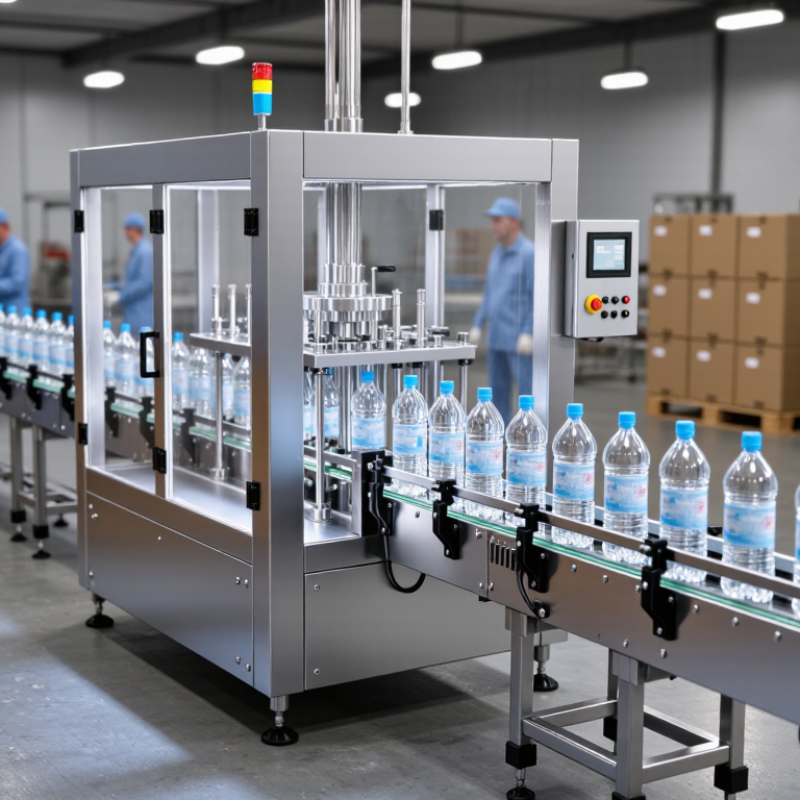
Define Your Water Labeling Requirements
Start with the bottle. Record its shape, diameter, height, and material, then check how these vary across your product range. A label machine must handle the containers you actually use, not just a perfect sample on a desk. Note whether bottles arrive dry or carry condensation, since moisture can affect label placement and adhesion. Small details matter.
Next, estimate your normal and peak production rates. Include planned growth, but avoid choosing a machine based only on its top-speed figure. I have seen teams focus on speed and overlook changeover time; that can slow a line handling several bottle sizes. List each label type, its dimensions, and where it should sit on the bottle. Decide whether you need one label or multiple labels, and how much placement variation is acceptable. A few millimeters can be visible on a clear bottle.
Map the available floor space, conveyor height, power supply, and connection points before comparing machines. Consider who will operate and clean the equipment, and how often adjustments are likely. Ask suppliers to test your own bottles and labels at a realistic line speed. Watch for skewed labels, wrinkles, missed containers, and difficult changeovers. Keep the test notes—even small gaps in your requirements can become costly surprises.
Water bottling lines commonly use pressure-sensitive, shrink-sleeve, or wet-glue labeling machines. Each handles bottles differently, so compare the label material, bottle shape, line speed, and changeover needs before choosing. A label that looks neat on a sample bottle may wrinkle or shift when bottles are damp or moving quickly.
Pressure-sensitive machines apply pre-coated labels directly to the bottle. They suit frequent design changes and usually need less setup than glue-based systems. Operators can check label placement by watching the seam and measuring its distance from the bottle base. However, adhesive performance can vary with condensation, and label rolls need careful loading. Small details matter.
Shrink-sleeve machines place a sleeve around the bottle, then use heat to make it conform to the container. They can cover curved shapes and provide broad space for graphics, but require a heating tunnel and attention to temperature. Wet-glue machines apply adhesive to cut labels, often making them practical for high-volume, consistent bottle formats. They may involve more cleaning and glue adjustment. A useful trial includes actual filled bottles, not just dry samples. Track label alignment, rejected bottles, and changeover time during a full production run; the results can be less tidy than a showroom demonstration.
| Machine Type | Typical Output* | Label and Application | Container Compatibility | Main Advantages | Considerations | Best Suited For |
|---|---|---|---|---|---|---|
| Manual label applicator | About 3–10 containers per minute | Usually pressure-sensitive labels; the operator positions each container and applies the label by hand or with a simple applicator. | Small batches of round bottles and other containers that can be positioned consistently. | Low equipment cost, compact footprint, and simple operation. | Output and placement consistency depend heavily on the operator; not suited to high-volume production. | Startups, samples, pilot runs, and very small production batches. |
| Semi-automatic tabletop labeler | About 10–30 containers per minute | Typically applies one pressure-sensitive label to a container; an operator loads and removes each bottle. | Often suitable for round PET or glass bottles, subject to the machine’s diameter and height range. | More repeatable placement than manual application while keeping equipment and setup relatively simple. | The operator remains part of the production cycle; bottle shape and label position may require adjustment. | Small businesses and low-to-medium-volume bottling lines. |
| Automatic inline pressure-sensitive labeler | About 30–150 containers per minute | Applies self-adhesive labels from a roll, commonly for front-and-back, wrap-around, or panel labeling. | Can handle many round and shaped bottles when the conveyor, guides, and labeling head are configured for them. | Flexible label changes, no wet glue required, and straightforward integration into an inline packaging process. | Requires suitable container spacing and stable conveyance; changeovers and setup affect actual output. | Growing operations that need flexible labels and moderate-to-high throughput. |
| Rotary pressure-sensitive labeler | About 100–400 containers per minute | Uses rotating stations to apply pressure-sensitive labels while containers move through the machine. | Primarily used for round containers; format parts and handling components are selected for the bottle size. | High throughput and continuous operation can suit established, high-volume lines. | Typically needs more floor space, investment, line coordination, and format-specific setup than a tabletop or inline unit. | Large-volume bottling plants with sustained production demand. |
| Shrink-sleeve labeling machine | About 30–300 containers per minute | Places a printed plastic sleeve around the container; a heat-shrink tunnel then conforms the sleeve to its shape. | Can cover round or contoured bottles, depending on sleeve design and machine configuration. | Supports full-body graphics and tamper-evident band applications; accommodates some non-cylindrical shapes. | Requires compatible sleeve material and a heat-shrink process; film use, tunnel settings, and container heat tolerance need consideration. | Products needing full-body decoration, distinctive bottle coverage, or a sleeve-style tamper-evident feature. |
| Roll-fed wrap-around labeler | About 60–300 containers per minute | Feeds cut labels from a continuous roll and wraps them around the container, commonly using adhesive applied during the process. | Most commonly used with round containers designed for stable rotation during labeling. | Can support efficient, high-speed labeling for large runs of consistent container formats. | Label material, adhesive, container shape, and changeover requirements may limit flexibility compared with pressure-sensitive systems. | High-volume production using long runs of round bottles with consistent specifications. |
Selection note: Output figures are indicative ranges, not guaranteed machine ratings. Actual throughput depends on bottle dimensions and stability, label size and material, changeover frequency, operator workflow, and line configuration. Confirm the required speed and container range with a supplier using your actual bottles and labels.
A water label machine must match the bottles you actually run, not just the sample shown in a brochure. Measure bottle height, diameter, and any shoulder or taper. A curved surface can wrinkle a flat label, while a narrow bottle may leave little room for sensors. Small details matter. Check whether bottles arrive wet or cold; condensation can affect label adhesion and placement.
Match the machine to the label’s material, dimensions, and roll direction. Paper and film labels can behave differently under tension, especially at higher speeds. Confirm that the label sensor can detect your label gap or registration mark. Ask for a test using your own bottles and label stock. A clean demo bottle may hide problems that appear on a damp production line.
Then check how the machine fits the full line. Compare its rated speed with the filler and capper, and leave room for bottle spacing and minor stops. Verify conveyor height, available floor space, power, and control connections before ordering. If possible, run a timed trial with several bottle sizes and inspect placement after bottles pass downstream equipment. One part is easy to overlook: a machine can label accurately alone yet struggle when bottles arrive unevenly. That mismatch is worth testing early.
Choose a water label machine around your actual production needs, not its advertised top speed. A line filling 60 bottles per minute may slow down when bottles arrive unevenly or labels need careful alignment. Ask for a live trial using your bottle shape, label stock, and expected line speed. Watch for wrinkles, skewed labels, and bottles that slip on the conveyor. Test it live.
Accuracy affects appearance and waste. Check whether the machine keeps labels level across different bottle sizes, and ask how quickly operators can adjust settings. Include the full cost: installation, change parts, energy use, training, and replacement rollers. A lower purchase price can become less attractive if routine adjustments take too long. Still, estimates rarely capture every production interruption; leave room for uncertainty.
Tips: Request a sample run and inspect several bottles from the beginning, middle, and end. Ask an operator to perform a changeover and clear a simulated jam. Confirm cleaning steps, spare-part availability, and recommended maintenance intervals. Small details matter. A tidy demo does not always reflect a busy shift.
Before buying a water label machine, test it with the bottles and labels your business actually uses. Bring several bottle sizes, including one that is slightly wet or uneven. Check whether labels sit straight, wrap smoothly, and stay attached after handling. A clean sample on a showroom bottle proves little.
Run the machine at your expected production speed, not just its slowest setting. Watch for missed labels, wrinkles, bottle jams, and inconsistent spacing. Ask an operator to change rolls and adjust guides while you time the process. Confirm that routine cleaning and sensor checks are straightforward. If possible, test a full shift. Short demonstrations can hide small faults that become costly over time. I would also record rejected bottles; estimating from memory is easy, but not very reliable.
Tips: Bring your own label stock. Test each bottle format. Request written speed and accuracy results. Check how quickly the supplier can provide replacement parts. Leave room for doubt: one successful run does not guarantee smooth performance on every shift.
| Cookie | Duration | Description |
|---|---|---|
| cookielawinfo-checkbox-analytics | 11 months | This cookie is set by GDPR Cookie Consent plugin. The cookie is used to store the user consent for the cookies in the category "Analytics". |
| cookielawinfo-checkbox-functional | 11 months | The cookie is set by GDPR cookie consent to record the user consent for the cookies in the category "Functional". |
| cookielawinfo-checkbox-necessary | 11 months | This cookie is set by GDPR Cookie Consent plugin. The cookies is used to store the user consent for the cookies in the category "Necessary". |
| cookielawinfo-checkbox-others | 11 months | This cookie is set by GDPR Cookie Consent plugin. The cookie is used to store the user consent for the cookies in the category "Other. |
| cookielawinfo-checkbox-performance | 11 months | This cookie is set by GDPR Cookie Consent plugin. The cookie is used to store the user consent for the cookies in the category "Performance". |
| viewed_cookie_policy | 11 months | The cookie is set by the GDPR Cookie Consent plugin and is used to store whether or not user has consented to the use of cookies. It does not store any personal data. |