What Are the Best Types of Transformers in 2026?
What Are the Best Types Of Transformers in 2026? The answer depends on where power must go, how much it must carry, and what conditions it will face. A compact dry-type unit may suit an indoor commercial building, while an oil-immersed power transformer can serve a utility substation. Neither is universally best. The right choice begins with the load, installation environment, efficiency targets, maintenance plan, and budget.
Transformer engineer J. A. Winders, author of Transformer Engineering, offers a useful selection principle: match the transformer’s design to its application and operating conditions. This is a paraphrase of his engineering approach, not a direct quotation. It matters in practice. A humming unit in a basement, a sunlit outdoor substation, and a factory feeding variable machinery face different demands. The Types Of Transformers worth comparing include distribution, power, isolation, autotransformers, and dry-type designs. Each balances factors such as voltage conversion, safety, size, cooling, and serviceability.
Details matter. A nameplate rating alone cannot reveal every operating cost or installation constraint. Buyers should check expected peak loads, ambient temperature, ventilation, sound limits, and available maintenance support. Some trade-offs are easy to miss. A lower purchase price may bring higher energy losses over years of operation; a compact design may leave little room for future capacity. This guide compares the leading options for 2026, explains where each performs well, and flags the questions worth asking before choosing. A careful fit beats a fashionable label.
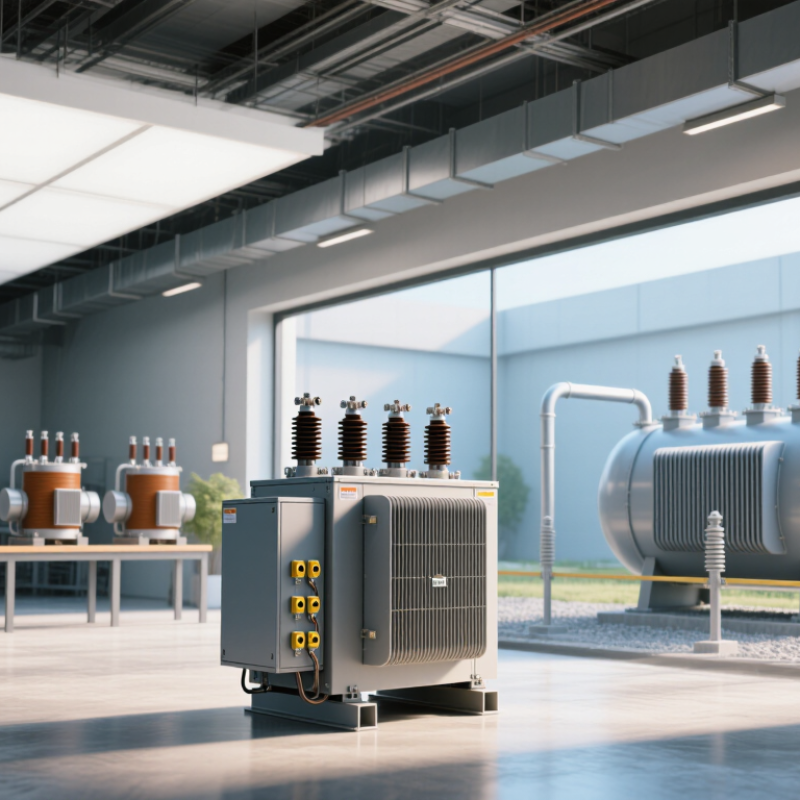
How Transformers Work and How Their Types Are Classified
What Are the Best Types of Transformers in 2026?
A transformer transfers alternating-current energy between circuits through electromagnetic induction. Current in the primary winding creates a changing magnetic field in the core, inducing voltage in the secondary winding. The ratio of winding turns determines whether voltage rises or falls; frequency stays essentially unchanged. Losses still produce heat. That detail matters.
Transformer types are classified in several ways, and the labels can overlap. By function, units may be step-up, step-down, power, or distribution transformers. By construction and cooling, they may be core-type or shell-type, dry-type or liquid-immersed. A substation unit, for example, can be three-phase, liquid-immersed, and step-down at once. The International Energy Agency’s 2023 report, Electricity Grids and Secure Energy Transitions, estimates that 80 million kilometres of grids must be added or replaced by 2040. It also says annual grid investment needs to rise from about $300 billion to over $600 billion by 2030. These are grid-wide figures, not transformer forecasts, but they show the scale of infrastructure planning.
The best type depends on voltage, load profile, installation space, cooling needs, and maintenance access. A dry-type unit may suit an indoor building where limiting liquid use is useful; a liquid-immersed unit may suit a high-capacity outdoor substation. There is no universal winner. Real projects can also reveal awkward trade-offs: a compact unit may be harder to cool or service. Engineers should verify ratings and operating conditions against applicable transformer standards and site requirements.
Transformer Types: Example Voltage Ratios
Transformers can be classified by function. This chart shows illustrative voltage examples: the ratio is secondary voltage divided by primary voltage. Step-up transformers increase voltage; step-down transformers reduce it; isolation transformers keep it equal while providing electrical isolation; autotransformers use a shared winding. These examples are not a ranking—choose a transformer based on voltage, power, frequency, and isolation requirements.
Major Transformer Types and Their Core Features
Power transformers move large amounts of energy between voltage levels in transmission networks. They are built for high loads and often operate continuously, so cooling, insulation, and fault withstand matter. Distribution transformers reduce voltage near homes, shops, and factories. A compact unit on a utility pole and a ground-level cabinet may serve similar purposes, but installation conditions differ.
Instrument transformers measure electrical systems safely. Current transformers scale high current for meters and protective relays; voltage transformers provide lower, proportional voltage signals. Isolation transformers separate input and output circuits, which can help limit unwanted electrical noise. Autotransformers use a shared winding, making them smaller and often more efficient for certain voltage adjustments. They do not provide galvanic isolation. A useful distinction.
Dry-type and liquid-filled describe construction, not the transformer’s main job. Dry-type units avoid liquid insulation and suit many indoor settings, while liquid-filled designs can manage heat effectively in outdoor or higher-capacity service. Selection needs real load data, ambient temperature, fault levels, and maintenance plans. Efficiency is easy to overvalue; a unit that runs hot or fits poorly can cost more over time. The labels can overlap, and that makes comparisons less tidy than a catalog suggests.
How Transformer Designs Differ in Efficiency and Application
In 2026, the best transformer depends on its load, location, and operating schedule. Oil-immersed units suit substations and demanding outdoor service. Their liquid cooling supports high capacity, but operators must inspect for leaks and monitor oil condition. Dry-type transformers use air rather than insulating liquid. They often fit offices, hospitals, and factories where indoor installation and simpler fluid management matter. Ventilation still matters. A cramped electrical room can undermine cooling and shorten equipment life.
Efficiency changes with the load profile. Core losses continue even when demand is low, while winding losses rise as current increases. A unit sized for peak demand may waste energy during long, quiet periods. Not ideal. Compare certified loss data at realistic operating loads, not just a headline efficiency figure. Autotransformers can reduce material use and losses for certain voltage conversions, but they do not provide electrical isolation. Isolation transformers serve different needs, including reducing transferred electrical noise; they are not a substitute for proper grounding or system design. Material advances and monitoring can improve performance, yet installation quality remains decisive. Honestly, selection can feel less tidy than a comparison chart suggests. Room temperature, harmonics, maintenance access, and future expansion all affect the result. Have a qualified engineer review site conditions and expected loads before specifying a unit.
Key Factors for Selecting a Transformer in 2026
In 2026, choosing a transformer means matching equipment to actual operating conditions, not just its nameplate rating. Record peak demand, daily load variation, motor-starting surges, and expected expansion. Not just peak. A unit sized too tightly may overheat during sustained high loads; oversizing can raise purchase costs and operating losses. Check primary and secondary voltages, phase, frequency, impedance, and fault levels against the site design. For buildings with variable-speed drives or data equipment, assess harmonics and neutral loading with measured or modeled data.
Efficiency and delivery timing matter over the transformer's full service life. The International Energy Agency’s 2023 report, Electricity Grids and Secure Energy Transitions, says annual grid investment must rise to more than $600 billion by 2030, nearly double current levels. That points to growing pressure on grid equipment, but it does not replace a site-specific load study.
The U.S. Department of Energy’s 2022 Electric Grid Supply Chain Deep Dive Assessment also identifies transformers as a supply-chain concern. Confirm lead times early. Compare total ownership cost, including energy losses, maintenance, cooling, and installation. Then match dry-type or liquid-filled construction to fire protection, ventilation, weather, and available space. A spreadsheet still misses things: dust, vibration, and awkward access can complicate maintenance. Check applicable efficiency requirements and verify assumptions with a qualified electrical engineer.


