10 Best Sewer Drain Cameras for Global Buyers?
A sewer camera earns its value in the footage it captures: a root crossing a joint, standing water in a low section, or a crack hidden beneath a clean-looking surface. These details help inspection teams assess problems before choosing repairs. The need is substantial. The U.S. Environmental Protection Agency’s 2022 Clean Watersheds Needs Survey reported an estimated $630.1 billion in wastewater and stormwater infrastructure needs over 20 years. That figure is not a global market estimate, but it shows the scale of investment required in one major economy. The American Society of Civil Engineers’ 2021 Infrastructure Report Card gave U.S. wastewater infrastructure a grade of D+. The message is plain: reliable condition assessment matters.
For global buyers, choosing among Sewer Drain Cameras means looking beyond headline resolution. Pipe diameter, cable length, camera-head articulation, lighting, recording, and local service support all affect daily use. A compact push camera may suit smaller lines, while larger networks can require longer, more robust systems. Check display readability in bright conditions, connector durability, battery runtime, and how easily footage can be shared with a client or maintenance team. Specifications help. Field conditions decide.
Even so, a spec sheet can mislead. A longer cable is not automatically better if it is difficult to control, and a sharp image is less useful when the lens fogs or the locator is unreliable. The following guide compares 10 options for different inspection needs, budgets, and operating environments. Buyers should confirm regional availability, warranty terms, and technical support before ordering. Small details matter.
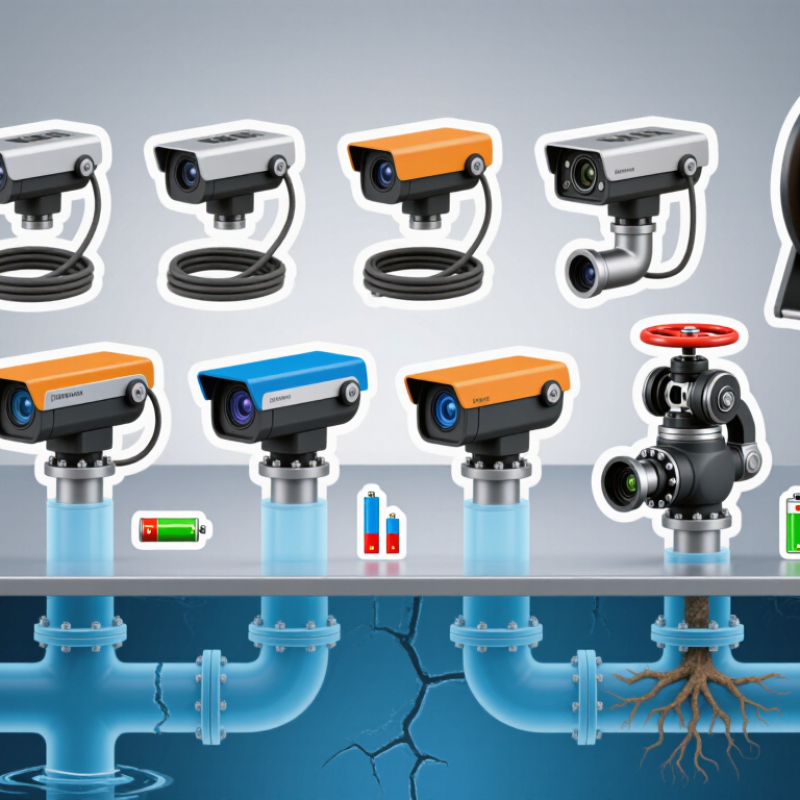
What Sewer Drain Cameras Are and Where They Are Used
A sewer drain camera is a waterproof inspection device that sends live video from inside a pipe. A compact camera head is attached to a flexible push rod for smaller drains, or mounted on a crawler for larger mains. Operators watch the feed on a monitor and record the pipe’s condition, distance, and location. It is a practical way to inspect areas hidden beneath floors, roads, and yards.
The footage helps technicians locate grease buildup, root intrusion, cracks, displaced joints, and recurring blockages. It is also used to check a pipe before a property purchase and to verify repairs after work is complete. A small detail can matter: a thin line in the image may be a surface mark, not a structural crack. Lighting, water, debris, and camera movement can obscure defects. A camera supports assessment; it does not replace skilled interpretation.
The scale of the infrastructure challenge makes inspection relevant. The U.S. Environmental Protection Agency’s 2022 Clean Watersheds Needs Survey estimated $630.1 billion in wastewater infrastructure investment needs over 20 years. That figure covers many needs, not cameras alone. Still, clear inspection records can help crews identify pipe problems and plan targeted maintenance. Some limits remain. A camera cannot show every defect, especially when standing water or heavy deposits block the view.
How Sewer Inspection Cameras Capture and Display Pipe Conditions
A sewer inspection camera turns a hidden pipe interior into a live image. At the tip, a compact camera lens faces forward while built-in lights illuminate the pipe. An operator feeds a flexible cable through the line, watching the monitor as the camera moves past joints, bends, and deposits.
The display can reveal cracks, root intrusion, standing water, or separated connections. Many systems show distance markings, helping crews estimate where a problem lies. Some also record video or still images for later review. A stable picture helps, but cable movement can make the view shake. Small details matter.
Image quality depends on more than screen size. Lens clarity, lighting control, cable handling, and monitor brightness all affect what an operator can see. Water droplets or grease may blur the lens, while a tight bend can turn the camera away from the pipe wall. Not always obvious. Reviewing footage slowly can prevent a misleading first impression. A clear screen does not prove that every section is damage-free; operators should note blind spots and inspect suspicious areas from more than one angle when possible.
Key Features to Compare Before Choosing a Sewer Drain Camera
A sewer drain camera should fit the pipes you inspect, not just look impressive on a product page. Compare the camera head diameter with the smallest drain in your regular work. A compact head can pass tight bends, while a larger lens may provide clearer images. Check the lighting too. In a dark, wet pipe, adjustable LEDs help reveal cracks, roots, and standing water without washing out the picture.
Cable length and flexibility matter just as much. A long cable reaches farther, but it may be harder to control in narrow lines. Ask whether its push rod balances stiffness with bendability. Too rigid, and it can snag at elbows; too soft, and it may coil near the opening. I have found that advertised reach does not always match usable reach. That detail deserves a real test.
Look for a screen that stays readable under bright site lighting, plus recording options that make inspections easier to review or share. A built-in distance counter can help locate a problem, though its readings may shift if the cable slips. Check battery runtime, charging compatibility, and the camera’s water and dust resistance rating before ordering internationally. Small details matter. Also compare replacement parts, warranty terms, and access to technical support in your region. A lower purchase price can feel less attractive when a damaged cable takes weeks to replace.
Ten Sewer Drain Camera Options for Buyers Around the World
Sewer networks differ in pipe diameter, access, bends, and maintenance history, so one camera rarely fits every job. The U.S. Environmental Protection Agency’s 2022 Clean Watersheds Needs Survey estimated $630.1 billion in wastewater and stormwater infrastructure needs over 20 years. The American Society of Civil Engineers’ 2021 Infrastructure Report Card also describes roughly 800,000 miles of public sewers in the United States. These figures are not global averages, but they show why inspection equipment must work across varied assets. Details matter.
For international buyers, ten practical options include compact pushrod cameras, longer-reach pushrod systems, self-leveling heads, pan-and-tilt cameras, small-diameter units, large-pipe crawlers, portable reel systems, battery-powered kits, locatable camera heads, and systems with recording and reporting tools. Match the camera head and cable to typical pipe size and inspection distance. Check screen visibility outdoors, battery endurance, waterproof ratings, spare-part availability, and whether measurements can be exported in useful formats. Not every job needs a crawler. A lightweight pushrod unit may be easier to transport between sites, while larger pipes may require powered movement and stronger lighting. I would also test controls with gloves on; specifications rarely reveal awkward handling. Global buyers should confirm local servicing and training before purchase, since downtime can outweigh a lower initial price.
How to Match a Camera System to Pipe Size, Workload, and Budget
Choosing a sewer drain camera starts with the pipe, not the feature list. A compact camera head can navigate tight bends in small residential lines, while larger pipes may need brighter lighting and a wider viewing angle. Check the head diameter against the smallest pipe you inspect, and compare cable length with typical access distances. Extra cable sounds useful, but a heavy reel can be awkward in a narrow service vehicle.
Workload changes what matters. For occasional inspections, a durable push rod, clear monitor, and simple recording controls may be enough. Crews working daily should consider reel strength, battery runtime, replaceable parts, and readable footage in wet, dirty conditions. Ask how the system performs around bends, standing water, and scale; specifications alone cannot show handling. Test it on a representative pipe section if possible. Small details matter.
Budget for the whole system, including maintenance and storage, rather than the camera alone. A lower purchase price may mean shorter runtime or harder-to-source components. Not every feature earns its cost. Wireless viewing or distance tracking can help some teams, but may add expense without improving routine inspections. It is easy to overbuy. Revisit your expected pipe sizes and weekly job volume before choosing; estimates are imperfect, and workload can change.


