2026 Best Photoelectric Sensors for Industrial Applications?
In the world of industrial automation, Photoelectric Sensors play a crucial role. An industry expert, Dr. Emily Grant, states, "Photoelectric Sensors are the eyes of automation." This statement encapsulates their importance in providing precise detection and measurement.
In industrial settings, these sensors are vital for various applications. They help in monitoring products on production lines, controlling inventory, and ensuring safety. The right sensor can improve efficiency significantly. Companies often face challenges in choosing the most suitable Photoelectric Sensors from a myriad of options available. The sheer variety can become overwhelming and confusing.
Many users lack an understanding of the specific needs their operations have. This can lead to suboptimal sensor choices and potential operational issues. While Photoelectric Sensors are designed for reliability, they are not infallible. Each application has unique requirements. A misplaced choice can disrupt workflows. Thus, it’s essential to gather insights and make informed decisions.
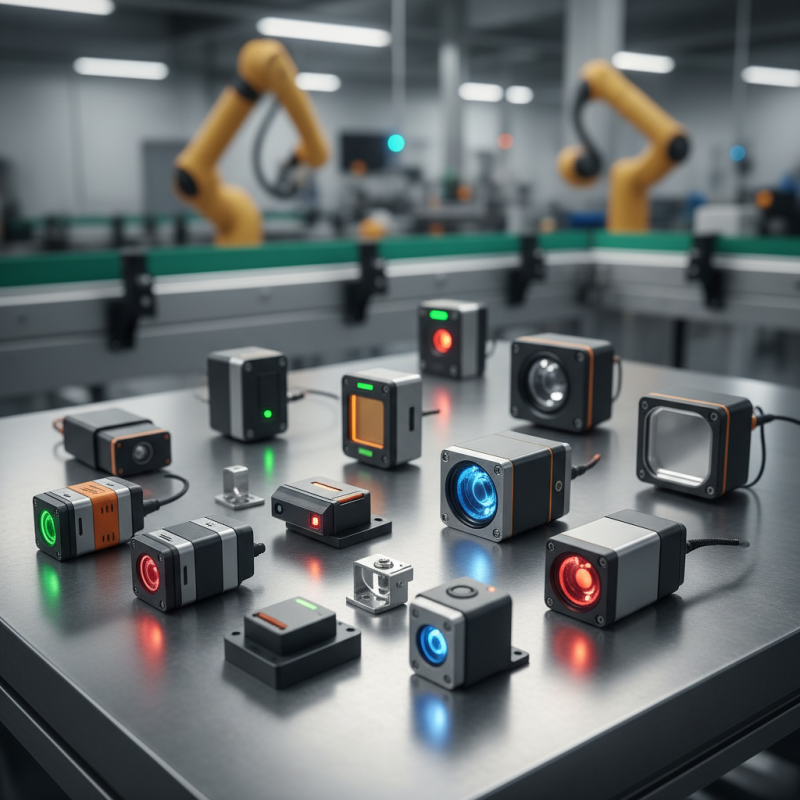
Overview of Photoelectric Sensors and Their Industrial Applications
Photoelectric sensors are essential in various industrial applications. They help detect the presence of objects, measure distances, and monitor levels. According to a recent report, the global photoelectric sensor market is projected to reach $3.2 billion by 2026, growing at a rate of 7.2% annually.
Industries utilize these sensors for automation, packaging, and safety purposes. In manufacturing, they enhance productivity by reducing downtime. Photoelectric sensors can also be found in conveyor systems, where they identify products and manage sorting processes. However, their effectiveness can diminish in harsh environments. Dust, humidity, and extreme temperatures may interfere with performance.
Despite their benefits, not all installations are seamless. Misalignment or improper calibration leads to errors. Adjustments and regular maintenance are crucial for optimal functionality. Data from various studies indicates that around 15% of sensor failures are due to improper setup. Investing in training for personnel can mitigate this issue, yet many companies overlook this aspect. Understanding the importance of these sensors can significantly impact operational efficiency and product quality.
2026 Best Photoelectric Sensors for Industrial Applications
| Sensor Type | Detection Range | Output Type | Operational Voltage | Response Time | Applications |
| Through Beam | 0.1 to 10 m | PNP/NPN | 10-30 VDC | < 1 ms | Packaging, Material Handling |
| Retroreflective | 0.5 to 15 m | NPN | 10-30 VDC | < 2 ms | Conveyor Systems, Automation |
| Diffuse Reflective | 0.05 to 1.5 m | PNP | 10-30 VDC | < 1.5 ms | Robotics, Assembly Automation |
| Fiber Optic | Dependent on Fiber Length | PNP/NPN | 12-24 VDC | < 1 ms | Laser Cutting, Process Control |
| Laser Sensors | Up to 50 m | PNP | 24 VDC | < 0.2 ms | Distance Measurement, Height Detection |
Types of Photoelectric Sensors Used in Industrial Settings
In industrial settings, photoelectric sensors play a crucial role in automation. They come in various types, each suited for specific applications. For instance, through-beam sensors consist of a light emitter and a receiver. This setup allows for precise detection of objects. These sensors are reliable for long distances and can detect small items easily.
Reflective sensors, on the other hand, bounce light off surrounding objects. They can be useful in tight spaces where installation is tricky. The challenge here is that reflective surfaces may cause false readings. Understanding the environment is vital for optimal performance.
Another type is proximity sensors, which detect objects without direct contact. These sensors often rely on light waves to identify presence or absence. However, they may struggle in dusty or dark conditions. Regular maintenance is necessary to ensure accuracy. Each type has its strengths and weaknesses, making it essential to choose wisely.
2026 Best Photoelectric Sensors for Industrial Applications
This chart illustrates the usage percentage of various types of photoelectric sensors in industrial applications as of 2026. Through-beam sensors lead the adoption at 30%, followed by retro-reflective sensors at 25%, while diffuse, laser, and capacitive sensors cover the remaining market share.
Key Features and Specifications to Consider in Selection
When selecting photoelectric sensors for industrial applications, several key features are critical. First, sensing distance is crucial. A longer sensing range can enhance system flexibility. According to industry reports, some sensors can detect objects from distances exceeding 10 meters. However, this can lead to errors in detection if not calibrated properly, especially in environments with dust or moisture.
Another important specification is response time. This determines how quickly the sensor can react to an object passing by. Many manufacturers specify response times as fast as 1 millisecond. Fast response times are vital in high-speed production environments. Yet, very fast sensors may be more prone to false triggering, which can disrupt operations.
Finally, consider the environmental factors. Sensors need to withstand temperature variations and exposure to chemicals. Some models are designed for extreme conditions. Data indicates that almost 30% of sensor failures happen due to environmental challenges. Thus, choosing the right casing and protection level is essential. Make sure to evaluate all these specifications with care to avoid costly mistakes.
Top 2026 Photoelectric Sensor Models and Their Comparisons
Photoelectric sensors play a critical role in various industrial applications. They are essential for automation and are used in packaging, assembly lines, and material handling. These sensors work by detecting objects using light, making them versatile and reliable. The diversity of models available today can leave users feeling overwhelmed.
When comparing different models, several factors come into play. Response time is crucial; faster sensors improve efficiency. Detection range is another key specification; some applications need sensors that can operate over long distances. Environmental resistance should not be overlooked. Many sensors face harsh conditions, such as dust and moisture, which can affect their performance.
While many options exist, not all sensors perform well in every scenario. Users may find limited testing data or support for some models. This makes choosing the right sensor challenging. Potential buyers may also realize that specific features they expect to be standard are not always present. Careful consideration and thorough research are needed to identify the best photoelectric sensor for each unique application.
Trends and Innovations in Photoelectric Sensor Technology for Industry
The evolution of photoelectric sensor technology is reshaping industrial applications. These sensors are gradually becoming more compact and efficient. With advancements in infrared and laser technologies, they offer enhanced detection capabilities. This allows industries to streamline operations and improve safety.
One notable trend is the rise of smart sensors. These devices enable real-time data analysis, providing immediate feedback. They can detect changes in environment or product flow. This integration of IoT enhances productivity but also raises questions about reliability. How much can we depend on technology? Are there scenarios where human intervention is still needed?
Implementing photoelectric sensors effectively requires careful planning. Consider the specific environment where they will be deployed. Ask yourself: Is there enough space for installation? Will dust or moisture affect performance? Regular maintenance is crucial to prevent malfunction. Overlooking this can lead to costly downtimes.


