Global buyers need more than a glossy machine brochure when evaluating laser cladding equipment. Laser Cladding can restore worn shafts, protect turbine edges, and build precise metal features. Yet performance depends on the application, not marketing claims alone. A machine that excels on steel may struggle with nickel alloys or heat-sensitive substrates. This guide examines seven leading machines for international purchasing decisions.
The selection considers laser power, powder or wire delivery, motion accuracy, cooling design, software, service access, and total operating cost. These details become practical on the workshop floor. A stable powder stream can determine whether a repair remains smooth or requires extra machining. Closed-loop monitoring may reduce defects, but it cannot replace skilled setup and inspection. Buyers should also check electrical standards, installation requirements, spare-part supply, training, and local technical support. These factors often matter after the sales demonstration ends.
Our perspective combines equipment comparison with realistic manufacturing concerns. We focus on manufacturers with documented applications, clear specifications, and credible support records. Independent testing remains valuable, especially for bond strength, dilution, porosity, and dimensional accuracy. No single machine is ideal for every factory. That is worth stating plainly. Some published specifications are difficult to compare, and service quality can vary by region. Therefore, readers should treat this list as a practical starting point, then request sample trials and verify references. The right choice should match materials, component sizes, production volume, operator skills, and long-term maintenance expectations.
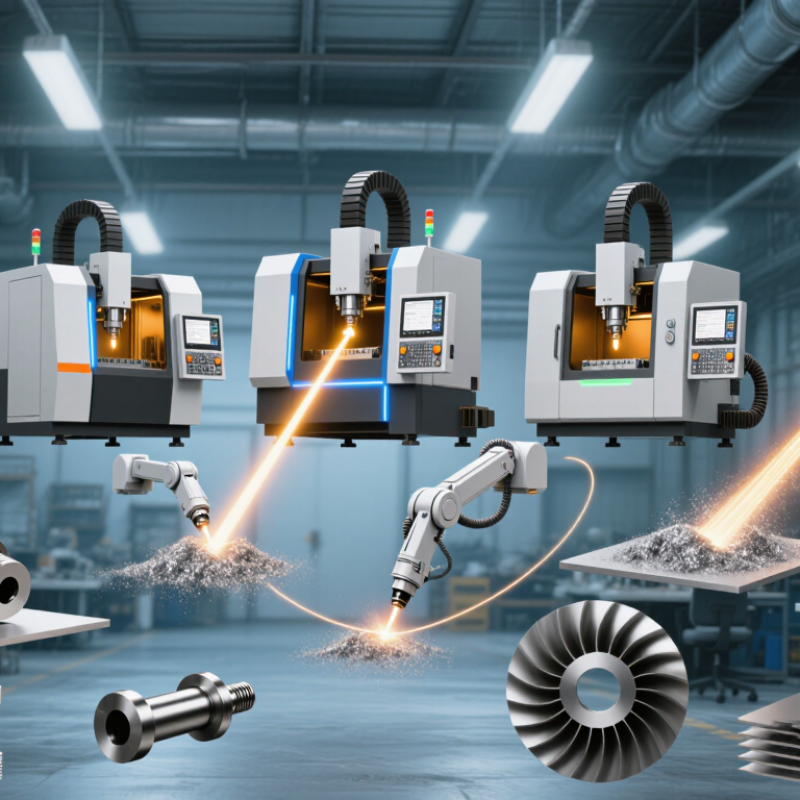
Laser cladding is a surface-engineering process that adds a protective metal layer to a component. A laser creates a focused heat source. Powder or wire enters the melt zone. The material melts and bonds metallurgically with the substrate. Unlike thermal spraying, this bond usually has lower porosity and less mechanical separation.
A typical laser cladding machine combines a laser head, powder or wire feeder, shielding gas, motion system, and control software. The laser moves across the surface while the feeder supplies material at a measured rate. Overlapping tracks build a dense coating or restore worn dimensions. Heat input remains concentrated, so distortion is often lower than with conventional welding. Still, “low distortion” does not mean no distortion.
In practical workshop trials, operators monitor laser power, travel speed, feed rate, spot size, and gas flow. Small changes can alter bead height, dilution, hardness, and surface finish.
Material cleanliness matters too. Oil, rust, or moisture may create unstable tracks. Machine selection should match the part size, alloy, coating thickness, and production volume. A large system can be wasteful for small repairs. A compact system may struggle with heavy deposition.
The process looks simple.
It is not always predictable.
Even experienced technicians must test parameters on representative samples. Metallurgical inspection and dimensional checks remain essential. A smooth-looking layer can still contain defects beneath the surface. Careful validation makes laser cladding more reliable for repair, wear resistance, and controlled surface modification.
When comparing the seven best laser cladding machines, buyers should examine process control before advertised power. A stable laser source supports consistent melting and reduces uneven coating thickness. Adjustable spot size matters when repairing both narrow edges and broad cylindrical surfaces. A 1.0-millimeter spot may suit precision work, while larger spots improve coverage speed. Coaxial powder delivery can reduce waste and improve coating symmetry. Ask for deposition tests using your actual alloy. Numbers can mislead.
Machine structure also affects daily reliability. Check the working envelope, rotary axis capacity, and access around large components. A rigid frame helps prevent vibration marks during long repair cycles. Closed-loop monitoring should track laser output, powder flow, temperature, and travel speed. Useful software records these values for quality audits. Operators need clear controls, not crowded screens. Small details matter.
Gas management deserves careful inspection. Stable shielding gas protects the molten pool from oxidation and contamination. Confirm flow control, nozzle design, and sensor response before purchase. Safety interlocks, guarded enclosures, extraction, and documented compliance are essential. Service availability affects downtime more than many brochures admit. Ask about calibration, spare optics, training, and response times. An impressive machine may still underperform without skilled setup. I would also compare energy use per deposited kilogram, because purchase price alone gives an incomplete picture.
| Machine Category | Typical Laser Power | Cladding Material | Recommended Part Size | Deposition Rate | Cladding Track Width | Motion System | Automation Level | Main Applications | Key Buying Advantage | Best Fit for Global Buyers |
|---|---|---|---|---|---|---|---|---|---|---|
| Compact 3-Axis Powder-Fed System | 1–2 kW fiber laser | Metal powders, including stainless steel, nickel alloys, cobalt alloys and tool steels | Small to medium parts; typically up to 500 mm in diameter and 800 mm in length | Approximately 0.5–2.5 kg/h, depending on powder and process settings | Approximately 0.5–3.0 mm | 3-axis CNC table with fixed or adjustable cladding head | Basic to intermediate; manual loading with programmable tool paths | Repair of molds, shafts, flanges, valves and precision industrial components | Small footprint, lower initial investment and straightforward operation | Job shops, maintenance departments and laboratories with moderate production volume |
| 4-Axis Rotary Cladding Cell | 2–4 kW fiber laser | Powder or wire feed; suitable for wear-resistant and corrosion-resistant alloys | Cylindrical parts generally up to 800 mm in diameter and 2,000 mm in length | Approximately 1–5 kg/h | Approximately 1–5 mm | 3 linear axes plus rotary axis or positioner | Intermediate; CNC programs, rotary synchronization and recipe storage | Restoration of rollers, bearing seats, hydraulic rods, pumps and rotating components | Efficient coverage of round parts with fewer repositioning operations | Repair centers and manufacturers processing shafts, tubes and other rotational parts |
| 5-Axis Robotic Laser Cladding Cell | 2–6 kW fiber laser | Metal powder, with optional multi-material powder delivery | Medium to large components; commonly 1,000–2,500 mm working envelope | Approximately 1–6 kg/h | Approximately 1–6 mm | Industrial robot with external positioner and coordinated axes | High; offline programming, path simulation and automatic process routines | Complex geometries, turbine components, dies, tooling and large repair work | Flexible access to difficult surfaces and complex three-dimensional geometries | Aerospace, energy, heavy equipment and contract manufacturing operations |
| High-Power Production Cladding Machine | 4–12 kW fiber or diode laser | Powder or wire; optimized for high-volume alloy deposition | Large parts, often exceeding 2,000 mm in length with a suitable positioner | Approximately 3–12 kg/h; actual output depends on material and geometry | Approximately 2–8 mm | Multi-axis CNC system with heavy-duty rotary positioner | High; automated powder control, monitoring and production recipes | Large rollers, mining components, oil and gas parts, wear surfaces and new near-net-shape builds | High throughput and reduced processing time for large workpieces | Industrial manufacturers with continuous production or large-part refurbishment demand |
| Wire-Feed Laser Metal Deposition System | 2–6 kW fiber or diode laser | Metal wire, including stainless steel, nickel alloys, titanium alloys and aluminum alloys | Medium to large parts; size depends on the robot, table and wire delivery system | Approximately 1–8 kg/h | Approximately 1–5 mm | 5-axis or robotic motion system with synchronized wire feeder | High; closed-loop wire feeding and programmable deposition paths | Material addition, edge rebuilding, large-area repair and near-net-shape manufacturing | High material utilization and reduced powder handling compared with powder-fed systems | Buyers prioritizing cleaner material handling, wire availability and large-part deposition |
| Hybrid CNC Machining and Cladding Center | 1–6 kW fiber laser | Powder-fed alloys, with integrated machining tools | Small to medium precision components; commonly 500–1,500 mm working envelope | Approximately 0.5–5 kg/h | Approximately 0.5–5 mm | CNC machine tool with laser head, milling spindle and rotary axis options | Very high; deposition, machining and inspection can be performed in one setup | Precision repair of molds, aerospace parts, sealing surfaces and high-value tooling | Reduced setup time, improved geometric accuracy and less secondary handling | Manufacturers needing integrated repair and finishing in a controlled production cell |
| Large-Format Robotic Cladding and Additive Cell | 4–12 kW fiber or diode laser | Powder or wire; selected according to part size, alloy and deposition rate | Large components; working envelopes can reach several meters with linear tracks | Approximately 2–15 kg/h | Approximately 2–10 mm | 6-axis robot mounted on a linear rail with external positioner | Very high; robotic programming, laser monitoring and process data recording | Heavy machinery, marine parts, energy equipment, large dies and oversized structural components | Scalable work envelope and strong flexibility for oversized or irregular parts | Heavy-industry buyers requiring repair, surface enhancement or large metal deposition |
Note: Performance ranges are typical industry-level values. Actual results vary with laser wavelength, powder or wire alloy, nozzle design, substrate condition, part geometry, shielding gas, robot or CNC configuration, and process parameters.
Seven leading laser cladding machines for global buyers now cover different production needs, not one universal design. Powder-fed coaxial systems suit turbine edges and valve seats. Off-axis powder machines offer lower initial costs. Wire-fed systems reduce material waste on large repairs. Five-axis cells reach curved surfaces accurately. Compact repair cells fit maintenance workshops. Large-format platforms handle shafts and heavy rollers. Hybrid CNC machines combine machining and deposition in one enclosure.
MarketsandMarkets’ 2024 analysis projects steady growth in the laser cladding equipment market, supported by aerospace, energy, and industrial repair demand. The report identifies automation, powder control, and process monitoring as major purchasing factors.
Those details matter. A stable melt pool can prevent visible ripples along a 200-millimeter shaft. A poor powder stream cannot.
Wohlers Report 2024 also highlights growing industrial interest in directed energy deposition. Buyers should compare deposition rate, laser power, enclosure size, axis travel, and local service coverage. A 2-kilowatt source may suit precision repair, while larger components often require higher power. Ask for test coupons using your actual alloy. Request measured hardness, dilution, porosity, and dimensional deviation. Do not trust a polished sample alone. I have found that software promises often look stronger than factory-floor results. Regional voltage, gas supply, operator training, and spare-parts access can quietly decide whether a machine succeeds.
Choosing a laser cladding machine starts with the repair task, not the machine catalogue. Define the substrate, coating alloy, part diameter, and required deposition rate. A turbine shaft needs different motion accuracy than a mining roller. MarketsandMarkets’ 2024 forecast estimates the laser cladding market will grow at roughly 11% annually through 2029, increasing pressure to choose efficiently.
Check the laser source, powder feeder, working envelope, and thermal control together. A 3 kW system may suit large steel surfaces, while delicate valve seats require lower power and finer powder control. Ask for measured bead width, dilution, hardness, and porosity data. ISO 14918 supports qualification testing for thermal spraying, but laser cladding still needs application-specific validation. Standards help. They do not replace trials.
Automation can improve repeatability, especially on circular parts. Confirm axis resolution, sensing capability, and software compatibility before purchase. The 2024 Wohlers Report showed continued growth in industrial metal manufacturing, yet adoption does not guarantee quick returns. Energy use, powder waste, extraction, maintenance, and operator training can change the calculation. Request a sample build using your actual alloy and geometry. I would not trust polished photographs alone. Some suppliers provide excellent surfaces but limited process records. That gap deserves closer questioning.
A laser cladding machine should fit the workshop before it fits the budget. Confirm floor loading, door clearance, electrical capacity, shielding gas supply, cooling water, and fume extraction. Global buyers should also check local safety rules and technician availability. A useful market benchmark comes from the Wohlers Report 2024. It recorded global additive manufacturing revenue of 20.035 billion US dollars in 2023, with 13.5% annual growth. This figure covers the entire additive manufacturing sector, not laser cladding alone. Still, it shows why service planning matters.
During operation, stable powder feeding and accurate temperature control protect coating quality. Operators should record laser power, travel speed, powder flow, overlap, and substrate temperature for every job. Small changes can create pores, cracking, or uneven thickness. In practical workshops, calibration is often delayed during busy production periods. That is a mistake. Measure twice. A machine may run correctly while producing inconsistent results. Regular sample coupons and cross-section checks reveal hidden defects.
Tips: Keep the optical path clean and inspect protective windows daily. Replace filters before airflow drops noticeably. Store powder in controlled conditions and verify its batch information. Review alarms instead of simply resetting them. Schedule preventive maintenance around duty cycles, not calendar dates alone. ISO/ASTM 52900 terminology can improve communication between suppliers, operators, and inspectors. Leave room for improvement; installation plans rarely survive unchanged after real production begins.
| Cookie | Duration | Description |
|---|---|---|
| cookielawinfo-checkbox-analytics | 11 months | This cookie is set by GDPR Cookie Consent plugin. The cookie is used to store the user consent for the cookies in the category "Analytics". |
| cookielawinfo-checkbox-functional | 11 months | The cookie is set by GDPR cookie consent to record the user consent for the cookies in the category "Functional". |
| cookielawinfo-checkbox-necessary | 11 months | This cookie is set by GDPR Cookie Consent plugin. The cookies is used to store the user consent for the cookies in the category "Necessary". |
| cookielawinfo-checkbox-others | 11 months | This cookie is set by GDPR Cookie Consent plugin. The cookie is used to store the user consent for the cookies in the category "Other. |
| cookielawinfo-checkbox-performance | 11 months | This cookie is set by GDPR Cookie Consent plugin. The cookie is used to store the user consent for the cookies in the category "Performance". |
| viewed_cookie_policy | 11 months | The cookie is set by the GDPR Cookie Consent plugin and is used to store whether or not user has consented to the use of cookies. It does not store any personal data. |