Get an instant quote
Get in touch Listen to our podcast

Blog

10 Best Energy Storage Systems for Global Buyers?

Energy storage is moving from a specialist purchase to a strategic infrastructure decision. The International Energy Agency reported that battery storage deployment more than doubled in 2023, making it one of the fastest-growing clean energy technologies. This acceleration reflects rising solar and wind capacity, stronger grid flexibility needs, and falling battery costs. However, rapid growth does not make every solution suitable for every buyer.

This guide examines the 10 Best Energy Storage Systems for Global Buyers. It focuses on usable capacity, round-trip efficiency, cycle life, safety controls, warranty terms, and service availability. A system may look impressive on a specification sheet yet perform poorly in a hot, dusty warehouse. Temperature management matters. So does local technician support. The IRENA Electricity Storage and Renewables report highlights storage’s role in integrating variable renewable power. BloombergNEF also expects global energy storage deployment to expand sharply through 2030, although forecasts vary by market and technology.

The selected Energy Storage System options cover residential, commercial, industrial, and utility applications. Lithium iron phosphate batteries receive careful attention because of their thermal stability and long cycle potential. Flow batteries and other technologies also deserve consideration for long-duration projects. No ranking is perfect. Data can age quickly, and advertised capacity is not always usable capacity. Buyers should verify test conditions, degradation assumptions, grid standards, fire protection, and recycling arrangements before signing contracts. Real-world performance begins with accurate load data, not attractive marketing language.
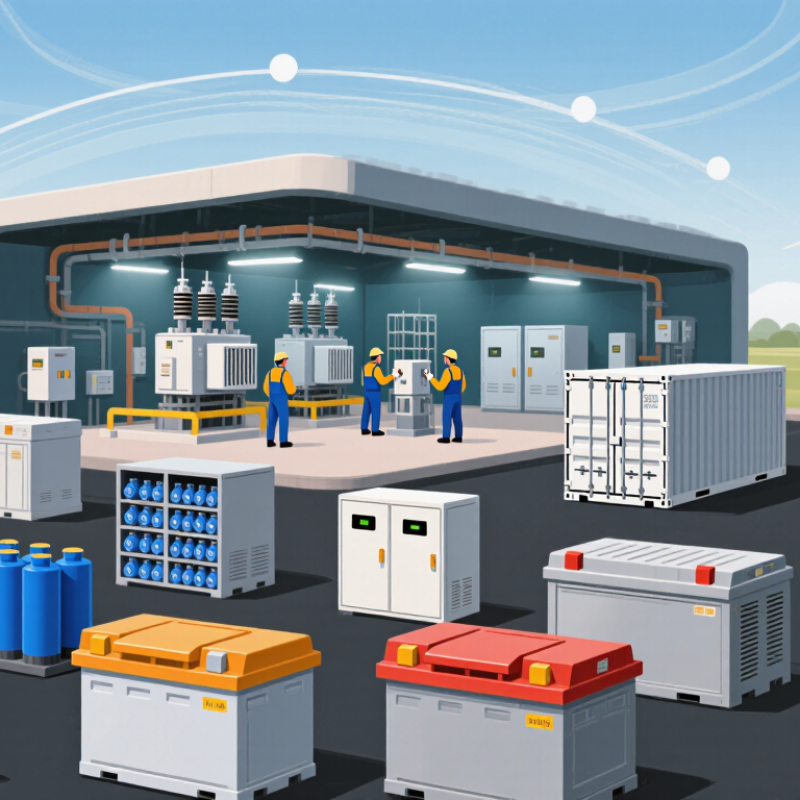
10 Best Energy Storage Systems for Global Buyers?

Energy Storage Explained: Global Battery Additions Exceeded 40 GW in 2023 (IEA)

Energy storage is moving from a specialist asset to core infrastructure. The IEA reports that global battery additions exceeded 40 GW in 2023, showing how quickly deployment is accelerating. GW measures power, while GWh measures stored energy. Buyers must understand both figures before comparing systems.

For global projects, ten practical options deserve attention: lithium-ion, sodium-ion, flow batteries, pumped hydro, compressed air, thermal storage, gravity storage, flywheels, lead-acid, and hybrid systems. Lithium-ion suits four-hour applications and fast frequency response. Flow batteries can support longer discharge periods with lower fire risk. Pumped hydro remains powerful, but geography and construction time limit access. Thermal storage may serve industrial heat better than electricity. Flywheels respond quickly, although they store energy briefly.

A credible assessment should examine cycle life, round-trip efficiency, safety testing, warranty limits, recycling routes, and local service capacity. A 100 MW system may look impressive, yet its duration could be only 15 minutes. That changes its value completely. Site temperature matters too. High heat can accelerate degradation without adequate cooling. Grid rules also differ between countries, so one design rarely fits every market. My own view is cautious: cost projections often look cleaner than field conditions. Dust, delayed parts, software faults, and imperfect forecasts still affect returns. Procurement teams should request independently verified performance data and test actual response times before signing.

Technology Foundations: LFP, NMC, Flow, Thermal, and Mechanical Systems

Energy storage begins with chemistry and physics, not marketing language. Lithium iron phosphate, or LFP, offers strong thermal stability, long cycle life, and predictable performance. It suits daily solar shifting and commercial backup. Nickel manganese cobalt, or NMC, stores more energy in less space. That advantage matters where land and weight are limited. However, NMC usually requires tighter thermal management and careful fire protection planning.

Flow batteries use liquid electrolytes in separate tanks. Their capacity can expand by enlarging the tanks, making them useful for long-duration discharge. They often tolerate frequent cycling, but pumps, plumbing, and lower energy density add maintenance demands.

Thermal storage keeps energy as heat or cold. Molten media, chilled water, and phase-change materials can reduce electric loads in factories and buildings. It does not replace every battery application.

Mechanical systems include pumped hydro, compressed air, flywheels, and gravity storage. Pumped hydro can provide enormous capacity, but geography and permitting limit its use. Flywheels respond quickly, though they generally support short-duration needs.

In field evaluations, climate, grid quality, maintenance skills, and spare-part access often matter more than headline efficiency. A system may perform well in a laboratory and disappoint in humid heat.

Buyers should test degradation assumptions, fire controls, warranty language, and round-trip efficiency under local conditions. No chemistry wins every project. Some comparisons still overlook installation complexity.

Ranking the 10 Best Systems by Efficiency, Safety, LCOS, and Warranty

A serious ranking of the 10 best energy storage systems should begin with measurable performance, not attractive brochures. The comparison weighs round-trip efficiency, thermal safety, levelized cost of storage, and warranty strength. High-efficiency systems lose less energy during daily charging and discharge. However, efficiency figures can change with temperature, load size, and aging. Laboratory numbers alone are not enough.

The ranking places systems with stable battery chemistry, layered fire protection, and clear maintenance records near the top. Safety comes first. Strong designs include cell monitoring, temperature sensors, fault isolation, and controlled ventilation. For LCOS, I examine purchase price, usable capacity, cycle life, electricity losses, replacement parts, and service labor. A cheaper cabinet may become expensive after several years. That detail is often missed.

Warranty quality also separates the leaders from the average options. The strongest terms define capacity retention, cycle limits, operating conditions, response times, and excluded events. Buyers should request test reports, degradation data, and local service evidence before signing. In practical projects, installation quality can influence results as much as the battery itself. My ranking therefore favors systems that balance efficiency, safety, LCOS, and dependable support. No score is perfect. Climate, grid stability, financing, and daily usage can change the order.

Buyer Segments: Residential, Commercial, Industrial, and Utility-Scale Storage

Energy storage buyers should start with duty cycles, not chemistry. The IEA’s Batteries and Secure Energy Transitions report states that global battery storage additions nearly doubled in 2023, reaching about 42 GW. It also estimates that storage capacity must expand sixfold by 2030 to support clean-power growth. Those figures make one point clear: the best system depends on the buyer’s operating pattern.

Residential users usually need compact batteries for evening solar shifting, backup power, and outage resilience. A 10 kWh system may cover lights, refrigeration, internet equipment, and selected appliances overnight. Commercial buyers often focus on peak-demand reduction. A battery can charge during low-price hours and discharge when a building’s load rises. Industrial facilities require stricter control. They may need high-power systems for machinery startup, production continuity, or microgrid operation.

Utility-scale buyers usually evaluate hundreds of megawatt-hours, grid response speed, safety controls, and long-term degradation. NREL’s 2024 Annual Technology Baseline uses four-hour battery storage as a common utility planning reference. That benchmark is useful, but not universal. A solar-heavy grid may need longer discharge periods, while a frequency-response project may need seconds, not hours. Real projects also reveal an uncomfortable weakness: forecast savings can look better than actual results when tariffs, weather, maintenance, and battery aging change. Buyers should request measured performance data, warranty assumptions, fire-safety documentation, and degradation curves before comparing prices.

Global Selection Data: Duration, Degradation, Standards, and Grid Compatibility

10 Best Energy Storage Systems for Global Buyers?

Global buyers should compare usable duration, not only nameplate capacity. A 10 MWh system may deliver less after conversion losses and reserve requirements. Two-hour storage suits short peaks, while four-to-eight-hour systems support evening demand and renewable shifting. Project data matters more than attractive specifications. In commissioning reviews, measure output at the connection point, not inside the battery container. At 25°C, performance may look excellent. Heat changes everything. Cooling loads can reduce delivered energy and increase operating costs.

Degradation deserves equal attention. Ask for capacity guarantees under stated temperature, cycling depth, and annual throughput. A system losing two percent yearly needs different financing than one losing four percent. Test records should show measured capacity, response time, and safety performance. Relevant references may include the IEC 62933 series, IEEE 1547, and local fire-safety requirements. Standards are not decoration. They guide acceptance testing.

Grid compatibility is often the hidden filter. Confirm voltage range, frequency response, reactive-power control, fault ride-through, and communication protocols. A technically strong system can fail approval if its inverter cannot follow local grid rules. Check islanding protection and emergency shutdown access before shipment. A practical mistake is trusting one country’s certificate everywhere. It rarely works. Port conditions, ambient heat, dust, and weak-grid behavior should enter the selection model. A clean spreadsheet can still miss real site conditions.

10 Best Energy Storage Systems for Global Buyers

Global selection data: typical discharge duration, annual capacity degradation, cycle life, standards, and grid compatibility.

Duration

Typical commercial discharge duration ranges from 1–4 hours for lead-acid systems to 4–12 hours for vanadium redox flow systems.

Degradation

Annual capacity degradation is affected by temperature, depth of discharge, charging rate, operating profile, and maintenance quality.

Standards

International projects commonly evaluate IEC 62933, IEC 62477-1, UL 9540, UL 9540A, NFPA 855, and local electrical-grid codes.

Grid compatibility

All listed technologies can support grid-connected applications when paired with compliant power-conversion equipment, protection systems, and supervisory controls.

The figures represent typical commercially reported ranges for utility-scale and commercial energy-storage applications. Actual performance varies by system design, climate, operating strategy, and warranty conditions.

CNC machining CAD export file formats

Put your parts in production today

Get an instant quote