What Is the Best Commercial Spot Light in 2026?
Choosing the best Commercial Spot Light in 2026 depends less on a product label and more on the space it must serve. A narrow beam can make a display case glow, while a wider beam may suit a textured wall or checkout area. The wrong optic can leave hard shadows, bright glare, or dark gaps between fixtures. These differences show up clearly on polished floors, glossy packaging, and people’s faces.
Lighting designer Howard M. Brandston is often credited with the line, “Light is the language of architecture.” It is a useful idea for commercial lighting: a spotlight should help people notice products and navigate a space, not merely add brightness. Still, no single fixture fits every project. Ceiling height, beam angle, color quality, dimming compatibility, heat management, and maintenance access all affect performance. A specification that looks excellent on paper may disappoint under real store conditions.
This guide compares the practical features that matter in 2026, including LED output, adjustable optics, color consistency, and energy use. It also considers installation and long-term reliability. Small details count. A fixture that is difficult to aim can waste time during refits. A high-output model may create glare if its beam is poorly controlled. There is no perfect shortlist, and product data can be incomplete. The goal is a clearer, evidence-minded way to choose a Commercial Spot Light for the actual space—not just the catalog photo.
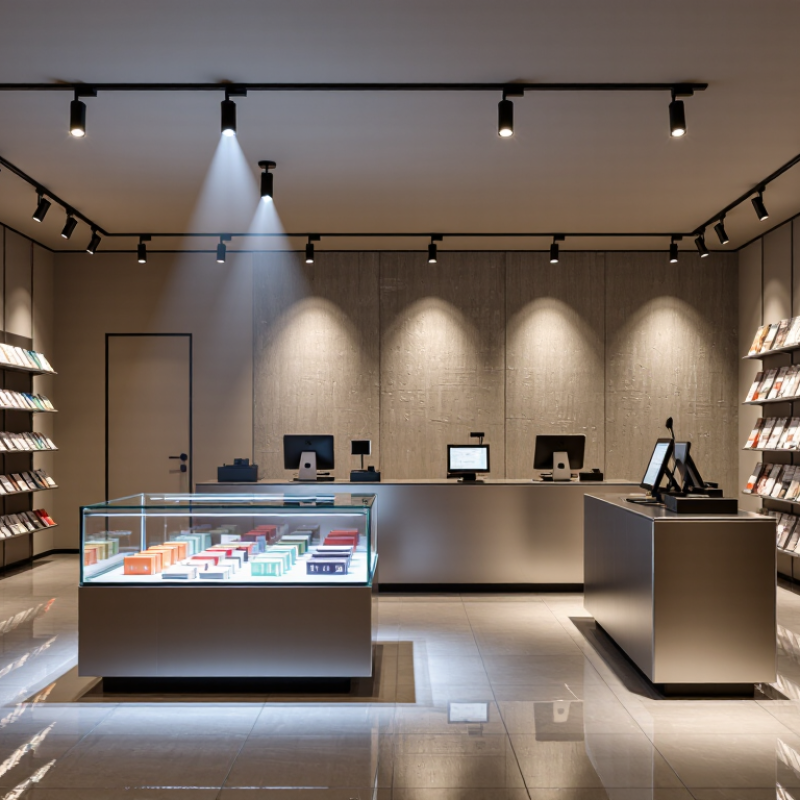
What Is a Commercial Spotlight and How Is It Used?
A commercial spotlight is a directional light designed to emphasize a specific area rather than illuminate an entire room evenly. Its focused beam can draw attention to a product shelf, artwork, reception desk, or architectural detail. Fixtures may be mounted on tracks, ceilings, or walls, depending on the layout and how often displays change. The beam can often be adjusted. That flexibility is useful in shops where seasonal displays move, or in galleries where a small shift can change how a painting looks.
Choosing one involves more than brightness. Check the beam angle, light output, color temperature, and color rendering index. A narrow beam can create a crisp highlight on a display, while a wider beam suits a counter or work surface. For example, a warm tone may make a café feel inviting, but it can distort the appearance of some merchandise. Watch for glare, too. A bright spot aimed at eye level feels uncomfortable, even when the fixture is efficient. Dimming helps, but only when the spotlight and control system are compatible. Small detail. It matters. A practical choice balances visual impact, maintenance access, and the room’s actual tasks; perfect uniformity is not always the goal, and sometimes the first lighting plan needs a rethink after people use the space.
Which Specifications Define Spotlight Performance in 2026?
Commercial spotlight performance starts with useful light, not the biggest lumen number on a box. Check measured lumens from the complete fixture, then compare beam angle and center-beam intensity for the mounting height. A narrow beam can put crisp emphasis on a display, while a wider beam may suit shelves or textured walls. Test the actual space. Reflections can surprise you.
Color quality matters when products, artwork, or food must look natural. A CRI of 90 or higher is a practical starting point, but saturated reds may need a separate R9 rating. Choose color temperature to fit the room: warmer light often feels comfortable, while neutral white can help details read clearly. Keep color consistency in mind across multiple fixtures. Small mismatches show.
Efficiency should be judged as delivered lumens per watt, alongside dimming range and flicker performance. Ask for verified photometric data, such as an IES file, rather than relying on claims alone. Thermal design also affects output and service life; inspect how the fixture handles heat and whether its driver is replaceable. For busy commercial areas, review ingress protection, glare control, and compatibility with the intended controls. No single specification wins every job. Check samples at the real ceiling height before ordering at scale.
What Is the Best Commercial Spot Light in 2026? Which Specifications Define Spotlight Performance?
Beam angle determines how wide a spotlight spreads its light. This chart compares the approximate beam diameter at a 3 m throw for common nominal beam angles.
Coverage is calculated geometrically as 2 × distance × tan(beam angle ÷ 2). At 3 m, beam angles of 10°, 15°, 24°, 36°, and 60° produce approximate diameters of 0.53 m, 0.79 m, 1.28 m, 1.95 m, and 3.46 m, respectively. Actual results vary with the fixture’s optics and the manufacturer’s beam-angle measurement. Choose a beam angle for the target area, then compare lumen output, efficacy (lm/W), color rendering (CRI), glare control, dimming, and ingress protection (IP) for the application.
How Do Commercial Spotlight Types and Technologies Differ?
Commercial spotlights differ in how they mount, direct light, and manage heat. Track-mounted heads can be repositioned along a rail, making them useful when displays change often. Recessed fixtures sit neatly in ceilings, but their fixed locations may limit adjustments. Surface-mounted spots suit exposed ceilings or retrofit projects where cutting openings is impractical.
Useful for focused displays. Narrow beam angles create crisp pools of light on shelves or artwork, while wider beams cover counters and larger products. Aiming matters: a bright spot reflected in glass can distract customers rather than highlight an item.
Technology affects both appearance and operating performance. LED sources use less energy than many older lamp types and typically need less frequent replacement, though actual lifespan depends on heat control and driver quality. Check color rendering, not just brightness: a higher CRI can show merchandise colors more faithfully.
Choose a suitable color temperature for the space, then test it against real materials. Dimming compatibility also matters; some combinations flicker or dim unevenly. I still find color temperature easy to judge incorrectly from a specification sheet alone.
A sample installed at the intended ceiling height gives more reliable evidence. Compare glare, beam spread, and color on the actual display before committing to a full installation.
How Can Commercial Spotlights Be Compared for Quality and Value?
A commercial spotlight should be compared by delivered light, not wattage alone. Check its tested lumens, efficacy, color consistency, beam angle, and glare control. ANSI/IES LM-79 testing reports electrical and photometric performance; LM-80 data, interpreted using TM-21, helps estimate LED package lumen maintenance. These figures are useful, but they do not guarantee identical results in a hot, dusty ceiling. Ask for the complete test report, not just a specification-sheet claim. Small detail, big difference.
Then compare lifetime cost: purchase price, energy use, replacement access, and warranty terms. The U.S. Department of Energy’s 2019 Solid-State Lighting Energy Savings Forecast projected about 569 terawatt-hours of annual U.S. electricity savings in 2035, compared with its baseline scenario. That is a projection, not a promise for any single fixture, but it shows why efficacy matters at scale. In a shop, test the beam on an actual display wall: a narrow optic may create bright centers and dark edges. I still think beam claims are easy to overvalue. A cheaper unit can be better value if its output suits the space and replacement is simple; weak glare control can make even a high-output fixture tiring.
How Do You Choose a Spotlight for a Specific Business Setting?
What Is the Best Commercial Spot Light in 2026?
How Do You Choose a Spotlight for a Specific Business Setting?
The best spotlight depends on what the space needs people to see. In a boutique, a narrow beam can pick out a display without flooding nearby shelves. A hotel lobby may need a wider, softer beam to illuminate artwork while keeping faces comfortable. Check ceiling height, beam angle, and light output together; a bright fixture can still leave a tall wall looking patchy. For accurate color, compare color-rendering information and test samples under the actual lighting. Small differences matter.
Tips: Aim a sample at the real surface. Check for glare from the entrance and seating areas. Note the fixture’s dimming range, mounting options, and maintenance access. Don’t choose by wattage alone.
For restaurants and reception areas, adjustable aiming helps staff refresh a scene as layouts change. In offices or showrooms, consistent light and controlled glare may matter more than dramatic highlights. Consider the fixture’s color temperature, expected operating hours, and the room’s existing lighting. Confirm environmental ratings if the spotlight will face dust or moisture. A specification sheet is useful, but it cannot show every reflection or shadow. A brief on-site trial can expose issues before a full installation—and sometimes the first aiming plan needs revision.


