As the global textile industry evolves, the demand for advanced chain weaving machines is increasing. These machines play a crucial role in the production of various fabrics. Their ability to integrate technology and efficiency is essential for suppliers seeking competitive advantages in the market.
In 2026, it is important to assess the best chain weaving machine options available. Suppliers must consider factors like quality, performance, and cost-effectiveness. Different regions may have unique requirements, making it vital to find machines that meet specific local demands. The right choice can impact production quality and operational efficiency.
However, selecting the ideal chain weaving machine can be challenging. New technology often tests traditional practices. Suppliers may face difficulties adapting to rapid changes in design and functionality. Evaluating different machines requires careful consideration and expert advice. Balancing innovation with reliability is key to making an informed decision.
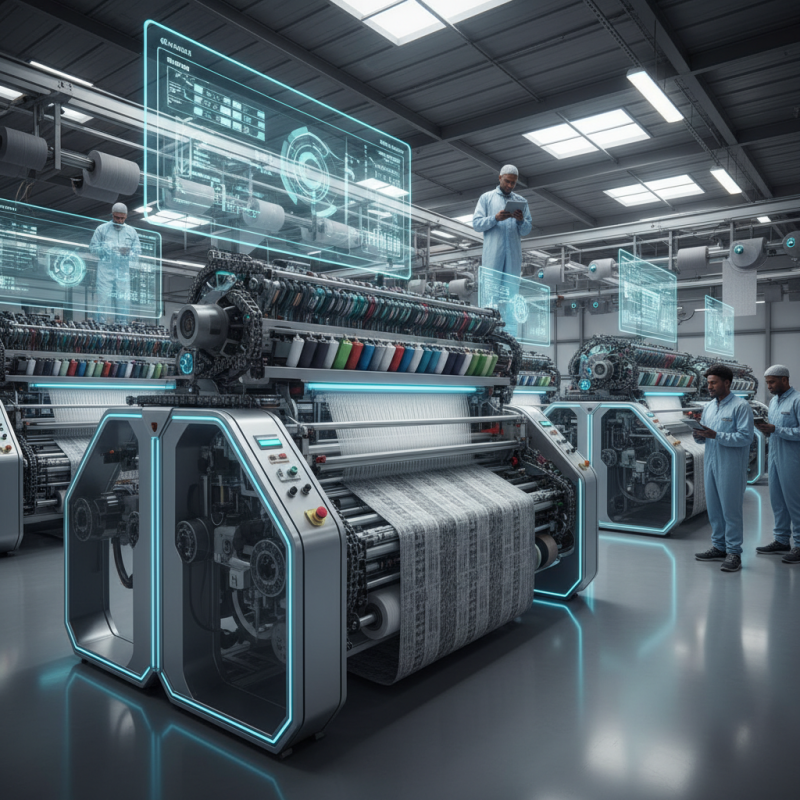
The textile industry has witnessed significant advancements in chain weaving machines over the past few decades. Initially, these machines were simple and manual, relying on basic mechanics. Today, they incorporate advanced technology, enhancing efficiency and precision in production. Modern machines can handle intricate designs, increasing creativity in textiles. This evolution reflects a broader trend in manufacturing towards automation and smart machinery.
However, the transition is not without challenges. Some manufacturers struggle to adapt to new technologies. Training workers becomes essential, as traditional skills may not transfer smoothly to automated systems. Additionally, the cost of upgrading machinery can be a barrier for smaller companies. Balancing innovation with practicality is crucial for global suppliers.
Moreover, environmental concerns shape the direction of future chain weaving machines. Sustainable practices are increasingly necessary for market competitiveness. As suppliers work towards greener solutions, the industry faces the imperative to reduce waste and energy consumption. Addressing these complexities will determine the future landscape of chain weaving in textiles.
The chain weaving machinery industry is experiencing significant advancements in 2026. Innovations focus on automation and efficiency. Reports show that automated machines can improve production rates by up to 30%. These enhancements help suppliers meet the rising global demand for textiles and industrial fabrics.
Key technologies include smart sensors and AI integration. These features ensure real-time monitoring, reducing waste and downtime. A study indicates that machines equipped with AI can predict maintenance needs with 85% accuracy. This predictive capability leads to lower operational costs.
However, challenges remain. Not all suppliers can afford these advanced technologies. Smaller manufacturers might struggle to keep pace. Transitioning from older systems can also be complex and costly. As a result, the gap between tech-savvy giants and smaller players widens. Efforts to support training in new technologies are essential. Overall, the 2026 landscape is marked by promise and obstacles.
| Machine Model | Production Speed (m/min) | Max Weaving Width (mm) | Energy Consumption (kW) | Automation Level |
|---|---|---|---|---|
| Model A | 120 | 3000 | 15 | Fully Automated |
| Model B | 150 | 2500 | 12 | Semi-Automated |
| Model C | 130 | 2800 | 14 | Fully Automated |
| Model D | 110 | 3200 | 16 | Manual |
The global demand for chain weaving machines is rising, driven by advancements in technology and manufacturing efficiency. In a comparative analysis of leading suppliers, several key metrics stand out. Industry reports indicate that the market for chain weaving machines is projected to grow by 5% annually over the next three years. This growth is attributed to increasing needs in sectors like automotive, textiles, and construction.
When evaluating suppliers, efficiency and reliability are paramount. A robust machine can drastically reduce downtimes. Companies often seek out those that offer comprehensive support and maintenance services. However, understanding the nuances of each supplier's offering can be tricky. Some machines may seem cost-effective initially but require frequent repairs.
Tip: Always inquire about a supplier's service history. Machines with longer lifespans often yield better returns.
Sustainability is another concern. Machines that consume less energy and produce minimal waste are gaining traction. A recent report highlighted that eco-friendly machines could lower operational costs by up to 15%. Nonetheless, it’s essential to assess the total cost of ownership rather than just the upfront price. Each supplier's innovation and adaptability in addressing these trends reflect their market position.
The market for chain weaving machines is witnessing notable trends. As industries evolve, the demand for efficient and versatile weaving solutions grows. Global suppliers must adapt quickly to these changes. Manufacturers are integrating smart technologies into their machines. Automation and AI are shaping this industry. This has led to improved production speeds and consistency.
Understanding market dynamics is crucial. Suppliers should consider customization options to meet diverse client needs. Some clients prefer specific fabric types or weaving patterns. However, not all machines can deliver. It is essential to balance between innovation and reliability.
Tips: Stay updated on technological advancements. Attend trade shows and webinars to learn. Networking with industry experts can provide valuable insights. Being proactive often leads to better opportunities. Regularly assess customer feedback. It can highlight areas for improvement. In this rapidly changing landscape, flexibility is key to sustaining growth.
Automation is transforming the weaving industry. Machines that weave chains reduce manual labor. These advancements boost production speed and minimize human error. However, relying solely on machines can pose challenges. Skilled artisans might be displaced, leading to a loss of traditional craftsmanship.
Efficiency has increased significantly with automation. Companies report lower production costs due to decreased labor. Automated machines operate consistently and predictably. Yet, there are hidden costs. Maintenance can be expensive. Training employees to manage these machines requires investment. Not all factories are ready for this shift.
Data-driven decision-making is becoming essential. Analyzing production metrics helps optimize workflows. Still, dependency on automation can create vulnerabilities. Technical failures could halt production, causing delays. Balancing human skills and technology is vital for a sustainable future in weaving production.
| Cookie | Duration | Description |
|---|---|---|
| cookielawinfo-checkbox-analytics | 11 months | This cookie is set by GDPR Cookie Consent plugin. The cookie is used to store the user consent for the cookies in the category "Analytics". |
| cookielawinfo-checkbox-functional | 11 months | The cookie is set by GDPR cookie consent to record the user consent for the cookies in the category "Functional". |
| cookielawinfo-checkbox-necessary | 11 months | This cookie is set by GDPR Cookie Consent plugin. The cookies is used to store the user consent for the cookies in the category "Necessary". |
| cookielawinfo-checkbox-others | 11 months | This cookie is set by GDPR Cookie Consent plugin. The cookie is used to store the user consent for the cookies in the category "Other. |
| cookielawinfo-checkbox-performance | 11 months | This cookie is set by GDPR Cookie Consent plugin. The cookie is used to store the user consent for the cookies in the category "Performance". |
| viewed_cookie_policy | 11 months | The cookie is set by the GDPR Cookie Consent plugin and is used to store whether or not user has consented to the use of cookies. It does not store any personal data. |