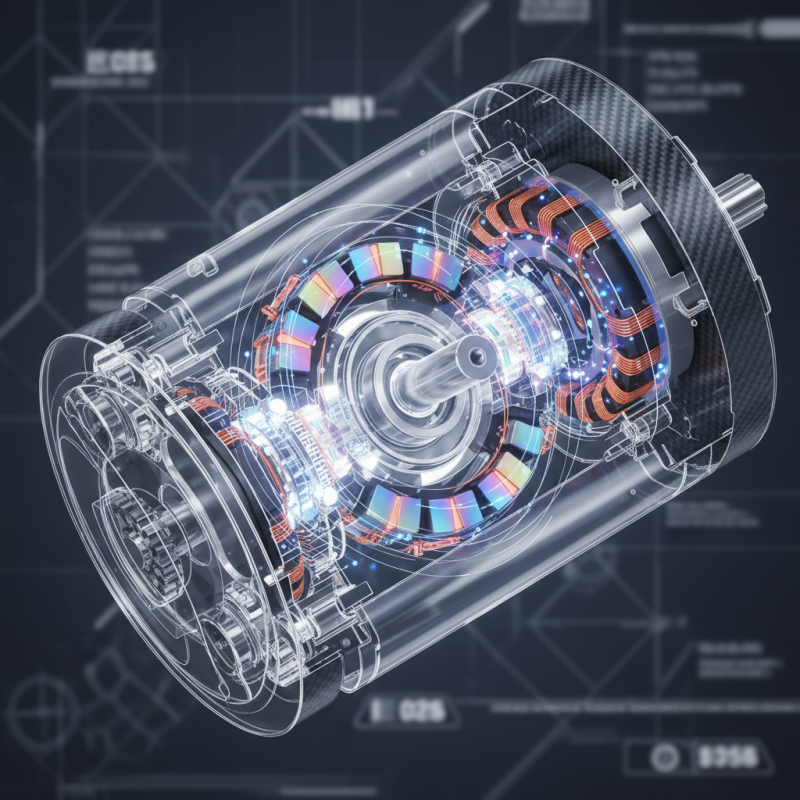
What is a Bent-axis Motor and How Does It Work?
The Bent-axis Motor is an innovative electrical device. It utilizes a unique design that allows for high efficiency. This motor is different from traditional motors in several ways.
With its angled rotor and stator, the Bent-axis Motor optimizes torque. The alignment of components reduces friction. This leads to improved performance and energy savings. Many industries are beginning to recognize its advantages, especially in robotics and automotive applications.
However, understanding how this motor truly works can be complex. Some users find the mechanics challenging. Therefore, exploring its operation and potential benefits is necessary. As technology evolves, so does the need for efficient motors. The Bent-axis Motor offers a glimpse into the future of electric power systems.
What is a Bent-axis Motor?
A bent-axis motor is a type of hydraulic motor. Its unique design allows for efficient energy conversion. This motor uses a bent input shaft to create rotation. The angle of the shaft influences the motor’s performance. Generally, the bent-angle enhances the torque and responsiveness.
In a bent-axis motor, the pistons are positioned at an angle. This design allows the pistons to move more freely. The motion of the pistons generates hydraulic flow. As a result, the motor can drive machinery effectively. Users often appreciate this with heavy equipment. However, there can be challenges, such as wear on components. Ensuring proper maintenance is crucial; overlooked details can lead to issues. The motor can also be sensitive to operating conditions, which might affect its longevity.
Overall, the bent-axis motor is powerful and versatile. It serves various applications, from construction to manufacturing. Despite its benefits, downsides exist that users need to consider. Understanding its mechanics can lead to better choices in machinery.
Bent-axis Motor Efficiency Comparison
This bar chart illustrates the efficiency percentages of various bent-axis motors. It shows the comparative performance of five different motors, highlighting their efficiency levels in a straightforward manner.
The Working Principle of Bent-axis Motors
Bent-axis motors are gaining traction in various industries due to their unique working principle. At the heart of these motors, the axial piston mechanism operates on a bent axis. This design allows for a compact form factor and increased efficiency compared to traditional motors. Studies show that bent-axis motors can achieve efficiencies exceeding 90% in hydraulic applications. Such efficiency can significantly reduce energy consumption in systems reliant on hydraulic power.
The working principle involves pistons arranged at an angle to the drive shaft. As the shaft rotates, the pistons move in and out of their cylinders, creating a constant fluid flow. This design provides consistent torque output across a wide range of speeds. However, it also introduces potential challenges. For instance, wear and tear on the pistons can affect performance over time. Regular maintenance is essential to sustain efficiency and prolong lifespan.
Operators must consider the implications of using bent-axis motors. While they offer significant benefits, durability and reliability should be weighed against application requirements. Adjustments may be needed to optimize performance based on specific operational contexts. Furthermore, manufacturers are exploring innovations to address these concerns, aiming for improvements in materials and design. As these motors evolve, their role in industrial applications continues to expand.
What is a Bent-axis Motor and How Does It Work?
| Feature | Description |
| Configuration | Bent-axis motors consist of a rotor that is inclined at an angle to the shaft, allowing for compact design. |
| Operating Principle | They operate by converting hydraulic energy into mechanical energy through the rotation of the bent shaft. |
| Efficiency | Bent-axis motors typically achieve high efficiency rates, making them suitable for various applications. |
| Applications | Commonly used in mobile equipment, such as excavators and wheel loaders, as well as industrial machinery. |
| Advantages | They offer high torque, compact size, and robust performance under various conditions. |
| Disadvantages | Can be more complex to manufacture and may have higher initial costs compared to other motor types. |
Key Components of Bent-axis Motors
Bent-axis motors have unique features that set them apart from other types. The core components include a rotor, stator, and swash plate. The rotor is where the transformation of motion occurs. It rotates around the axis, interacting with other components. The swash plate tilts to create the necessary angle for effective motion transfer.
The stator, often mounted rigidly, houses the rotor. This arrangement ensures that the rotor can rotate smoothly within it. The angle of the swash plate is adjustable, allowing for different performance characteristics. This adjustability can influence efficiency and power output. However, many designs have challenges with wear over time. Components like seals may also require regular maintenance. Observing these factors is crucial for optimizing motor performance. The interplay between efficiency and durability is a vital consideration for engineers.
Understanding these key components helps in grasping how bent-axis motors function. While they are powerful, their complexity can lead to potential issues. Each component plays a significant role in overall performance. Ensuring balance among them is an ongoing process. Motor designers must continually assess and refine their approaches.
Applications of Bent-axis Motors in Industry
Bent-axis motors play a crucial role in various industries. Their unique design allows for high efficiency and compactness. These motors convert rotary motion into linear motion effectively. Many applications benefit from this technology, especially in construction and manufacturing.
One notable application is in mobile machinery. Bent-axis motors provide precise control in hydraulic systems. They help lift heavy loads with accuracy. This is vital in construction sites where safety is key. However, the integration of these motors can be challenging. Proper alignment and maintenance are necessary to ensure optimal performance.
Another area is robotics. Bent-axis motors facilitate quick, responsive movements. This agility is essential for tasks requiring fine manipulation. However, their complexity can lead to troubleshooting difficulties. Engineers must understand their intricacies to harness full potential. Regular assessments help identify potential weaknesses and improve reliability.
Advantages and Disadvantages of Bent-axis Motors
Bent-axis motors are unique devices commonly used in hydraulic systems. They convert rotary motion into linear movement through a bent drive shaft. This design allows for compactness and efficiency. However, there are both advantages and disadvantages to consider.
One major advantage is their efficiency. Bent-axis motors generally have a high power-to-weight ratio. Studies show they can achieve efficiencies of up to 95%. This makes them ideal for applications requiring precise control. Additionally, the simple construction can reduce maintenance costs. Users often appreciate the reduced need for complex systems.
On the downside, bent-axis motors can be sensitive to contamination. Dirt or debris can lead to performance issues. This sensitivity may require more rigorous maintenance schedules than other motor types. Another drawback is their limited speed range. While they perform well at moderate speeds, their effectiveness decreases significantly at high speeds. This limits their application in high-velocity environments. Balancing the pros and cons is essential for making informed decisions when selecting these motors.