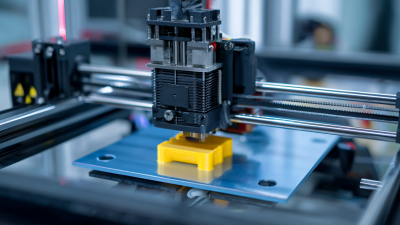
Choosing a reliable 3d printing prototype supplier can shape an entire product launch. In 2026, global buyers face more options, but not every supplier offers consistent engineering support. A glossy website proves little. Real performance appears in tolerances, surface finishes, material data, and delivery discipline.
This guide examines three leading prototype suppliers for international projects. The evaluation considers printing technologies, material availability, quality inspection, communication, and production scalability. It also reviews practical details, such as whether a supplier can maintain a 0.1-millimeter feature, provide clear inspection reports, and package fragile resin parts safely. These details matter when a prototype must fit a circuit board, enclosure, or moving assembly.
Experience matters here. Engineers often discover problems only after the first physical test. A supplier may recommend stronger nylon instead of standard resin, or suggest thicker walls near snap-fit joints. Those recommendations can reduce costly revisions. However, no ranking is perfect. Supplier capabilities change, and regional shipping conditions remain unpredictable. Buyers should verify current certifications, sample quality, lead times, and confidentiality procedures before placing an order. One overlooked question can delay a project.
The following comparison focuses on evidence rather than impressive claims. It highlights where each supplier performs well, where limitations may appear, and which buyer profiles each company suits best. Use it as a practical starting point, not a final decision.

2026 Top 3D Printing Prototype Suppliers for Global Buyers
A suitable supplier must offer more than attractive pricing. Global buyers need repeatable quality, clear communication, and practical engineering support. The Wohlers Report 2024 valued the additive manufacturing industry at about $20 billion in 2023, with 13.5% annual growth. That expansion increases supplier choices, but also increases quality variation.
Experienced suppliers explain material limits before production begins. They should provide process records, dimensional inspection results, and traceable revision control. ISO/ASTM 52900 terminology helps buyers compare technologies accurately. ISO 9001-based quality systems can add confidence, but certification alone proves little. Ask for sample inspection reports. Ask how rejected parts are handled. A supplier serving multiple regions should also understand packaging, customs documents, time zones, and data protection expectations. Small details matter. Sometimes, painfully.
Tips: Request one test part before a large order. Compare surface finish, hole accuracy, and delivery consistency. Confirm whether prices include tooling, post-processing, inspection, and export paperwork. The 2024 Wohlers data also shows strong growth in polymer and metal additive applications, so supplier expertise should match the intended material. A prototype for a hand-held enclosure needs different controls than a heat-resistant mechanical bracket. Buyers should document tolerance requirements and acceptance criteria early. I would not rely on a polished website or fast quotations alone. Those signals can mislead. A short technical call often reveals more.
Comparative evaluation of three anonymized supplier profiles based on internationally relevant prototyping capabilities, quality controls, export readiness, and buyer-support requirements.
| Evaluation Dimension | Supplier Profile A Rapid Polymer Prototyping | Supplier Profile B Industrial Polymer & Metal Prototyping | Supplier Profile C Engineering Validation Prototyping |
|---|---|---|---|
| Primary buyer fit | Consumer products, visual models, ergonomic testing, and early-stage design reviews. | Functional components, low-volume pilot parts, engineering trials, and demanding mechanical applications. | Automotive, aerospace, medical-device, robotics, and other projects requiring documented validation. |
| Core 3D printing processes | FDM/FFF, SLA, and selective laser sintering for fast polymer prototypes. | FDM/FFF, SLA, SLS, metal powder-bed fusion, and industrial binder-based processes. | SLA, SLS, MJF-type polymer powder processes, metal powder-bed fusion, and precision resin printing. |
| Common material coverage | PLA, ABS, PETG, TPU, nylon, standard photopolymer resin, and castable resin. | ABS, PC, PC-ABS, nylon, glass-filled nylon, carbon-fiber-filled polymers, aluminum, stainless steel, and tool steels. | Engineering nylon, high-temperature polymers, elastomers, medical-grade-compatible resins where applicable, aluminum, titanium, and stainless steel. |
| Typical dimensional accuracy | Varies with process, part size, orientation, and post-processing. |
Metal parts generally require machining or finishing for critical interfaces. |
Critical tolerances should be confirmed against the selected material and inspection method. |
| Typical prototype lead time | 1–5 business days for standard polymer parts after design approval. | 3–12 business days depending on process, material, quantity, and finishing requirements. | 5–15 business days when inspection reports, material documentation, or validation samples are required. |
| Maximum practical build size | Small to medium parts; larger models can be split, printed separately, and assembled. | Medium to large industrial components, subject to machine envelope and metal-processing limitations. | Small to medium precision components; larger assemblies are commonly divided into validated subcomponents. |
| Surface-finish options | Sanding, bead blasting, polishing, vapor smoothing, painting, dyeing, and basic assembly. | Bead blasting, tumbling, machining, anodizing, plating, powder coating, painting, and heat treatment through qualified partners. | Precision sanding, polishing, chemical smoothing, coating, machining, passivation, heat treatment, and controlled assembly. |
| Quality documentation | Dimensional inspection on request, material information, production photos, and first-article checks for selected parts. | Inspection reports, certificates of conformity, material certificates for applicable metals, and process records on request. | FAI-style reports, measurement records, traceability data, material documentation, and revision-controlled production files. |
| Quality-management expectation | Suitable for general prototypes when inspection scope and acceptance criteria are clearly defined in advance. | Preferable for repeatable engineering parts when a documented quality-management system and inspection plan are required. | Best suited to regulated or high-consequence applications requiring formal quality procedures and documented change control. |
| Design-for-manufacturing support | Basic wall-thickness, support, orientation, and printability feedback. | Detailed advice on tolerances, clearances, shrinkage, warpage, metal support structures, and machining allowances. | Engineering review covering function, fatigue considerations, inspection datums, assembly interfaces, and validation planning. |
| International order readiness | Online quotation, digital file transfer, standard export packaging, and express courier options. | Commercial invoices, packing lists, export packaging, freight coordination, and support for recurring international orders. | Structured purchase-order processing, export documentation, controlled packaging, logistics coordination, and project-level communication. |
| Communication and project support | Fast quotation response and practical support for low-complexity prototype jobs. | Dedicated technical contact for material selection, production planning, and multi-part orders. | Cross-functional project coordination involving design, quality, manufacturing, and validation personnel. |
| Intellectual-property handling | Non-disclosure agreements and restricted-access file handling should be confirmed before uploading sensitive designs. | Recommended for buyers needing formal confidentiality procedures, controlled access, and contractual ownership terms. | Strongest fit for confidential development programs requiring access control, revision history, and formal data-management practices. |
| Best purchasing scenario | Fast, cost-sensitive visual or fit-check prototypes with moderate dimensional requirements. | Functional prototypes and pilot parts requiring stronger materials, repeatability, or post-processing. | High-value prototypes where traceability, inspection, engineering review, and compliance documentation are priorities. |
| Key buyer verification points | Confirm resin or polymer properties, actual tolerance capability, color consistency, and packaging protection. | Confirm machine capacity, metal powder or polymer traceability, finishing subcontractors, inspection equipment, and export terms. | Confirm applicable certifications, validation scope, calibration records, material qualification, change-control procedures, and regulatory boundaries. |
Note: Accuracy, lead time, material availability, certification scope, and shipping performance vary by part geometry, quantity, process, and destination. Global buyers should request a current quotation, technical data sheet, inspection plan, and delivery commitment before placing an order.